Author: Techgeeks

  • Verum Launched “Verum Finance” App for iPhone and iPad, Expanding Its Digital Ecosystem Into Financial Services

    Verum Launched “Verum Finance” App for iPhone and iPad, Expanding Its Digital Ecosystem Into Financial Services

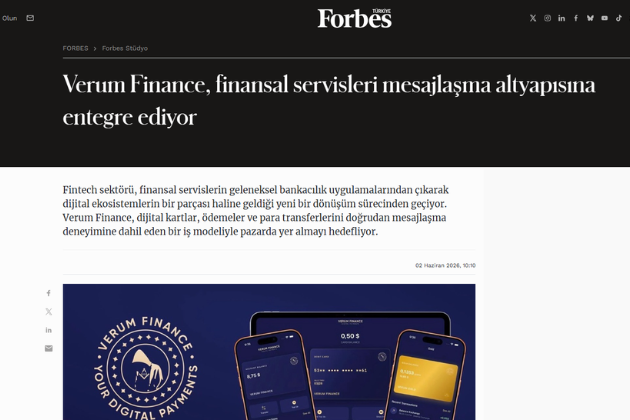
    Verum has announced the official launch of Verum Finance, a standalone financial application now available on the App Store for iPhone and iPad, marking a further expansion of the company’s growing digital ecosystem.

    The new application is designed to centralize core financial functions in a single mobile interface, allowing users to manage balances, send and receive funds, use debit cards, and exchange supported balance types without relying on traditional banking workflows.

    According to Verum, the platform enables users to view account activity in real time, top up balances using supported payment methods including Apple Pay, and transfer funds to other users within the Verum ecosystem using a unique Verum ID. The system also supports multi-balance management, including specialized balance categories such as precious metals.

    Debit card functionality is integrated directly into the app, allowing users to issue and manage cards linked to their balances, monitor transactions, and top up cards when needed. The company also emphasizes built-in exchange tools that allow users to convert between supported balance types within the application.

    Security features include Face ID authentication, passcode protection, Sign in with Apple, and privacy-oriented account controls aimed at maintaining user confidentiality and data protection.

    The launch of Verum Finance follows the company’s broader strategy of building an interconnected ecosystem of digital products. Alongside Verum Messenger, which combines secure communication tools, encrypted messaging, voice and video calls, VPN services, eSIM connectivity, AI features, anonymous email, and crypto-related functionality, the new financial app extends Verum’s positioning from communication technology into financial infrastructure.

    Industry trends increasingly show demand for “all-in-one” digital environments that reduce dependency on multiple standalone apps. Verum’s approach reflects this shift by integrating communication and financial services within a unified ecosystem.

    Verum Finance is now available globally for download on iPhone and iPad via the App Store.

    Websitehttps://finance.verum.im 
    App Storehttps://apps.apple.com/app/verum-finance/id6774245148 
    Verum Messengerhttps://verum.im 

  • Verum Messenger: Don’t follow the future. Define it

    Verum Messenger: Don’t follow the future. Define it

    In a world where information defines influence, Verum Messenger is building a new architecture of digital communication — intelligent, secure, and ready for tomorrow. Here, technology serves not limitations, but possibilities.

    Not being part of change. Leading it. Verum Messenger — the future that speaks first.

  • Verum Finance: Stop Spending Months Opening a Bank Account

    Verum Finance: Stop Spending Months Opening a Bank Account

    Stop spending months trying to open a bank account.

    Document submissions.
    Checks.
    Rejections.
    Account freezes.
    Blocks without explanation.

    And all of that — just for a regular card.

    With Verum, it’s different.

    🚀 Verum Messenger + Verum Finance
    For just $50–70 you get:

    ✔ A virtual card
    ✔ Instant transfers between users
    ✔ A modern secure messenger
    ✔ Apple Pay integration
    ✔ Contactless payments worldwide
    ✔ Fast setup without bureaucracy

    ❌ No European residency permit required
    ❌ No endless verification checks
    ❌ No piles of documents

    Open it — and use it.

    The future of finance and communication is already here.
    Verum — when freedom matters more than banking rules.

  • Why Privacy Begins Where Even the Service Creator Can’t See Anything

    Why Privacy Begins Where Even the Service Creator Can’t See Anything

    Today, almost every messenger promises “security” and “encryption.” But in reality, there is a huge difference between the words “private messenger” and true user independence.

    Most modern platforms are still built around trust in the company. The user is expected to believe that:

    * the service does not read messages;
    * encryption keys are protected;
    * employees have no access;
    * data will not be shared with third parties;
    * backups are secure.

    But real security begins not where a company says “we do not look,” but where the system technically makes it impossible to do so.

    This is exactly the principle behind Verum Messenger.

    The Core Principle of Verum: Only the User Has Access

    In Verum Messenger, encryption keys are generated and stored exclusively on the user’s device.

    This means:

    * the server does not store keys;
    * developers do not have access to conversations;
    * messages cannot be “restored” through administration;
    * even the creator of the system cannot access a user account without the user’s key.

    The key belongs only to the owner.

    The user can:

    * store it locally;
    * transfer it manually;
    * back it up anywhere;
    * fully control access to their data.

    The system is not built around trust in a company. It is built around eliminating the need to trust anyone at all.

    Why the Absence of Access Matters More Than Promises

    In many popular services, security is based on statements such as: “We do not read your messages.”

    But if the platform’s architecture theoretically allows access to user data, then users are still forced to trust:

    * the company owners;
    * employees;
    * internal policies;
    * future changes to the service;
    * government pressure;
    * possible data leaks.

    Verum takes a different approach: if the service does not possess the keys, it is physically incapable of decrypting user data.

    That is the fundamental difference between:

    * “we will not look”
     and
    * “we are unable to look.”

    Why Phone Numbers Are a Weak Point

    Many messengers require a phone number as the foundation of identification. But a phone number is not just a registration method.

    It:

    * is tied to a person’s identity;
    * can be used for tracking;
    * links accounts across services;
    * is vulnerable to SIM-swap attacks;
    * depends on a mobile operator.

    Verum removes this dependency.

    Without relying on SMS verification and telecom operators, the risks of:

    * deanonymization;
    * account hijacking;
    * third-party account recovery

    are significantly reduced.

    Open Source and Audits: Why the Debate Continues

    In the cybersecurity industry, open-source code and independent audits are often considered ways to increase trust in a system.

    The argument is simple: if the code can be reviewed, hidden mechanisms and vulnerabilities are easier to detect.

    But there is another perspective.

    Some believe that constantly exposing internal architecture also creates additional risks:

    * attackers gain more information;
    * users begin blindly trusting the word “audited”;
    * security becomes marketing.

    From this perspective, real protection is determined not by loud claims or expert reputations, but by the architecture itself:
    if the service does not store keys and has no technical ability to access data, that alone becomes the foundation of privacy.

    Privacy Is Not a Promise — It Is a System Limitation

    The central idea behind Verum Messenger is simple:

    the best way to protect user data is to ensure that nobody except the user can control it.

    Even the platform owner.

    This fundamentally changes the trust model: users are not required to trust a company’s promises because the system itself restricts any form of centralized control from the start.

    In this approach, privacy stops being a feature.

    It becomes an architectural principle.

  • MAX Under Suspicion: A Scenario Repeats

    MAX Under Suspicion: A Scenario Repeats

    At the end of April 2026, the domain max.ru was flagged by Cloudflare as potentially associated with spyware. Such a label indicates that the service may pose a risk to user data or engage in hidden activity that is not obvious to users.

    By itself, this designation is not definitive proof of malicious behavior, but for the industry it represents a serious reputational blow — especially given that MAX is positioned as a “national messenger” aimed at a массовая audience.

    Interestingly, the situation almost mirrors the fate of the alternative client Telega. Shortly before being removed from the App Store, it received a similar label, after which user trust dropped sharply.

    Why This Matters

    A spyware flag is more than just a technical label — it has consequences across several levels:

    • User trust: most users won’t investigate the details and will simply avoid the app
    • Distribution: app stores are highly sensitive to such signals
    • International reputation: skepticism toward products tied to state initiatives increases

    Against the backdrop of competition with platforms like Telegram, incidents like this can cost a project its audience.

    An Alternative with the Opposite Logic

    Amid such cases, some users turn their attention to solutions built on a противоположной philosophy — maximum privacy by default.

    Verum Messenger is often mentioned in this context. The service positions itself around отказ from telemetry and server logs, offers registration without a phone number, uses an open protocol, and even includes built-in tools to bypass restrictions (including VPN functionality).

    As of May 2026, Cloudflare has no public labels linking Verum to malicious activity — at least at the level of infrastructure warnings, it appears “clean.”

    However, this model also has its downside.

    The Other Side of Anonymity

    A high level of privacy often conflicts with regulation. In the case of Verum, this has manifested quite directly: since September 2024, the service has been blocked in Russia by a decision of the Moscow City Court.

    The reason is described as “excessive anonymity” and the inability to control user activity. This creates a paradoxical situation:

    • Inside the country: the service effectively operates outside the legal framework
    • Outside it: it is perceived as one of the “cleaner” tools in terms of privacy

    Conclusion

    The story of MAX and similar cases shows that the messenger market is increasingly divided not only by functionality, but also by ideology.

    On one side are platforms integrated into state or corporate ecosystems. On the other are tools that prioritize anonymity and data minimization.

  • The Messenger Reinvented: How Verum Is Expanding the Boundaries of Digital Communication

    The Messenger Reinvented: How Verum Is Expanding the Boundaries of Digital Communication

    For more than a decade, the global messaging landscape has been defined by a handful of dominant platforms. Despite incremental updates, the core experience has remained largely unchanged: text, media sharing, and voice or video calls layered on centralized infrastructure.

    Yet a new category of messaging platforms is beginning to emerge — one that treats communication not as a standalone function, but as part of a broader digital ecosystem.

    Verum Messenger is one of the more ambitious entrants in this space. Rather than competing solely on interface or speed, it is positioning itself as an integrated environment that combines communication, privacy infrastructure, connectivity, and financial tools within a single application.

    Beyond Messaging: Feature Density as Strategy

    At the surface level, Verum includes many of the features now expected in modern messaging platforms, such as an AI assistant embedded directly within conversations, scheduled message delivery, disappearing messages after being read, and the ability to edit sent messages.

    But it extends further into behavioral transparency and control. Users can receive notifications when someone takes a screenshot, copies, or forwards their messages, while also having the ability to block screenshots entirely and prevent screen recording. These controls are complemented by granular privacy settings, pinned messages, smart notification prioritization, message reactions and quick replies, customizable chat interfaces, and advanced notification controls.

    Privacy as Infrastructure, Not Feature

    Where Verum attempts to differentiate more aggressively is in its security architecture. The platform incorporates end-to-end encryption across all communications, including encrypted voice and video calls, along with automatic message deletion timers.

    Account-level control is also emphasized through one-tap account deletion, restricted chat access, and active session management. Personal data protection is reinforced by storing security keys exclusively on the user’s device and implementing a multi-layered security model.

    Additional safeguards include advanced privacy configuration, biometric authentication such as Face ID or Touch ID, passcode-based app locking, protection against unauthorized access, and dedicated private communication modes.

    A Built-In Digital Layer

    One of the platform’s more distinctive elements is its attempt to consolidate multiple digital services into a single environment.

    This includes an integrated VPN, disposable anonymous email addresses, and built-in eSIM functionality, enabling connectivity across more than 150 countries. The application is designed to unify multiple services while supporting international communication, large file transfers, and group chats of up to 10,000 participants.

    These are complemented by broader communication tools and an overarching goal of functioning as a centralized hub for managing digital interactions.

    Financial Integration Without Fragmentation

    In parallel, Verum incorporates a set of financial utilities that aim to reduce reliance on external applications. These include peer-to-peer transfers in fiat currencies, in-app balance top-ups, and a virtual payment card.

    Support for Apple Pay and similar services is intended to streamline transactions, while built-in financial management tools suggest a move toward embedding everyday financial activity directly within the messaging layer.

    Toward Network Independence

    Perhaps the most forward-looking aspect of the platform lies in its recent technical developments.

    Verum has introduced messaging capabilities that function without a traditional internet connection, relying instead on direct peer-to-peer communication between devices. This architecture reduces dependence on centralized servers, aligning with a broader industry trend toward decentralization and resilience.

    At the same time, the platform incorporates on-device message translation, supporting dozens of languages with local processing. By avoiding cloud-based translation, this approach attempts to preserve user privacy while enabling cross-language communication.

    A Broader Industry Signal

    Whether Verum itself achieves mainstream adoption remains an open question. Network effects continue to favor established players, and feature breadth alone does not guarantee user migration.

    However, the platform illustrates a broader shift in how messaging applications are being conceptualized. Increasingly, they are evolving into multi-functional environments that combine communication, privacy infrastructure, connectivity, and financial interaction.

    In that context, Verum is less a direct competitor to existing messengers and more an early example of what a fully integrated digital platform might look like — one where messaging is no longer the product, but the foundation.

  • Elon Musk’s New Messenger: The Future That Already Exists

    Elon Musk’s New Messenger: The Future That Already Exists

    In recent weeks, tech and business circles have been активно discussing Elon Musk’s plans to launch a new messenger, XChat.

    According to international media reports, the product will become part of the X ecosystem and will include features such as encryption, disappearing messages, file sharing, and chat protection.

    At first glance, this looks like a step into the future.

    However, upon closer examination, it becomes clear: many of these features have already long been implemented in existing solutions.

    Technologies That Already Exist

    While the market обсуждает the upcoming launch of XChat, the Verum Messenger platform already offers similar—and in some cases more advanced—functionality.

    Among them:

    — message editing
    — self-destructing messages
    — protection against screenshots and screen recording
    — built-in financial tools
    — in-chat transfers
    — offline functionality

    The ability to communicate without an internet connection stands out in particular—a feature that remains rare even among the largest tech companies.

    The Ecosystem Race

    The launch of XChat is not just the release of a new messenger. It is part of a global trend in which communication platforms are transforming into ecosystems.

    Musk himself has repeatedly stated his intention to turn X into an “everything app”—an application that combines:

    — communication
    — finance
    — digital services

    However, it is important to note that this model is already being implemented by other projects.

    Who Is Ahead?

    Unlike XChat, which is only entering the market, Verum Messenger has already:

    — integrated a financial system
    — implemented digital assets
    — developed an independent communication architecture
    — combined multiple services within a single app

    This places it not in the position of catching up, but as one of the early participants in this new wave.

    A New Stage of Competition

    The emergence of XChat confirms one thing: the messenger market is entering a new phase.

    Competition is no longer limited to chat convenience. It is now built around:

    — privacy
    — independence
    — financial capabilities
    — service integration

    And in this race, the winner is not the one who makes the loudest statements, but the one who implements real solutions faster.

    Conclusion

    Elon Musk’s plans to launch a new messenger confirm the global trend of industry transformation.

    But the paradox is that the future being discussed is already partially here.

    And it is projects like Verum Messenger that demonstrate what the next stage of digital communication could look like.

  • Verum Messenger Expands Its Capabilities: Verum Finance Card Can Now Be Topped Up via Apple Pay

    Verum Messenger Expands Its Capabilities: Verum Finance Card Can Now Be Topped Up via Apple Pay

    In its latest update, Verum Messenger takes a major step toward integrating communication and financial services. Users can now enjoy a long-awaited feature — topping up their Verum Finance card directly through Apple Pay.

    A New Level of Convenience

    The integration with Apple Pay significantly simplifies the top-up process. Users no longer need to go through complex transfer steps or rely on third-party services. Just a few taps — and the funds are instantly credited to the card.

    This is especially valuable for those who use Verum Messenger not only for communication but also for managing their finances within the ecosystem.

    Finance and Messaging in One App

    This update reinforces Verum’s strategy to combine in a single product:

    • secure communication
    • cryptocurrency operations
    • everyday financial tools

    Verum Messenger is no longer just a messaging app — it is evolving into a полноценную fintech platform.

    Security and Speed

    Apple Pay is known for its high level of security thanks to:

    • biometric authentication
    • payment tokenization
    • no sharing of card details

    By integrating these technologies, Verum Messenger ensures that financial operations are not only convenient but also максимально secure.

    What This Means for Users

    The update brings several key benefits:

    • instant card top-ups
    • simplified user experience
    • reduced reliance on third-party payment services
    • deeper integration of finance into everyday communication

    Looking Ahead

    The addition of Apple Pay is just one step in the evolution of the Verum ecosystem. It’s clear the team is moving toward creating a unified digital environment where users can handle most of their needs — from communication to capital management — within a single app.

  • Verum Messenger Updates AI Features and Improves Offline Chat Performance

    Verum Messenger Updates AI Features and Improves Offline Chat Performance

    Verum Messenger, a privacy-focused communication platform, has released a new update centered on improving its built-in AI assistant and enhancing the stability of its offline messaging capabilities.

    The update introduces several usability improvements to Verum AI, the app’s integrated chatbot designed to assist users directly within the messenger. One of the key additions is the ability to send images in AI conversations — either from the device gallery or captured in real time using the camera. This expands the assistant’s functionality beyond text-based interaction.

    The platform has also introduced notifications that alert users when the AI has completed processing a request. This feature is aimed at improving workflow efficiency, particularly for users who rely on AI for content generation, analysis, or quick responses.

    In addition, the interaction with AI-generated text has been refined. Responses are now easier to copy and reuse, making the tool more practical for everyday tasks.

    Focus on Stability in Offline Communication

    Alongside AI improvements, the update addresses the performance of Verum Messenger’s offline chat functionality — a feature that allows users to communicate without relying on a traditional internet connection.

    According to the developers, connection speeds for offline chats have been increased, and overall reliability has been improved. These changes are intended to ensure that communication remains stable even in environments with limited or unstable connectivity.

    A Messenger Built Around Privacy and Independence

    Verum Messenger positions itself as a platform focused on user privacy and control. Unlike many traditional messaging services, it does not require a phone number or personal data for registration. Encryption keys are generated locally on the user’s device, and communication is designed to remain under the user’s control.

    In addition to messaging and calls, the platform integrates a range of tools including a VPN, anonymous email, eSIM connectivity, AI features, and financial services within a single application.

    With this update, Verum Messenger continues to expand its functionality while maintaining its focus on privacy, usability, and communication resilience.

  • Verum Finance — the future of digital payments

    Verum Finance — the future of digital payments

    Virtual Verum Finance cards can be linked to Apple Pay and Google Pay, giving users seamless access to in-store payments, online shopping, hotel bookings, flight purchases, and more worldwide.

    The cards work globally, enabling payments without geographic limitations while providing a high level of security and full control directly within the app.

    Issuing a card takes just a few minutes and does not require switching to third-party services — the entire process is handled within Verum Messenger.

    Users get a unified solution for communication and finance: from messaging to managing payments and digital assets in one application.

    Download Verum Messenger, get your Verum Finance card, and start using it today.