Category: Technologies

  • Save Up to 50% On Samsung and LG TVs for Your Entertainment Space

    Save Up to 50% On Samsung and LG TVs for Your Entertainment Space

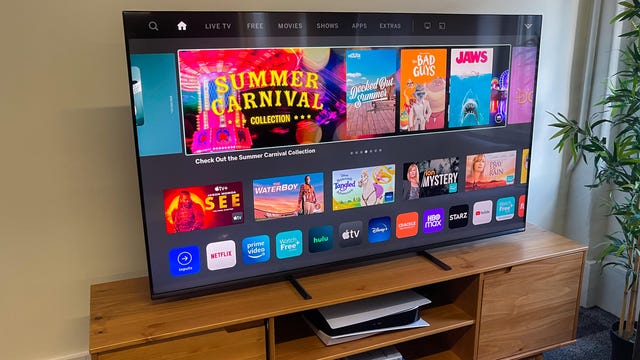
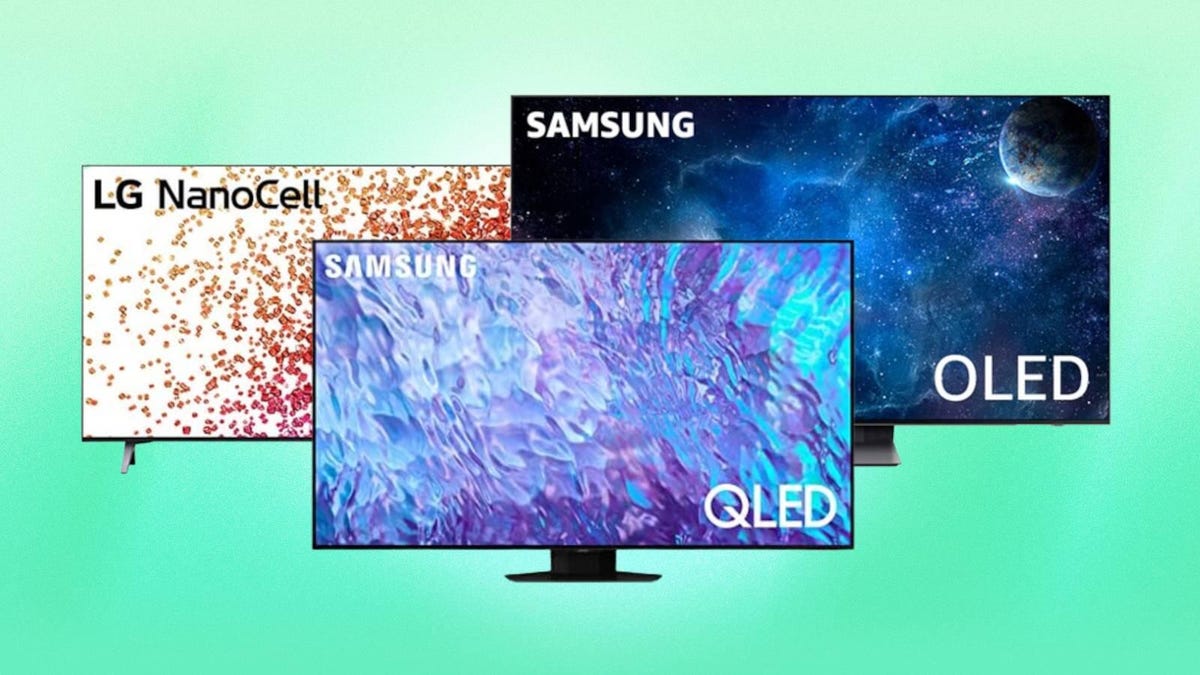
    If you want to take a break from the sun and cool off inside this summer, you may want to invest in a new big screen TV to keep everyone entertained. Right now Woot has discounted a ton of brand new Samsung and LG TVs by up to 50%, helping you elevate your entertainment space for hundreds less. The sale even includes new 2023 models and high-end OLED displays. These offers are available now through July 31, while supplies last. However, we expect some of these items to sell out before then, so we recommend making your purchase sooner rather than later.

    The 2022 model of the popular Frame TV by Samsung is available starting at $418, with the 55-inch model marked down to just $1,088. It has an anti-reflection matte QLED display that will display art on your screen when you’re not watching it, allowing it to blend into your space.

    If you are set on an OLED model, Woot has slashed the price on the 2022 65-inch S95B OLED TV by $1,408, meaning you’ll pay just $1,590 right now. Or you can get the new 2023 77-inch Samsung S95C OLED 4K TV at a $998 markdown, bringing the price to $3,500 for those wanting a huge OLED panel.

    Just looking for a big screen option and aren’t worried about getting an OLED model? Check out the 75-inch QN90B Neo QLED 4K TV by Samsung. At 47% off, you’ll pay just $1,700 to get one for your home — that’s a $1,498 discount. And it has features like Dolby Atmos, object tracking sound and an anti-glare screen to fully immerse you in your favorite movies and shows.

    And for the bottom-dollar price in this sale, you can grab the smaller 43-inch LG NanoCell 75 for just $350 (save $170). While we wouldn’t recommend a TV that small for your main entertainment hub, it’s a solid option for an office or bedroom — and it has support for HDR, HDR10 and HLG, along with a Game Optimizer setting with auto low-latency mode, which might make this a good option for gamers.

    There are plenty of other models worth checking out, so be sure to shop the entire sale selection at Woot. And for more options, be sure to take a look at our roundup of the best 4K TV deals happening now.

  • Save Over $200 When You Bundle the Latest OnePlus Phone and Tablet

    Save Over $200 When You Bundle the Latest OnePlus Phone and Tablet

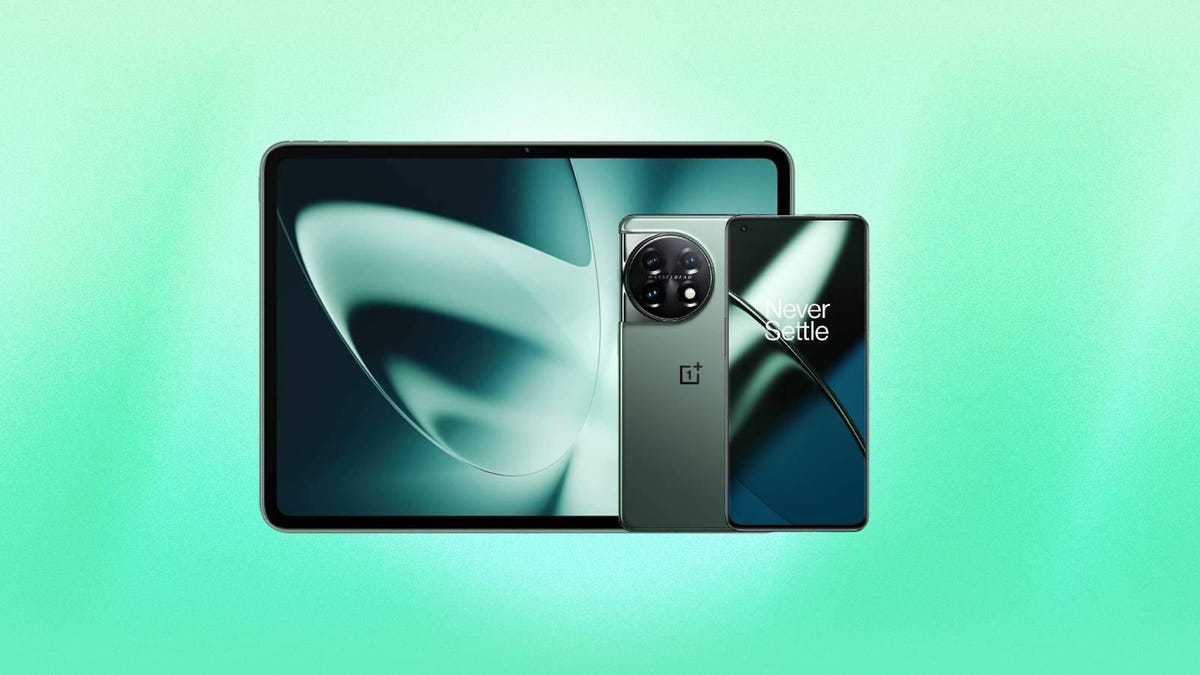
    Apple, Google and Samsung may reign supreme over the smartphone market, but they’re not the only brands with something to offer. OnePlus may be a smaller brand, but it has made a big name for itself and has even managed to earn a spot on our list of the best phones for 2023 with its new OnePlus 11 5G. And when you pick up its latest flagship phone, you’ll also have a chance to grab the new OnePlus Pad tablet for 50% off, saving you $240 when you add both to your cart. There’s no set expiration for this offer, so we’d recommend getting your order in soon if you don’t want to miss out on these savings.

    The OnePlus 11 5G earned a spot on our best phones list thanks to its powerful hardware and reasonable $700 starting price. It sports the Qualcomm Snapdragon 8 Gen 2 chip, 8GB of RAM and a 6.7-inch AMOLED display. It even supports Dolby Vision and HDR10 Plus, as well as Dolby Atmos, so it’s a great option for gaming or video streaming. And with 80-watt fast charging, you can fully charge your phone in under half an hour. While it doesn’t have the most powerful cameras, the quality should be good enough for day-to-day usage.

    And if you need a new tablet as well, you can bundle it with the new OnePlus Pad. CNET reviewer Scott Stein already called the OnePlus Pad one of the best Android tablets in its price range, so it’s practically unrivaled at just $240, which is half the usual price. It has an 11.6-inch LCD display as well as a powerful eight-core Dimensity 9000 CPU for smooth performance, and comes equipped with 8GB of RAM and 128GB of storage. It also measures just 6.5mm thick and weighs in at just 552 grams, which makes it perfect for taking care of business while you’re on the go.

    You can also save up to 20% on earbuds and 10% on select accessories when you bundle them with the phone purchase as well. And for even more bargains, you can check out our full roundups of all the best phone and tablet deals available now.

  • Today Only: Keep Your Battery Boosted With Up to $50 Off Anker Chargers

    Today Only: Keep Your Battery Boosted With Up to $50 Off Anker Chargers

    Running out of battery while you’re in the middle of something is a bummer — especially because we use our smartphones, laptops and other top tech for so many things in our everyday lives. But to keep your devices boosted all-day long, Anker has plenty of chargers that you can use at home, at the office or even on the go. And today only, Best Buy has marked down select Anker chargers by up to $50, making it a great time to snag one. These offers expire tonight, July 4, at 9:59 p.m. PT (12:59 a.m. ET, July 5).

    If you want a device with high-speed charging that can boost the battery on your phone, your tablet or laptop, consider snagging Anker’s 30W PowerPort Atom PD1 charger and 6-foot USB-C cord bundle today. Usually listing for $50, you can grab this charger for just $30 right now. And it’s more compact than competitors, making it easy to take with you on the go.

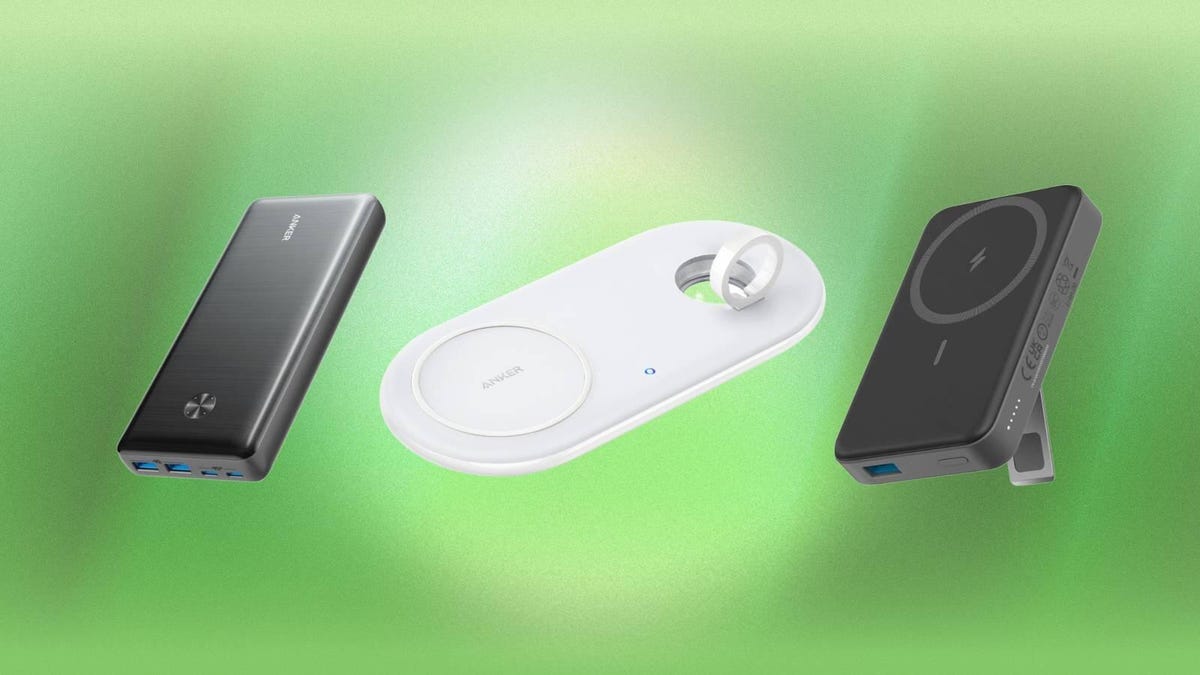
    And to charge multiple devices at once, Anker’s PowerCore III Elite charger is a great option. It sports two USB-A ports and two USB-C ports, and its massive 25,600mAh capacity should let you get plenty of boosts on your devices. It’s $50 off right now, bringing the price to $100.

    Looking for a portable magnetic battery charger? Anker’s 633 MagGo charger supports MagSafe compatible devices and even has a foldable stand so you can watch your device as it charges. Normally $80, it’s down to $60 right now.

    And iPhone owners can get a PowerPort PD Nano 20W charger along with a USB-C lightning cable for just $20 today (save $15).

    There are more discounted options available as well, so be sure to shop the entire sale selection at Best Buy. It’s also worth noting that some of these items may only be available for in-store pickup, so be sure to check your zip code on the product page before you purchase to determine if you can get it shipped or not in your area.

    Read more: Best Early Black Friday in July deals at Best Buy

  • Nothing Phone 2 Gets LED Evolution In Redesign Video

    Nothing Phone 2 Gets LED Evolution In Redesign Video

    We’re weeks away from the release of the Nothing Phone 2, and its design has finally been revealed — to show a very similar phone with some distinct changes.

    YouTuber Marques Brownlee exclusively unveiled the design in a video earlier today with a helpful side-by-side comparison to the original Nothing Phone 1 released in June 2022. The sneak peek didn’t reveal any changes in the software, and concerned the look of the upcoming phone — which inherited the flat-sided iPhone-esque look of the original Nothing Phone 1 — and an update on the light-up glyph design on the back.

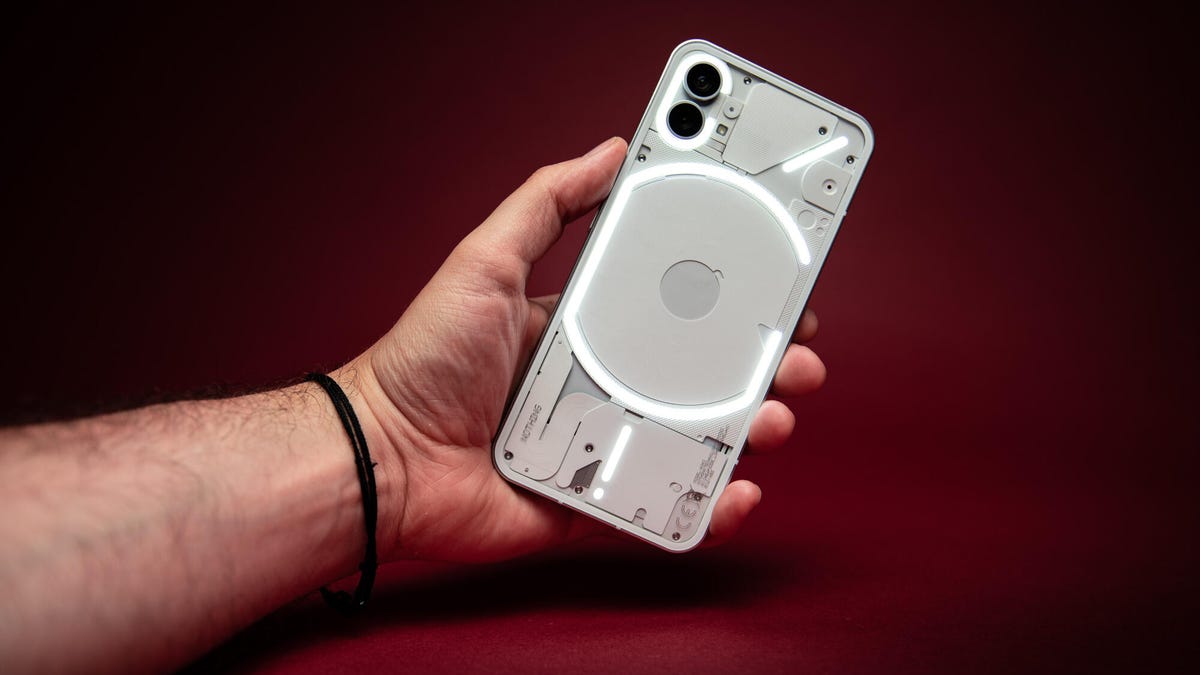
    Aside from swapping out the old phone’s black rear cover for a gray one, the biggest change to the Nothing Phone 2’s design is in the LEDs, which are still in the same general glyph shape as the original, but split apart into many smaller ones. To wit, the Nothing Phone 1 had 12 LEDS on the back, while the new one has 33, which can still be programmed using the phone’s software, Brownlee said.

    Nothing seems to have focused on these LEDs, as 16 of the 33 are located in one long arc near the top of the back cover, which can be programmed as a progress bar — for instance, if you turn the volume up and down using the buttons on the phone’s side, the bar fills and depletes, respectively. You can also set a timer and watch the arc darken bit by bit. Nothing plans to open this functionality up for notifications by third parties, Brownlee said, with signups from ride-sharing app Uber and India-based restaurant app Zomato so far.

    You can do more with other parts of the glyph, like keeping one strip lit until you address notifications or programming a sequential light-up pattern as your own custom ringtone.

    And that’s it for reveals about the Nothing Phone 2, but fans won’t have long to wait to discover the rest, as Nothing set a July 11 launch date for its next big smartphone — which has already been confirmed to be getting a US release.

    If you’re looking to buy a new phone, here’s CNET’s advice on the best phones this year and the best cellphone carrier plans (though you may want to consider waiting for Amazon Prime Day before getting that new phone).

  • Optoma UHD38x Projector: Budget(ish) 4K Brightness Hot Rod

    Optoma UHD38x Projector: Budget(ish) 4K Brightness Hot Rod

    There’s bright and then there’s bright. Most mid- and high-end projectors these days are “bright,” at least compared to those from just a few years ago. The smaller, more portable models certainly aren’t bright, giving us a fairly reasonable scale to judge. In the many years I’ve been reviewing projectors, only a handful have ever put out more than 200 nits on my 102-inch, 1.0-gain screen. For reference, an HDR-capable television is capable of 1,000 nits or more. The Optoma UHD38x is the third projector to exceed expectations for the category just this year.

    So it seems times, as they say, are a-changin’. Last year, no projectors I reviewed hit that 200 mark, and in 2021, only onw=e. Perhaps just as interesting, the Optoma is the first projector I’ve measured that was capable of this light output that wasn’t an Epson 3LCD. Which also means this is the first DLP projector I’ve tested that’s this bright.

    So maybe I need to “recalibrate” myself in what I call “bright.” Maybe someday all projectors will be this intense. Not today, however, so we’ll still give the UHD38x kudos. In addition to its impressive light output, it’s also 4K and because it’s DLP, lacks motion blur. Beyond that it has a few misses that you might be able to excuse because of its price. Here’s how it performs.

    Some impressive specs

    • Resolution: 3,840×2,160 pixels
    • HDR-compatible: Yes
    • 4K-compatible: Yes
    • 3D-compatible: Yes
    • Lumens spec: 4,000
    • Zoom: Manual, 1.1x
    • Lens shift: No
    • Lamp life: 4,000 (Bright mode), 15,000 (Dynamic mode)

    The 4K UHD39x is, as you’d hope from a modern 4K projector, HDR compatible. Like most projectors, though, it’s not truly able to do that much with HDR. It does OK, though there is some banding in bright highlights. There’s 3D compatibility too, for the few people still interested in 3D.

    Like most single-chip DLP projectors, there’s only a small amount of zoom and no lens shift. Projectors like the BenQ HT2080 are a rare exception, though even it only has a small amount. If you want more flexibility in placement, you’ll need to get the non-DLP Epson Home Cinema 2350.

    A closeup of the lens of the Optoma UHD38x.

    Rated at 4,000 lumens, the UHD38x was almost certainly going to be bright. Specs are just specs, though. The brightest projector we’ve reviewed so far, the Epson CO-FH02, is rated at “only” 3,000. I measured 1,913 lumens, which is still excellent. If you don’t mind a greenish, less accurate image, you can get an impressive 3,018 lumens in the Bright picture mode.

    Despite the impressive light output, Optoma says you get 4,000 hours before you’ll need to replace the lamp. That’s in the brightest mode. If you watch for 4 hours a day, that means a lamp replacement every three years or so. But if you switch to the Dynamic mode which changes the lamp level depending on what you’re watching (darker for darker scenes), you’ll get an impressive 15,000 hours. That’s more than 10 years, which personally I’d call the life of a projector like this.

    The ins and the outs

    The back panel of the Optoma UHD38x on a yellow background.
    • HDMI inputs: 2
    • USB port: 1 (1.5A)
    • Audio output: 3.5mm analog, optical
    • Internet: None
    • Control: RS-232, 12v
    • Remote: Backlit

    Both HDMI inputs are 4K 60 capable, which is more than enough since I would assume most people are just running one HDMI cable to a projector like this, and switching their sources with a receiver or soundbar.

    If you’ve got a more traditional home theater with a control system, there’s both RS-232 and a 12-volt output. The USB puts out 1.5 amps, which should be enough to power a streaming stick if you’re mad enough to connect one directly. If that’s the route you go, you can connect to a speaker or soundbar via optical or 3.5mm analog audio outputs. There’s also a small 10-watt speaker that, like all such speakers, is best used only as a backup option.

    The small remote is brightly backlit and has direct access to each input and several important picture quality settings.

    Picture quality comparisons

    The lens controls of the Optoma UHD38x projector.

    The JMGO N1 Ultra is a bit of an oddball, with its gimbal design. It’s powered by lasers, and boasts a similar lumen rating for more money. It’s here as an example of a “next-gen” design. The Epson and BenQ are roughly the same price as the Optoma, and are the traditional competition. The Epson is also 4K, while the BenQ isn’t. Both are excellent projectors. I compared the Optoma to the JMGO in the latter’s review. I connected the BenQ, Epson, and Optoma to a Monoprice 1×4 distribution amplifier and viewed them side by side on a 102-inch 1.0-gain screen.

    Despite the similar specs, the JMGO looks better than the Optoma, with better color and a better contrast ratio. It also handles HDR better, as the Optoma has some banding in high brightness areas. It’s not super noticeable, but the JMGO doesn’t have it. The JMGO however, is let down by a little speckle, due to the laser light source, but I don’t think most people would notice or care. It’s a lot more expensive, though, and its unique gimbal design seems unnecessary for most setups.

    The Epson, BenQ, and Optoma are all within a few hundred dollars of each other, but they look quite different. The BenQ looks the best of the three, from a videophile standpoint. Its colors are more accurate. Grass looks more natural, for instance. Even though it’s only 1080p, it still looks detailed enough that only on closeups of faces do you really notice the difference in resolution. The Optoma, being DLP and lacking motion blur, looks the most detailed in this bunch. It’s not a huge difference, though.

    The remote for the Optoma UHD38x.

    The BenQ’s contrast ratio is better, most noticeable with darker letterbox bars with 2.35:1 aspect ratio movies. However, the Optoma isn’t significantly behind. I measured an average contrast ratio of around 1380:1 with the BenQ, which is well above average, and around 770:1 with the Optoma which is about average for the projectors I’ve tested. The Epson lags way behind both the others. At 348:1 its image is far more washed out, with blacks far more gray.

    Where the competitive Epson excels is eye-bursting light output, and while its performance in this metric let it hold its own against the BenQ, here the Optoma is not far behind. The Epson’s 2075 lumens isn’t enough brighter than the Optoma’s 1913. Both can easily fill a 100-inch screen with a bright image, and could manage 150-inch screen and still be easy to watch.

    Which is to say, the BenQ is still the pick for purists. It’s about as textbook perfect as you’ll find in the sub-$1,000 range. The Optoma is close for color and contrast, and makes a compelling case for itself with higher resolution and some impressive brightness.

    Budget brightness

    A front view of the Optoma UHD38x projector.

    At the time of this writing, the UHD38x has been $1,100 for weeks, down from its original list of $1,400. That puts it basically head-to-head against the Epson HC2350 and BenQ HT2060, basically the two leaders in this price range. The Epson is a solid projector, but its strengths are nearly equaled, or bettered, by the Optoma. It’s also, as of this writing, more expensive. The BenQ remains my top pick, both for its excellent image quality and the fact that it’s the cheapest of the three. It’s also more flexible in terms of placement, with a better zoom and a small amount of lens shift.

    There’s something to be said about tons of light, though, and the OptomaUHD38x has it in spades. No projector can handle a lot of ambient light, but the Optoma would sure be easier to see with a few lights on than the BenQ. If you want or have a truly enormous screen (over 150 inches), or you prioritize brightness and resolution over all else, the UHD38x is a great deal.

  • Today Is Your Last Chance to Shop Best Buy’s Huge Fourth of July Sale

    Today Is Your Last Chance to Shop Best Buy’s Huge Fourth of July Sale

    Best Buy is running one of this year’s biggest Fourth of July sales, though you only have until the end of the day to make the most of its discounts. The sale includes hundreds of deals across an array tech and home products making now the perfect time to pull the trigger on anything you’ve been eyeing up.

    While the sale is certainly worth checking out in full, we’ve pulled together a few of our favorite offers below to help you make the most of the limited time you have to shop the savings. With deals on everything from laptops, headphones and TVs to smart home gear, outdoor furniture and even major appliances, you could save hundreds — but only for the next few days.

    Note that some deals or additional savings are exclusively available to My Best Buy Plus and My Best Buy Total members, the two new paid options within Best Buy’s recently revamped membership program.

    Other notable deals:

    Best Buy also has another important sale on the horizon: its Black Friday in July promotion. Set to take place on the exact same dates as Amazon Prime Day 2023, expect some of the best deals of the year and a second chance to pick up anything you miss out on during Fourth of July sales.

  • Best Sonos Deals: Save Up to $60 on Speaker Bundles

    Best Sonos Deals: Save Up to $60 on Speaker Bundles

    There’s a lot to love about Sonos speakers, including their premium design, seamless pairing and stunning audio quality. Which is why they’ve claimed spots on our lists of the best speakers, soundbars and Bluetooth speakers of 2023. But those high-end features don’t come cheap, and Sonos very rarely offers any direct discounts on its premium audio tech. Though there are a few deals on bundles that you can take advantage of right now. To help you score some top-notch speakers for less, below we’ve rounded up the best (and only) Sonos deals available at the moment.

    Sonos has long been known for its stellar sound quality, and its latest S2 operating system supports hi-res audio standards like Dolby Atmos. Wi-Fi playback is compatible with Apple AirPlay 2 and Spotify Connect, as well as Amazon Alexa and Google Assistant voice commands, so you can cast audio directly without needing to use the Sonos app. In addition, Sonos’ portable speakers add versatility with Bluetooth playback.

    Despite the variety of Sonos’ speakers, one thing remains constant: the dearth of deals. Its speakers are rarely discounted, and right now, just about the only way to score some savings is by purchasing two or more speakers at a time as part of a set. And if the Sonos speaker you are looking to buy isn’t on sale, be sure to check out the Sonos Certified Refurbished products page, where you might be able to pick one up for less than full price.

    We’ve assembled Sonos’ most popular products here, and we’ll update this story as more Sonos speakers go on sale.

  • OpenAI Sued by Authors Alleging ChatGPT Trained on Their Writing

    OpenAI Sued by Authors Alleging ChatGPT Trained on Their Writing

    Two authors have sued ChatGPT creator OpenAI for allegedly using their works of fiction to train the machine learning underpinning the chatbot’s artificial intelligence, as Reuters reported.

    The copyright lawsuit was filed on behalf of science fiction and horror author Paul Tremblay and novelist Mona Awad in San Francisco federal court on Wednesday. Since ChatGPT can give summaries of their works, it stands to reason that those works were fed into the machine learning models used by ChatGPT.

    The suit, which seeks class action status, accuses OpenAI of training ChatGPT on works “without consent, without credit and without compensation” to the authors, according to a copy of the filing uploaded by Reuters.

    The filing alleges that their works likely came from a pair of online book datasets referenced in OpenAI’s 2020 paper published to introduce GPT-3, the large language model that powers the ChatGPT chatbot. The authors of the lawsuit claim that these datasets likely source their material from “shadow library” websites like Library Genesis and Sci-Hub, which use torrent downloads to illegally publish copyrighted works, according to Bloomberg Law.

    “These flagrantly illegal shadow libraries have long been of interest to the AI-training community,” the filing alleges.

    OpenAI didn’t immediately respond to a request for comment.

    Other AI lawsuits and struggles

    Soon after AI tools emerged last year, lawsuits began challenging what the tools were trained on and how they could be used.

    Photo service Getty Images blocked AI-generated images back in September, and then in February, it sued AI art generator Stable Diffusion for allegedly copying over 12 million images from its database without permission or compensation.

    Separately, three artists sued Stable Diffusion, art generator Midjourney and art hosting site DeviantArt in January for allegedly using their work to train AI models without consent or compensation, claiming that “millions of artists” have been similarly victimized, according to The Verge.

    In response, software maker Adobe released Firefly in March, a generative AI toolset that uses the company’s own library of stock images to create images without fear of illegally scraping artists’ works. Adobe is gearing up to integrate Firefly into the other products in its software lineup, like Photoshop.

    Creators have hit other speed bumps while integrating AI into the modern publishing process. The US copyright office denied copyright protections to the AI-generated art in a graphic novel, though it did grant them for the human-created writing. And short story publications have been swamped with AI-generated submissions, to the point where the celebrated outlet Clarkesworld banned anything even partially created with AI.

  • WhatsApp Lets You Move Messages to Your New Phone: How to Do It

    WhatsApp Lets You Move Messages to Your New Phone: How to Do It

    If you’re buying a new phone, one of the biggest pain points can be ensuring all your data moves over from your old phone. To make this easier, WhatsApp is finally letting you transfer all your chat histories with accompanying media over to a new device without needing a third-party app, as long as your new phone is on the same operating system as the old.

    “If you want to move your WhatsApp chats to a new phone, you can now do it more privately without your chats ever leaving your devices,” Meta CEO Mark Zuckerberg said Friday on Facebook.

    How to move your WhatsApp chat history to a new phone

    Here’s how to do it.

    1. Make sure your new phone and your old phone are connected to Wi-Fi with location enabled.
    2. On your old phone, go to Settings, and then click Chats.
    3. Tap Chat transfer, and a QR code will show up.
    4. Scan the QR code on your old phone with your new phone.
    5. Keep both phones on that screen while the chats and media all transfer over.

    Your data will be fully encrypted while being transferred, Meta said. The company’s focus on WhatsApp security has seen it introduce a number of new features over the past few months, including automatically silencing unknown callers and locking away your more intimate chats for extra privacy.

    If you’re looking to buy a new phone, you may want to wait until Amazon Prime Day next week to see if they have any phone sales. You can also check out CNET’s guides for the best phones to buy in 2023, or the best iPhone to get right now.

  • Why Apple Is Moving Your Health Information to the iPad

    Why Apple Is Moving Your Health Information to the iPad

    It didn’t have the same pizazz as the VR headset, or as much interest as the anticipated iPhone updates, but there was another announcement at Apple’s WWDC event this year that demonstrated the company’s deepening reach into the wellness market: the Health app coming to the iPad this fall.

    Apple has been subtly building up a health-tracking empire for the Apple Watch and iPhone — most recently, it added features aimed at vision and mental health. But for Deidre Caldbeck, director of product marketing for Apple Watch and Health, the Health app’s arrival on a larger screen represents how health information is becoming more user-friendly, and what the company is reaching toward in terms of future health and fitness apps.

    “We think this is gonna give you new ways to see your health and fitness data,” Caldbeck told CNET. “And maybe more importantly, open up new opportunities for developers to create health and fitness experiences with iPad apps.”

    Since it came out in 2014, the Health app has been a treasure trove of information collected from the iPhone itself, as well as the Apple Watch and third-party apps that can sync to the iPhone app, thanks to HealthKit, Apple’s framework for developers. Metrics like how well you’re sleeping, how steady you walk, your heart rate and more are all available on the little heart icon on your phone.

    But you may be wondering what moving the same app to another, bigger device will do. In addition to opening the door further for app developers to create apps specific to the iPad and a larger screen, the iPad Health app reflects a growing interest in wellness, how much space it takes up in our lives and on our screens, and how increasingly eager we are to share our health bulletins with other people.

    Here’s what your health information may look like on the iPad, and what a larger screen could mean for app developers.

    health app on apple ipad

    Bigger display and new app opportunities

    The Health app on iPad will have a split-screen view, which means you’ll be able to toggle between your health information and another app or page — something that Caldbeck says may be particularly helpful to people who use the sharing features in the Health app, like caregivers of other adults or patients at doctor’s appointments.

    Apple is also hoping that the iPad-only accessories, like the Keyboard and Pencil, will stir some creative ideas in developers on how to create new health and fitness apps through HealthKit. Already, there are “tens of thousands” of apps on the app store that use the HealthKit API, Caldbeck said. But this new format for health information may bring more developers and apps on board, in addition to apps that will be carried over to the iPad.

    Read more: Apple Unveils iPadOS 17 at WWDC 2023

    Rise, a sleep-tracking app, is one app moving to the iPad — it was given a special callout during WWDC this year. According to Jeff Kahn, Rise’s co-founder and CEO, the beauty of HealthKit in general is that it makes the world of health tracking a little more seamless for consumers who don’t necessarily want to wear a watch or buy an extra device: they just want the health information from their chosen apps.

    “They don’t want hardware, so the fact that HealthKit exists allows us to pull in all the data on the background,” Kahn explained. He added that having a more centralized framework benefits developers, and it’s an advantage Apple initially had over the different Android integrations, though it’s “getting better.”

    Using the iPad for sleep and mental health

    Kahn said that it “makes sense” Apple is moving to the iPad as the next step in its health feature expansion, given the health-tracking mission Apple has been on. But it also blends two growing truths in Kahn’s eyes: People are trying to cut down on phone time before bed to improve their sleep and health, and many people may be using their iPad to watch Netflix or wind down before bed instead of their phone.

    “There’s a lot of people that either a) don’t bring their phones in their room or b) maybe they do, but that iPad is that bedside entertainment device,” Kahn said.

    Read more: Apple Research App: How to Join an Apple Health Study

    The iPad may also be in a better position to deliver other wellness features Apple has announced for iOS 17 and iPadOS 17, this year’s iPhone software update and its iPad counterpart, including mood and mental health logging and screen distance, which uses the TrueDepth FaceTime camera to encourage people to move their faces back from the screen.

    It’s also possible that a shift toward the iPad-as-approachable-wellness-device may be one way Apple could close the gap it has with other companies that give sleep insight, like Oura, which offers more detailed sleep metrics than the Apple Watch. Apple could maintain its simplified approach to health information while pulling in more detailed tracking features (for people that want them) through its third-party partnerships.

    The Rise app on iPad

    The future of the Health app

    In terms of data-sharing notifications, the experience should be similar on iPad as it is on your iPhone, according to Caldbeck.

    “After you unlock your iPad and open the Health app for the first time, you will actually be prompted to choose if you want to sync your health data to that device,” she said, adding that everything is still encrypted except medical identification information, and that you’ll receive an alert on your iPhone the first time the Health app syncs.

    As Apple continues to ride the wellness wave with new features for Apple Watch and narrow in on specific points within the extremely broad topic that is “health,” we can expect the Health app to keep expanding as well — whether this means a new fitness app for the iPad, an improved way to measure sleep through more app integrations or a completely new metric in Health becoming available, in general.

    “The goal has really not changed since 2014,” Caldbeck said. “It’s really to provide you with insights that can hopefully break down barriers between you and your health information.”

    Read more: Fitness Trackers Are Getting More Personal, Powerful