Spotify is reportedly planning a new premium tier that would include high-fidelity audio at a higher subscription price, Bloomberg reported Tuesday. The new plan would offer subscribers CD-quality sound through lossless compression.
The new “Supremium” subscription tier will likely cost more than Spotify’s Premium plan that includes ad-free listening and goes for $10 a month, the report says. Spotify did not immediately respond to a request for comment.
On top of hi-fi audio, the Supremium tier would also include expanded audiobook access that will offer listeners either a number of free hours per month or a number of titles.
Expect to see the new plan to be available in the US in October, after Spotify first launches it in markets abroad.
Spotify revealed that it was working on a HiFi tier in 2021, but halted its rollout after Apple Music and Amazon Music began to offer their own high-fidelity features for free in their own subscription plans.
Uncompressed audio offers some advantages over compressed audio. But hi-fi audio doesn’t always outperform CD audio quality for playback. Bluetooth headphones and earbuds add their own compression to audio, so lossless playback may not make it all the way to your ears even if you’re paying for it, my colleague Stephen Shankland pointed out.
This advertising widget is powered by Navi and contains advertisements that Navi may be paid for in different ways. You will not be charged for engaging with this advertisement. While we strive to provide a wide range of offers, this advertising widget does not include information about every product or service that may be available to you. We make reasonable efforts to ensure that information in the featured advertisements is up to date, each advertiser featured in this widget is responsible for the accuracy and availability of its offer details. It is possible that your actual offer terms from an advertiser may be different than the offer terms in this advertising widget and the advertised offers may be subject to additional terms and conditions of the advertiser which will be presented to you prior to making a purchase. All information is presented without any warranty or guarantee to you.
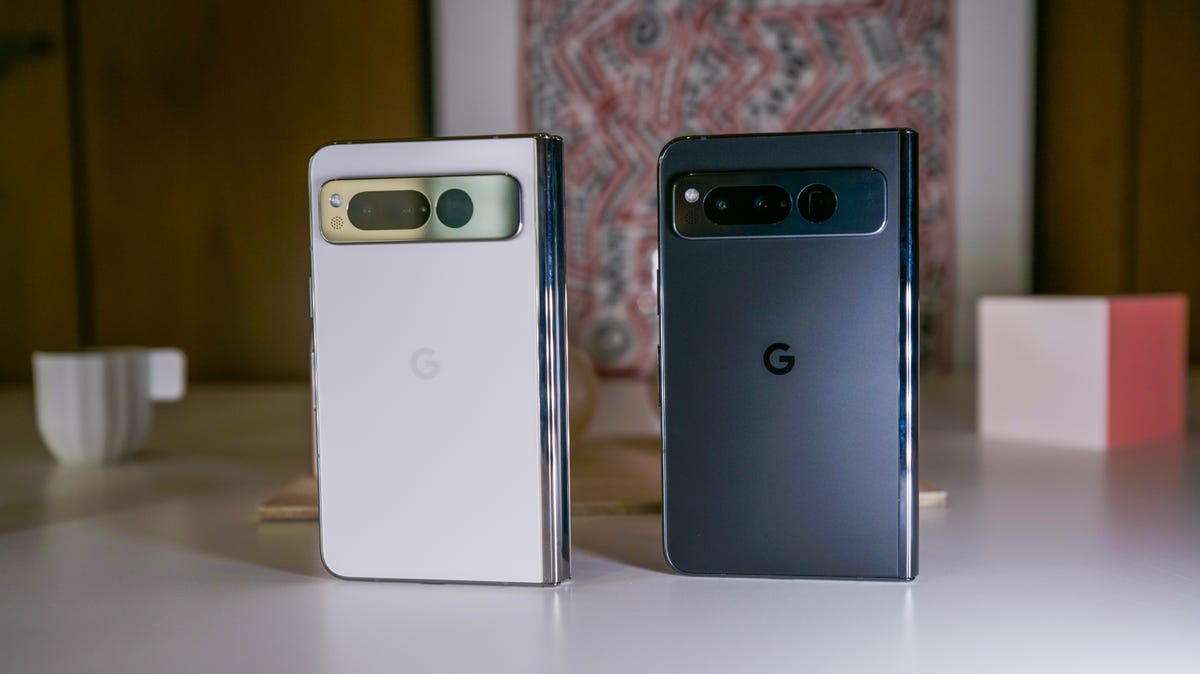
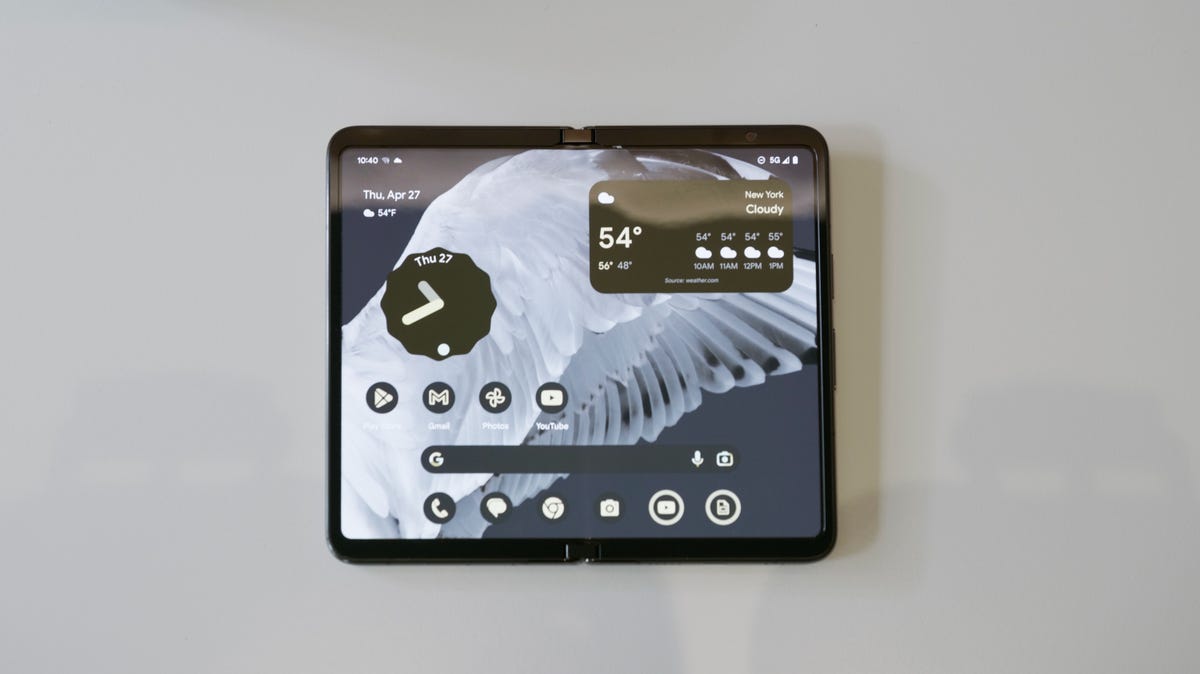
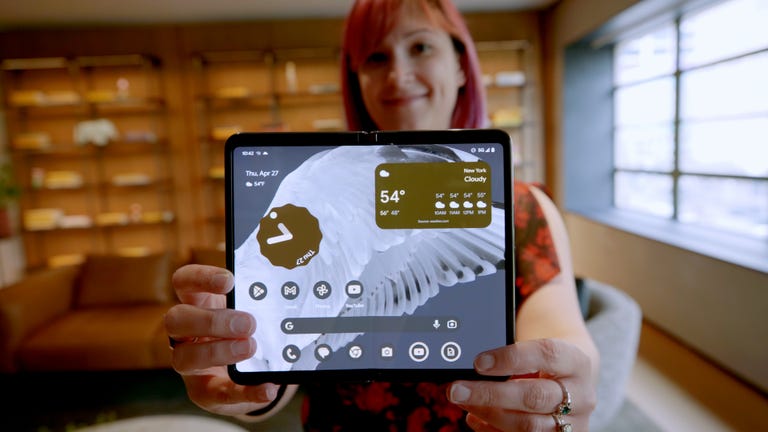
Pixel Fold preorders are now open following the device’s official unveiling at during Google I/O back in May. Google’s first foldable is designed to compete with the likes of the Samsung Galaxy Z Fold 4 as a hybrid phone and tablet device that can slip into your pocket.
It features a book-style folding design with a 5.8-inch external display and a 7.6-inch internal panel. That outside screen is a tad bigger than Samsung’s flagship device, which Google hopes will make it feel more natural to use, like a normal phone. It’s also thinner when unfolded than the Z Fold 4 and it closes completely when folded, with no gap near the hinge.
Like the rest of Google’s flagship lineup, the device is powered by the in-house Tensor G2 chip. It’s also packing the sorts of features you’d expect from a high-end device, like 256GB of storage, 12GB of RAM and a triple-lens camera system with a 48-megapixel main camera, along with a 10.8-megapixel telephoto lens and a 10.8-megapixel ultrawide camera.
Whether you’re the ultimate Google fan or just want to be on the cutting edge of technology, we’re rounding up the best Pixel Fold preorder deals below so you can get your hands on one.
Watch this: Pixel Fold Hands-On: A First Look at Google’s First Foldable
05:10
How much does the Pixel Fold cost?
The Google Pixel Fold will launch at $1,799, putting it right on par with starting price of Samsung’s Galaxy Z Fold 4. While some rumors suggested Google might undercut that price, as it’s wont to do with its Pixel lineup, you’ll still be paying the foldable premium if you want to be among the first to get your hands on the new hybrid device.
What colors does the Pixel Fold come in?
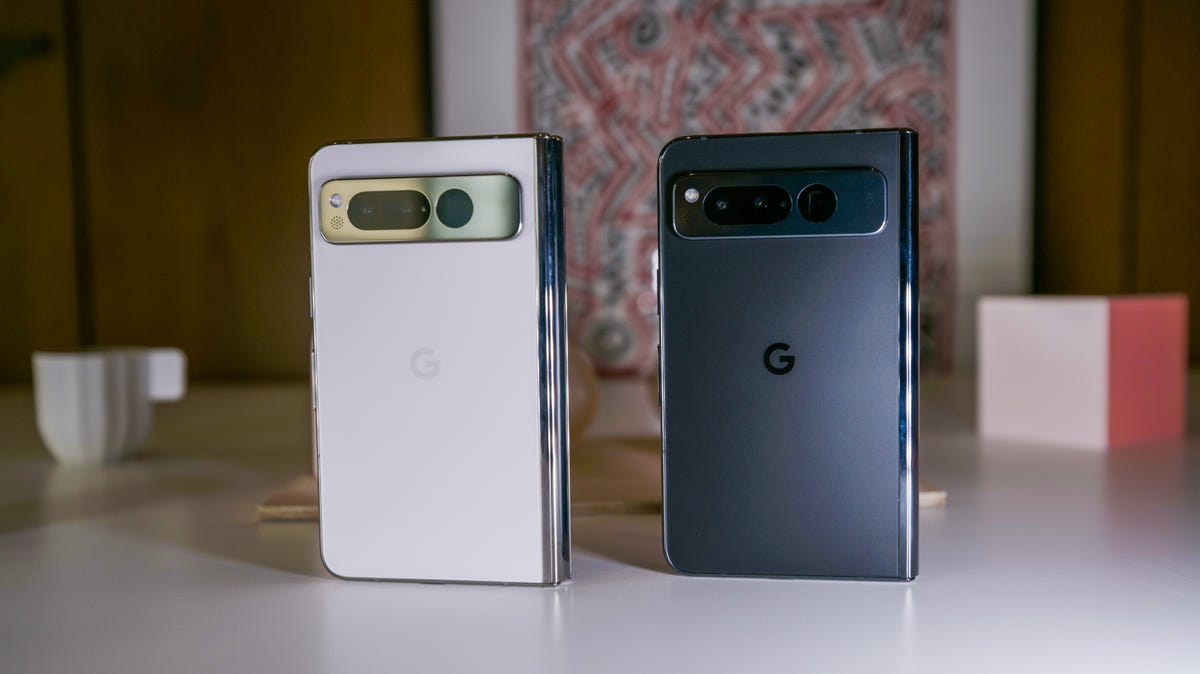
The Pixel Fold will come in two colors: white and black. That’s a slimmed-down palette compared with previous Pixel-branded phones.
For a limited time, you can nab a free Pixel Watch when you preorder the Pixel Fold directly at Google. That’s a $350 freebie and the ideal companion device for Android fans. Pixel Fold orders will begin shipping in late June.
AT&T has perhaps the most attractive carrier offer on the Pixel Fold at launch with $900 off the device’s retail price when you preorder one on an eligible unlimited plan. That drops the monthly cost of the hardware down to just $25 with the discount being applied over 36 monthly bill credits. Unlike a lot of carrier promos, there’s no need to trade in an old phone to get in on this deal.
It’s worth noting that AT&T is listing the Fold’s price at $1,880, an $80 markup on the retail price direct at Google, and advertizing the discount as $980. In reality, you’re saving $900 when you factor that markup in, but the lack of a trade-in requirement remains appealing.
Like Google, Verizon is offering a free Pixel Watch with preorders of the Pixel Fold, though the cellular-enabled smartwatch will need a new line of service if you go the Verizon route. New or existing Verizon customers can also get $900 off the Pixel Fold when trading in their old phone.
Amazon is now listing the Pixel Fold, though you can’t actually place a preorder for the foldable device there yet. We’ll keep our eyes peeled for Amazon’s introductory offer and update this article when we see it.
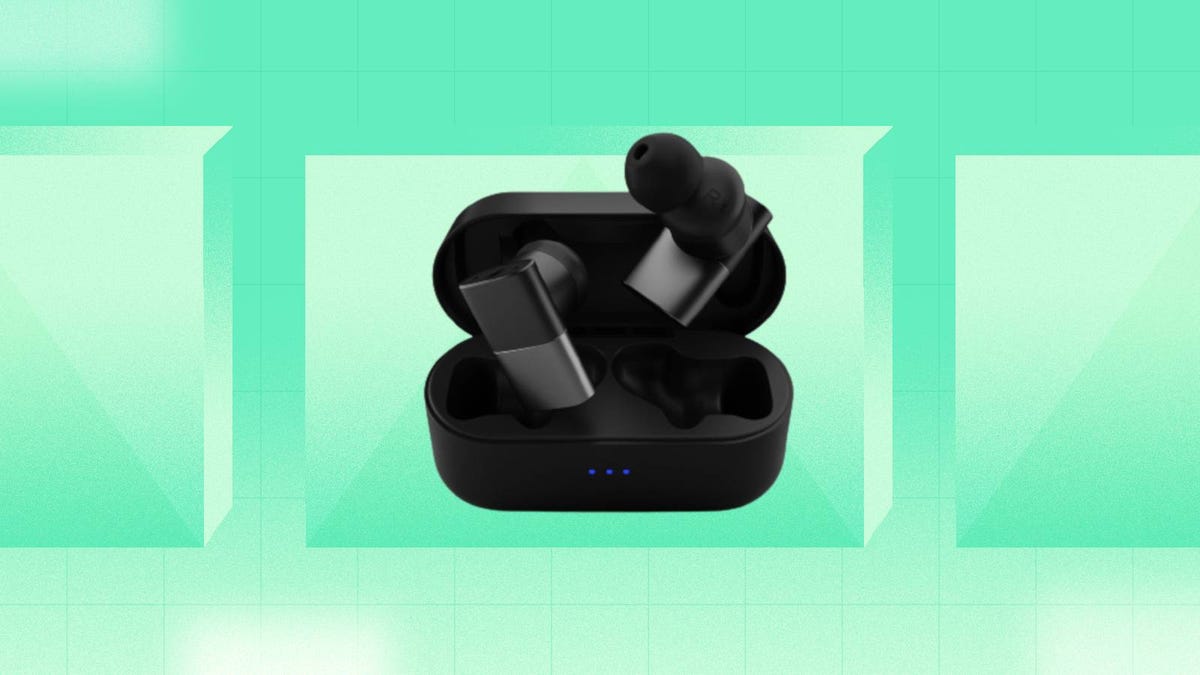
If you’re looking for a pair of everyday earbuds with ace sound quality at a great price, check out options from Status. CNET readers can save $50 on select Status earbuds right now when you use promo code BETWEENCNET50 at checkout. This exclusive discount applies to either the Between 3ANC or Between Pro models and will drop the price of each to $199 and $99, respectively. This offer is available now through June 27.
The Between 3ANC earbuds scored a spot on our roundup of the best-sounding wireless earbuds of the year, so if you’re looking for top sound quality from true-wireless earbuds, this model is a great option. With active noise canceling, triple drivers, multipoint Bluetooth pairing, an IPX5 water-resistance rating and a strong battery life of up to eight-and-a-half hours with ANC on, these earbuds offer a lot. CNET’s David Carnoy attests that despite only supporting the AAC audio codec, these earbuds offer “clean sound with punchy bass and good clarity.” With the current markdown, they’re an even better value at just $199.
And if you’re looking for a pair that costs even less, the Between Pro earbuds are also a decent option. Like the earbuds mentioned above, these offer three speaker drivers per earbud and are water-resistant. While they lack ANC, they do offer up to 12 hours of playback per charge and an additional 36 hours with the charging case. And they’re a solid deal at $99.
Want to check out other models? You can find a variety of options in our roundup of the best headphone and earbuds deals currently available.
This morning, B&H Photo kicked off a massive three-day Mega Deal Zone sale where you can score big savings on over 1,400 items across the site. And despite the retailer’s name, there’s more than just photography equipment available. You can also save hundreds on laptops, headphones, storage drives, monitors and tons of other helpful tech and accessories. This sale is set to expire at 8:59 p.m. PT (11:59 p.m. ET) on Thursday, June 22, so be sure to get your order in before then.
There are too many great deals to cover the entire sale here. But to help you make the most of these limited-time offers, we’ve rounded up some of the very best bargains available. If you’re in the market for a new laptop, the MacBook Pro is a great option that has more than enough power for most people. This 2021 14-inch model may be a generation old, but still boasts some seriously impressive specs, including an M1 Max processor, 64GB of RAM and 2TB of built-in storage, and you can snag it on sale for $2,499 right now, $1,600 off the usual price.
Or, if you need a new monitor for your home office, you can save $170 on this stunning 27-inch 4K LG model, which drops the price down to $329. If you need some extra storage for your phone, tablet, camera or Nintendo Switch, this is a great chance to snag some spare microSD cards, like this 512GB SanDisk Extreme, which you can pick up for just $48, which is $82 off the usual price.
There’s tons of photography gear that you can pick up on sale as well, including cameras, lenses, lighting, tripods, bags and much, much more. Be sure to shop the entire sale selection to see if there’s any discounted items that would make a great addition to your kit.
Summer is here, and anime series like Demon Slayer and Vinland Saga are airing their finales. Though you can read manga on an app, you won’t want to miss out on streaming services that offer access to all the hottest anime of the season. More Attack on Titan, Spy x Family and Jujutsu Kaisen await fans this year. We’ve assembled a list of the best anime streaming services so you can see it all.
Subscribe and get your fill, whether you’re a die-hard anime fan with niche tastes, an occasional viewer or a newbie.
Because of its robust stable of content, Crunchyroll has become the global destination for anime streaming. The brand boasts over 100 million registered users and more than 5 million subscribers. Crunchyroll merged its vast lineup with fellow genre titan Funimation to deliver thousands of titles 24/7. All that anime is under one umbrella, which includes Attack on Titan, Demon Slayer, Jujutsu Kaisen and To Your Eternity.According to Crunchyroll, it’s now “the world’s largest anime library of more than 40,000 episodes and over 16,000 hours of content.”
The biggest selling points? New episodes land on the streamer one hour after they premiere in Japan. Viewers can also count on surprise releases like special OAD episodes when shows are on break.
Anime fans love the variety and appreciate that for some content, they can watch the uncut Japanese versions of their favorite series on this service. Additionally, there’s a carousel of original, in-house creations that spin alongside the freshest releases out of Japan.
You can sign up for a free account to stream ad-supported content on the service. Just note that not all titles are available with this version, and there is a wait for new releases. However, anime watchers who want immediate access to new episodes should opt for Crunchyroll’s basic $8 ad-free subscription. There’s a free 14-day trial for new subscribers.
If you’re on the fence about a Crunchyroll subscription, Hulu boasts more than 300 anime titles and is a prime stop to watch hits My Hero Academia, Boruto: Naruto Next Generations, Attack on Titan, Soul Eater and more. Hulu is the exclusive streamer for Bleach: Thousand-Year Blood War and Tokyo Revengers season 2 in the US. There are also simulcasts that stream each season, treating viewers to the newest releases from Japan. This is an area where Hulu one-ups Netflix. Fans will find Pokemon films and oldies but goodies like Sailor Moon and Akira, too.
Hulu also has partnerships with Crunchyroll and Funimation to carry some titles, but not their entire catalog. However, new subtitled episodes may arrive immediately on the streamer while dubbed versions take longer. Debut times vary depending on the series.
An added benefit is the dedicated Anime Hub, where you’ll find content organized into categories such as classic, A-Z or simulcasts. Hulu starts at $8 a month.
Netflix has increased its anime offerings, though it lacks the fresh installments and simulcasts of Hulu. There are currently dozens of Japanese imports on the platform as well as Netflix originals Cyberpunk: Edgerunners, Castlevania, Yasuke and Devilman Crybaby.
Though it’s not the go-to for more obscure titles, Netflix has a reliable selection of popular anime that includes Vinland Saga, Demon Slayer, JoJo’s Bizarre Adventure and nine glorious seasons of Naruto. Its 2023 releases include Junji Ito Maniac: Japanese Tales of the Macabre, Aggretsuko, Ultraman and The Way of the Househusband.
Another major plus for the streamer is the option to watch without ads if you pay for a plan that’s $10 or more. But subscribers should be aware they’ll need to take the extra step of nixing the skip function when episodes end to see if there are post-credits scenes in their favorite show. Netflix starts at $7 a month.
A cheap option for viewers, Hidive streams content to fans around the globe, including simulcasts. Not only will you find curated anime from all subgenres, but there’s an assortment of live-action adaptations too. And though the service has family-friendly titles, it caters to the 18-and-older crowd. Because of a new deal between its parent company AMC Networks and MBS, Hidive will be the exclusive streaming platform for titles such as The Most Heretical Last Boss Queen: From Villainess to Savior. You’ll also find the popular Oshi no Ko and The Eminence in Shadow here.
Hidive prides itself on its customizable subtitle options, in-episode live chats and exclusive catalog. You can even choose between censored and uncensored anime. An independent service, the company encourages fans to request their favorite titles if they can’t find them on the platform.
Hidive is supported on iOS, Android and smart TVs, and it runs content directly through its site. There’s no free subscription option, and the monthly rate is $5 after the 14-day free trial.
In the anime community, the terms dubbed and subbed are used to describe the difference between a piece of content that streams in Japanese with subtitles or an English-dubbed (or other language) version. It’s a matter of personal preference, but some fans like one type over the other. Funimation (before its merger with Crunchyroll) was once known for its extensive dubbed collection.
Why can’t I find certain anime content on some streaming services?
Due to licensing agreements, some streaming providers’ anime lineups will change. This also depends on which country you live in, as various content may only be available in Japan, the US, or other regions.
Timing plays a role and can determine whether a series’ new season or movie hits a platform the same day, month or year of its original release. However, viewers will notice that some shows are streaming on multiple platforms at the same time.
What is the meaning of OAD and OVA in anime and does it matter?
From time to time, you may see streaming services refer to OAD or OVA as special promotions. Generally, OAD and OVA are extra episodes that did not air on television, but are part of the story and may or may not be canon. They can be prequel episodes or storylines that happen during or after what’s seen in a series and act as cool additions for anime lovers.
Which devices support these apps?
Each of these anime streaming providers are accessible via their standalone websites, smart TVs, Roku, iOS, Android, Chromecast, Amazon FireTV, Apple TV and Xbox One devices. You can watch it on your phone, tablet, PC or TV.
Running out of battery can be super inconvenient, which is exactly why you ought to ensure you have the right charger with you at all times. Fortunately, it doesn’t have to cost a fortune to stock up on cables, wall plugs and charging hubs with a huge Anker sale currently running at Amazon offering as much as 44% off regular prices.
The sale features a broad array of charging accessories to suit a variety of devices. If you’ve got a recent iPhone, the MagSafe-compatible 622 Magnetic Battery is worth picking up at $40 for on-the-go charging needs. As well as working as a 5,000-mAh portable battery, it also does double duty as a convenient phone stand. For charging at home or at the office, the Anker 623 Power Strip can power up to six devices at once with its three AC outlets, two USB-A ports and singular USB-C port. It’s down to a new all-time low of $42. And if you just need a few spare USB-C cables, you can pick up a two-pack of braided cables for just $9.
Advertiser Disclosure
This advertising widget is powered by Navi and contains advertisements that Navi may be paid for in different ways. You will not be charged for engaging with this advertisement. While we strive to provide a wide range of offers, this advertising widget does not include information about every product or service that may be available to you. We make reasonable efforts to ensure that information in the featured advertisements is up to date, each advertiser featured in this widget is responsible for the accuracy and availability of its offer details. It is possible that your actual offer terms from an advertiser may be different than the offer terms in this advertising widget and the advertised offers may be subject to additional terms and conditions of the advertiser which will be presented to you prior to making a purchase. All information is presented without any warranty or guarantee to you.
The world of Android tablets has been a weirdly up-and-down ride for the last decade or so. I remember Google’s fantastic little 7-inch Nexus tablet back in 2012. And Google’s considerably less successful Chromebook-meets-Android Pixel Slate, a sort of touchscreen laptop/tablet hybrid. That was Google’s previous tablet hardware entry.
Watch this: Google Pixel Tablet: Google Made a Good Home Android Tablet!
06:35
The Pixel Tablet is a return to Android tablets for Google. But its competition never strayed. Samsung’s ongoing tablet series, for instance, and Amazon’s Fire tablets (which can sideload the Google Play store and are very affordable). Google’s new Pixel Tablet is hopefully a return to excellent Android tablet software and features, too: The $500 Pixel Tablet feels like a really good iPad alternative for Google ecosystem people. Google also took a unique approach by making it a dockable home hub, something Apple should steal someday for its iPad lineup.
Google Pixel Tablet
Like
Fast processor
Included speaker dock sounds great
Good front video camera
Don’t like
Price ramps up for cases and more storage
No keyboard or stylus case options
There are only two gripes I have: this Pixel Tablet, while fast-performing and really nicely built, doesn’t have a Google keyboard case at launch, nor any stylus option. This is more of a sharable tablet for the home and family than a get-work-done tablet, although you could absolutely bring your own accessories and make it what you want.
At $500, this Pixel isn’t a budget tablet and if you want to add more storage beyond the base model’s 128GB, the 256GB version is $100 more. Add another $80 for Google’s Pixel Tablet protective case. It’s a more expensive package than Apple’s entry-level iPad. But, if you’re looking for a more premium Android tablet for families than Amazon’s Fire options or Samsung’s Tab A-series, this looks like the best bet.
The tablet snaps into its charge dock, which doubles as a speaker.
Scott Stein/CNET
Design: Clean and comfy
Google’s Pixel Tablet has an iPad-like feel, with a nearly 11-inch display and a smooth aluminum case. At a bit over a pound, it’s comfortable enough to hold but leans toward the heavier side with its case on.
The screen resolution — 2,560×1,600 pixels — gives you a crisp picture, and bright, too. The side speakers are good enough on their own but not as great as what the speaker dock provides (as you might expect).
There’s no headphone jack, so you’ll need USB-C headphones or an adapter, or go Bluetooth. There is a fast-acting fingerprint sensor in the power button that unlocks the Pixel Tablet as fast as a Pixel phone. Overall, it’s what I’d want from a tablet, and it looks really good when docked. The whole design ends up feeling like a larger Google Nest Hub, or a smart picture frame.
Google’s expensive case (there are also less-expensive third-party options) is pretty great, too, with a soft finish and protective edges, and a metal, ringlike kickstand that adjusts to any angle and still docks in the speaker hub. It’s not a keyboard case, but you could add your own Bluetooth keyboard for desk typing.
The dock is great
Google includes a dock the Pixel Tablet magnetically attaches to that charges and acts as a stand so that the tablet can be a home picture frame, or smart home interface, or a connected speaker/display with YouTube benefits or whatever else you might need. The speaker-equipped dock has a fabric covering much like Google’s other home products and is small enough to pack easily for travel. Its speakers sound boomy for playing music indoors, too.
Snapping the tablet on and off the dock is relatively easy, although sometimes it’s a little hard to locate the magnetic pins, and pulling the tablet off the dock can sometimes result in pulling the lightweight dock with it. The dock charge plug and cable are also proprietary, not USB-C. The Pixel Tablet does have a USB-C port for charging, but you’ll need that specific dock cable to plug it into your home, and the cable length isn’t exactly long.
The Pixel Tablet supports casting audio from another device to the tablet when it’s connected, but the speaker dock won’t work when the Tablet isn’t mounted on it and has no Bluetooth. That’s a bit of a bummer if someone wants to use the speaker while someone else uses the tablet.
Split-screen multitasking is just fine on this tablet, and a bunch of apps already support it.
Scott Stein/CNET
Performance and software: Speedy and improved, mostly
The Google Tensor G2 chip, similar to what’s on the most recent Pixel phones, is zippy in the tablet and generally runs well. There were a few moments where apps seemed to glitch a bit in split-screen multitasking, but that could also be due to this being a prerelease device running early software.
Google’s renewed attention to tablet software shows, with multitasking that feels like Apple’s iPadOS; apps can be easily dragged up from an app taskbar into another window, and two apps at once can be adjusted to fit on a few preset-size settings. Google’s also added a series of widgets that help customize information, which I sometimes found useful and at other times thought weren’t flexible enough.
Videos from another app, like YouTube, can pop up and hover in a small window over these split windows, too. It feels great to work in these modes, although not all apps work for the Pixel Tablet yet. Google focused on optimizing a bunch of popular apps and also its own core apps first, but hopefully more will come. There are also some Google Play apps that don’t run at all yet on Pixel Tablet, including Geekbench, which we use for testing tablets for performance comparisons.
The Tensor G2 pulls off some tricks Google has on its Pixel phones, too, notably Magic Eraser in the Photos app, which removes people or objects from shots. Dictation also works really well: I could see myself voice-typing a lot with the Pixel Tablet, even if I still miss a dedicated keyboard case (hint, hint). Google’s on-screen keyboard is fine, but I didn’t fall in love with it. I also found that a few multifinger swipe gestures got a little weird at times in apps like Google Earth. Some two-finger swipes and pinches, for instance, were not always recognized, but maybe a future software update can address that.
Nice camera
The front-facing 8-megapixel camera looked good for selfies and video chat, and looked sharper than my normal laptop-video-chat expectations. Google placed its camera on the long edge where it should be, much like Apple’s most recent 10th-gen iPad. It means this tablet can be used easily for video chat when docked. But, a subject-tracking, autoframing feature didn’t seem to work on my review unit, and video quality looked better for the moment with Google Meet than in Zoom.
James Martin/CNET
Google makes extra accounts pretty easy
One other advantage of Google tablets over iPads is account-swapping. Much like a Chromebook, you can add extra accounts and switch over to others easily enough here, even entering a guest mode or a kid mode. This underlines the family-sharing concept that’s at this tablet’s core, and I like it. I could easily see the Pixel Tablet being a casual grab-a-tablet option in a living room where someone could just pick it up as needed and check a few things, watch a video or play a game.
I miss Google’s work focus on the Slate, though
I miss some of the ideas Google was going for on its previous Slate tablet, which was more of a Chromebook with Android benefits. The Pixel Slate made a keyboard and trackpad one of its big included features. This time, the Android-focused Pixel Tablet has gone the other way, toward a sharable, video-and-game-playing, app-browsing tablet, but without any great ideas for how to add a keyboard or access to ChromeOS-type features in a new, helpful way. Anyone who wants a Chromebook will still want to get a Chromebook — or a laptop. You could add a keyboard here, or a stylus, but your mileage won’t be any different than on another Android tablet. Plus, with other options from Samsung, OnePlus and Amazon, keyboard accessories are already there — or even included.
There’s a USB-C port on the Pixel Tablet, even though the dock charges with its own proprietary plug and pin connector.
James Martin/CNET
Yes, it could be a home hub, too
I didn’t test the smart home features of this tablet, but you can connect Google Home devices and services just like you’d do on a Nest Hub. That’s the Pixel Tablet’s greatest success as a device, and where Google pivoted this time with its design. Voice response via its microphones was fast, and I was able to play music, ask questions, play audiobooks and launch YouTube videos quickly with voice commands. Once my kids realized this thing could play videos, they gathered around it like a small TV. It could be a great kitchen option, especially since the tablet hovers when in the dock (avoiding contact with counter surfaces). The dock angle won’t adjust beyond its slightly elevated angle, but I found it easy enough to glance at when on a table or counter.
A great start for Google’s return to tablets
Don’t stop, Google: Keep building off the Pixel Tablet, add a keyboard case, and maybe lower the price a bit (with a case and the 256GB storage option, which costs an extra $100, you’re suddenly pushing towards $700). But this is the Google tablet you’re probably looking for, despite the price. The only question is whether Google commits to its software and performance over time. Google tends to suddenly change focus on product lines, especially its tablets. But the Pixel Tablet is a great addition to its device lineup and a perfect nonphone option. Keep it around, please.
Google’s Pixel Fold is nearing its release, but there may be a bit of a delay. After being announced at Google I/O in May, Google’s first foldable is just now getting some release updates, this time from AT&T and Verizon.
On Tuesday, AT&T announced that it will begin its own preorders for the Pixel Fold and introduced a deal that offered new and existing AT&T users the Pixel Fold for $25 per month without needing to trade in a device. To get that discount you will need to be on an unlimited plan and commit to a 36-month installment plan.
All told, the carrier is willing to cover $900, or half of the Pixel Fold’s regular $1,799 starting price for the 256GB model (not including taxes). Oddly, purchasing the 256GB model outright from the carrier is $1,880, or $81more than the unlocked version you could buy directly from Google.
Advertiser Disclosure
This advertising widget is powered by Navi and contains advertisements that Navi may be paid for in different ways. You will not be charged for engaging with this advertisement. While we strive to provide a wide range of offers, this advertising widget does not include information about every product or service that may be available to you. We make reasonable efforts to ensure that information in the featured advertisements is up to date, each advertiser featured in this widget is responsible for the accuracy and availability of its offer details. It is possible that your actual offer terms from an advertiser may be different than the offer terms in this advertising widget and the advertised offers may be subject to additional terms and conditions of the advertiser which will be presented to you prior to making a purchase. All information is presented without any warranty or guarantee to you.
Watch this: Pixel Fold Hands-On: A First Look at Google’s First Foldable
05:10
Verizon previously said it would begin accepting preorders for the foldable on June 20, and said the device would go on sale on June 27. Verizon is still taking preorders, starting on Tuesday, but it now says that “wide availability” won’t be until July 18.
Verizon’s deals are also not as aggressive as AT&T’s. Switchers can get up to $1,100 off the Pixel Fold while existing customers can get up to $900 off. Both options require a trade-in of “select” devices and need you to be on the carrier’s newest Unlimited Plus plan.
The longer-than-expected wait for Google’s first foldable is a bit of a surprise. Although Google did not announce an exact release date for the device during its launch, early preorders displayed a June 27 ship date. Recent shipping estimates on Google’s storehave the foldable not shipping until early to mid-August depending on color and storage option.
T-Mobile has yet to release its preorder or sale date but has said it will offer the device. The carrier did not immediately respond to a request for comment when contacted by CNET.
Meta has made a change to the age requirement for its Quest headset users, allowing younger children to have their own account. The minimum age for a Meta account to use the virtual reality headset dropped from 13 to 10 years old, the company said in a blog post Friday.
Parents can create an account for their children and will have control over the apps they can download. Meta will also provide additional protections to these accounts from only showing age-appropriate apps to having the account automatically set to private and hidden from other users.
Meta’s current virtual reality headset is the $300 Quest 2, but the company already confirmed the Quest 3 will release later in the fall. The new hardware is expected to be a slimmer design, have new controllers and put a focus on mixed reality, which blends the VR world with the real world.