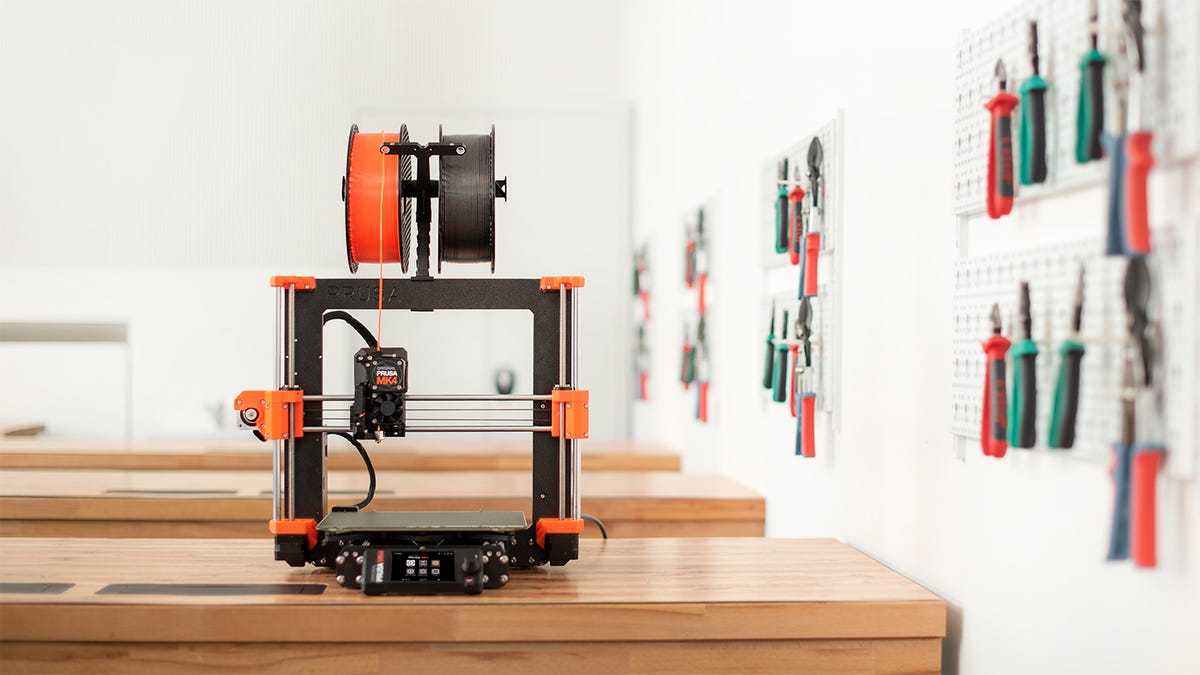
Prusa Research, a leading 3D printer manufacturer, has announced the MK4, the latest update to its popular Original Prusa line.
Why it matters
The original Prusa MK3 has been one of the best 3D printers for a long time. This new upgrade is supposed to make Prusa’s flagship even better.
What’s next
You can order the Prusa MK4 fully assembled for $1,099 or wait for the kit to ship for $799 in the coming weeks.
Prusa Research on Wednesday launched the Original Prusa MK4. Based on the same design as its MK3S Plus — a frequent pick as the best 3D printer on many sites — this new version has been upgraded in almost every way.
While there are few aesthetic changes to the shape of the MK4 compared to the MK3, there have been a lot of changes under the hood to bring it up to speed with the latest innovations in 3D printing. Many smaller details are quite technical, but the main points can be seen below. The upshot of these upgrades is a printer that promises accurate and detailed prints almost three times faster than the previous generation.
Faster print speeds through “input shaper and pressure advance” firmware updates
Hardware upgrades to better support speed and quality changes
Fast-swappable hot ends to let you use different size nozzles quickly
Nextruder extruder system
32-bit mainboard, which allows for Wi-Fi and Ethernet connections
Upgraded color LCD with model preview
Fully automatic bed leveling to improve your first layer
New multimaterial unit available as an add-on
Prusa has a reputation as a leader in the open-source 3D printing community. The MK4 will continue that tradition, allowing people to customize the machine how they want in the years to come. The company has also announced several upgrade kits that can upgrade your existing Prusa MK3 to variations of the MK4 — called the MK3.5 and MK3.9 — that will allow you to get almost all the MK4’s features, starting from $250.
Prusa announced the Prusa XL last year, but many of these have still not shipped. Because of this, the company has offered to switch preorders of the Prusa XL to the MK4 if you would rather pick up the smaller machine.
The Original Prusa MK4 is available now in a limited run, with more units to follow for $1,099, while the MK4 kit is due in the coming weeks. You can also order the upgrade kit for your MK3S Plus now if you want to upgrade rather than buy a new machine.
Apple’s iOS 16.4 was released Monday, and it brings new features and bug fixes to your iPhone, including 31 new emoji.
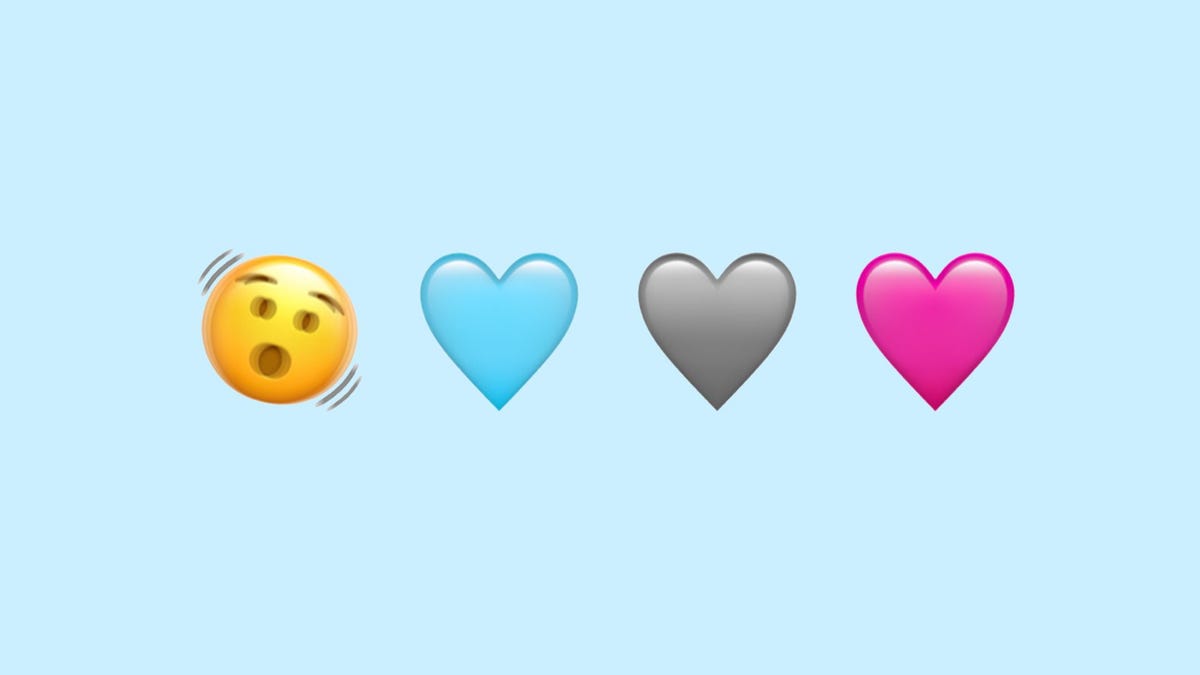
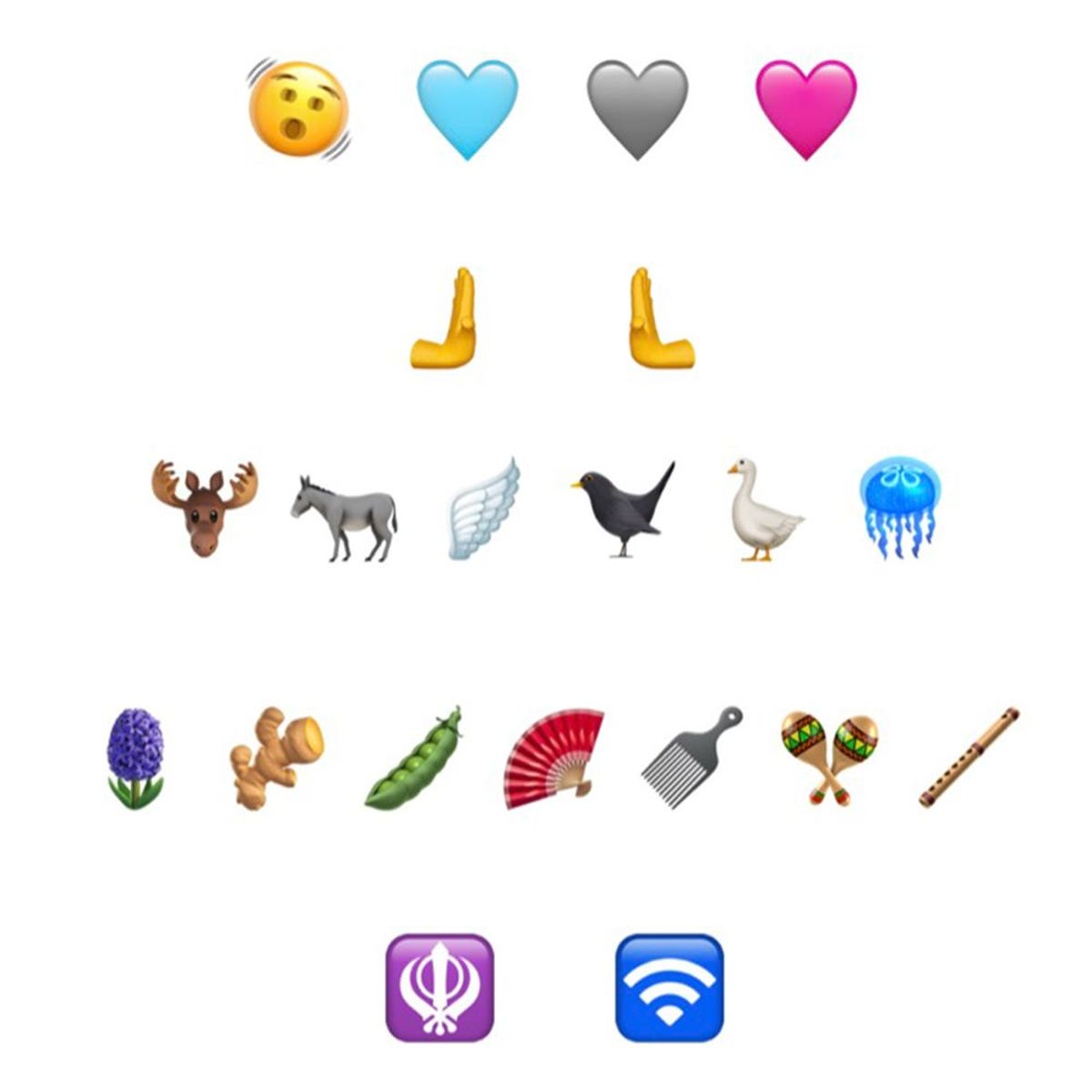
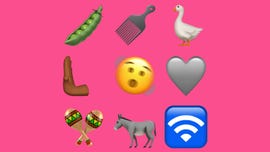
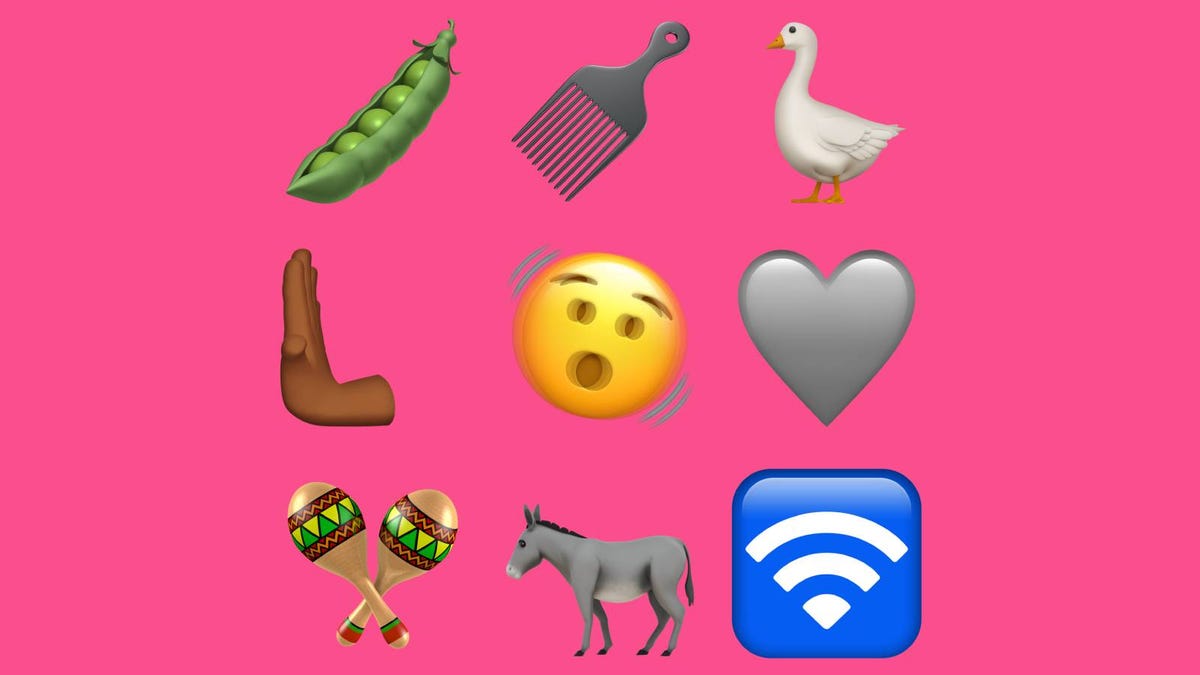
The new emoji include a shaking-head smiley, animals like a donkey, moose and a goose, and additional heart colors, including plain pink and light blue. The plain pink heart has been a long-sought emoji, according to Emojipedia, which named it one of the site’s top emoji requests in 2015. Last year’s significant emoji drop in iOS 15.4 included a melting face, a biting lip and a pregnant man, with 37 new designs in total.
A moose, donkey and goose are some of the new emoji iPhone users might see soon.
Emojipedia
Emojipedia said the new emoji came from Unicode’s September 2022 recommendation list, Emoji 15.0.
Google usually announces new Pixel products throughout the year, but 2023 could end up being a particularly important moment for the company’s device line. Google is rumored to be releasing its first foldable phone, which would directly compete with Samsung’s proven line of Galaxy Z Fold devices.
Google also introduced its own ChatGPT rival, Bard, which it opened up to the public in March. It wouldn’t be surprising to see new developments to Bard and hear about Google’s other AI ambitions during its I/O conference in May.
Both potential announcements would further signal that tech giants are thinking about what’s next for the smartphone and the apps that run on these devices in 2023. Samsung and Motorola, for example, both introduced new concept devices earlier this year with slidable and rollable screens, which could one day succeed today’s foldables. And Microsoft has its own revamped version of Bing that uses AI to provide more direct and conversational answers, giving Google stronger competition in the search arena it’s dominated for years.
Here’s a look at what we’re expecting from Google this year, based on rumors, reports and the company’s typical product launch schedule. We’ll be updating this story regularly as more leaks and reports surface.
Pixel 7A
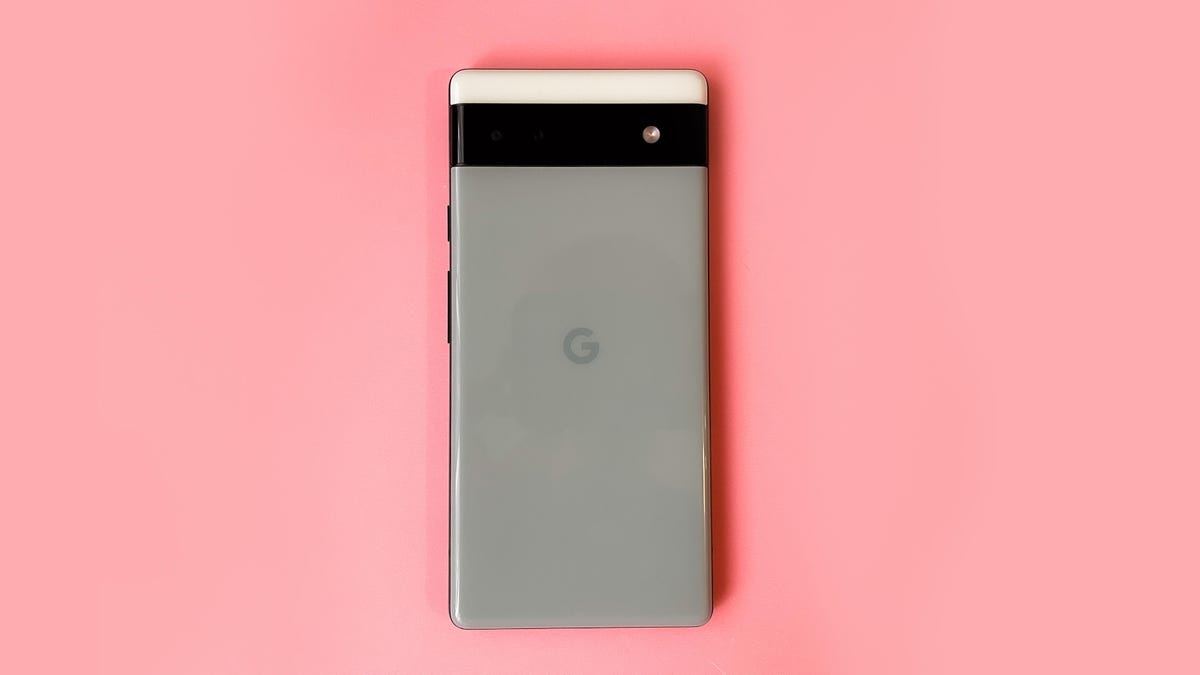
Google’s Pixel 6A from last year.
Lisa Eadicicco/CNET
If history repeats itself, Google will release a cheaper version of the Pixel 7 known as the Pixel 7A in the spring or summer. Google introduced the Pixel 6A at Google I/O last year before putting it on sale in July. That means we might be just weeks away from learning about the Pixel 7A, if Google does decide to announce it at its annual developer conference again this year.
We won’t know anything for certain until Google debuts the Pixel 7A, but some leaks and reports have provided clues about what it might include. Developer Kuba Wojciechowski, who claims to have found details possibly referring to the Pixel 7A in the Android codebase, suggests the Pixel 7A could have a screen with a higher 90Hz refresh rate and wireless charging.
That might not sound too exciting, but it’s notable because these two features are absent from the 6A. By bringing them to the Pixel 7A, Google would further close the gap between its premium and budget-friendly phones.
Another purported leak from Vietnamese website Zing News suggests the Pixel 7A will have a 6.1-inch screen just like the 6A and a design that resembles the Pixel 7.
If the Pixel 7A follows in the Pixel 6A’s footsteps, we can expect it to have the same Tensor G2 processor as the Pixel 7, but a camera that’s a step down.
Pixel Fold
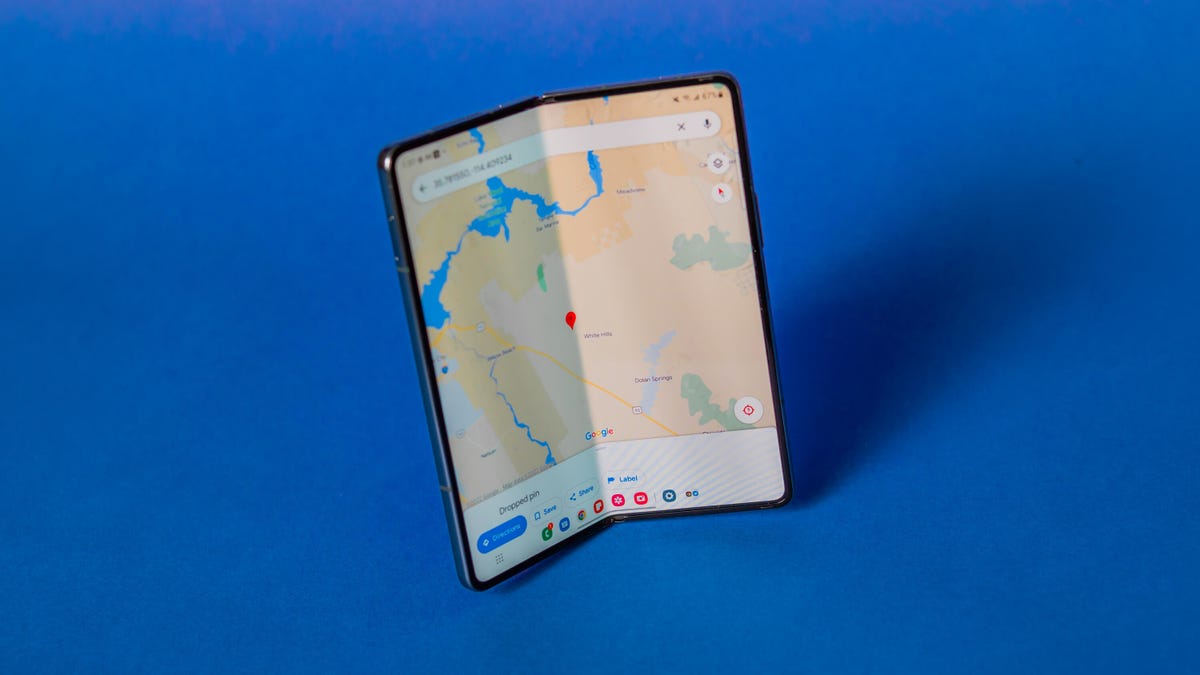
Samsung is currently the leader when it comes to foldable phones like the Z Fold 4, but maybe Google could give it some competition.
James Martin/CNET
Aside from Apple, Google is one of the only major phone-makers that hasn’t released a foldable phone or discussed plans to do so. But that could change in the near future. Reports from 9to5Google and WinFuture suggest Google’s first foldable Pixel device could arrive as soon as June.
The phone could avoid the Samsung Z Fold series’ tall, thin design in favor of a shorter, wider format with a look that’s similar to the Oppo Find N or Microsoft Surface Duo, according to reports and leaks from 9to5Google and YouTube personality Dave2D. Code in the beta for Android 13, which Wojciechowski says he discovered, also suggests the Pixel Fold would have a camera with main, ultrawide and telephoto lenses.
Google is known for undercutting rivals like Apple and Samsung on price with its regular Pixel phones. If Google does release a foldable phone, I’m hoping it takes a similar approach. Samsung currently dominates foldable phones with 62% of the market in the first half of 2022, according to Counterpoint Research, so it’ll be interesting to see if Google can give Samsung some worthwhile competition.
Sales of foldable phones are growing, but they still make up just a fraction of the broader smartphone market. Global shipments are expected to grow by 52% year-over-year in 2023, according to Counterpoint, reaching 22.7 million units. But when you consider that 304 million smartphones are estimated to have been shipped in the fourth quarter of 2022 based on Counterpoint’s findings, 22.7 million in a whole year seems like a drop in the ocean.
Pixel 8 and 8 Pro
James Martin/CNET
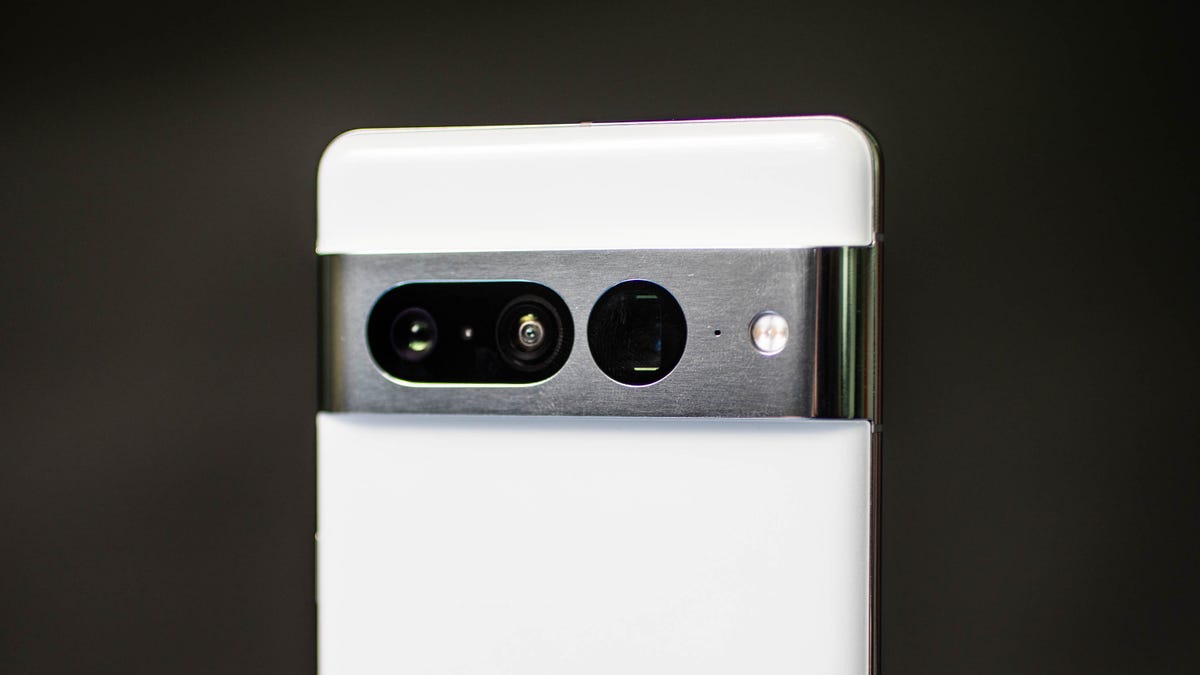
Google typically releases new flagship Pixel phones in the fall, and we’re expecting the company to follow that same pattern in 2023. We won’t know what’s in store for Google’s Pixel 8 and 8 Pro until it announces those devices.
However, Google’s updates have been very camera-centric in recent years, with the Pixel 7 lineup gaining improved zoom and the Pixel 7 Pro receiving a new macro photography mode. With the Pixel 6 and 6 Pro, which were the first Pixels to run on Google’s Tensor chips, we saw new features like Magic Eraser, Face Unblur and Real Tone. With that in mind, it wouldn’t be surprising to see Google push the camera even further on the Pixel 8 and 8 Pro, although we won’t know exactly what that looks like just yet. Both phones will also likely have a new Tensor processor, too.
Leaks have been scarce so far, but there have been a few reports claiming to provide details about Google’s next pair of Pixels. WinFuture reports the new phones will run on Android 14, which is expected to be the next major version of Android, and will have 12GB of RAM. Well-known gadget leaker Steve Hemmerstoffer also partnered with blogs MySmartPrice and SmartPrix to publish what are said to be renderings of the Pixel 8 and Pixel 8 Pro.
Android 14
Omar Marques/SOPA Images/LightRocket/Getty Images
Android 14 is currently available in a preview mode for developers, with the final consumer-ready version expected to arrive in the fall. Google releases new Android features and Pixel-specific features throughout the year, but its annual version upgrades usually provide sweeping platform-wide improvements.
Android 13, for example, introduced more color options for Google’s Material You interface, end-to-end encryption for RCS group chats in Messages and more privacy protections, such as the option to grant apps access to a limited selection of photos instead of your whole library.
Based on what we know about Android 14 so far, it seems like Google will continue building on these themes by making improvements related to power efficiency, privacy and accessibility. We’ll likely find out more at Google’s I/O developer conference in May.
Pixel Tablet
Screenshot/CNET
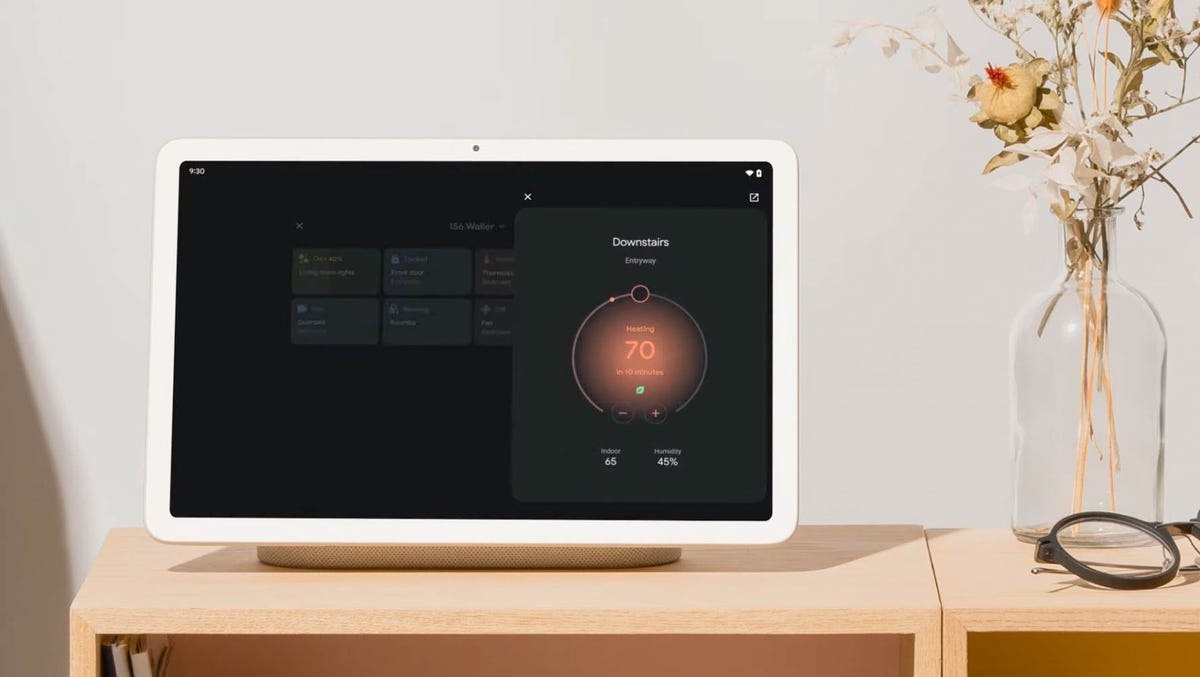
Google is taking a fresh approach to tablets with its upcoming Pixel Tablet, which will have a speaker charging dock that turns it into a Nest Hub when docked.
The company hasn’t revealed much about its upcoming tablet, but it did provide some details during its last Pixel event in October. Other than its speaker dock, we also learned that the tablet will have a nano-ceramic coating inspired by porcelain and will run on the Tensor G2 processor found in the Pixel 7 and 7 Pro.
Google said it plans to launch the tablet in 2023, although it didn’t provide specifics. We’re expecting to learn more at Google I/O or in the fall, when the company typically holds its Pixel product launch event.
More AI in Google Search and elsewhere
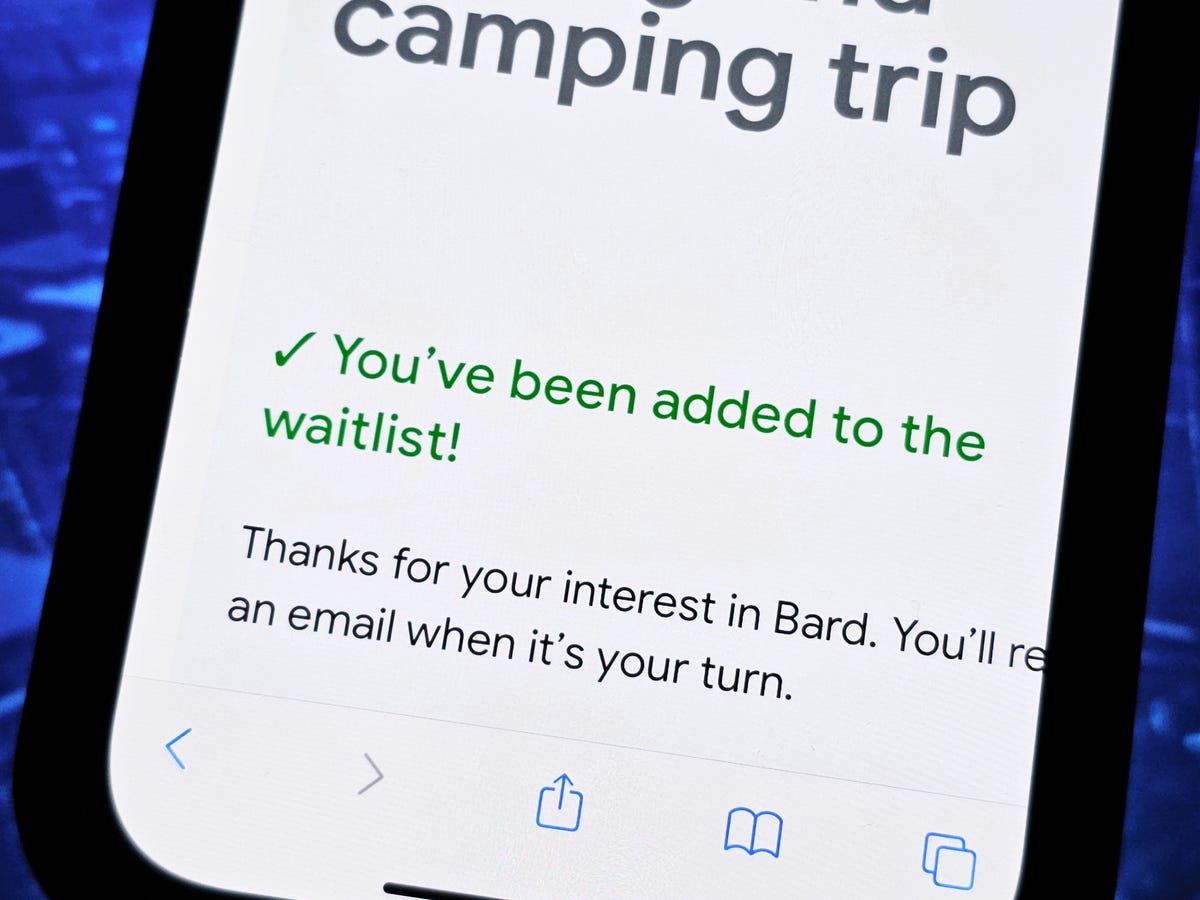
Joining the Bard waitlist only takes a few taps/clicks.
Nelson Aguilar/CNET
Following the success of ChatGPT, generative AI has been everywhere in 2023 — and that includes in Google’s products. The company already introduced its AI-powered search chatbot Bard and announced new AI features for Gmail and Google Docs for generating drafts and rewriting emails.
But we’re expecting AI to be a dominant trend at Google I/O conference this year, especially as it seeks to keep pace with Microsoft and other rivals. Google reportedly issued a code red in December after ChatGPT debuted, according to The New York Times, so it wouldn’t be surprising to see Google use its conference as an opportunity to assert its authority in AI.
AI has been a prominent theme at Google I/O before. Last year, for example, Google discussed improvements to automation, like auto translation and transcription for video, as well as updates to Search that make it better at handling questions that combine text and images. With all the attention Microsoft’s Bing has garnered thanks to its incorporation of AI, Google will likely make AI and Search a centerpiece of its I/O presentation.
Pixel Watch 2
James Martin/CNET
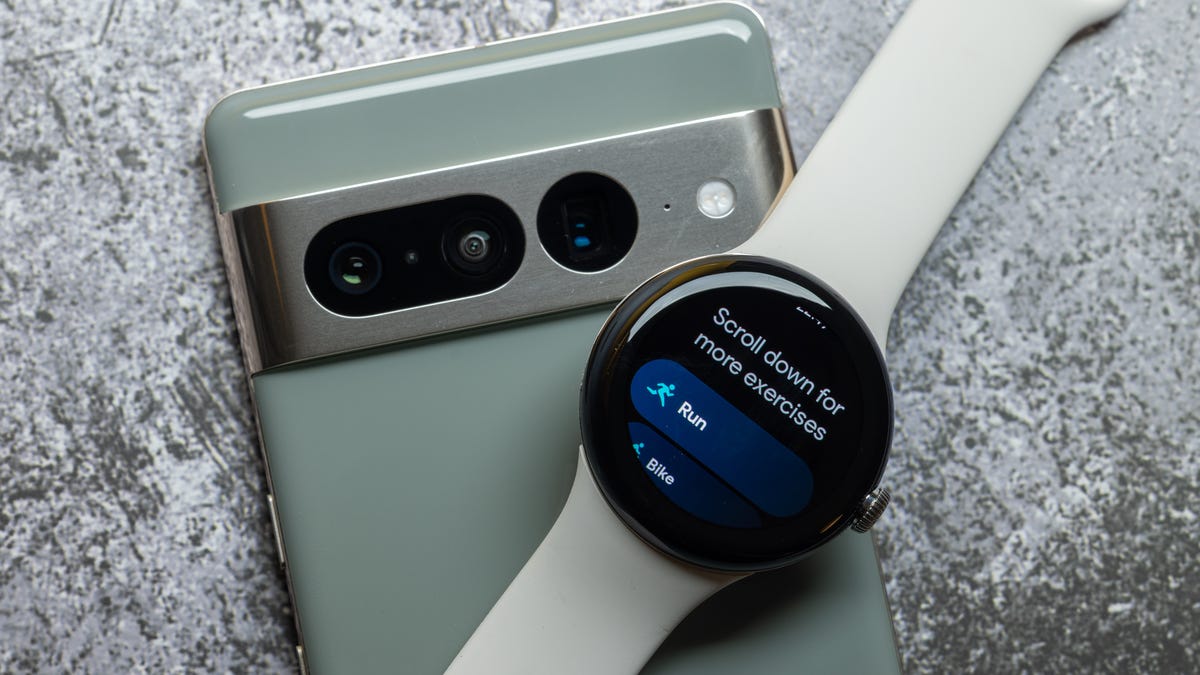
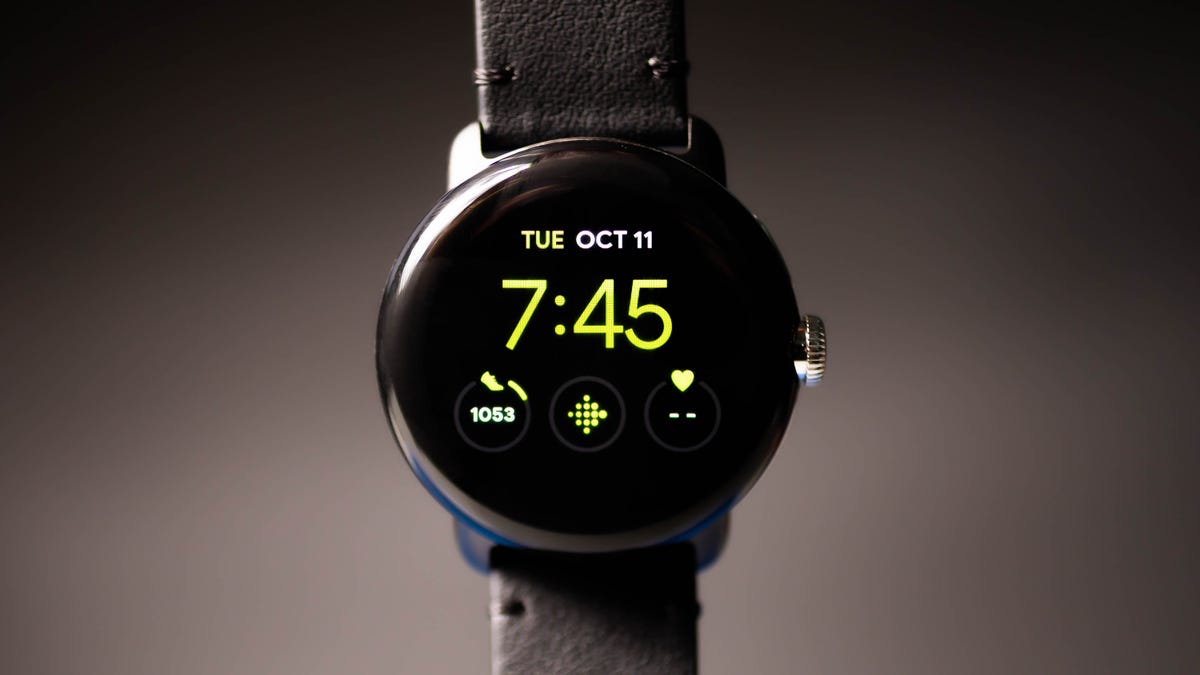
Google hasn’t discussed plans for future Pixel Watches, nor have there been many leaks or rumors about what’s next for Google’s smartwatch. But since Google’s Pixel phones follow a yearly cadence — as do the Pixel Watch’s biggest competitors like the Apple Watch and Samsung Galaxy Watch — it wouldn’t be surprising to see the Pixel Watch follow suit.
Based on Google’s current direction for the Pixel Watch, we can probably expect to see the same round design on its sequel. The latest version of Wear OS, which we’re expecting to hear more about at Google I/O, will also likely make an appearance. I’m also hoping to see longer battery life and a few extra health and fitness-tracking features, such as auto-workout detection.
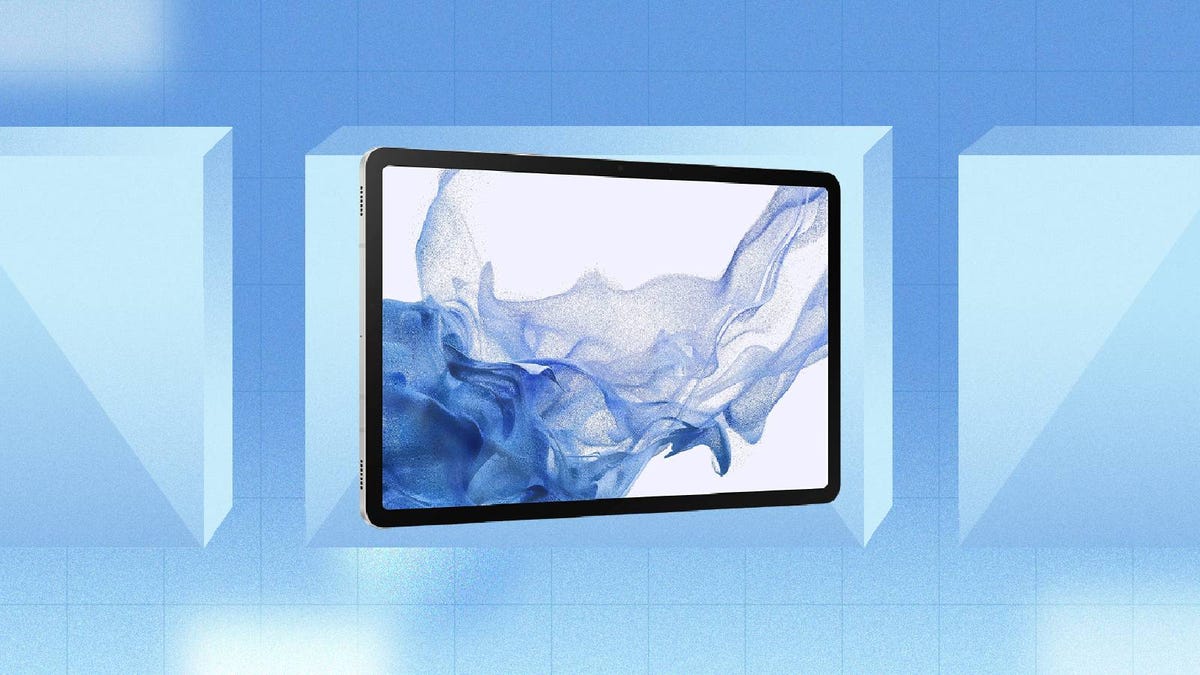
While Apple’s iPads are still the most popular tablets out there, if you prefer an Android device, you’ll want to go with the Samsung Galaxy Tab S8 Plus. This sleek Samsung tablet earned a top spot on our list of the best tablets for 2023 as our favorite Android option, and right now you can snag one on sale. Amazon currently has the 128GB model on sale for $600, which saves you $300 and matches the all-time lowest price we’ve seen. There’s no set expiration, but we don’t expect a deal this good to last for long. So get your order in sooner rather than later if you don’t want to miss out on these savings.
This powerful Android tablet comes equipped with a Qualcomm Snapdragon processor, 8GB of RAM and 128GB of storage, though that can easily be expanded up to 1TB thanks to the built-in microSD card reader. It features a stunning 12.4-inch AMOLED display, and comes with the Samsung S Pen stylus for easy note-taking and navigation. It’s great for games and entertainment, but is designed for productivity as well with Microsoft 365 integration and Wi-Fi 6E support for blazing fast web performance. It also weighs just 1.27 pounds and has a substantial 10,090-mAh battery, so it’s great for taking care of work when you’re on the go.
And if you’re in the market for a different model, you can check out our roundup of all the best tablet deals for even more bargains.
Which tablets have the best price?
Use our CNET Shopping extension to compare top products or find coupon codes before buying your next tablet.
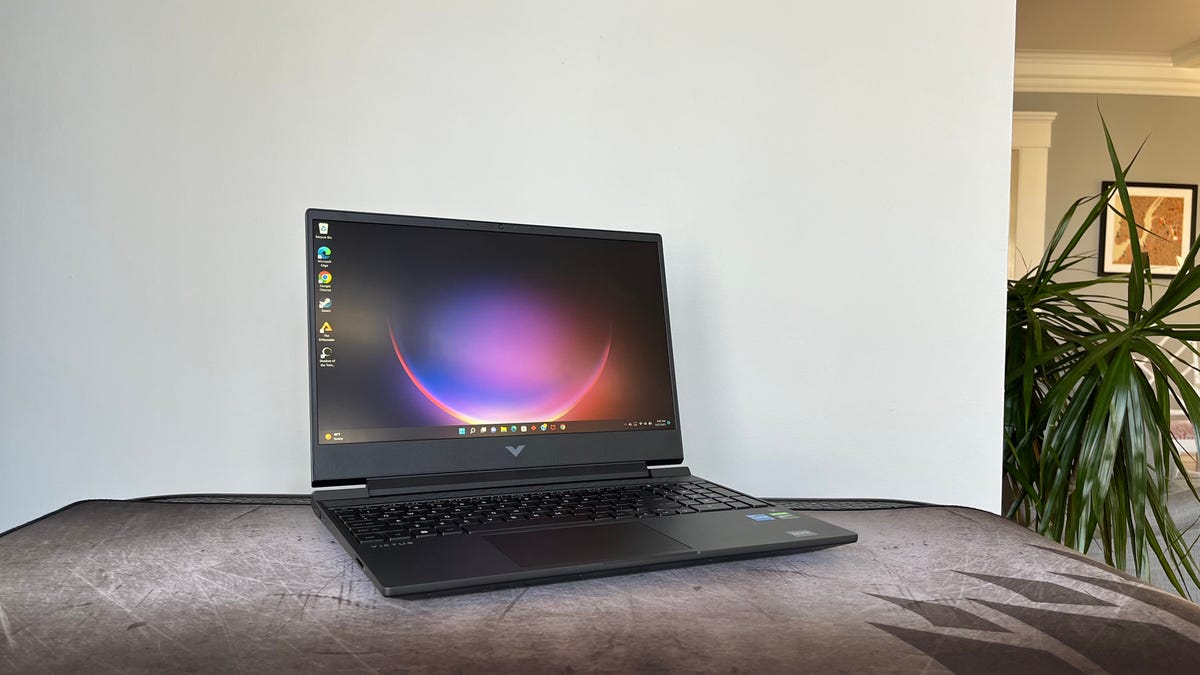
There are two types of budget gaming laptops: Ultralow-cost models well under $1,000 with entry-level Nvidia GeForce GTX graphics and models priced between roughly $1,000 and $1,200 equipped with a low-end GPU from the superior GeForce RTX series. The HP Victus 15 is solidly in the former category. It costs $800 at Best Buy and can frequently be found on sale for as little as $580. It’s based on a 15.6-inch, 1080p display with a 144Hz refresh rate and powered by an Intel Core i5-12450H CPU, 8GB of RAM and GeForce GTX 1650 graphics.
I wouldn’t pay $800 for a laptop with a midrange Core i5 CPU, a meager 8GB of RAM and an aging GTX 1650 GPU because you can usually find a budget model with a better CPU, twice the RAM and — most importantly — an RTX 3050, 3050 Ti or even 3060 GPU on sale for less than $1,000. So, the question becomes, is the Victus 15 a good buy when it’s on sale for less than $600? At that price, it begins to make sense for those just dipping their toes into the 3D-gaming waters and looking to play older or more casual games rather than rocking the latest AAA titles with ray tracing and other quality settings dialed up.
You’re receiving price alerts for HP Victus 15-fa0031dx
Like
Ultralow price for gaming laptop
Speedy 144Hz display
Decent battery life
Don’t Like
Dim display
Grainy 720p webcam
Keyboard lacks RGB lighting
Enough 3D performance for some
Our Victus 15 test system (model 15-fa0031dx) has been available at Best Buy for nearly a year and is based on an Intel Core i5-12450H CPU and GeForce GTX 1650 graphics. Released at the beginning of last year, the 12th-gen Alder Lake CPU is relatively new. While some high-end, high-priced laptops have been released with 13th-gen Raptor Lake CPUs, we’ve yet to see a lower-end model based on a mainstream 13th-gen Core i5 or Core i7 chip. The Victus 15’s GPU is another story. The GTX 1650 was released nearly four years ago and has been surpassed by three generations of GeForce RTX graphics processors.
The only place you’ll find the GTX 1650 GPU these days is in not just a budget gaming laptop but an entry-level budget gaming laptop. You really can’t drop down a level without entering integrated graphics territory. That said, this four-year-old GPU isn’t entirely useless. While it will struggle with the latest, most demanding AAA titles, it’s more than capable of playing most games at 1080p at medium to high settings.
HP Victus 15 gaming laptop
Price as reviewed
$800
Display size/resolution
15.6-inch 1,920×1,080 144MHz 16:9display
CPU
2GHz Intel Core i5-12450H
Memory
8GB DDR4 3,200MHz RAM
Graphics
4GB Nvidia GeForce GTX 1650 Graphics
Storage
SamsungMZVL2512HCJQ 512GB SSD
Networking
Wi-Fi 6 MT7921 (2×2) and Bluetooth 5.3
Operating system
Windows 11 Home 21H2
For casual gamers looking to play around with co-op shooters, the Victus 15 is a cheap way to get there. We experienced smooth gameplay at 1080p on both CS:GO and Riftbreaker. The laptop averaged 105 frames per second on the Riftbreaker GPU benchmark and an even more impressive 191fps on the CS:GO benchmark. Both tests were run at 1080p with High settings enabled. It also achieved a playable 61fps on the newer and more demanding Guardians of the Galaxy — also at 1080p and High settings.
On our Shadow of the Tomb Raider test (1080p with Highest settings), however, it dropped to 46fps. When we dialed back the detail settings to High, the Victus 15 averaged 53fps. It was able to surpass 60fps only when we dropped the settings to Low, where it averaged 73fps. (It got close at Medium settings, with an average frame rate of 58fps.)
Gaming laptops rarely, if ever, deliver long battery life, so all we are looking for from such a machine is a passable runtime. And the Victus 15 delivers just that. It lasted for nearly 6.5 hours on our demanding streaming video battery-drain test, which placed it in the top half of the other budget gaming laptops we are using for comparison in this review. Don’t plan on getting anywhere near that if you’re gaming, though.
Matt Elliott/CNET
Plastic chassis, dim display
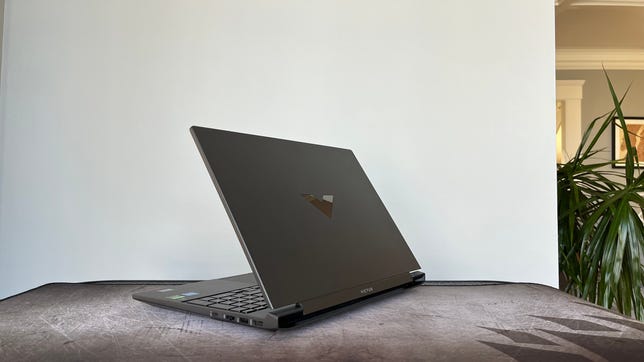
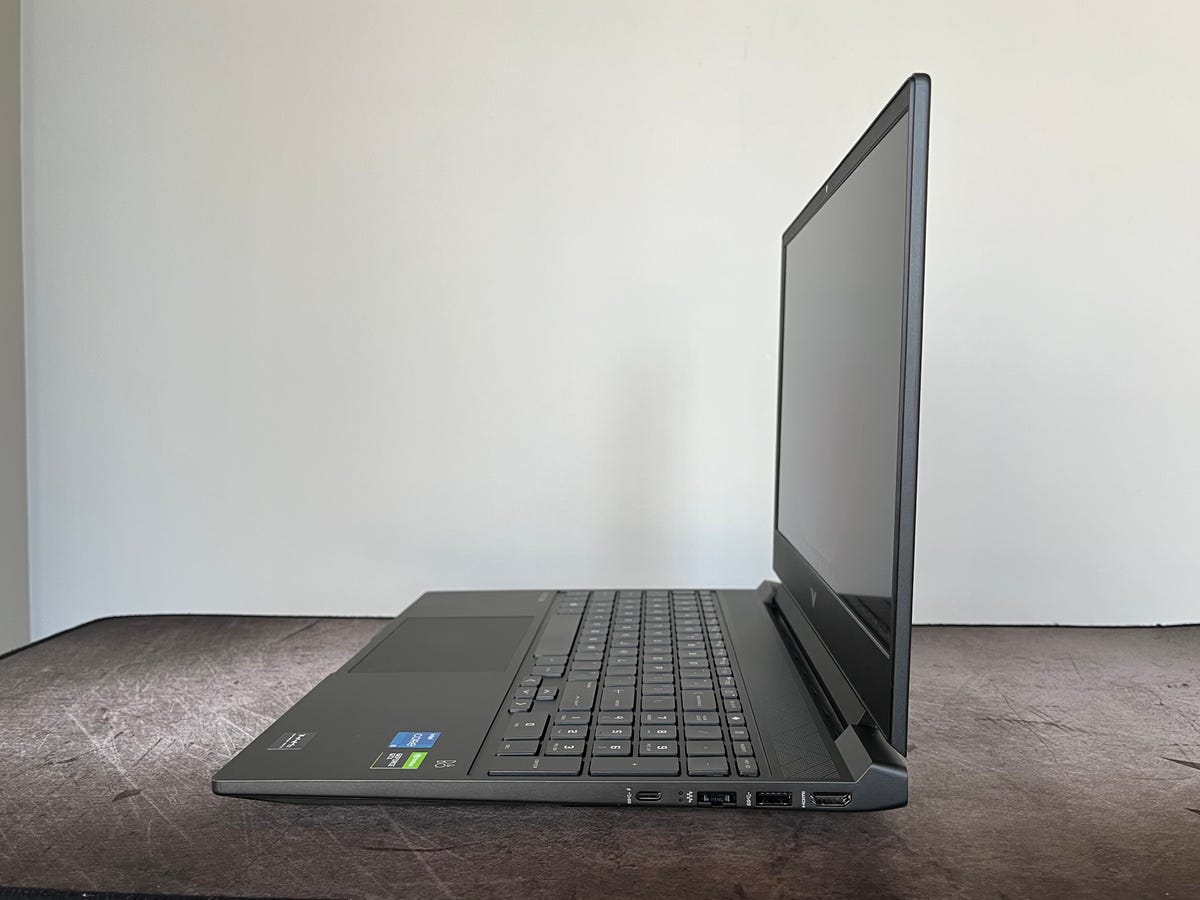
There’s certainly a limit to its 3D performance — not a surprise with an $800 gaming laptop that’s frequently on sale for less than $600. The laptop’s design doesn’t overcome its budget price, either. The all-plastic, all-black body is a bit flimsy but not too bulky. It’s a hair less than an inch thick and weighs just over 5 pounds. The display hinge isn’t quite tight enough, causing the display to wobble at the slightest nudge. Some flex can be felt with the plastic keyboard deck under your fingers when you are typing and particularly when mashing keys during a game. The plastic lid protecting the display also flexes a bit too much for my comfort.
Matt Elliott/CNET
The keyboard feels cramped because HP decided to squeeze in a number pad. The keys have snappy response but lack RGB backlighting, a fun feature offered on nearly every gaming laptop. I wasn’t expecting per-key or even multizone RGB lighting, but the Victus 15 offers neither R nor G nor B — nor any other color than white. You get the bare minimum of keyboard backlight — one-level white lighting.
Matt Elliott/CNET
The display offers a crisp, full-HD image across the 15.6-inch panel along with a speedy 144Hz refresh rate but is rated for only 250 nits of brightness. That’s typical of budget laptops, but I measured a peak brightness of only 220 nits. Games and images looked a bit dull, even at max brightness. The 720p webcam, too, is underwhelming. It produces a grainy, poorly balanced image compared with that of 1080p cams that have quickly become the norm.
Affordable fun for a first gaming laptop
Do you remember your first car? Unless you were born into the 1%, it was likely on the level of a Ford Taurus that could receive a dent or two without your parents getting upset. It’s also likely you recall that dented Taurus fondly. You made great memories in that car, because you and your friends had the ability to cruise around without a parent at the wheel. The Victus 15 is that beloved Ford Taurus. It’s not the sleekest or fastest gaming laptop, but it’s an inexpensive rig that you can afford right now. You could keep saving for a pricier gaming laptop that would deliver greater gaming capabilities and more bells and whistles than the Victus 15, but the Victus 15 will let you start making fond memories online with your friends right now.
The Victus 15 can regularly be found on sale at Best Buy for less than $600. For first-time gamers, it makes sense at this price. If it’s selling at its full price of $800, however, then budget gaming laptops in the form of the Acer Nitro 5 or Dell G15 are better buys. Or you could check out this RTX 3050-based Victus 15 model available directly from HP that is regularly discounted. Each cost less than $1,000 (and can be frequently found discounted closer to $800) and feature RTX 3050 or RTX 3060 graphics for better 3D gaming performance than the Victus 15 and its aging GTX 1650 GPU.
How we test computers
The review process for laptops, desktops, tablets and other computer-like devices consists of two parts: performance testing under controlled conditions in the CNET Labs and extensive hands-on use by our expert reviewers. This includes evaluating a device’s aesthetics, ergonomics and features. A final review verdict is a combination of both objective and subjective judgments.
Google Drive now limits users to 5 million items. A Google Workspace spokesperson confirmed the change in an email Monday evening.
This comes as a Reddit user posted a thread Monday saying Google had imposed a 5 million item limit on peoples’ Drive accounts, without prior warning. The Reddit user said people began receiving “Upload Failed” notifications around Feb. 14 for any action, including creating a new empty folder.
“To maintain strong performance and reliability, individual users are limited to 5 million total created items in their Google Drive,” a spokesperson from Google Workspace said. The spokesperson went on to say this change affects only a small number of users and recommended deleting some files.
For those with a plethora of files, suddenly being asked to remove millions of items is a major inconvenience, as noted in a report created on Google’s issue tracker. One user in the UK said their business in the animal health space has been critically hit by this change. It’s caused a major disruption for the “tens of thousands of users in-practice and their work on a daily basis.”
Others are wondering why, if there’s a hard limit, Google didn’t provide any guidance. The rollout of this change may not be going smoothly either, with some users saying that even at 1 million items, they can’t create a new folder.
For many users and businesses, storing files online is often more convenient than local storage. The overall cloud storage market was valued at $78.6 billion in 2022, according to Markets and Markets.
People can upgrade their Google One account, the service that contains Gmail, Drive, YouTube and others, to have additional storage. This storage can go all the way up to 30TB. Google One competes with Microsoft’s OneDrive, Dropbox, Amazon Cloud Drive and Box. Of course, Google One integrates better with Google Workspace apps like Docs and Sheets.
Some Google One competitors also have file limits.OneDrive for Business has a limit of 50,000 items per folder. But it’s uncertain if Microsoft has a hard cap on the number of items overall. Dropbox, on the other hand, says there’s no limit.
Microsoft, Amazon and Box representatives didn’t immediately respond to a request for comment.
It seems that regardless of a person’s Google One plan, whether it be 100GB or 20TB, the 5 million item limit applies. As a result, users with small file sizes are likely to hit the item limit before they hit the storage limit: Someone on a 2TB plan would have to exceed an average file size of 400KB to run out of storage before they hit the item limit. So, unless a person is storing large files like photos and videos on their drive, it’s possible that some are paying for more space than can realistically be used.
Alternatively, other Reddit users pointed out that compressing files into a .ZIP folder ends up counting as one item.
The wait for iOS 16.4 is over. Apple rolled out iOS 16.4 on Monday, about a week after the company let developers and beta testers try the iOS 16.4 release candidate.
The update comes with a handful of bug and security fixes, as well as some new features. Some of the new features include new emoji, voice isolation for cellular calls, and more.
Here are some of the new features your iPhone gains with iOS 16.4.
31 new emoji
The iOS 16.4 update brings 31 new emoji to your iOS device. The new emoji include a new smiley; new animals, like a moose and a goose; and new heart colors, like pink and light blue.
Some of the new emoji released in iOS 16.4.
Patrick Holland/CNET
The new emoji all come from Unicode’s September 2022 recommendation list, Emoji 15.0.
Voice isolation comes to cellular calls
Voice isolation was introduced with iOS 15 in 2021, and at the time it worked only on FaceTime calls. Now with iOS 16.4, you can use the feature on your cellular calls too.
When enabled, voice isolation can help the person you’re on a call with hear you more clearly by muffling background sounds, like kids playing in the other room or construction outside your window. It could therefore cut back on the number of times you have to repeat yourself in a phone call because the other person can’t hear you.
Easily find photo duplicates across shared albums
In iOS 16.4, you can easily find duplicate photos in shared albums in Photos. If you share photos with family or friends via iCloud, iOS 16.4 will show you all the duplicates across albums. You can also Merge these duplicate photos.
The page-turn curl animation is back in Apple Books with iOS 16.4, after it was removed in a previous iOS update. Before, when you turned a page in an ebook on your iPhone, the page would slide to one side of your screen or it would vanish and be replaced by the next page. You can still choose these other page-turn animations in addition to the curl animation.
Music app changes
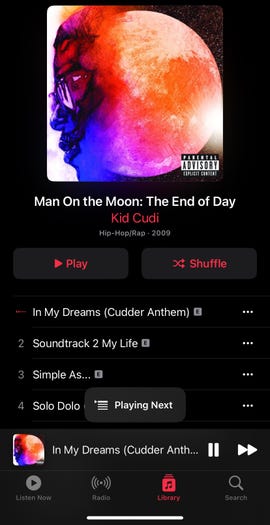
A small banner appears at the bottom of the screen when you choose to play a song next in Apple Music in iOS 16.4
Zach McAuliffe/CNET
The Music interface has been slightly modified in iOS 16.4. When you add a song to your queue, a small banner appears near the bottom of your screen instead of a full-screen pop-up like in previous iOS versions.
Also, if you go into your Library in Music, you can organize your Library by Artist and tap into an artist, across the top of your page you will see an icon for that artist. A search bar used to be at the top of this page. Tap the artist’s icon and you will be taken to that artist’s Music page.
Apple Podcasts updates
Apple Podcasts also gets an update with iOS 16.4. Now you can access a Channels tab in your Library, which shows you different networks you follow. Tap into each channel and you see can the shows you subscribe to and other shows that channel produces.
See who and what is covered under AppleCare
With iOS 16.4, you can go to Settings > General > About> Coverage to check who and what devices are covered on your AppleCare plan. That way, if your AirPods break, you can easily check whther they are covered. You can manage your coverage from here too.
Focus Mode filters added
If you have an iPhone 14 Pro or Pro Max, iOS 16.4 lets you enable or disable the always-on display option with certain Focus Modes. When creating a new filter, scroll down to the bottom of the edit page, tap Focus Filter, then tap Always-On Display to enable or disable the display for that Focus Mode.
New Apple Wallet features
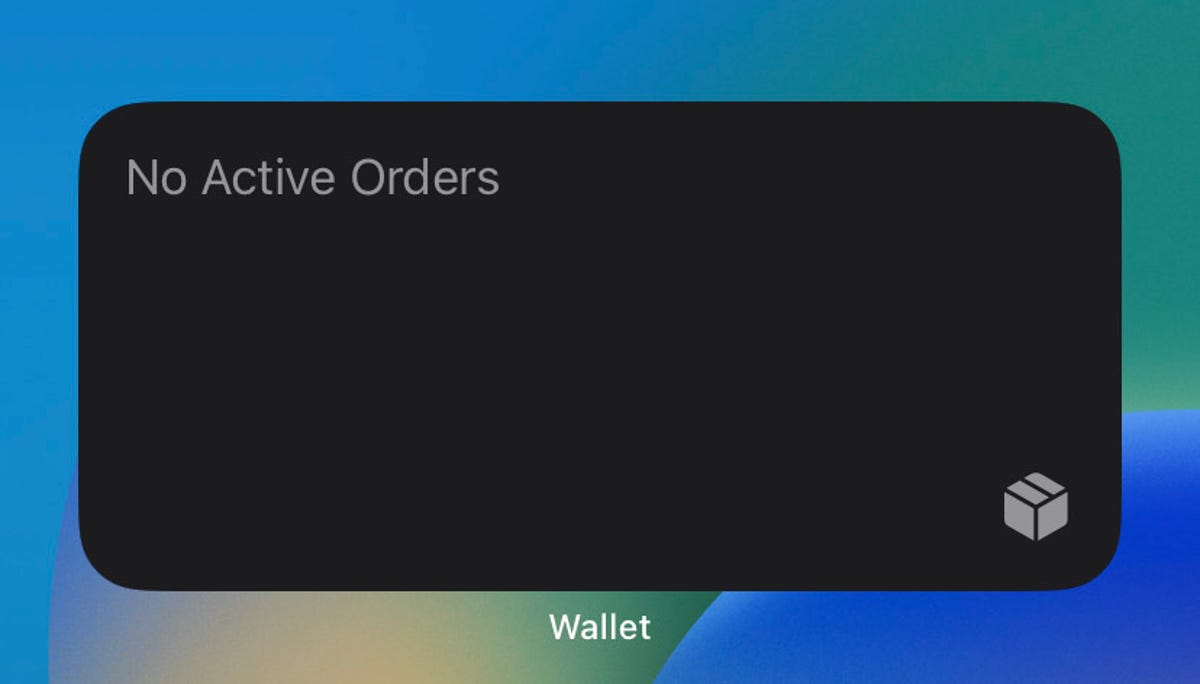
You can add three new order-tracking widgets for Apple Wallet to your home screen with iOS 16.4. Each widget displays your tracking information on active orders, but the widgets are different sizes: small, medium and large.
The medium-size Apple Wallet order tracking widget takes up three tile spaces on your iPhone’s screen.
Zach McAuliffe/CNET
More accessibility options
The update also adds new accessibility options. One new option is called Dim Flashing Lights, and it can be found in the Motion menu in Settings. The option’s description says video content that depicts repeated flashing or strobing lights will automatically be dimmed. Video timelines will also show when flashing lights will occur. VoiceOver support has also been expanded to the maps and Weather apps.
Apple ID and beta software updates
The latest iOS update lets you sign into another Apple ID to access other beta software.
Zach McAuliffe/CNET
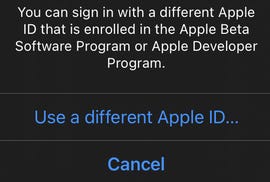
With iOS 16.4, developers and beta testers can check whether their Apple ID is associated with the developer beta, public beta or both. If you have a different Apple ID, like one for your job, that has access to beta updates, iOS 16.4 also lets you switch to that account from your device.
New keyboards, Siri voices and language updates
This iOS 16.4 update also adds keyboards for the Choctaw and Chickasaw languages, and there are new Siri voices for Arabic and Hebrew. Language updates have also come to Korean, Ukrainian, Gujarati, Punjabi and Urdu.
This update includes the following enhancements and bug fixes:
• 21 new emoji including animals, hand gestures, and objects are now available in emoji keyboard
• Notifications for web apps added to the Home Screen
• Voice Isolation for cellular calls prioritizes your voice and blocks out ambient noise around you
• Duplicates album in Photos expands support to detect duplicate photos and videos in an iCloud Shared Photo
Library
• VoiceOver support for maps in the Weather app
• Accessibility setting to automatically dim video when flashes of light or strobe effects are detected
• Fixes an issue where Ask to Buy requests from children may fail to appear on the parent’s device
• Addresses issues where Matter-compatible thermostats could become unresponsive when paired to Apple Home
• Crash Detection optimizations on iPhone 14 and iPhone
14 Pro models
This story is part of Focal Point iPhone 2023, CNET’s collection of news, tips and advice around Apple’s most popular product.
Apple’s iPhone software keeps adding new features, and you don’t even need a new iPhone 14 to take advantage of them. With iOS 16.3, first released in January, Apple added a number of small but significant updates to the iOS 16 iPhone software, including security keys for iCloud and new wallpaper options. A smaller iOS 16.3.1 update in February then threw in a few bug fixes and security updates as well. And now the release of iOS 16.4 and its new emojis are available for the iPhone, too.
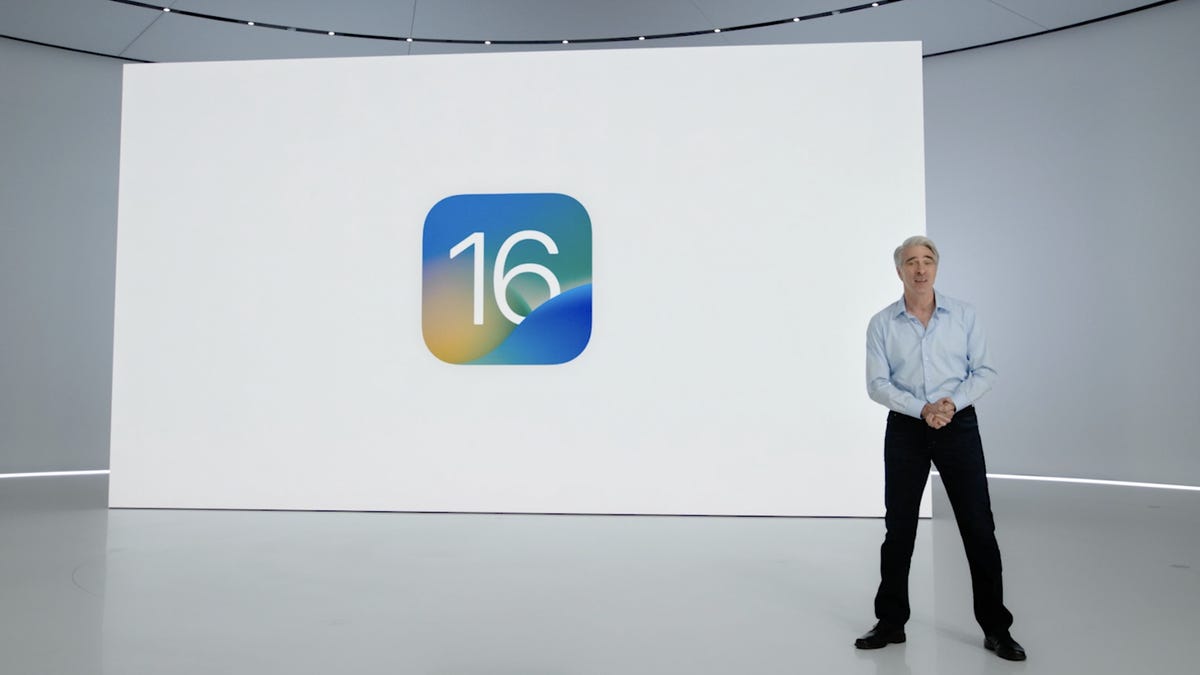
iOS 16 was announced last spring at Apple’s WWDC conference prior to its public launch alongside the iPhone 14. If you’re curious about what else iOS 16 offers, read on as we break down the 11 best new features on your iPhone. Just make sure you’ve already completed these three steps first, and check out the lesser-known features lurking in iOS 16 too.
After downloading iOS 16.4, your iPhone’s emoji keyboard will expand to include 31 new symbols to decorate your chats — many of which have a festive theme. Maracas, Pink Heart, Light Blue Heart and Folding Hand Fan arrive alongside animals like the Donkey, Moose and the Goose. Meanwhile the Shaking Face could help you express shock and confusion.
The ability to edit and ‘unsend’ messages
“Embarrassing typos are a thing of the past,” Craig Federighi, Apple’s senior vice president of software engineering, said at WWDC as he introduced three of the most requested features for the Messages app.
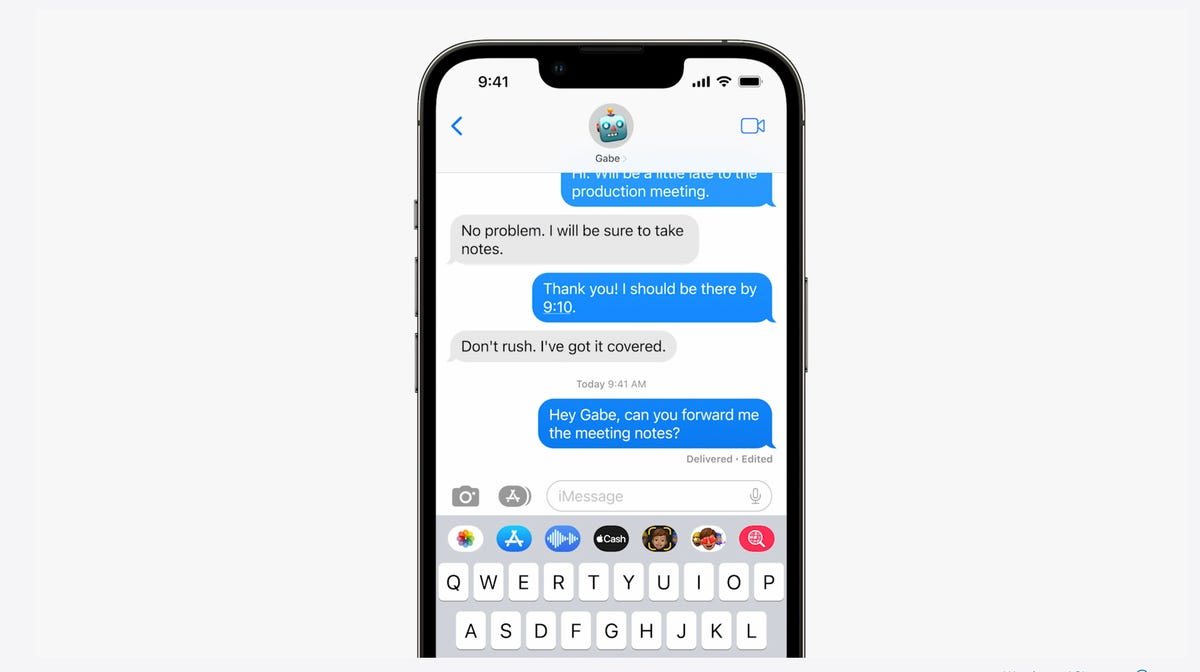
First, in iOS 16 you’re able to edit sent messages. So if you notice a typo after a message, you’ll be able to edit the message after the fact. A tiny “edited” appears in the status under the message.
In Messages, you can edit previously sent messages.
Apple
Next, and this might be my favorite new feature, you can immediately recall a sent message. If you accidentally send an unfinished message, you can use the Undo Send tool to prevent it from being read and hopefully look less chaotic to your friends and family.
Last, you can mark messages and threads as unread. This could be an excellent tool for when you don’t have time to respond to a message in the moment, but want to make sure you come back to it later.
Now playing:Watch this:Testing iOS 16 (Edit/Delete Sent Messages, New Lock Screen…
16:22
A new customizable lock screen
One of the things you look at the most on your iPhone is the lock screen, especially if you have a Face ID-equipped iPhone. iOS 16 brings the most substantial update to the iPhone’s lock screen yet. Press and hold to edit your lock screen. You can swipe to try out several different styles. Each style changes the color filter for the background photo and the font on the lock screen so everything complements each other. This feels a bit like Apple’s take on Google’s Material You, which launched with Android 12.
You can also customize the fonts for the time and date, and add lock screen widgets like temperature, activity rings and a calendar. The widgets are akin to complications on the Apple Watch lock screen.
Your iPhone will become more customizable in iOS 16. You’ll be able to choose how your lock screen looks, down to the font and color.
Apple
You can even set up multiple customized lock screens with different widgets and easily swipe to switch between them. There’s also a photo shuffle option that automatically changes the pictures on your lock screen.
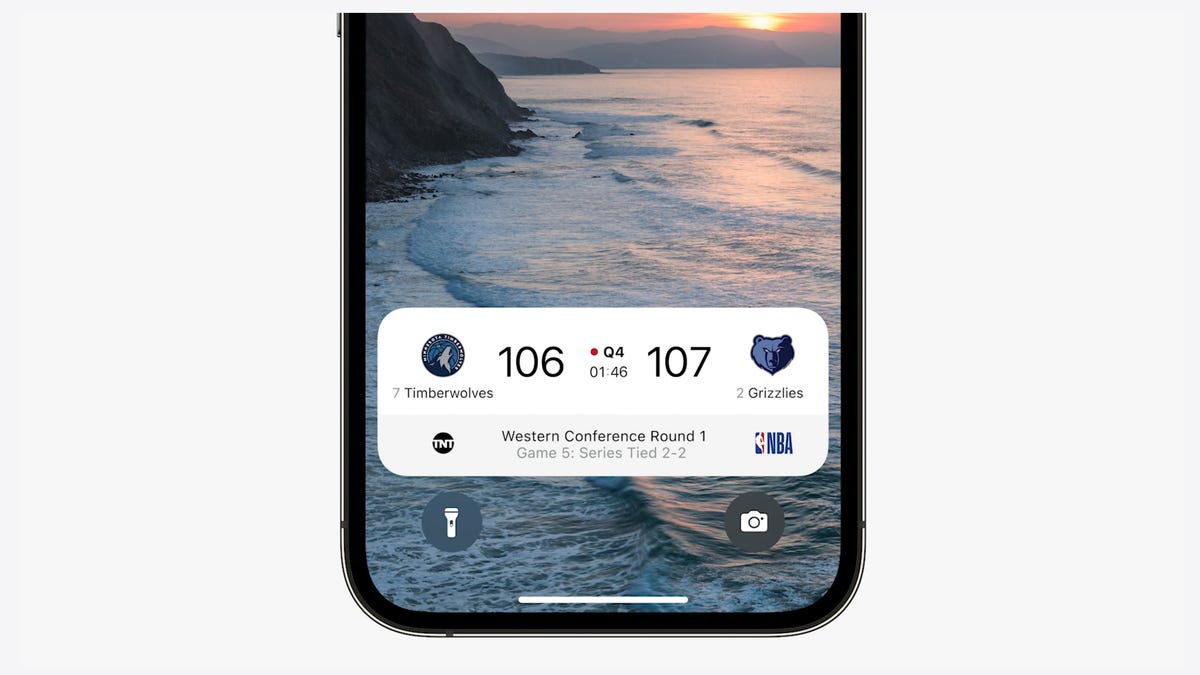
iOS 16 adds a feature that developers can use called Live Activities. This is essentially a mini view of the real-time progress of a workout, sporting event or Uber ride from your iPhone’s lock screen.
Apple
Notifications and live activities
Sometimes notifications can cover up your lock screen’s photo, so iOS 16 moves notifications to the bottom of your display. As you receive them, instead of being compiled into a list, they appear like a vertical carousel. This not only looks better but should be a big help for one-handed use of your iPhone.
iOS 16 also aims to solve another notification problem. Sometimes you get a bunch of notifications in a row from one app, like the score of a basketball game. A new tool for developers called Live Activities makes it easier to stay on top of things happening in real time from your lock screen, instead of getting a series of interruptions.
Live Activities should make it easier to follow sporting events, workouts or even the progress of an Uber ride.
Skip CAPTCHAs using Private Access Tokens
The CAPTCHA — which stands for Completely Automated Public Turing test to tell Computers and Humans Apart — has been a necessary evil across the internet. CAPTCHAs are designed to make sure that a person is accessing a website or service, and not a bot. I find them annoying, as they often involve reading strangely written letters or having to find all the images that have a truck. With iOS 16, Apple plans to start replacing these awkward interactions with Private Access Tokens.
According to a video on Apple’s website demonstrating Private Access Tokens, websites that support the token will essentially log in and authenticate that you are indeed a human without your having to play any of the usual CAPTCHA games. Apple says in the video that the company is working with other companies to roll out support for this feature, so we can’t say the CAPTCHA will be dead after iOS 16 rolls out to the public. But the concept could provide some relief if it gets adopted.
Wallet and Apple Pay Later
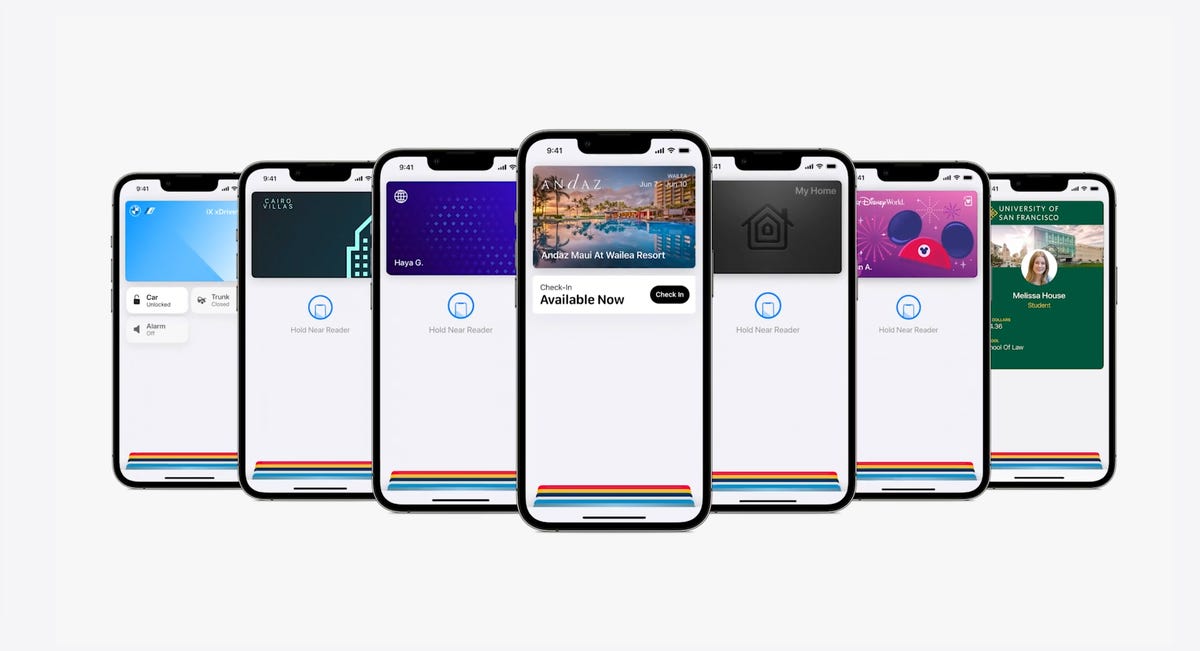
ID cards from more states will be available in your Wallet app along with more security and privacy features. In iOS 16 you can also protect your identity and age. So rather than showing your exact birth date, the Wallet app will display your ID and that you’re over 21.
iOS 16 makes sharing keys easier with apps like Mail and Messages. When your friend receives the key, they can add it to the Wallet app on their iPhone. Apple said it’s working to make sure that shared keys are an industry standard and free for others.
The Wallet app in iOS 16 gets a bunch of small but notable updates, including the Apple Pay Later payment plan.
Apple
Apple Pay will support new types of payments and adds a new feature called Apple Pay Later, a Klarna-like service that lets you split the cost of an Apple Pay purchase into four equal payments spread over six weeks, with zero interest and no fees. Upcoming payments are managed through the Wallet app, making it easy to keep track of dates and payments.
But Apple Pay doesn’t stop there. A new feature will also help you track Apple Pay orders and lets merchants deliver detailed receipts and tracking information. This should make it easier to stay up to date on the status of all your orders.
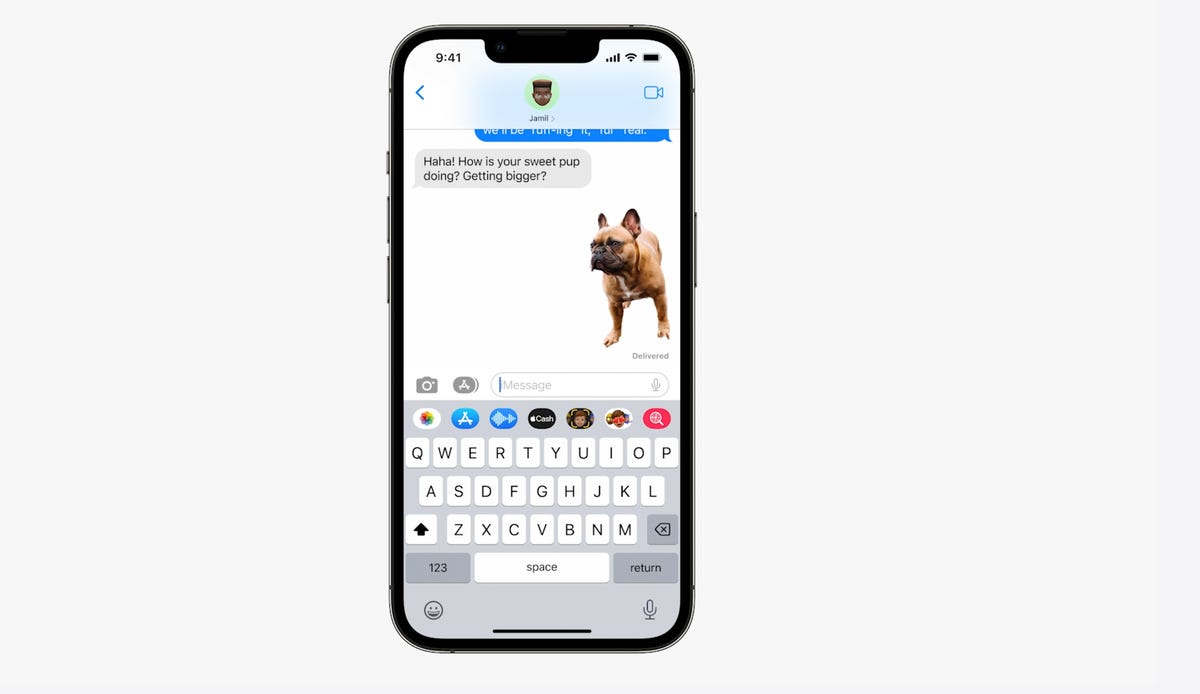
You can tap and hold on the subject of a photo and separate it from the background. Then you can drag it into another app like Messages to share it.
Apple
Visual Look Up’s tap and drag for photos
In iOS 15, Visual Look Up analyzes your photos and can identify objects like plants, landmarks and pets. iOS 16 takes this to the next level. When you touch a photo’s subject like the dog in the image above, you can lift it away from the background and add it to apps like Messages. Essentially it’s a tap-and-hold tool that removes a photo’s background.
Apple sometimes overuses the word “magic,” but this feature truly seems like it.
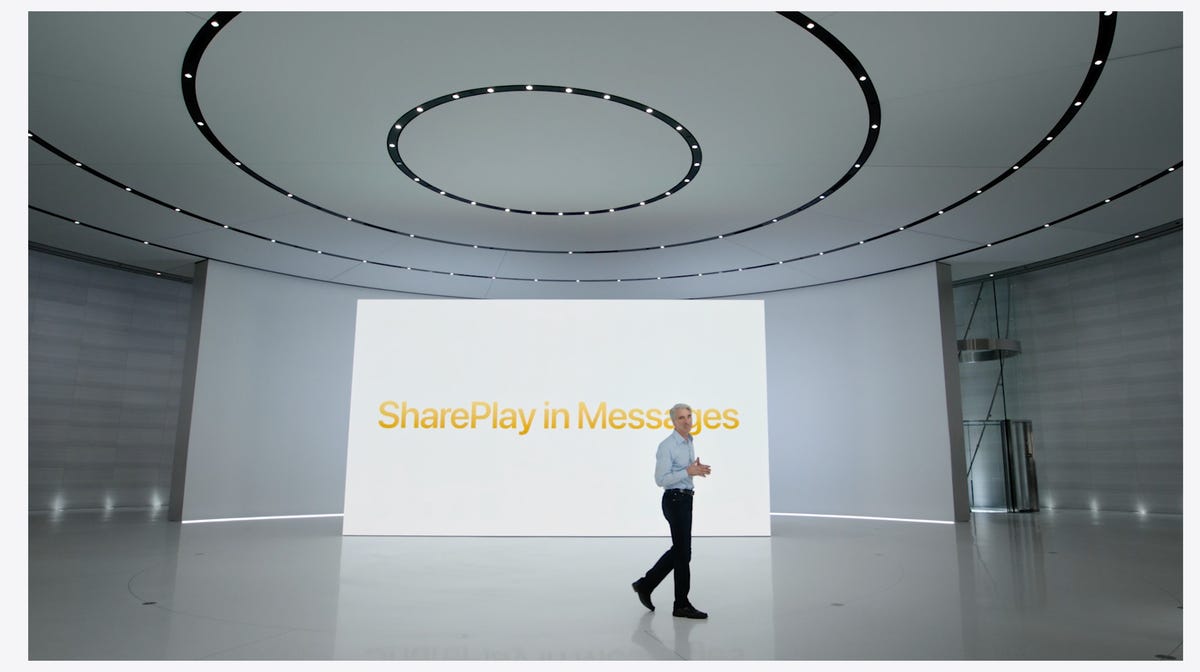
During the keynote for WWDC, Apple executive Craig Federighi introduces SharePlay for the Messages app.
Apple
SharePlay comes to Messages
SharePlay, which debuted in iOS 15, lets you have a shared experience while connecting with someone over FaceTime. You can watch TV shows, listen to music in sync and other things. iOS 16 adds the ability to discover more apps that support SharePlay from within FaceTime.
But perhaps one of the coolest things Apple did for SharePlay was to make it work within the Messages app. Apple said that this was one of the biggest requests from app developers. Now when you want to share a movie on Disney Plus, you can start SharePlay together with a friend while chatting in Messages.
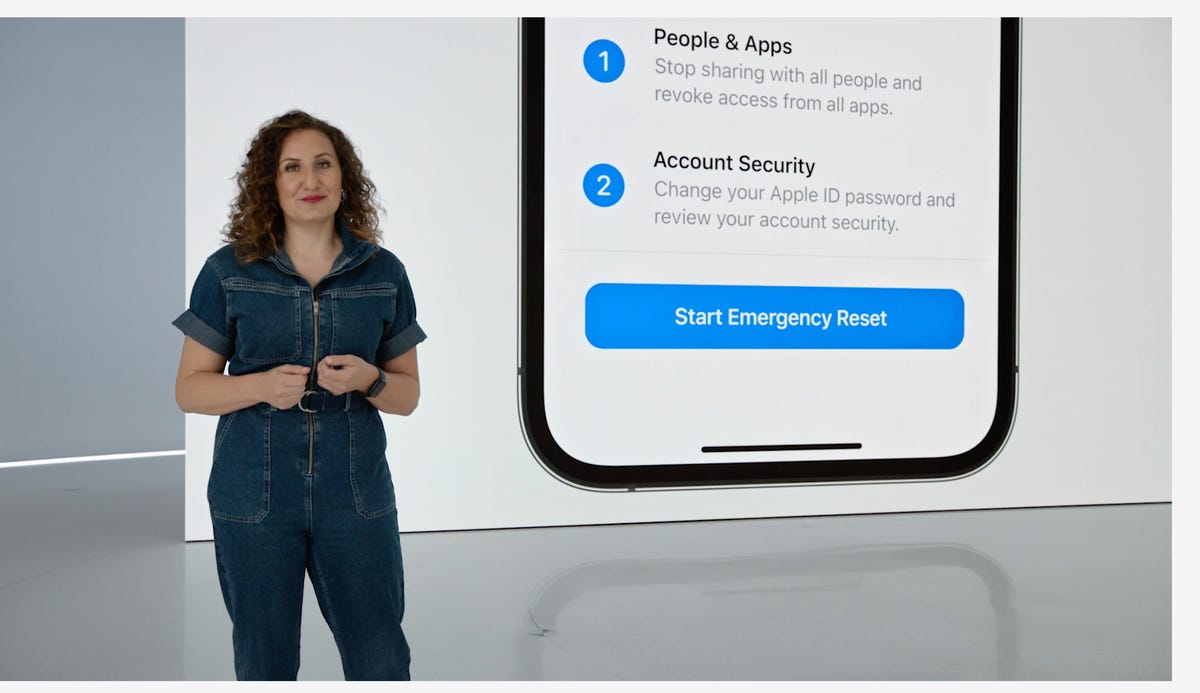
Safety Check lets you quickly reset location sharing and access to passwords. It’s intended to be helpful for people in abusive relationships.
Apple
Safety Check aims to help people in abusive relationships
Safety Check is a new feature intended to be helpful for people in abusive relationships. It lets you review and reset who has access to location information as well as passwords, messages and other apps on an iPhone.
Focus mode updates and Focus filters
Focus mode gets several updates. The first applies Focus behaviors to widgets and lock screen looks. So you could have one lock screen set for when your Work Focus is enabled and another for workouts.
Apple added specific Focus filters that apply your iPhone’s Focus mode within apps. For example, in Safari, you can limit what tabs are shown depending on what Focus mode you have active.
Apple Maps adds transit fare cards
Maps gets several updates. You’ll be able to plan trips with up to 15 different stops along the way. If you start planning a trip with the Maps app on your Mac, you’ll be able to share that to your iPhone.
And in something similar to what Google announced for Google Wallet in Android 13, you’ll be able to see transit fare estimates as well as add more money to a fare card from within Apple Maps.
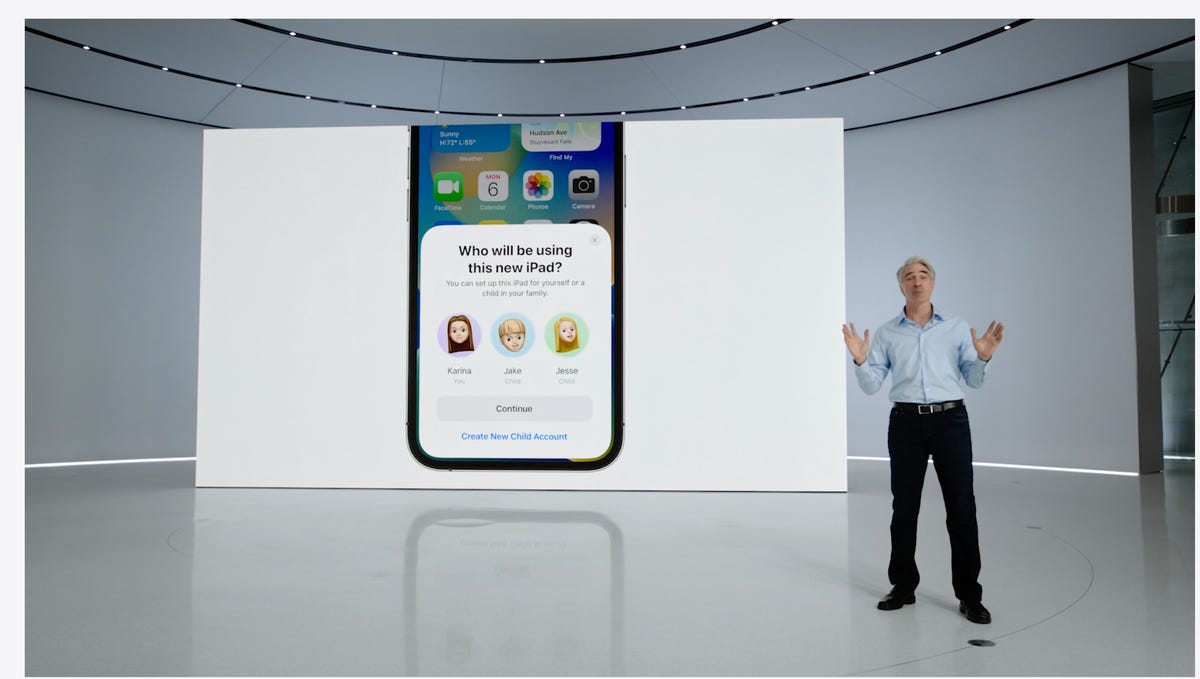
In iOS 16 you’ll be able to customize Quick Start with a specific child’s iCloud parental controls and settings.
Apple
iCloud family checklist
iCloud gets several new features. One of the more interesting ones is the option to quickly set up a new device for your child. When Quick Start appears, you have the option to pick a user for the new device and use all the existing parental controls you’ve previously selected and configured. However, this is not what many of us still want: the ability to set up separate users for the same device.
There’s a new family checklist with tips for updating settings for your kids as they get older, like a reminder to check location-sharing settings or share your iCloud Plus subscriptions.