Category: Technologies

  • Best Budget Laptop 2023: Our Top 6 Picks Starting at $300

    Best Budget Laptop 2023: Our Top 6 Picks Starting at $300

    When you’re spending several hundred dollars on a device, you want to make sure you get something that meets your performance needs. However, you don’t want to spend big money on features you don’t need. The best budget laptop models can handle all your everyday tasks like checking emails, scrolling through social media, typing up documents and more, and they can be available for less than $900.

    The chip shortages of the past couple of years have made finding a good budget-friendly laptop a little trickier, though. With fewer chips available, PC makers made more midrange and premium laptops than lower-end models made to handle essential, day-to-day tasks. Inflation has driven up prices, too. So while it’s possible to find a good laptop under $500, you may need to shop around and wait for a discount. Otherwise, you may need to spend closer to $700 to get a laptop that’ll last you several years.

    The good news is, we’re here to help. If you’re searching for a laptop under $500, we’ve tested and reviewed the best budget laptops you can buy right now. Not sure what to look for in a good budget laptop? Jump to the buying advice right below our recommendations. This advice is based on our years of testing and review experience to figure out what to expect from a laptop priced under $500. It will also let you know what to look for if you want to continue your budget laptop hunt on your own.

    Use these picks to sort through the competition. Because there are a lot of cheap laptops that aren’t worth it, try not to make rash decisions when buying.

    Best budget laptops

    Josh Goldman/CNET

    The HP Laptop 17 is a good pick if you want everyday performance and a bigger display. It’s perfect for home office tasks, entertainment and just general computing. Battery life is also good at nearly 9 hours in our tests. Although the configuration we reviewed is $650, HP offers many configuration options so that you can balance price and performance to match your needs. And if you’d rather have a smaller laptop, HP makes both 14- and 15.6-inch models in this line too.

    HP Laptop 17 review

    Sarah Tew/CNET

    The Acer Aspire 5 continues to be one of the best laptop deals available. Available in 14-, 15.6- and 17.3-inch sizes, I am partial to the 15.6-inch size because it’s relatively compact and lightweight but still full-featured. Acer has a wide range of configurations to choose from starting under $500. This budget laptop also features a USB 3.2 Gen 1 USB-C port, two USB-A 3.2 Gen 1 ports, Ethernet and an HDMI port. The Acer Aspire 5 regularly includes a backlit keyboard and fingerprint reader for quick sign-ins — rarities at this price.

    Acer Aspire 5 review

    Josh Goldman/CNET

    This Lenovo 13-inch Chromebook two-in-one has a full-HD display as well as excellent performance and battery life for the money, thanks to an Intel Core i3-1115G4 processor, 8GB of RAM and a 128GB solid-state drive. Battery life is great, too, at nearly 11 hours.

    While it’s not overflowing with extras, the Flex 5i Chromebook does have a privacy shutter on the webcam so you can physically block it when it’s not in use. The touch display is also pen-enabled so you can write or draw it with a USI pen. It is definitely one of the best Chromebook models for its price, power and size.

    Lenovo has another two-in-one option on our best budget laptop list, the Lenovo Duet Chromebook. The Lenovo Duet Chromebook is similarly priced to the Flex 5i but is a detachable two-in-one — i.e., a tablet with a removable keyboard cover. If you need a Chromebook for full-day use, go with the Flex 5i. The Lenovo Duet Chromebook is better as a secondary device for on-the-go productivity tasks and entertainment.

    Lenovo Chromebook Flex 5i review

    $300 at Amazon

    You’re receiving price alerts for Lenovo Flex 5i Chromebook

    Lenovo

    The Windows version of the 14-inch Lenovo IdeaPad Flex 5i is also an excellent value. Along with the latest 12th-gen Intel processors, Lenovo includes higher-end features like a Thunderbolt 4 USB-C port, an SD card reader, a 1080p webcam with a privacy shutter and a fingerprint reader. Plus, it reached nearly 11 hours of battery life in our tests. It regularly sells for around $700, but right now you can get it for just $450.

    Josh Goldman/CNET

    The HP Pavilion 14 is a budget laptop that looks and performs above its price. At 3.2 pounds (1.4 kilograms), the laptop can easily be a daily carry for school or work. It could also be a good home office laptop that can be easily connected to a monitor, keyboard and mouse at a desk, but also has a screen that’s comfortably large enough for full-time use. It’s just a solid everyday laptop with a clean design. The starting price is $650, and the configuration we tested is normally $800, but it goes on sale for much less sometimes.

    HP Pavilion 14 review

    Dan Ackerman/CNET

    The Lenovo Duet Chromebook (aka Chromebook Duet 3) is an awesome little 11-inch ChromeOS tablet with a detachable keyboard and touchpad. Its small size and performance aren’t ideal for full-time use. But the Chromebook Duet 3 is a good pick if you’re looking for an affordable ultraportable device to get some work done on the go, sketch or jot down notes in class, or do simple stuff like email, web browsing, gaming, reading and streaming video.

    The original 10-inch version of the Duet Chromebook is also still available for $300 or less.

    Lenovo Duet Chromebook review

    $379 at Best Buy

    You’re receiving price alerts for Lenovo Duet Chromebook

    Budget laptop FAQ

    Are laptops under $500 any good?

    As a rule of thumb, resist buying out of desperation — don’t spend $500 because you can’t find a cheaper laptop deal available, for example. Buying a need-it-now laptop can be like shopping for food while hungry.

    Even for a laptop, $500 can be a lot of money, and you’ll likely be holding onto it for at least three years, if the statistics Intel and PC manufacturers hurl at us are correct.

    You can also try to make your current laptop last a little longer. If you need something to tide you over for a few months, dig into possible places to buy refurbished machines and explore nonprofit or educational discounts if you’re eligible.

    Also, if there’s something you really want in a laptop, like a touchscreen, a backlit keyboard, DDR4 RAM, an HD webcam, Intel UHD Graphics, AMD Radeon Vega Graphics or an HDMI port, check the manufacturer’s specs closely to make sure it has it. You’ll regret it if you don’t.

    If you suspect you’ll be holding onto your new laptop for a while, see if you can stretch your budget to buy a slightly more expensive laptop to accommodate more than 8GB of RAM or a processor with more cores than you were otherwise considering.

    If you haven’t thought about it, look at AMD Ryzen processors as alternatives to Intel Core for Windows laptops or alternatives to Intel Celeron and Pentium for Chromebooks.

    Even better, if you’re comfortable with it, think about an affordable laptop with a replaceable battery (if you can find one), upgradable memory, graphics card and storage, or all of the above.

    Remember to consider whether having a lighter, thinner laptop or a touchscreen laptop with a good battery life will be important to you in the future.

    Read more: Best Monitors Under $200 You Can Get Right Now

    When it comes to storage, you can always add an external drive or two (or five, if you’re me) at some point down the road or use cloud storage to bolster a small internal drive. You can frequently set a system to boot from an external solid-state drive if necessary, too. You may see references to Intel Optane in less expensive laptops; Optane is fast solid-state memory that acts as a temporary storage space for frequently accessed files on the hard drive to speed things up. It helps, but not as much as an SSD drive.

    And finally, if you’re replacing an old Windows laptop that’s not up to running Windows anymore, consider turning it into a Chromebook.

    What are the trade-offs on laptops under $500?

    As long as you manage your expectations when it comes to options and specs, you can still get quite a bit from a budget laptop model, including good battery life and a reasonably lightweight laptop body.

    A bright spot is you don’t have to settle for a traditional clamshell laptop with a fixed display and keyboard. You can also get a convertible laptop (aka a two-in-one), which has a screen that flips around to turn the screen into a tablet, to position it for comfortable streaming or to do a presentation.

    Keep in mind that all convertibles work as both laptops and tablets. A touchscreen is a prerequisite for tablet operation, and many support styluses (aka pens) for handwritten and sketched input. Don’t assume a stylus is included, though.

    One thing you won’t find at these cheap laptop prices: a MacBook or any other Apple laptop. An iPad will run you more than $500 once you buy the optional keyboard (though it might work out to less if you look for sales on the tablet or keyboard), which is above our budget here. A base-model iPad with an inexpensive Bluetooth keyboard and cheap stand for the iPad might suffice.

    You’ll see a lot of cheap laptops listed as coming with Windows 10 S, a stripped-down and locked-down version of the operating system intended for use by schools — it only allows you to install applications from the Windows Store, forces you to use Microsoft’s Edge browser and includes a subset of the administrative tools in Windows 10 Pro. You can upgrade to the full version for free, though.

    It’s easier to find inexpensive Chromebooks than Windows laptops, making them one of the most popular budget laptops on the market, though we’re also seeing a lot more Chromebooks in the $500-to-$1,000 range.

    Google’s ChromeOS isn’t nearly as power-hungry as Windows (check the specs), so you can get by with a lower-end processor, slower storage and less screen resolution or RAM — just a few of the components that make a laptop expensive.

    But the flip side is Chrome and Google apps are more of a memory hog than you’d expect, and if you go too low with the processor or skimp on memory, the system will still feel slow.

    ChromeOS is also a much different experience than Windows; make sure the applications you need have a Chrome app, Android app or Linux app before making the leap. Since Chromebooks are cloud-first devices, however, you don’t need a lot of storage built-in.

    That also means if you spend most of your time roaming the web, writing, streaming video or playing Android games, they’re a good fit. If you hope to play Android games, make sure you get a touchscreen Chromebook.

    For a cheap gaming laptop, though, you’ll still have to break the $500 ceiling to support most games. The least expensive budget laptops suitable for a solid gaming performance experience — those with moderately powerful discrete graphics processors — will run you closer to $700. Here are our recommendations if you’re looking for the best gaming laptop under $1,000.

    Although, if you like to live on the bleeding edge, cloud gaming services such as Nvidia GeForce Now and Microsoft Xbox Game Pass Ultimate’s Cloud Gaming will let you play games on laptops with specs that hit the under-$500 mark.

    What to look for in laptops under $500

    While Chromebooks can run ChromeOS-specific and Android apps, some people need the full Windows OS to run heftier applications, such as video-editing suites. With that comes a need for a faster processor with more cores, more memory — 8GB RAM is the bare minimum — and more storage for applications and the operating system itself.

    A lot of sub-$500 laptops have 4GB or 8GB, which, in conjunction with a spinning hard disk, can make for a frustratingly slow Windows laptop experience.

    • A lot of Windows laptops in this range use AMD Athlon and lower-end A series or Intel Celeron and Pentium processors to hit the lower price. I don’t recommend going with an Athlon instead of a Ryzen or a Celeron/Pentium instead of a Core: Windows is too heavy for them, and in conjunction with the 4GB memory a lot of them have, you may find them abysmally slow at best.
    • Because of their low prices, 11.6-inch Chromebooks are attractive. But we don’t recommend that size for any but the youngest students.
    • SSDs can make a big difference in how fast Windows performance feels compared with a spinning hard disk. However, not all SSDs are equally speedy and cheaper laptops typically have slower drives. Still, even a slower SSD is faster than a slow 5,200rpm hard-disk drive.
    • In the budget price range, you have to watch out for screen terminology when it comes to specs: An “HD” screen may not always be a truly high-definition screen. HD, which has a resolution of 1,920×1,080 pixels, is called “Full HD” so marketers can refer to lesser-resolution displays (1,280×720 pixels) as HD. In Chromebooks, HD usually refers to a screen with a resolution of 1,366×768 pixels. On the upside, the boom in 14-inch laptops trickles down to this price range, which allows for more FHD options in the size.
    • A frequent complaint I see is about “washed-out” looking displays with poor viewing angles. Unfortunately, that’s one of the trade-offs: A lot of these use TN (twisted nematic) screen technology, which is cheap but meh. Look for IPS (in-plane switching) LCDs which are better for off-angle viewing.
    • Pay attention to networking. Inexpensive models with older chipsets may only support Wi-Fi 5 (aka 802.11ac) or the older Wi-Fi 4 standard (802.11n). For the sake of longevity, look for at least 802.11ac but you can find inexpensive laptops with the latest wireless standard 802.11ax (Wi-Fi 6).

    Considering all specs and options — battery life, storage space, screen resolution, screen size, core processor performance, general machine and battery performance — you’ll find some of our top picks for 2022’s best Windows laptops and Chromebooks under the $500 budget in the list above, along with their pros and cons.

    How we test computers

    The review process for laptops, desktops, tablets and other computer-like devices consists of two parts: performance testing under controlled conditions in the CNET Labs and extensive hands-on use by our expert reviewers. This includes evaluating a device’s aesthetics, ergonomics and features. A final review verdict is a combination of both those objective and subjective judgments.

    The list of benchmarking software we use changes over time as the devices we test evolve. The most important core tests we’re currently running on every compatible computer include: Primate Labs Geekbench 5, Cinebench R23, PCMark 10 and 3DMark Fire Strike Ultra.

    A more detailed description of each benchmark and how we use it can be found in our How We Test Computers page.

    Best Laptops for 2022

    A selection of the best laptops you can buy right now.

    See the full list of best laptops for 2022.

  • Best Printer for 2023

    Best Printer for 2023

    Now that so much work can be done online without the need for a hard copy, many people have begun to wonder in recent years if they really need a printer at home.

    However, with tons of people now working from home, we’ve seen a renaissance for home printers. If you’re one of the many who find yourself in need of your own printer, CNET is here to help you find the right one. We’ve combed through the changing landscape of printers to bring you the best models available in 2023 so you can print photos, documents, college essays and more whenever you need.

    Every printer profiled below can manage basic printing needs. For example, they can handle mobile printing and wireless printing from a phone or any PC, Mac or Chromebook, which is a must when it comes to office printers. They can also print over a cabled connection and via wireless printer connectivity. (Note that some — but not all — printers support Apple’s AirPrint and Google’s Cloud Print protocols, which are usually less onerous than the printer vendors’ proprietary systems.)

    But what you intend to print will determine which is the best printer for you. If you’re mostly working with shopping lists, concert tickets or travel itineraries, having excellent print quality is arguably less important than print speed and price. If you’re using your printer for professional materials or photo printing, then color accuracy, printing quality and the inclusion of features like borderless printing will be primary considerations when you’re looking for the right printer.

    Another factor to consider is the cost of ink and making sure that you have enough ink to print everything you need. (There’s nothing more frustrating than having a printer but no ink in the ink tank.) Inkjet printers use liquid ink to print, whereas laser printers use toner cartridges containing powder. So even if you’re getting a great printer deal, just be sure to do some research into how you’ll refill the ink, so you can choose the best printer for your overall budget. Some new printers include an ink subscription in their original price tag, so that may be something to consider as well.

    We’ve tested and reviewed the top models for home and small office use from many of the major printer manufacturers including Brother, Canon, Epson and HP. Whether you print for business or personal use, we’ve got the best printer for you.

    HP

    If you work from home but need all the advantages of an office printer, the OfficeJet Pro is an excellent choice. In terms of sheer printing speed, the HP is ahead of most others in its price range. It printed the 10 pages in just 32 seconds and scanned and printed them in 1 minute, 12 seconds. Very impressive.

    While the images and graphics aren’t the best, they were, on average, for at-home printers. The text was excellent, with clearly defined edges, even the Comic Sans parts. It’s a bit larger than some of the printers I tested, but the deep paper tray and auto-feed for the scanner make the size worthwhile.

    Of the printers I’ve tested so far, the OfficeJet Pro is the most versatile. It also comes with six months of free ink, based on a standard usage if you sign up for HP Plus. While HP Plus does give you some extra helpful app choices for free and the ink, the downside is you can only use HP inks while subscribed to it.

    You’re receiving price alerts for HP OfficeJet Pro 9015e

    Epson

    First off, this is not a typical printer machine. The bulky square shape is not something you would want to see in a fashionable home office. It is solidly constructed, though, and unlike some of the other products in this price range, it doesn’t have any creaky plastic pieces. It’s built well and it shows.

    Because of the extra paper tray, the Epson can hold a large amount of paper for use. This makes it perfect if you and another person use it daily. It prints fast too — the fastest in our test, though the scanning is a little slow. The graphic, text, and webpage text were all excellent, though the image quality on glossy paper was only good. This is a workhorse though, designed for high-volume text, not imagery.

    My only real issue with the Workforce Pro was the size of the ink cartridges. It’s great that you have two large paper trays to hold a lot of paper, but if the amount of ink you have doesn’t match, then you are going to have a problem.

    $200 at Amazon

    You’re receiving price alerts for Epson Workforce Pro WF-4830 Wireless All-in-One Printer with Auto 2-Sided Print, Copy, Scan and Fax, 50-Page ADF, 500-sheet Paper Capacity, and 4.3″ Color Touchscreen, Works with Alexa, Black, Large

    Canon

    The Canon Pixma TR4720 is not going to be winning any awards in any category. In all of my testing, it came out around the middle of the pack in just about every category. While that could be seen as a negative in a printer that costs several hundred dollars, for one that is as cheap as the Pixma, it’s encouraging.

    In fact, the Pixma scored better in color reproduction when placed against other, more expensive all-in-one printers when printing on glossy paper. Some printers suffer from dimpling when printing images but the Pixma didn’t and the skin tones were far better on the Canon image than on other brands. My only real negative is the machine’s volume. You can tell it was built on a budget, but as far as budget printers go, this one’s pretty good.

    You’re receiving price alerts for Canon Pixma TR4720

    James Bricknell / CNET

    Sublimation is the process of transferring ink from paper to another material like t-shirts, mugs and canvases. There are plenty of options if you are looking to convert a standard printer to use sublimation ink but if possible you should buy a dedicated printer for the job.

    The Sawgrass SG500 is purpose-built to print using sublimation ink and paper. It works great too: You can print up a storm of artwork to put on t-shirts for the whole family. If you’re interested in starting your own business using your own art, then this printer is well worth the price.

    $649 at Amazon

    You’re receiving price alerts for Sawgrass SG500 Sublimation Printer with Inks, 330 SHEETS SUBLIMAX Paper, 3 Rolls Tape, White

    Epson

    After testing the Expression I was pleasantly surprised at how well this printer did. Being Epson’s budget option it could have been poor, but instead performed excellently at text reproduction and about average on the image quality.

    The setup was quick and easy and the Wi-Fi connection seems to be solid wherever I put it in my house. Print time was average at 1 minute, 15 seconds, but the text quality more than made up for the speed. All of the text, even the photocopied text was legible and smooth.

    The only downside is how small the ink cartridges are on this printer. I know ink is where companies make the most money, but replacing these tiny cartridges every few weeks or months will get old quick.

    You’re receiving price alerts for Epson Expression Home XP-4100 Wireless Color Printer with Scanner and Copier

    How we test

    For a long time, CNETs methodology for testing printers didn’t change. Our original testing was designed in the days when Wi-Fi printers were rare, and faxing was an important consideration when choosing a device. These days, Wi-Fi is standard, app-controlled printers are everywhere and what and how we print have changed considerably. I designed a new set of printing parameters in 2022 that I hope will mesh with how we use printers nowadays.

    Print and copy speed

    The speed at which things print and copy is important in our daily lives. Printing a quick theater ticket, or copying a document needs to be done quickly and accurately. Testing this is easy; I simply used a stopwatch and printed 10 pages of text of varying sizes and typefaces. I used Fillerama to generate random text from Star Wars and Monty Python and changed the font size randomly across the page. I also used different fonts like Arial and Times New Roman to see how they would print. I even added Comic Sans into the mix, as people still think it’s a good idea to use it. Middle managers mostly.

    Brochure and web page test

    A screenshot of a brochure with a pink phoneA screenshot of a brochure with a pink phone
    James Bricknell / CNET

    When asked, people told me that they use their home printer for printing online tickets from webpages as well as their resumes for job interviews. With that in mind I used the standard brochure template from Google Docs that I changed a little — I made the font size smaller and larger and changed the font too — to give that modern resume look. I also saved my article about becoming a Star Wars action figure into a PDF — I needed to keep the ads the same on every test so the live article wouldn’t do. Sometimes we are in too much of a rush to select just the ticket, so printing the entire webpage is easier. This test simulates that.

    Receipt test

    An image made up of lots of other imagesAn image made up of lots of other images
    Photodisc

    When you work from home you often have to submit your receipts for traveling and incidentals. One of the most common ways to do that, if you aren’t lucky enough to have an app, is to tape receipts to a piece of paper and scan them into your computer. That way you can email to where they need to go quickly and easily. To recreate that, I taped my receipts from my food shopping to create a scan. I used a mixture of new receipts and ones that had faded in my wallet, then I checked the scan for legibility. Most scanners will enhance the image you are scanning and that certainly helps with receipts.

    Picture quality test

    Like the previous CNET photo tests, I use the PhotoDisc Target file for my image tests. I print them on the same Canon glossy paper and study them according to the guidelines associated with this industry standard. I take special note of the skin tones at the bottom to make sure they’re replicated correctly and I also check for chromatic abrasion. Chromatic abrasion is a purple hue that often surrounds images and can make even the best picture look cheap and tacky. I also check for stippling; an image error that occurs on poorly calibrated inkjet printers.

    Should you buy a printer with an ink subscription?

    Ink subscriptions are becoming more common, with several of the printers on this list offering them as part of the original cost. Are they any good though? It all depends how much ink you use. If you’re printing more than 100 pages a month, then yes, it likely is a good deal. Less than that and you may find you don’t need it.

    Most ink subscriptions offer you a certain number of months free, so it is worth trying it to see if it can fulfill your needs, but remember to cancel it before you are supposed to start paying if you don’t want it.

  • NFL Divisional Round: How to Watch, Stream Cowboys vs. 49ers on Sunday Without Cable

    NFL Divisional Round: How to Watch, Stream Cowboys vs. 49ers on Sunday Without Cable

    The San Francisco 49ers haven’t lost a game since October and after a slow first half, they ran away with Saturday’s playoff opener against their NFC West rivals the Seattle Seahawks. The Dallas Cowboys, meanwhile, dominated Tom Brady and the Tampa Bay Buccaneers on Monday night (despite some poor kicking) to continue their impressive season.

    The two teams will meet at the 49ers’ home in Santa Clara on Sunday at 6:30 p.m. PT (4:30 p.m. ET) on Fox.

    San Francisco 49ers defensive end Nick Bosa rushes the passerSan Francisco 49ers defensive end Nick Bosa rushes the passer

    Nick Bosa and the San Francisco 49ers will take on the Dallas Cowboys on Sunday.

    Ezra Shaw/Getty Images

    How to watch Cowboys vs. 49ers without cable

    If you don’t have a cable or satellite TV subscription, you can watch the Cowboys-49ers game on Fox with a live TV service. The good news for football fans is that Fox is available on each of the five major streaming services. The catch is that not every service carries every local network, so check each one using the links below to make sure it carries Fox in your area.

    If you live in an area with good reception, you can watch the broadcast on Fox for free on over-the-air broadcast channels just by attaching an affordable (under $30) indoor antenna to nearly any TV.

    Sling’s $40-a-month Blue package carries Fox but only in a handful of areas.

    Read our Sling TV review.

    YouTube TV costs $65 a month and includes Fox. Plug in your ZIP code on its welcome page to see which local networks are available in your area.

    Read our YouTube TV review.

    Hulu with Live TV costs $70 a month and includes Fox. Click the “View channels in your area” link on its welcome page to see which local channels are offered in your ZIP code.

    Read our Hulu with Live TV review.

    DirecTV Stream’s basic, $70-a-month Entertainment package includes Fox. You can use its channel lookup tool to see which local channels are available where you live.

    Read our DirecTV Stream review.

    FuboTV’s basic plan costs $75 a month and includes Fox. Click here to see which local channels you get.

    Read our FuboTV review.

    All of the live TV streaming services above offer free trials, allow you to cancel anytime and require a solid internet connection. Looking for more information? Check out our live-TV streaming services guide.

  • Best Game Subscription Services

    Best Game Subscription Services

    Gaming subscriptions are here to stay, and there’s no denying it. Every gaming platform has at least one, with Xbox, PlayStation, and Nintendo building their gaming subscription servicesaround basic features like online multiplayer.

    That’s right, even if you’re not interested in a digital gaming library, it might be more cost-effective to subscribe to one just to access things like multiplayer — and you might even find a new favorite game along the way.

    With cloud gaming and the PC version of Xbox Game Pass, subscriptions are a big part of PC gaming, but not yet the default. It helps that PC gamers can buy games a la carte from a variety of shops (Steam, GOG and so on), which means that individual games are often discounted.

    White Xbox and PS5 controllers.White Xbox and PS5 controllers.
    Dan Ackerman/CNET

    And if content subscriptions are the future of gaming, then cloud gaming subscriptions are the future of that future, as they require almost no specialized hardware, and generally work anywhere from an iPad to a cheap Chromebook. For this roundup, we’re including both download and cloud-based subscription services.

    That said, the road to cloud gaming is not always a smooth one. Google just announced that its Stadia service is going to end this month. Similarly, the very first cloud-gaming service, On Live, started in 2010 and shut down in 2015.

    Xbox Game Pass Ultimate remains the gold standard, offering a catalog of games across console, PC and cloud (which works on practically any device). But Sony has revamped its PlayStation Plus service to be much closer to what Microsoft offers.

    The top tier of services includes:

    • Xbox Game Pass Ultimate
    • PlayStation Plus
    • Nintendo Switch Online
    • GeForce Now
    • Apple Arcade

    Other players include:

    • EA Play
    • Ubisoft Plus
    • Google Play Pass
    • Amazon Luna
    • Amazon Prime Gaming

    Dan Ackerman/CNET

    Game Pass has evolved far beyond its Xbox-bound origins to become a subscription that delivers something for everyone who plays games, and now encompasses console and PC game downloads, access to online multiplayer services, a deal with gaming giant EA and a cloud-based service that streams games to nearly any device.

    Microsoft offers several versions, but because of how the features are sliced up between them, only the $15-a-month Ultimate plan, with all the benefits detailed above, really makes sense. New subscribers can get their first month for just $1 right now as well.

    Read our full review of Xbox Game Pass.

    Dan Ackerman/CNET

    This service went through a dramatic change in 2022. The new PS Plus incorporates a large game catalog and also Sony’s PS Now cloud gaming service. Subscribers have access to three tiers: Essential, Extra and Premium (called Deluxe in some countries).

    Essential is the same as the previous version of PS Plus, allowing access to online multiplayer games, along with PSN in-store discounts, cloud game saves and two new free-to-you games each month (similar to Xbox Live Gold).

    Extra has about 400 PS4 and PS5 games available to play via download for $15 monthly, while Premium costs $18 a month and adds PlayStation 1, PS2, PS3 and PSP games, a handful of time-limited game demos and cloud streaming for select games.

    Essential is the least expensive ($10 a month), but Extra ($15 a month) is the tier everyone should have. Premium ($18 a month) feels like a stretch, unless you’re really into retro games. — Oscar Gonzalez

    See our top picks for the best PlayStation Plus games.

    Read our review of PlayStation Plus.

    Now playing:Watch this:PlayStation Plus: Picking the Best Tier

    10:39

    Nintendo

    If you want to play online multiplayer with a Nintendo Switch, there’s only one option: Pay for Nintendo Switch Online. The service ranges in price depending on whether you’re playing by yourself or have other family accounts: $19 for a single person is the way to go for most, while $35 covers eight Nintendo family accounts in case others play (or have their own Switches).

    Unlike other services, which charge by the month, this single fee covers an entire year. Besides online play, access to a bunch of free NES and SNES games are included, as well as Pac-Man 99. Online cloud saves are useful in case you play across multiple Switches, too.

    A bonus tier introduced in 2021 called the Expansion Pack probably isn’t worth it unless you’re a serious Switch player or a lover of retro games. It comes with add-on Animal Crossing, Splatoon 2 and Mario Kart 8 DLC packs that normally cost around $25 each, and adds a bunch of Sega Genesis and N64 games.

    But the $50-a-year plan ($80 a year if you choose the family account access) still doesn’t feel worth it yet. If you really love Sega games, there’s already a Genesis Classics compilation in the eShop that’s often on sale. — Scott Stein

    You’re receiving price alerts for Nintendo Switch Online

    Lori Grunin/CNET

    GeForce Now differs from the competition in that it lets you play games you’ve already paid for rather than requiring you buy a special version of the game (like Google Stadia or Amazon Luna) or stream games from a circumscribed subscription library (like Xbox Game Pass Ultimate or the Sony PlayStation Plus Premium).

    It also works, via an app or web browser, on Android, Windows and Mac OS devices, as well as Chromebooks, iPhones and iPads.

    The service costs $10 a month for a version that supports 1080p resolution at up to 60 frames per second. For $20 a month, a premium tier supports 4K resolutions at up to 120fps. A free tier is a great way to try it out, but limits you to one hour of play at a time.

    Because of its smart set of plan options, solid performance and big and growing list of supported games, along with Nvidia’s aggressive strategy for its data center and GPU businesses (the bedrock on which GeForce Now is built) I’m recommending it for gamers who’ve amassed large game libraries and want to play them in more places. — Lori Grunin

    Read our full review of Nvidia GeForce Now.

    James Martin/CNET

    Apple Arcade has established a polished service with something for every kind of gamer since its launch in 2019. For just $5 per month, subscribers can play hundreds of games without ads or in-app purchases across all their iOS devices. New games are added weekly along with updates for existing titles. You can download and play all of Apple Arcade’s games offline.

    The service is still a solid option for users seeking family-friendly gameplay, but Apple Arcade increased its appeal by adding more social and multiplayer games, as well as classic and well-known games already available in the App Store. — Shelby Brown

    Read our full review of Apple Arcade.

    Also tested

    EA Play

    For $5 to $15 a month, you get access to a catalog of EA games, but EA Play is also included in Xbox Game Pass Ultimate.

    Ubisoft Plus

    For $15 a month, you get access to Ubisoft games as a stand-alone PC subscription, or as a paid add-on to Stadia or Luna, and eventually Xbox.

    Google Play Pass

    Like Apple Arcade, the Google version for Android phones includes lots of games, but also other apps. It works on Android devices only.

    Amazon Luna/Prime Gaming

    Luna is Amazon’s cloud-based service, like Stadia, that offers different catalogs for between $5 and $18 a month. Prime members can stream some games at no additional cost, and also get access to “a rotating selection” of full downloadable games. Amazon also owns Twitch, so there’s deep built-in integration for streamers.

    Stadia

    Google’s cloud-based service is shutting down later this month, but you can still go back and read our launch review of Google Stadia.

  • iOS 16.3 Is Coming Soon: The New Features That Could Hit Your iPhone

    iOS 16.3 Is Coming Soon: The New Features That Could Hit Your iPhone

    Apple’s next iOS update is expected to arrive as soon as this week, and with it will likely come a handful of new features, bug fixes and some Black History Month designs for your iPhone. Public beta testers, however, have already been given access to the iOS 16.3 beta.

    CNET Tech Tips logoCNET Tech Tips logo

    As always, we recommend downloading a beta only on something other than your primary device. Since these are beta versions of iOS 16.3, the features might be buggy and your device’s battery life may be shortened, so it’s best to keep betas on a secondary device.

    If you’re a public beta tester, here’s what’s new in the iOS 16.3 beta software. Note that the beta is still ongoing, so these likely won’t be the only new features to land on your iPhone when iOS 16.3 is officially released.

    Apple Maps helps you find nearby parking options

    Parking options in Apple Maps near Cincinnati's Music HallParking options in Apple Maps near Cincinnati's Music Hall

    Book parking before you leave your home so you aren’t driving around looking for a spot.
    Screenshot by Zach McAuliffe/CNET

    If you use Apple Maps to get directions to a location, you can now find nearby parking within Maps. When looking up a place to go, you can tap More (…) and tap Parking. This opens SpotHero, an online service that helps you find, book and pay for a parking spot at a nearby garage or parking lot. You can also reserve a spot through SpotHero. This feature is available only in select cities, though.
    New ways to use Emergency SOS via satellite

    Emergency SOS via satellite was introduced at Apple’s 2022 event in September. The new beta software brings new ways to use the service on your iPhone.

    In iOS 16.3 beta 2, the Call with Hold option has been replaced with Call with Hold and Release. If you enable Call with Hold and Release, you can hold the side button and a volume button to initiate a countdown and an alarm. After the countdown, you release the buttons and your iPhone will call emergency services on its own. Before with Call with Hold, pressing the side button and a volume button would first bring up the Emergency SOS call slider. If you continued to hold the buttons, a countdown started and an alarm would go off. After the countdown ended, your phone would make an emergency call.

    There’s also an option to Call Quietly in Emergency SOS. By enabling this option, when you try to make an emergency SOS call, your phone won’t start flashing or making an alarm sound.

    Security keys come to Apple ID

    With the beta software, users will be able to use third-party security keys instead of two-factor authentication for their Apple ID.

    Security keys are a lot like keys to your home. You still use passwords, but this extra layer of security can help protect you against phishing scams and hackers.

    “Hardware security keys are very, very secure,” Diya Jolly, chief product officer of authentication service company Okta, told CNET’s Stephen Shankland.

    Security Keys screen in iOS 16.3 betaSecurity Keys screen in iOS 16.3 beta

    Security keys add more protection to your device.

    Screenshot by Zach McAuliffe/CNET

    Apple’s security keys feature only works with FIDO Alliance-certified security keys.

    New HomePod Handoff prompts

    Beta testers who have an Apple HomePod will be shown new messages when trying to use Handoff to transfer music, podcasts or phone calls over to the speaker. The messages further explain how Handoff works with your HomePod.

    One message instructs you to bring your iPhone closer to the HomePod to view controls or to transfer your audio over to the HomePod. Another message says you can bring your iPhone closer to your HomePod again later to view those same controls or to transfer music.

    Those are the major new features beta testers will see in the iOS 16.3 beta. That doesn’t mean these are the only features coming to the next iOS update. Apple will likely add more features before the release of iOS 16.3.

    For more iOS 16 news, check out the new features in iOS 16.2 and iOS 16.1. Here’s how to sign up to test Apple’s iOS beta software, too.

    Now playing:Watch this:iOS 16: Powerful Features You May Have Missed

    6:28

  • Arsenal vs. Manchester United Livestream: How to Watch Premier League Soccer From Anywhere

    Arsenal vs. Manchester United Livestream: How to Watch Premier League Soccer From Anywhere

    Table-toppers Arsenal welcome third-placed Manchester United to the Emirates Stadium on Sunday in what looks set to be pivotal match in this season’s English Premier League title race.

    A win here for the Gunners would see them open up a massive 11-point gap over United, as coach Mikel Arteta looks to edge his side closer to their first title in 19 years.

    United boss Erik ten Hag nevertheless knows his team have had the measure of Arsenal once already this season, with their 3-1 victory in the reverse fixture at Old Trafford back in September standing as the only defeat the Gunners have suffered in the league this term.

    United were left to settle for a draw in midweek away to Crystal Palace, in a match that saw influential midfielder Casemiro pick up a costly yellow card, which rules him out of this big game.

    Sunday’s match could see Arsenal give new $33 million signing Leandro Trossard his debut, following the completion of the Belgian attacker’s move from Brighton on Friday.

    Below, we’ll outline the best live TV streaming services to use to watch the game live wherever you are in the world.

    Leandro Trossard posing cross-armed in front of an Arsenal flag.Leandro Trossard posing cross-armed in front of an Arsenal flag.

    Sunday’s game could see Leandro Trossard make his debut for Arsenal following his big-money move from Brighton.

    Stuart MacFarlane/Arsenal FC/Getty Images

    Arsenal vs. Manchester United: When and where?

    Arsenal host Manchester United at the Emirates Stadium in London on Sunday, Jan. 22. Kickoff is set for 4.30 p.m. local time in the UK (11.30 a.m. ET, 8.30 a.m. PT in the US).

    How to watch the Arsenal vs. Man United game online from anywhere using a VPN

    If you find yourself unable to view the game locally, you may need a different way to watch the game — that’s where using a VPN can come in handy. A VPN is also the best way to stop your ISP from throttling your speeds on game day by encrypting your traffic, and it’s also a great idea if you’re traveling and find yourself connected to a Wi-Fi network, and you want to add an extra layer of privacy for your devices and logins.

    With a VPN, you’re able to virtually change your location on your phone, tablet or laptop to get access to the game. So if your internet provider or mobile carrier has stuck you with an IP address that incorrectly shows your location in a blackout zone, a VPN can correct that problem by giving you an IP address in your correct, nonblackout area. Most VPNs, like our Editors’ Choice, ExpressVPN, make it really easy to do this.

    Using a VPN to watch or stream sports is legal in any country where VPNs are legal, including the US, UK and Canada, as long as you have a legitimate subscription to the service you’re streaming. You should be sure your VPN is set up correctly to prevent leaks: Even where VPNs are legal, the streaming service may terminate the account of anyone it deems to be circumventing correctly applied blackout restrictions.

    Looking for other options? Be sure to check out some of the other great VPN deals taking place right now.

    Sarah Tew/CNET

    ExpressVPN is our current best VPN pick for people who want a reliable and safe VPN, and it works on a variety of devices. It’s normally $13 per month, and you can sign up for ExpressVPN and save 49% plus get three months of access for free — the equivalent of $6.67 per month — if you get an annual subscription.

    Note that ExpressVPN offers a 30-day money-back guarantee.

    Livestream the Arsenal vs. Man United game in the US

    Sunday’s match at the Emirates is streaming on Peacock. You’ll need a Peacock Premium or Premium Plus account to catch the game live.

    NBC’s streaming service Peacock offers access to plenty of Premier League soccer throughout the season. You’ll need to be signed up with a Peacock Premium or Premium Plus account to stream games live. For a limited time, you can sign up for Peacock Premium at a 60% discount, dropping the monthly cost as low as $2 (or even less with an annual account).

    Livestream the Arsenal vs. Man United game in the UK

    Premier League rights in the UK are split between Sky Sports, BT Sport and Amazon Prime Video. The Arsenal-Man United game is exclusive to Sky Sports — showing on its Sky Sports Main Event, Premier League and Ultra channels. If you already have Sky Sports as part of your TV package, you can stream the game via its Sky Go app, but cord-cutters will want to get set up with a Now account, and a Now Sports membership, to stream the game.

    Sky subsidiary Now (formerly Now TV) offers streaming access to Sky Sports channels with a Now Sports membership. You can get a day of access for 12, or sign up to a monthly plan from 25 per month right now.

    Livestream the Arsenal vs. Manchester United game in Canada

    If you want to stream this crucial game in the title race live in Canada, you’ll need to subscribe to FuboTV Canada. The service has exclusive rights to this Premier League season.

    FuboTV is the go-to destination for Canadians looking to watch the Premier League this season with exclusive streaming rights to every game. It costs CA$25 per month, though you can save some cash by paying quarterly or annually.

  • Record iPhone Video The Wrong Way? Here’s How To Fix the Orientation

    Record iPhone Video The Wrong Way? Here’s How To Fix the Orientation

    Sometimes you might start shooting a video vertically on your iPhone only to realize moments later that it’s recording horizontally instead. Flipping your phone midway doesn’t work, since the iPhone locks the video in the orientation you started recording in.

    CNET Tech Tips logoCNET Tech Tips logo

    Thankfully, Apple knows this is a common occurrence and has equipped our iPhones with a handy solution you can use after you’re done recording. All it involves is a series of “button” taps, and you should have your video in the correct orientation in seconds.

    Apple added the ability to rotate a video’s orientation with the release of iOS 13 in 2019. In fact, as long as your iPhone is running iOS 13 or newer, you can take advantage of the feature and quickly fix any videos recorded the wrong way. Here’s how.

    How to fix your iPhone’s video orientation

    1. Open the Photos app and find the video you want to fix.
    2. Tap the Edit button on the upper right of the screen to bring up a toolbar at the bottom.
    3. Now tap the Crop icon on the far right side on the toolbar.
    4. Next tap the Rotate tool icon (a square with a tiny arrow) on the top left of the screen.
    5. Once the video is in the orientation you want, tap the Done button.

    If you enjoyed this tech tip, make sure to check out these 10 hidden iOS 16 settings that’ll change how you use your iPhone, as well as the most annoying iOS 16 features and how to fix them.

    Now playing:Watch this:iPhone 14 and 14 Pro 3-Month Review: More to Offer

    8:28

  • Don’t Skip Out on Antivirus Software in 2023

    Don’t Skip Out on Antivirus Software in 2023

    You might think you’re smart enough to avoid viruses, but even the smartest of tech aficionados can get fooled — yes, even us. That’s why it’s so important to invest in an antivirus software that can efficiently protect your system. These programs can help protect not only your devices, but your information as well, which hackers, scammers and other internet bandits would love to get their hands on. These rascals are getting smarter every day, developing new techniques and methods all the time. Fortunately, there are tons of great antivirus softwares available in 2023, so you’ve got plenty of options to keep your computer safe. We’ve put some of the most popular softwares out there to the test to bring you the best antivirus software options out there.

    Windows devices make up three out of every four laptop or desktop operating systems, according to the latest data from Statcounter. Windows-targeted malware has a larger base of devices to infect, giving it more potential in the eyes of cybercriminals.

    We’re here to help you find the antivirus software that best fits your needs. These picks of the best antivirus programs are a combination of recommendations from independent third-party labs AV-Test, AV-Comparatives and SE Labs, as well as CNET’s own hands-on testing. We regularly research and test software to determine which product leads the pack, and we update this list periodically based on those tests.

    Note that antivirus software is only one piece of the cybersecurity puzzle. Cybercriminals are becoming more sophisticated, and the more steps you take to lock down your online security, the safer you’ll be. A secure virtual private network can help protect your internet privacy, and a password manager will help you create and keep track of more secure login credentials. These tools are all essential in protecting your personal information.

    Our recommendations

    Whether you’re looking for free antivirus protection or are willing to pay for a program that offers more security features, we have you covered. Here’s where to start when looking for the best antivirus software for your specific needs.

    Note: The pricing structure for antivirus services can be complicated, since providers often offer low introductory prices to entice you to sign up for their services. After the first billing period — typically a year or two, depending on the plan you purchase — the amount you pay for the service may increase substantially. The regular rate for the services may be double the introductory rate or sometimes more. Be sure to check the terms of the subscription plan prior to making your purchase so you don’t get an unwelcome surprise when your subscription renews.

    Microsoft

    Free version? Yes, free antivirus built into Windows 10 and Windows 11.

    Paid version: Windows Defender Advanced Threat Protection is available to corporate users for a fee.

    Honestly, if you practice safe computing — you keep your software up to date, you use strong passwords (with the help of a password manager), you steer clear of unexpected emails and you don’t click suspicious links that may be phishing attempts — you probably can avoid zero-day attacks and ransomware attacks. And with the free Microsoft Defender Antivirus software running on Windows 10, you have a malware protection safety net if you do let your guard down. In fact, it is one of the best antivirus software options.

    (Note: Microsoft changed the name of Windows Defender to Microsoft Defender and has expanded the service to other platforms.) This free antivirus program is built into Windows, and it’s turned on by default, the antivirus engine does its thing, and this antivirus solution will cover the basics of internet security. Microsoft pushes new updates frequently. Defender also lets you tune the level of protection you want, giving you control over blocking potentially unwanted apps and protecting folders and files from a ransomware attack.

    Windows 10 and 11 will automatically disable its own Windows Defender antivirus when you install third-party antivirus. If you uninstall the third-party protection, Windows will turn back on its own antivirus.

    Norton

    Platforms: Windows 10 and 11 plus MacOS, Android, iOS.

    Free version? No, but a free 30-day trial is available.

    Cost: $100 per year for five devices (first year).

    For a long time, Norton Security — now called NortonLifeLock, and no longer part of Symantec — has earned high marks from AV-Test, AV Comparatives and SE Labs for virus and malware detection. Norton antivirus provides industry-leading security software for PC, Mac and mobile devices. Their products include Antivirus Plus, Norton Secure VPN, Norton 360 for Gamers, Norton 360 with LifeLock Select and more. A five-device subscription for Norton 360 with LifeLock Select is normally $180 per year, but you can get your first year for $80 off. In addition to malware and virus protection for your computer and mobile device, this antivirus suite provides 100GB of backup to the cloud, safe-browsing tools, a secure VPN, password manager, parental controls and LifeLock identity theft protection and fraud alert. While not all of those services are necessarily best in their respective class, getting them all in one package is a compelling option.

    Bitdefender

    Platforms: Windows 10 and 11 plus MacOS, Android, iOS.

    Free version? Yes.

    Paid version: $25 per year for five devices (first year).

    If you’d like to take a step up in securing your PC without taxing your wallet, it’s hard to beat Bitdefender’s free antivirus software for Windows 10 and 11. The Windows security software offers real-time monitoring for viruses, malware, spyware and ransomware protection. Bitdefender Antivirus Free Edition is easy to set up and stays out of your way until you need it. And the protection this antivirus product offers is solid. Bitdefender antivirus software consistently earns top marks for its antivirus protection and usability from the respected AV-Test independent testing lab. The free antivirus version covers one Windows PC. For broader protection, you can choose Bitdefender Total Security or Bitdefender Antivirus Plus. The subscription antivirus suite lets you protect five devices (Windows, MacOS, iOS and Android), set up parental controls on a kid’s computer and run a VPN.

    Malwarebytes

    Platforms: Windows 10 and 11 plus MacOS, Android.

    Free version? Yes, after the 14-day trial expires.

    Paid version: $34 per year for one device, $59 for two years for one device.

    Malwarebytes does protect your PC from a virus or malware attack, scoring reasonably well in recent independent testing for guarding against malware threats. But that’s not really what Malwarebytes is known for. If you find yourself in trouble, the go-to disinfectant for many is Malwarebytes. You can get protection and disinfection for one device for $34 a year, regularly $45. To cover five devices — any combination of Windows, MacOS and Android — it’s $80 for a year of antivirus software. To get the antivirus company’s free antivirus version, download this trial version, which “downgrades” to a no-fee on-demand cleaner with fewer features that detects and removes viruses and malware when you run an on-demand antivirus scan after 14 days.

    Also worth considering

    In addition to the four antivirus apps we recommend above, a handful of other anti-malware tools are worth considering among the best antivirus protection if you find them at a better price or just prefer to use one over our picks above.

    Platforms: Windows 10 and 11 plus MacOS, Android, iOS.

    Free version? No, but offers a 30-day money-back guarantee.

    Cost: One-year subscription: $30 for a single device, $40 for five devices, $50 for unlimited devices, and $90 for advanced unlimited devices (prices increase after the first year).

    It feels like McAfee Antivirus has been around forever, first on its own in the ’80s, then as part of Intel starting in 2010, and then again on its own when Intel spun it off in 2017. And McAfee Total Protection has been around forever because quarter after quarter it creates solid, modern antivirus software that protects your PC. (In recent evaluations by AV-Test, it had high scores on both protection and performance.) McAfee Total Protection guards devices against viruses and offers ransomware protection, wards off malicious websites and includes a password manager for $30 (usually $90) for the first year. If you agree to auto-renew your antivirus suite subscription, you get access to McAfee ID Theft Protection Essentials, which monitors for ID fraud.

    Platforms: Windows 10 and 11 plus MacOS, Android, iOS.

    Free version? No, but a 30-day free trial is available.

    Cost: One-year subscription: $50 for five devices. Two-year subscription: $100 for five devices.

    Maybe this antivirus provider isn’t as well known to consumers because of its focus on enterprise security, Trend Micro antivirus security quietly brings its business expertise to the home with its Trend Micro Maximum Security tools. Trend Micro’s software earns high marks from AV-Testconsistently scoring well for detecting zero-day attacks and widespread viruses and malware. And Trend Micro does a good job of not taxing system resources. Trend Micro’s 10-device subscription for computers and mobile devices is $130, but discounted currently at $60.

    Platforms: Windows, MacOS

    Free version? No, but a 30-day free trial is available, and college students can get up to 50% off.

    Cost: From $50 per year for one device to $90 per year for five devices.

    If you’re looking for something easy to set up and use, ESET NOD32 antivirus may meet your needs. It earns high scores for usability and offers solid virus protection. A five-device option is $90 for a year, with a 30-day free trial.

    Platform: Windows plus MacOS.

    Free version? Yes.

    Paid version: $30 per year for 10 devices.

    The free antivirus version of Sophos Home gives you virus protection for three Windows PCs or MacOS devices — using the company’s high-scoring anti-malware tool — plus a 30-day trial of the company’s malware-removal tool. Annual subscription typically costs $60, but right now you can sign up for half off.

    What about Avast?

    Test after test, Avast Antivirus for Windows performs well for malware detection with options ranging from Avast free antivirus software to Avast Premium Security. And we’ve included its antivirus in our list of recommended security app options before. But Avast was in the news for several months for its non-antivirus business, so we looked at the company, specifically reports at the end of 2019 that Avast allegedly collected user data with its browser plug-ins and antivirus software and then sold data it collected through its Jumpshot subsidiary in early 2020.

    In response to the reports that his company gathered and sold the details of its customers’ online activities, Avast CEO Ondrej Vlcek said in a statement that he understood that his company’s actions raised questions of trust in his company. To address that, Avast terminated Jumpshot data collection in January 2020 and closed its operations because the data collection business wasn’t in line with Avast’s privacy priorities.

    Those reports followed another in 2019 from Avast that its internal network was breached, possibly to insert malware into its CCleaner software, similar to an earlier CCleaner hack that occurred prior to Avast’s acquiring the Windows utility.

    Avast started saying the right things about taking its customers’ privacy seriously, but it only came to that point after reacting to investigative reporting that revealed the Jumpshot practices. (The CCleaner revelations, while concerning, were self-disclosed, which is important to building user trust.) We hope Avast’s more privacy-friendly policies mean that there will be no further Jumpshot-style activities and that it returns to glory as one of the best antivirus software options. In the meantime, we’d recommend using one of the many other solid choices in this realm (listed above).

    What about Kaspersky?

    Because the company has been in the news the past few years, let’s talk about Kaspersky Lab — specifically about the federal ban that blocks US government agencies from using Kaspersky Antivirusproducts.

    Based in Moscow, Kaspersky Lab has for years produced some of the best antivirus software for business antivirus needs and home customers. But in 2017 the US government prohibited Kaspersky security cloud software on federal government computers because of alleged ties between Kaspersky and the Russian government.

    Notably, the ban does not apply to its consumer products such as Kaspersky Total Security and Kaspersky Anti-Virus. But as with China-based Huawei, the question remains: If the federal government doesn’t think the products are safe enough for its own devices, should consumers avoid them as well?

    In a statement sent to CNET, the company said, “Kaspersky Lab has no ties to any government, and the company has never, nor will ever, engage in cyber offensive activities. Kaspersky Lab maintains that no public evidence of any wrongdoing has been presented by the US government, and that the US government’s actions against Kaspersky Lab were unconstitutional.”

    In Kaspersky’s favor, it continues to earn top scores and awards for virus and malware detection and endpoint protection from independent testing labs. And it’s reasonably priced.

    In the end, even though no one has ever publicly produced a “smoking gun” linking the company to Russian intrigue, we think any of the options listed above is a safer bet. And if you are a US government employee or work with the federal government, you’ll want to steer clear of Kaspersky internet security products — and perhaps use one of the antivirus software products mentioned here instead.

    Antivirus basics: What to look for

    Picking the best antivirus software for Windows means finding one that keeps your PC safe, doesn’t take up a lot of system resources, is easy to use and stays out of the way till you need it. Here’s what to look for.

    Effectiveness. Antivirus software runs virus scans for known viruses and malware, of course, and can offer real-time protection. And it watches for shady websites and suspicious links to keep you out of trouble. It can also offer ransomware protection and monitor unexpected behavior that may be a sign of new and not-yet-identified viruses and malware. You want antivirus software that can successfully identify these unknown online threats without flagging too many false positives.

    Light on system resources. You don’t want antivirus software that taxes your PC’s resources. If after you install the program, websites open slowly, apps download or open sluggishly or file copies take longer than expected, you may want to try another service. The good news is, all our picks offer a free trial or money-back guarantee to let you try out the antivirus program, so if your system feels sluggish after installation, you may want to keep looking.

    Cost and discounts. Don’t just pay the sticker price for antivirus protection. Before you buy, check for discounts on a company’s website. Another way to save: The prices we list above are for 10 devices — if the company offered that package — but you can trim your cost with antivirus packages if you need to cover three or five devices. You may also find discounts on an app’s Amazon page.

    Privacy. To be effective, antivirus software needs to monitor what’s going on with your PC, check in with company servers about unusual behavior and should provide sound banking protection. The companies say they anonymize this technical data as much as possible to protect your privacy. But if you want to know more, the security companies on our list post privacy policies on their websites, so read their privacy statements to learn what the companies do with the information you share.

    Protection for other platforms. Microsoft is by far the biggest target for viruses and malware. But Android is second, with just under 1% of apps installed on Android devices with Google Play Protect in the potentiallyharmful app, or PHA, category.

    The threat to MacOS and especially iOS is low, in part because of the tight control Apple has over its app stores. While the Mac does come under attack via side-loaded apps, it’s rare, and if you download apps only from the Mac and iOS app stores and keep your guard up when clicking links and download files, you should be OK without an antivirus app on Apple devices.

    Antivirus FAQs

    Can antivirus protect against phishing?

    To a degree, yes. Some antivirus programs can do things like warn you or block you from visiting a suspected phishing site. Others may also automatically block suspicious emails that appear to come from a malicious sender or contain phrasing common in phishing emails. However, you cannot count on an antivirus program to be a failsafe solution for phishing protection. You still need to be vigilant and know what to look out for on your own when it comes to phishing, because an antivirus program won’t be able to catch everything.

    Will antivirus slow down my computer?

    Any program running on your computer will require a certain amount of processing power to work, which can affect your computer’s overall performance. If an antivirus program is just running in the background, it shouldn’t really have any effect on your computer’s performance. However, when actively running a scan of your system, an antivirus can noticeably slow down your computer. If this is the case, try to schedule antivirus scans at night, or at a time when you’re not using your computer.

    More computer security advice

  • Best Apple AirPods for 2023: Top Picks Across Generations

    Best Apple AirPods for 2023: Top Picks Across Generations

    Seamless integration between all Apple devices is a huge benefit of the ecosystem, and that’s why AirPods often come in handy: They can easily connect to the rest of your devices. With several AirPods on the market, however, it’s tough to know which are the best ones for you.

    CNET is here to help. We’ve tested out all of Apple’s earbuds and rounded up the best models across the various generations below.

    There’s a reason AirPods always top best headphones lists for the year, but shopping for AirPods has become a lot more complicated now that Apple’s released multiple generations and versions of its AirPods. These versions include standard AirPods, AirPods Pro and AirPods Max.

    Confused? Don’t be: I’ll run down the differences and benefits of each. Note, too, that we’re pulling the Beats Fit Pro into this conversation — they’re not “AirPods,” but that model of the Apple-owned brand is worth considering if you’re looking for AirPods in the $150 to $200 range.

    Great sound quality, a variety of ear tips for a snug fit, noise-canceling technology and extended battery life thanks to a wireless charging case are aspects that undoubtedly contribute to AirPods’ perpetual appeal.

    I’ll compare their feature highlights below to help you pick the best AirPods for your needs. Many times, choosing the best AirPods involves striking a balance between function and price, so we’ve mapped out the most current pricing for you as well. Here are the best Apple AirPods deals you can find this year.

    Read more: Best True-Wireless Earbuds for 2023

    AirPods pricing 2023

    Model Apple Store price Best price right now Best all-time price
    AirPods 2 $129 $100 $90
    AirPods Pro 2 $249 $229 $223
    AirPods 3 $179 $179 $150
    Beats Fit Pro $200 $180 $160
    AirPods Max $549 $450 $429

    We update this story frequently to reflect current pricing.

    David Carnoy/CNET

    Battery Life

    Rated up to 6 hours

    Noise Canceling

    Yes (ANC)

    Multipoint

    No

    Headphone Type

    Wireless earbuds

    Water-Resistant

    Yes (IPX4 — splash-proof)

    The new AirPods Pro (2nd generation) are powered by Apple’s new H2 chip, which delivers more processing power while being more energy efficient, according to Apple. The new chip, combined with new low-distortion drivers, allows for improved sound that offers better clarity and depth. The noise canceling is also improved — Apple says the new AirPods have “double” the noise canceling of the original AirPods Pro.

    Additionally, the new AirPods add an extra hour of battery life, up from five to six hours with noise canceling on. Plus, a speaker in the case that emits a sound that helps locate your buds via Find My should they decide to hide from you.

    Note that while Apple has discontinued the original AirPods Pro, they’ll remain on sale at discounted prices until supplies are exhausted. However, most people should get this newer model if they can afford it.

    Read our Apple AirPods Pro 2 review.

    You’re receiving price alerts for Apple AirPods Pro (2nd Gen, White)

    David Carnoy/CNET

    Battery Life

    Rated up to 6 hours

    Noise Canceling

    Yes (ANC)

    Multipoint

    No

    Headphone Type

    Wireless earbuds

    Water-Resistant

    Yes (IPX4 — splash-proof)

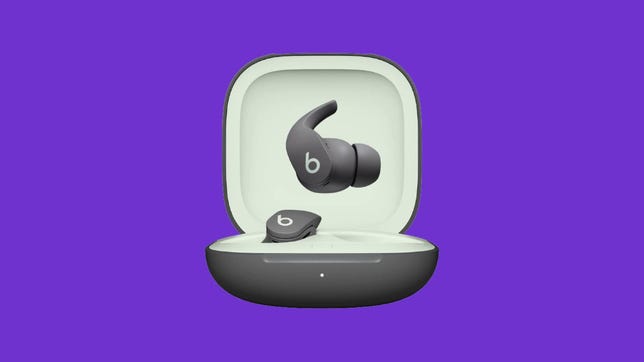
    Made by Apple, the newest Beats headphones aren’t AirPods, but — except for lacking a case with wireless charging and MagSafe compatibility — they pretty much pack most of the features found on the AirPods Pro in a sportier design and are available in multiple color options. You should definitely check these out before buying the AirPods 3 or AirPods Pro at nearly the same price. Read our Beats Fit Pro review.

    You’re receiving price alerts for Beats Fit Pro Earbuds (White, 2021)

    David Carnoy/CNET

    Battery Life

    Rated up to 20 hours

    Noise Canceling

    Yes (ANC)

    Multipoint

    No

    Headphone Type

    Over-ear wireless headphones

    Water-Resistant

    No IP rating

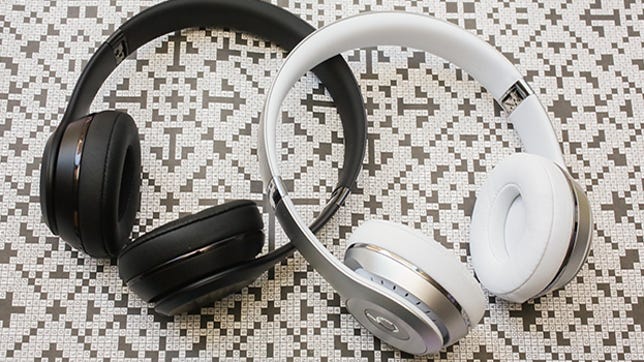
    Apple’s first full-size headphones are chock-full of high-end features like noise cancellation, spatial audio and easy integration with Apple devices. Yes, paying about the same as you would for a PS5 may sound crazy, but here’s the crazier thing: They’re actually kinda worth it, so long as you don’t feel burned by their lack of support for full lossless audio and lack of included cable for wired listening (which must be purchased separately).

    We’ve occasionally seen the Apple AirPods Max prices dip as low as $395 in certain colors, but right now they’re hovering around $480 at most retailers.

    Read our AirPods Max review.

    You’re receiving price alerts for Apple AirPods Max (Gray)

    Sarah Tew/CNET

    Apple’s original AirPods Pro have been discontinued, so they’re gradually getting a little harder to find (Amazon is only stocking “renewed” versions). While a clear step down from the new AirPod Pro 2, if you can find them at a steep discount — under $180 — they may be worth buying.

    Read our AirPods Pro review.

    You’re receiving price alerts for Apple AirPods Pro (2021, MagSafe case)

    David Carnoy/CNET

    The newest 2021 AirPods deliver better sound quality than their predecessors while maintaining an open design. Slightly larger and shaped more like the AirPods, they should be a better fit for more people’s ears, but at the same time, they may not fit those with very small ears who got a perfect fit with the AirPods 2nd Generation. Read our AirPods 3 review.

    Battery Life

    Rated up to 5 hours

    Noise Canceling

    No

    Multipoint

    No

    Headphone Type

    Wireless earbuds

    Water-Resistant

    Yes (IPX4 — splash-proof)

    Apple’s second-generation AirPods remain in the line but no longer include a wireless-charging option. Apple has dropped the official price of the AirPods 2 to $129, though you can usually find them for $100 or less.

    They’re not as feature-packed as the other AirPods on this list, but they remain an appealing option for folks on a tighter budget or those who’ve worn out their original pair but love their fit and simply want to replace them.

    Read our AirPods review.

    You’re receiving price alerts for Apple AirPods 2019 (Charging Case)

    What are the newest AirPods?

    The newest AirPods are AirPods Pro (2nd generation), which hit stores on Sept. 23, 2022, and feature Apple’s new H2 chip along with better sound, noise canceling and battery life. The third-generation AirPods with enhanced functionality, improved sound and an updated design arrived in stores in October 2021 Meanwhile, the Beats Fit Pro — which share most of the same features as the original AirPods Pro — arrived in November. While they’re not AirPods by name, we and others have referred to them as “the sports AirPods you always wanted.”

    Are the AirPods Pro 2 better than the Beats Fit Pro?

    With their integrated wingtips, the Beats Fit Pro may offer you a more secure fit than AirPods Pro 2 and they do cost $50 less (and sometimes even less when they go on sale). Otherwise, the AirPods Pro 2 are better — they have slightly better sound quality and noise canceling along with better voice-calling performance.

    Also note that the Beats Fit Pro are missing wireless charging and the MagSafe compatibility found in the AirPods Pro 2.

    Should I buy AirPods in the Apple Store?

    If you can help it, no: The various AirPods models typically sell for less online at other retailers like Amazon and Walmart. Amazon, meanwhile, typically matches the lowest price at other retailers. Generally, we’d only buy AirPods at the Apple Store if we want engraving, which isn’t available elsewhere. That said, if you opt to go into an Apple Store for Apple deals, you should ask about price matching. While Apple doesn’t seem to have any official policy, it’s been reported that it will offer up to 10% price matching. As an example, that would be $25 off the AirPods Pro, which list for $249. That’s not much, but it’s worth asking to see if you can get 10% off.

    Does spatial audio sound different on different AirPods?

    The short answer is, not really when you’re talking about spatial audio with head tracking for movie and TV watching. While the AirPods Max offer the best sound overall, using the spatial audio virtual sound feature is largely the same experience on all the AirPods that support it.

  • NFL Divisional Round: How to Watch, Stream Giants vs. Eagles on Saturday Without Cable

    NFL Divisional Round: How to Watch, Stream Giants vs. Eagles on Saturday Without Cable

    The New York Giants knocked off the Minnesota Vikings last weekend and now will head to Philadelphia to take on the Eagles, who finished with the best record in the NFC and earned a first-round playoff bye. The Eagles went 14-3 and swept the season series against the Giants, but the Giants are a confident bunch behind first-year head coach Brian Daboll and fourth-year QB Daniel Jones, who’s playing the best football of his career. For the Eagles, the worry is the health of quarterback Jalen Hurts’ shoulder, which he sprained a month ago; he has played sparingly since. The Divisional Round game between the Giant and Eagles kicks off on Saturday at 8:15 p.m. PT (5:15 p.m. ET) on Fox.

    Quarterback Jalen Hurts of the Philadelphia Eagles gestures after scoring a touchdown.Quarterback Jalen Hurts of the Philadelphia Eagles gestures after scoring a touchdown.

    Jalen Hurts and the Philadelphia Eagles take on the New York Giants on Saturday night on Fox.

    Mitchell Leff/Getty Images

    How to watch Giants vs. Eagles without cable

    If you don’t have a cable or satellite TV subscription, you can watch the Giants-Eagles game on Fox with a live TV service. The good news for football fans is that Fox is available on each of the five major streaming services. The catch is that not every service carries every local network, so check each one using the links below to make sure it carries Fox in your area.

    If you live in an area with good reception, you can watch the broadcast on Fox for free on over-the-air broadcast channels just by attaching an affordable (under $30) indoor antenna to nearly any TV.

    Sling’s $40-a-month Blue package carries Fox — but only in a handful of areas.

    Read our Sling TV review.

    YouTube TV costs $65 a month and includes Fox. Plug in your ZIP code on its welcome page to see which local networks are available in your area.

    Read our YouTube TV review.

    Hulu with Live TV costs $70 a month and includes Fox. Click the “View channels in your area” link on its welcome page to see which local channels are offered in your ZIP code.

    Read our Hulu with Live TV review.

    DirecTV Stream’s basic, $70-a-month Entertainment package includes Fox. You can use its channel lookup tool to see which local channels are available where you live.

    Read our DirecTV Stream review.

    FuboTV’s basic plan costs $75 a month and includes Fox. Click here to see which local channels you get.

    Read our FuboTV review.

    All of the live TV streaming services above offer free trials, allow you to cancel anytime and require a solid internet connection. Looking for more information? Check out our live-TV streaming services guide.