Winners of nine straight, the 49ers have looked like the best team in football the past two months. They have had the NFC West wrapped up for a few weeks now but still have something to play for in the final weekend. The 49ers can leapfrog the Eagles for the top spot in the conference and a first-round bye with a win against the Cardinals on Sunday coupled with an Eagles loss to the Giants. Kickoff in San Francisco is set for 1:25 p.m. PT (4:25 p.m. ET) on Fox.
The game will be shown on TV in the San Francisco and Arizona areas (according to 506 Sports) on live TV streaming services, but there may be cases where you’re blocked because of an internet location glitch or just want an added layer of privacy for streaming. There is an option that doesn’t require subscribing to something like NFL Sunday Ticket or NFL Plus, or searching the internet for a sketchy website: You can use a virtual private network, or VPN.
Here’s how you can watch the game from anywhere in the US with a VPN.
Brock Purdy has been staking a strong claim in recent weeks to become the 49ers’ long-term starting QB.
Michael Zagaris/San Francisco 49ers/Getty Images
Cardinals vs. 49ers: When and where?
For Week 18 of the NFL season, the 49ers host the Cardinals at 1:25 p.m. PT (4:25 p.m. ET) on Sunday. The game is set to take place at Levi’s Stadium in Santa Clara, California.
Now playing:Watch this:What It’s Like Playing VR Football: NFL Pro Era Hands-On
8:17
How to watch the Cardinals vs. 49ers game online from anywhere using a VPN
If you find yourself unable to view the game locally due to incorrectly applied blackout restrictions, you may need a different way to watch the game and that’s where using a VPN can come in handy. A VPN is also the best way to stop your ISP from throttling your speeds on game day by encrypting your traffic, plus it’s a great idea for when you’re traveling and find yourself connected to a Wi-Fi network, and you want to add an extra layer of privacy for your devices and logins.
With a VPN, you’re able to virtually change your location on your phone, tablet or laptop to get access to the game. So if your internet provider or mobile carrier has stuck you with an IP address that incorrectly shows your location in a blackout zone, a VPN can correct that problem by giving you an IP address in your correct, nonblackout area. Most VPNs, like our Editors’ Choice, ExpressVPN, make it really easy to do this.
Using a VPN to watch or stream sports is legal in any country where VPNs are legal, including the US and Canada, as long as you’ve got a legitimate subscription to the service you’re streaming. You should be sure your VPN is set up correctly to prevent leaks: Even where VPNs are legal, the streaming service may terminate the account of anyone it deems to be circumventing correctly applied blackout restrictions.
Looking for other options? Be sure to check out some of the other great VPN deals taking place right now.
ExpressVPN is our current best VPN pick for people who want a reliable and safe VPN, and it works on a variety of devices. It’s normally $13 per month, and you can sign up for ExpressVPN and save 49% plus get three months of access for free — the equivalent of $6.67 per month — if you get an annual subscription.
Note that ExpressVPN offers a 30-day money-back guarantee.
This week’s Cardinals-49ers game is on Fox, so you’ll need a live TV streaming service that carries a local Fox affiliate that’s broadcasting the game. The least expensive such service is Sling TV Blue.
Among the live TV streaming services that carry local Fox stations, the cheapest is Sling TV Blue at $40 per month.
One important caveat: In our experience, Fox local affiliates will only be available if your billing address is in one of the 18 metropolitan areas covered in Sling’s agreement. If you’re outside of one of these areas, you’re probably better off going with one of the alternate services listed below.
Numerous other live TV streaming services carry local Fox stations as well, namely YouTube TV, Hulu Plus Live TV, DirecTV Stream and FuboTV. They all cost more than Sling TV, but they also carry more channels, including football-specific channels like Fox, ESPN, NFL Network and/or RedZone. Check out our live TV streaming channel guide for details.
Quick tips for streaming Cardinals vs. 49ers using a VPN
With four variables at play — your ISP, browser, video streaming provider and VPN — experience and success may vary.
Sling Blue is only an option if and when the ability to get Fox local affiliates is active on your account. You may want to verify that your billing address is eligible for that option before committing your credit card.
We tested the game successfully using an ExpressVPN server in San Francisco, so that location should work for watching the game.
If you don’t see your desired location as a default option for ExpressVPN, try using the “search for city or country” option.
If you’re having trouble getting the game after you’ve turned on your VPN and set it to the correct viewing area, there are two things you can try for a quick fix. First, log into your streaming service subscription account and make sure the address registered for the account is an address in the correct viewing area. If not, you may need to change the physical address on file with your account. Second, some smart TVs — like Roku — don’t have VPN apps you can install directly on the device itself. Instead, you’ll have to install the VPN on your router or the mobile hotspot you’re using (like your phone) so that any device on its Wi-Fi network now appears in the correct viewing location.
All of the VPN providers we recommend have helpful instructions on their main site for quickly installing the VPN on your router. In some cases with smart TV services, after you install a cable network’s sports app, you’ll be asked to verify a numeric code or click a link sent to your email address on file for your smart TV. This is where having a VPN on your router will also help, since both devices will appear to be in the correct location.
And remember, browsers can often give away a location despite using a VPN, so be sure you’re using a privacy-first browser to log into your services. We normally recommend Brave.
How we test VPN streaming for Sunday NFL games
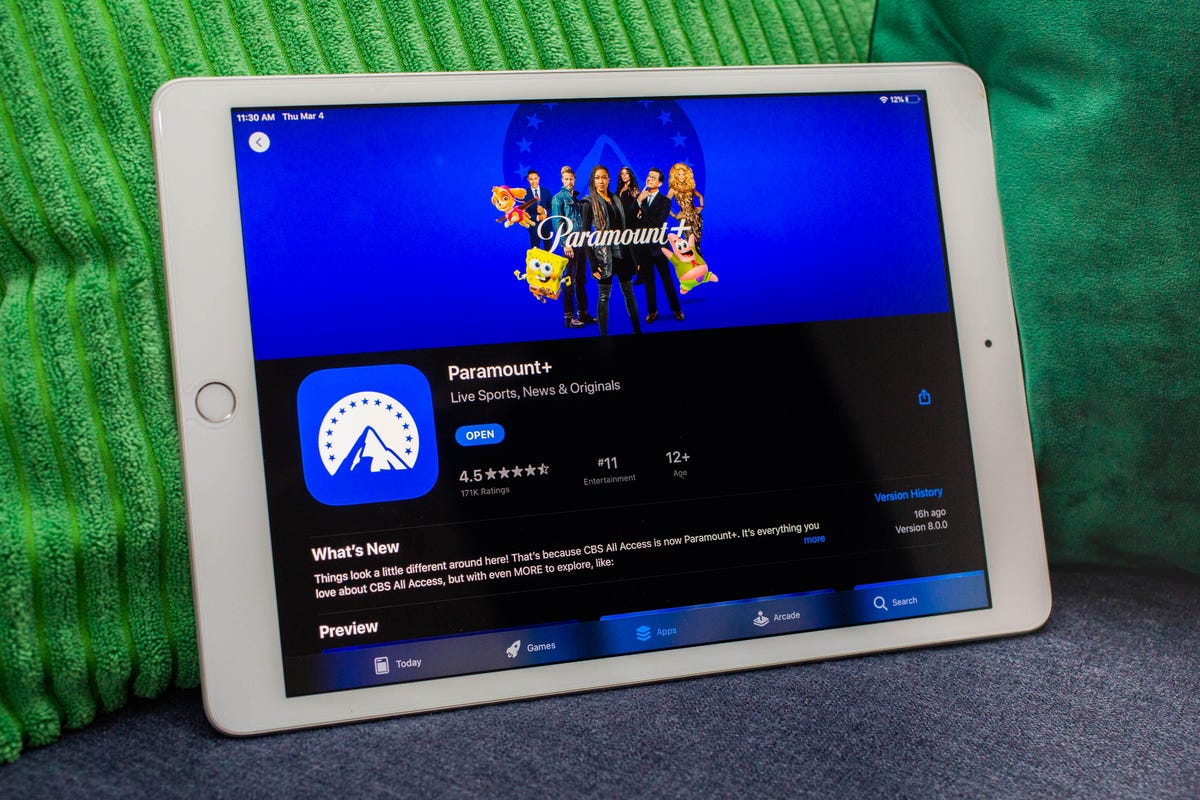
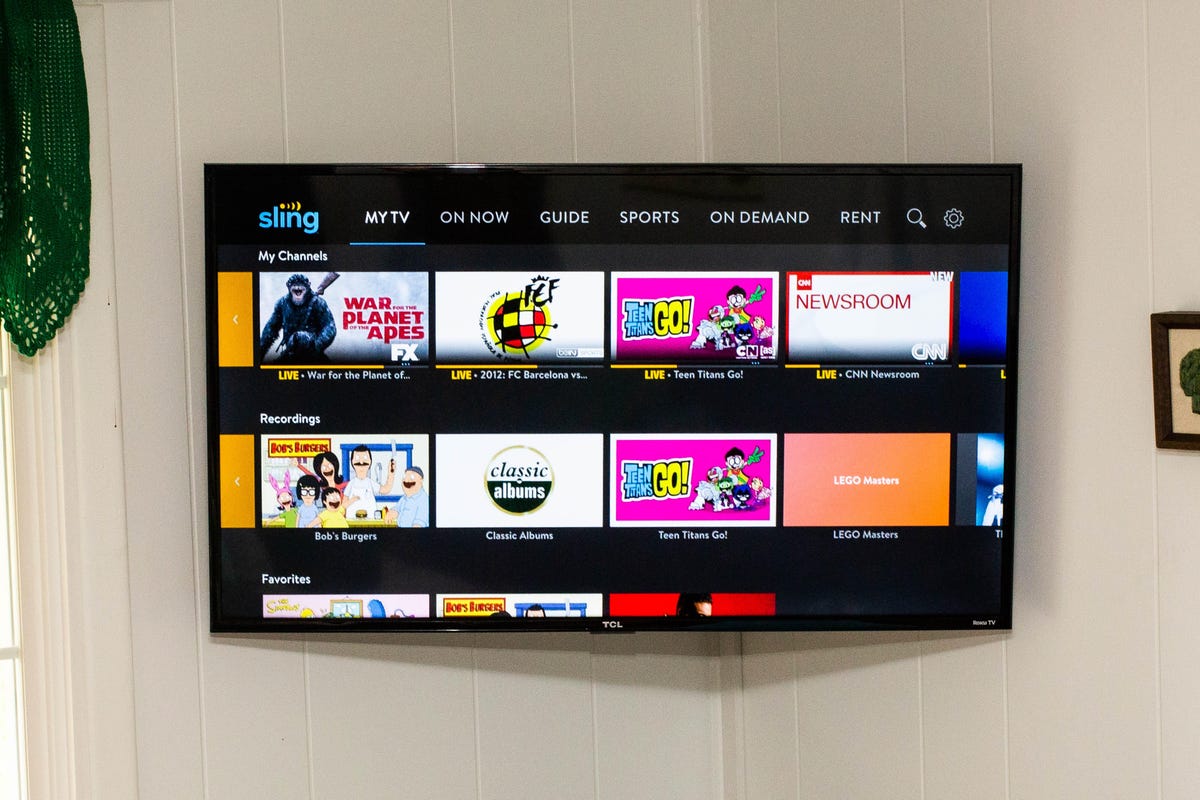
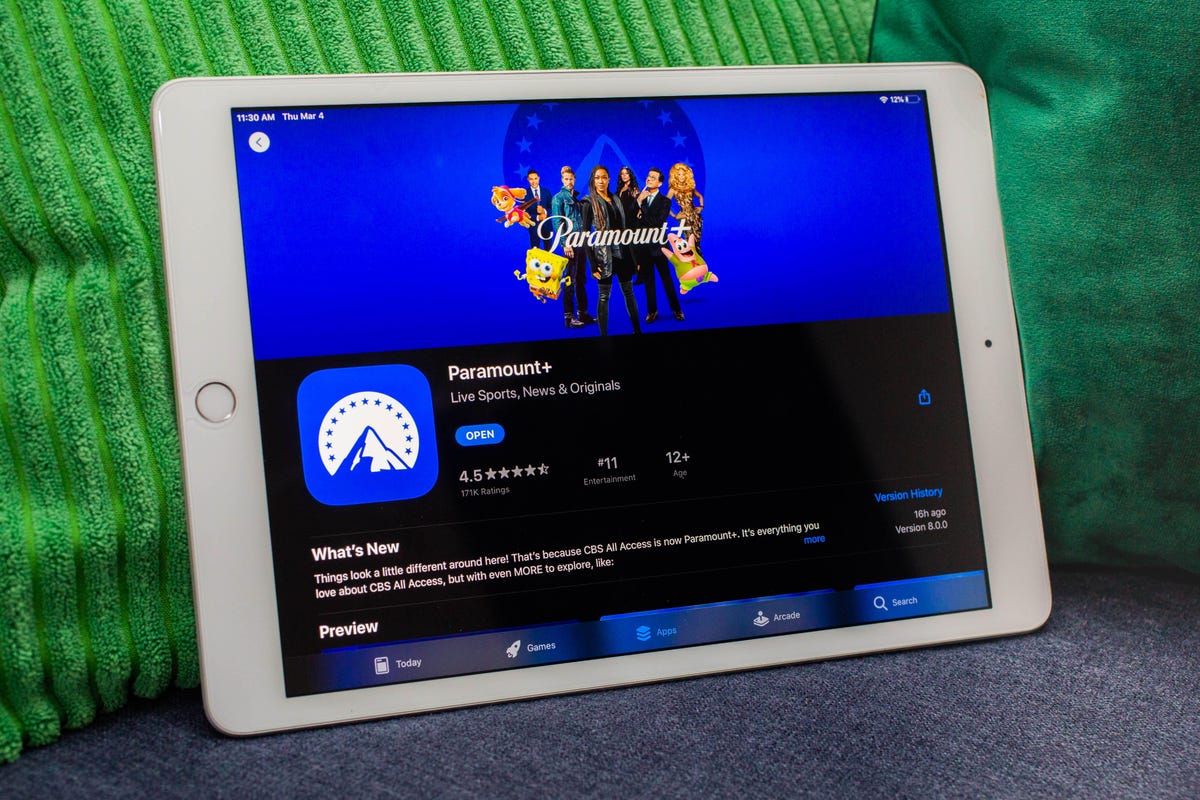
For every game, we use a combination of ExpressVPN and either Paramount Plus (for CBS games) or Sling TV Blue (for Fox games). Using the maps on 506 Sports, we determine which servers are nearby and connect to one, then launch the streaming service and tune to the local CBS or Fox affiliate. If the channel comes through, it’s successful and we report the results above. We also screenshot the relevant program guide listing (see above) on either the local CBS affiliate’s website or Sling TV.
The target date of this AR/VR headset keeps sliding, with the latest report in early December from noted analyst Ming Chi-Kuo suggesting an arrival in the second half of 2023. With an announcement event that could happen as soon as January, we’re at the point where every Apple event seems to feel like the one where it could pull the covers off this device at last. Bloomberg’s Mark Gurman reported in early January that’s he’s heard the company is aiming to unveil the headset in the spring ahead of the annual Worldwide Developers Conference in June.
2023 looks like a year full of virtual reality headsets that we originally expected in 2022, including the PlayStation VR 2 and Meta Quest 3. Apple has already laid down plenty of AR clues, hinting at what its mixed-reality future could hold and has been active in AR on its own iPhones and iPads for years.
As far as what its device could be like, odds are strong that the headset could work from a similar playbook as Meta’s recent high-end headset, the Quest Pro, with a focus on work, mixed reality and eye tracking onboard.
Here’s what we’re expecting.
Now playing:Watch this:Apple’s VR Headset Event Will Be Different
10:17
Is its name Reality Pro? Is the software called xrOS?
The latest report from noted Apple reporter Mark Gurman at Bloomberg suggests the operating system for this headset could be called “xrOS,” but that may not indicate the name of the headset itself. Recent trademark filings reported by Bloomberg showed the name “Reality” showing up a lot: Reality One, Reality Pro and Reality Processor. Apple’s existing AR software framework for iOS is named RealityKit, and previous reports suggested that “Reality OS” could be the name for the new headset’s ecosystem.
No one really expected the Apple Watch’s name (remember iWatch?), so to some degree, names don’t matter at this point. But it does indicate that Apple’s moving forward on a product and software, for sure.
Whatever the headset might become, it’s looking a lot more real lately. A detailed report from The Information earlier this year discussed likely specs, which include what Bloomberg’s Mark Gurman says is Apple’s latest M2 chip. According to another report from Bloomberg earlier this year, Apple’s board of directors have already seen a demonstration of the mixed-reality headset.
Apple could take a dual headset approach, leading the way with a high-end AR-VR headset that may be more like what Meta has done with the Quest Pro, according to Bloomberg’s Gurman. Gurman also suggests a focus on gaming, media and communication on this initial first-wave headset. In terms of communication, Gurman believes FaceTime using the rumored headset could rely on Memoji and SharePlay: Instead of seeing the person you’re talking to, you’d see a 3D version of their personalized Memoji avatar.
Eventually, Apple’s plans for this headset could become larger. The company’s “goal is to replace the iPhone with AR in 10 years,” Kuo explained in a note to investors, seen by MacRumors. The device could be relatively lightweight, about 300 to 400 grams (roughly 10.5 to 14 ounces), according to Kuo. That’s lighter than Meta’s Oculus Quest 2. However, it’s larger than a normal pair of glasses, with early renders of its possible design looking a lot more like futuristic ski goggles.
The headset could be expensive, maybe as much as $2,000 or more, with 8K displays, eye tracking and cameras that can scan the world and blend AR and VR together, according to a report from The Information last year. That’s to be expected, considering the Quest Pro costs $1,500 and AR headsets like the Magic Leap 2 and Hololens 2 are around $3,000.
It’s expected to feature advanced processors, likely based on Apple’s recent M2 chips, and work as a stand-alone device. But it could also connect with Apple’s other devices. That’s not a surprising move. In fact, most of the reports on Apple’s headset seem to line right up with how VR is evolving: lighter-weight, with added mixed-reality features via more advanced pass-through cameras. Much like the Quest Pro, this will likely be a bridge to future AR glasses efforts.
Previous reports on Apple’s AR/VR roadmap suggested internal disagreements, or a split strategy that could mean a VR headset first, and more normal-looking augmented reality smart glasses later. But recent reports seem to be settling down to tell the story of a particular type of advanced VR product leading the way. What’s increasingly clear is that the rest of the AR and VR landscape is facing a slower-than-expected road to AR glasses, too.
Now playing:Watch this:What Apple’s expensive 8K VR headset could be like
14:56
VR, however, is a more easily reachable goal in the short term.
Apple has been in the wings all this time without any headset at all, although the company’s aspirations in AR have been clear and well-telegraphed on iPhones and iPads for years. Each year, Apple’s made significant strides on iOS with its AR tools. It’s been debated how soon this hardware will emerge: this year, the year after or even further down the road. Or whether Apple proceeds with just glasses, or with a mixed-reality VR and AR headset, too.
I’ve worn more AR and VR headsets than I can even recall, and have been tracking the whole landscape for years. In a lot of ways, a future Apple AR headset’s logical flight path should be clear from just studying the pieces already laid out. Apple acquired VR media-streaming company NextVR in 2020 and it bought AR headset lens-maker Akonia Holographics in 2018.
I’ve had my own thoughts on what the long-rumored headset might be, and so far, the reports feel well-aligned to be just that. Much like the Apple Watch, which emerged among many other smartwatches and had a lot of features I’d seen in other forms before, Apple’s glasses probably won’t be a massive surprise if you’ve been paying attention to the AR and VR landscape lately.
Here’s where Apple is likely to go based on what’s been reported, and how the company could avoid the pitfalls of those earlier platforms.
Apple declined to comment on this story.
Launch date: Looks likely for 2023
New Apple products tend to be announced months before they arrive, maybe even earlier. The iPhone, Apple Watch, HomePod and iPad all followed this path.
The latest reports from Kuo point to possible delays for the release of the headset to the second half of 2023, but an event announcing the headset could happen as soon as January. That timeframe would make a lot of sense, giving time for developers to understand the concept well ahead of the hardware’s release, and even possibly allowing for Apple’s WWDC developer conference (usually in June) to go over specifics of the software.
Either way, developers would need a long head start to get used to developing for Apple’s headset, and making apps work and flow with whatever Apple’s design guidance will be. That’s going to require Apple giving a heads-up on its hardware well in advance of its actual arrival.
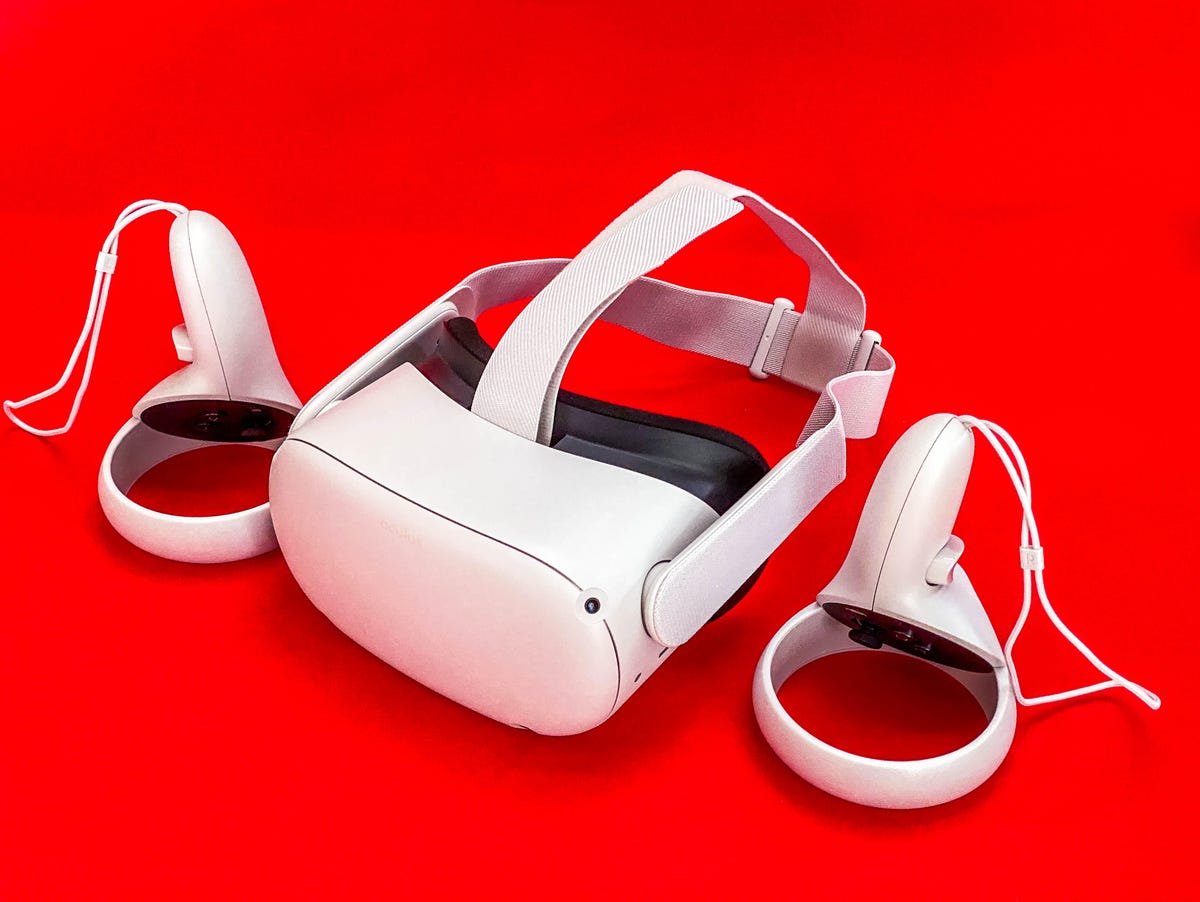
Facebook’s Oculus Quest 2 is a self-contained VR headset on the road to AR glasses. Could Apple follow a similar path?
Scott Stein/CNET
An Apple headset could be a lot like the Meta Quest, but higher end
There’s already one well-polished success story in VR, and the Quest 2 looks to be as good a model as any for where future headsets could aim. Gurman’s report makes a potential Apple VR headset sound a lot like Facebook’s stand-alone device, with controller-free hand tracking and spatial room awareness that could be achieved with Apple’s lidar sensor technology, introduced on the iPad Pro and iPhone 12 Pro.
Apple’s headset could end up serving a more limited professional or creative crowd. But it could also go for a mainstream focus on gaming or fitness. My experiences with the Oculus Quest’s fitness tools feel like a natural direction for Apple to head in, now that the Apple Watch is extending to subscription fitness training, pairing with TVs and other devices.
Now playing:Watch this:Meta Quest 2 Is Better and Cheaper… With One Facebook…
8:56
The Oculus Quest 2 (now officially the Meta Quest 2) can see through to the real world and extend some level of overlap of virtual objects like room boundaries, but Apple’s headset could explore passthrough augmented reality to a greater degree. I’ve seen impressive examples of this in headsets from companies such as Varjo. It could be a stepping stone for Apple to develop 3D augmented reality tech on smaller glasses designs down the road.
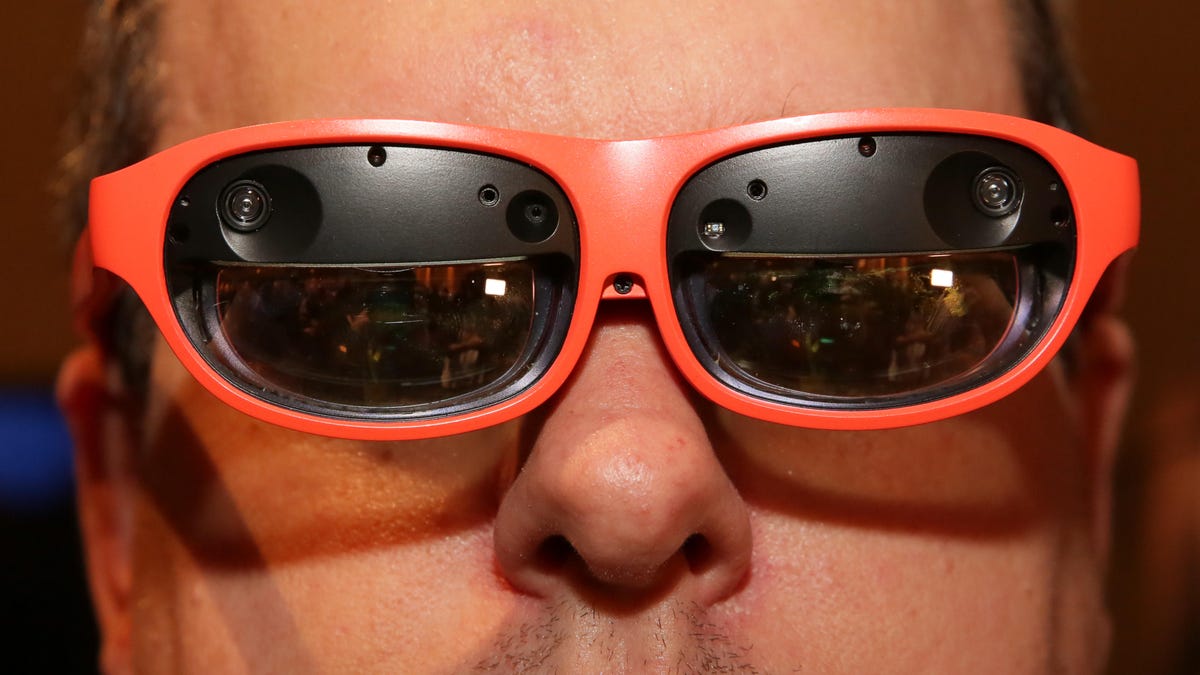
Right now, there aren’t any smart glasses manufacturers able to develop normal-looking glasses that can achieve advanced, spatially aware 3D overlays of holographic objects. Some devices like the nReal Light have tried, with mixed success. Meta’s first smart glasses, Ray-Ban Stories, weren’t AR at all. Meta is working on ways to achieve that tech later on. Apple might take a similar approach with glasses, too.
The VR headset could be a ‘Pro’ device
Most existing reports suggest Apple’s VR headset would likely be so expensive — and powerful — that it will have to aim for a limited crowd rather than the mainstream. If so, it could target the same business and creative professionals that more advanced VR headsets like the Varjo XR-3 and Meta Quest Pro are already aiming for.
I tried Varjo’s hardware. My experience with it could hint at what Apple’s headset might also be focusing on. It has a much higher-resolution display (which Apple is apparently going to try to achieve), can blend AR and VR into mixed reality using its passthrough cameras, and is designed for pro-level creative tools. Apple could integrate something similar to its lidar sensors. The Quest Pro does something similar, but in a standalone device without as high-end a display.
Varjo’s headset, and most professional VR headsets, are tethered to PCs with a number of cables. Apple’s headset could work as a standalone device, like the Quest 2 and Quest Pro, and also work when connected to a Mac or iPad, much like the Quest 2 already does with Windows gaming PCs. Apple’s advantage could be making a pro headset that is a lot more lightweight and seamlessly standalone than any other current PC-ready gear. But what remains unknown is how many apps and tools Apple will be able to introduce to make its headset feel like a tool that’s truly useful for creators.
Controls: Hand tracking or a small wearable device?
The Information’s previous reports on Apple’s headset suggest a more pared-down control system than the elaborate and large game controller-like peripherals used by many VR headsets right now. Apple’s headset should work using hand tracking, much like many VR and AR headsets already enable. But Apple would likely need some sort of controller-type accessory for inputs, too. Cracking the control and input challenge seems to be one of the bigger hurdles Apple could face.
Recent patent filings point to a possible smart ring-type device that could work for air gestures and motion, and maybe even work with accessories. It’s also possible that Apple might lean on some of its own existing hardware to act as inputs, too.
Could that controller be an Apple Watch? Possibly, but the Apple Watch’s motion-control capabilities and touchscreen may not be enough for the deeper interactions an Apple headset would need. Maybe iPhones could pair and be used as controllers, too. That’s how Qualcomm is envisioning its next wave of phone-connected glasses.
North Focals’ smart glasses design prototype. North was acquired by Google in 2020.
North
Future AR smart glasses may also be in the works
Getting people to put on an AR headset is hard. I’ve found it a struggle to remember to pack smart glasses, and find room to carry them. Most of them don’t support my prescription, either. Developer-focused AR glasses made by Snap that I tried at home show what everyday AR glasses could look like someday, but they’re still a work in progress.
Qualcomm’s plans for AR glasses show a wave of devices arriving between 2023 and 2025, but at this point no one has been able to crack making a perfect pair. Software, battery life and even common cross-platform interfaces remain a big challenge.
Kuo’s prediction of AR glasses coming a few years after a VR-AR goggle-type headset would line up with what other companies are promising. The challenges with AR glasses are a lot greater than VR. No one’s figured out how wearing them all the time would work, or how you’d interact with virtual objects: Hand tracking? A watch or a ring? Voice? Neural inputs?
Apple always touted the Apple Watch, first and foremost, as a “great watch.” I would expect the same from its glasses. If Apple makes prescription glasses and makes them available, Warby Parker-style, in seasonal frames from its Apple Stores, that might be enough for people if the frames look good. Apple’s VR headset, according to Gurman, will also offer prescription lenses. That could be a stepping stone to developing glasses later on.
Google acquired smart glasses manufacturer North in 2020, which made a prescription, almost normal set of eyewear. North’s concept for glasses might be too similar to Google Glass for Apple’s tastes, but the idea of AR glasses doubling as functional glasses sounds extremely Apple-like. More recently, Vuzix’s planned smart glasses for 2021 show how far the tech has shrunken down, but even those planned glasses won’t have the ability to spatially scan the world and overlay augmented reality: They’ll be more like advanced glasses with heads-up displays and 3D audio.
A report from The Information in 2020 said new AR lenses were entering a trial production phase for Apple’s AR hardware (9to5Mac also broke the report down). These lenses sound much closer to normal glasses than current AR headsets allow, but when would those be ready?
Could Apple make its first smart glasses something more basic, letting Apple slowly add more AR features over time and let newcomers settle into the experience? Or would Apple try to crack the AR challenge with its first pair of glasses? Augmented reality is a weird concept for eyewear, and potentially off-putting. Maybe Apple will aim for subtlety. The original Apple Watch was designed to be glanced at for just 5 seconds at a time.
Are the AirPods Max a sign of how expensive a headset could be?
The business-focused HoloLens and Magic Leap cost thousands of dollars. Current VR headsets have trended towards $500 or more.
The latest price reports suggest something between $2,000 and $3000, which is in the territory of business-focused AR headsets like the HoloLens 2, or business-creative VR headsets like those from Varjo. An analysis from TrendForce published in February also estimates that an Apple headset’s hardware would cost in the thousands, and it predicts that Apple would employ a “monthly subscription-based software solution.”
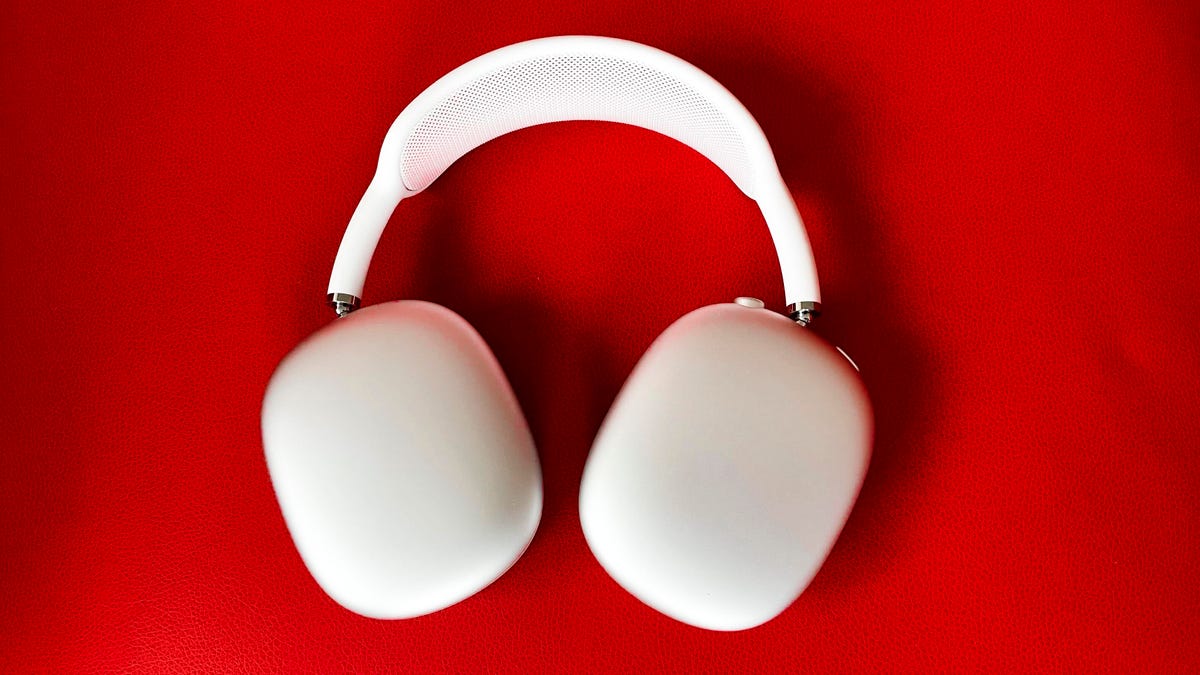
Apple’s headphones, the AirPods Max, indicate that the pricing could climb high. At $549, they cost more than a PlayStation 5. And those are just headphones. A pair of smart glasses, or an advanced VR headset, would be a lot more advanced.
iPhone-connected, too?
Qualcomm’s AR and VR plans telegraph the next wave of headsets: Many of them will be driven by phones. Phone-powered glasses can be lighter and just have key onboard cameras and sensors to measure movement and capture information. Meanwhile the phone does the heavy lifting and doesn’t drain headset battery life.
Apple’s star device is the iPhone, and it’s already loaded with advanced chipsets that can do tons of AR and computer vision computation. It could already power an AR headset right now; imagine what could happen in another year or two.
Apple could also have its own high-end dedicated chip in its first wave of VR and AR headsets, as reports suggest, but they’ll also undoubtedly dovetail with more advanced processors in Apple’s phones, tablets and Macs. Over time, this could mean smaller glasses that lean on connecting to other Apple devices, or the cloud.
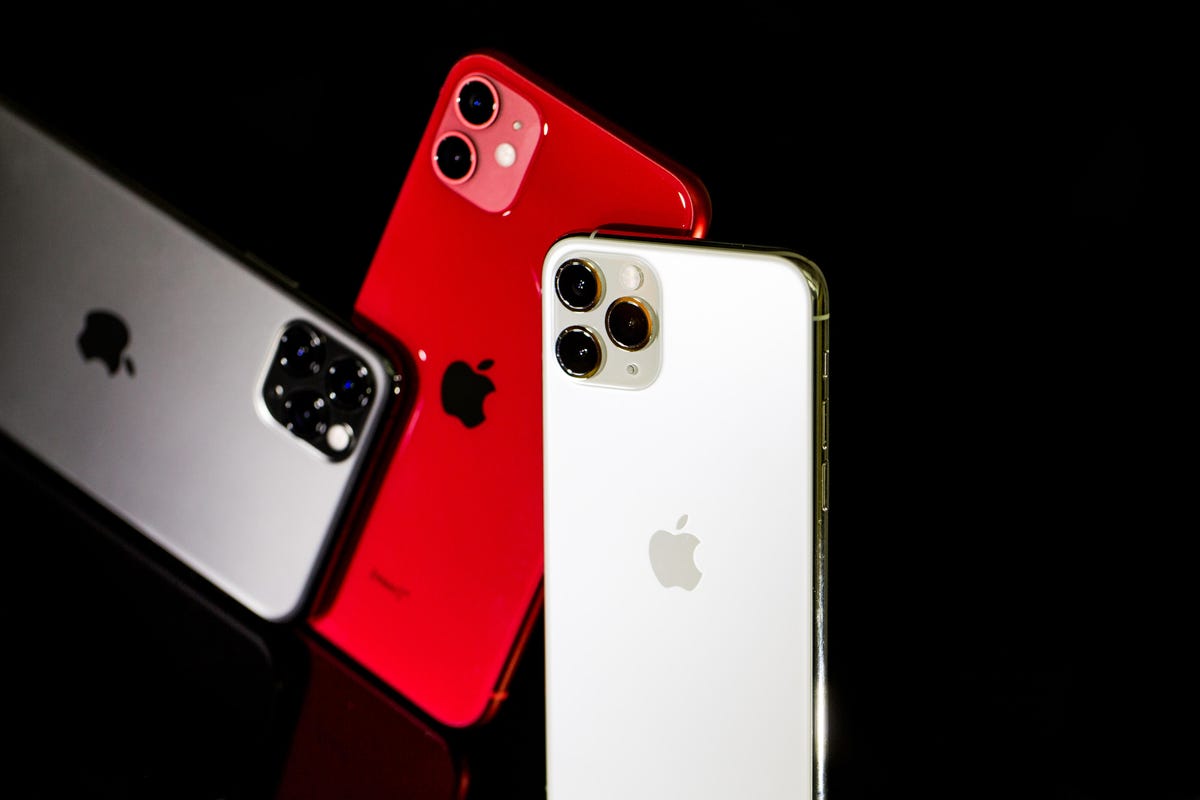
Apple’s iPhones are likely to be the engine.
Angela Lang/CNET
How Apple could blend the real world with AR and VR
Apple already dabbles with AR overlays with real world locations: QR code and NFC-enabled App Clips can launch experiences from real-world locations with a tap or scan. These micro apps are made to work with AR, too: With glasses or an AR headset, they could eventually launch interactions at a glance.
Maybe QR codes can help accelerate AR working in the “dumb” world. Apple’s iPhones also have a U1 chip that can be used to improve accuracy in AR object placement, and also to more quickly locate other Apple devices that have the U1 chip, too.
Apple’s AirTags arrived in 2021 with features similar to Samsung’s SmartTags Plus that use similar ultrawideband technology. These tags could be seen via an iPhone app using AR, which could possibly extend into Apple’s future VR or AR headsets. If all Apple’s objects recognize each other, they could act as beacons in a home. The U1 chips could also be indoor navigation tools for added precision.
Microsoft’s collaborative mixed-reality platform, Mesh, shows how meetings with people in virtual spaces could happen instantly and in work-like environments. Apple already enables multiperson AR in real places, but a necessary next step would be to allow a platform for collaboration in AR and VR like Microsoft is developing.
Apple’s depth-sensing hardware is already here
Apple is already deeply invested in camera arrays that can sense the world from short and long distances. The front-facing TrueDepth camera, which Apple has used on every Face ID iPhone since the X, is like a shrunken-down Microsoft Kinect and can scan a few feet out, sensing 3D information with high enough accuracy to be used for a secure face scan. Apple’s lidar technology on its recent iPhones and iPads can scan out much further, several meters away. That’s the range that glasses would need.
Apple’s existing lidar technology, combined with cameras, is already good enough to scan environments and 3D objects. Add to this the wider-scale lidar scanning Apple is doing in Maps to enable overlays of real-world locations with virtual objects via a technology called Location Anchors, and suddenly it seems like the depth-scanning Apple is introducing could expand to worldwide ambitions.
Apple’s new Mac chips already point toward VR-AR compatibility
Apple’s M1-enabled Macs and those since are technically a lot more capable of the power needed to run AR and VR, and they share similarities to how iPhone and iPads handle graphics. Developing a common groundwork across devices could allow a headset to feasibly run on an iPhone, iPad or Mac, making it a universal Apple device accessory.
That would be essential if Apple intends on its VR or AR headsets to have any role in creative workflows, or be used for games or apps. It’s one of the limitations of existing VR headsets, which need to run off particular Windows gaming PCs and still don’t play that well with iOS or Android phones.
AirPods went from absurd to essential. Can Apple do the same for smart glasses?
Sarah Tew/CNET
Look to AirPods for ease of use — and audio augmented reality
I’ve thought about how the AirPods’ comfort — and weird design — was an early experiment in wearing Apple’s hardware directly on our faces — and it was a success. It proved that doing so could be accepted and become normal. AirPods are expensive compared to in-box wired buds, but they’re also utilitarian. They’re relaxed. If Apple’s working on AR or VR headsets, they’ll need to feel the same way.
The AirPod Pros’ spatial audio, which AirPods Max and AirPods 3 also have, points to where future ideas could head. Immersive audio is casual, and we do it all the time. Immersive video is hard and not always needed. I could see AR working as an audio-first approach, like a ping. Apple glasses could potentially do the world-scanning spatial awareness that would allow the spatial audio to work. In the meantime, Apple’s already developing the spatial audio tech that its VR headset would need.
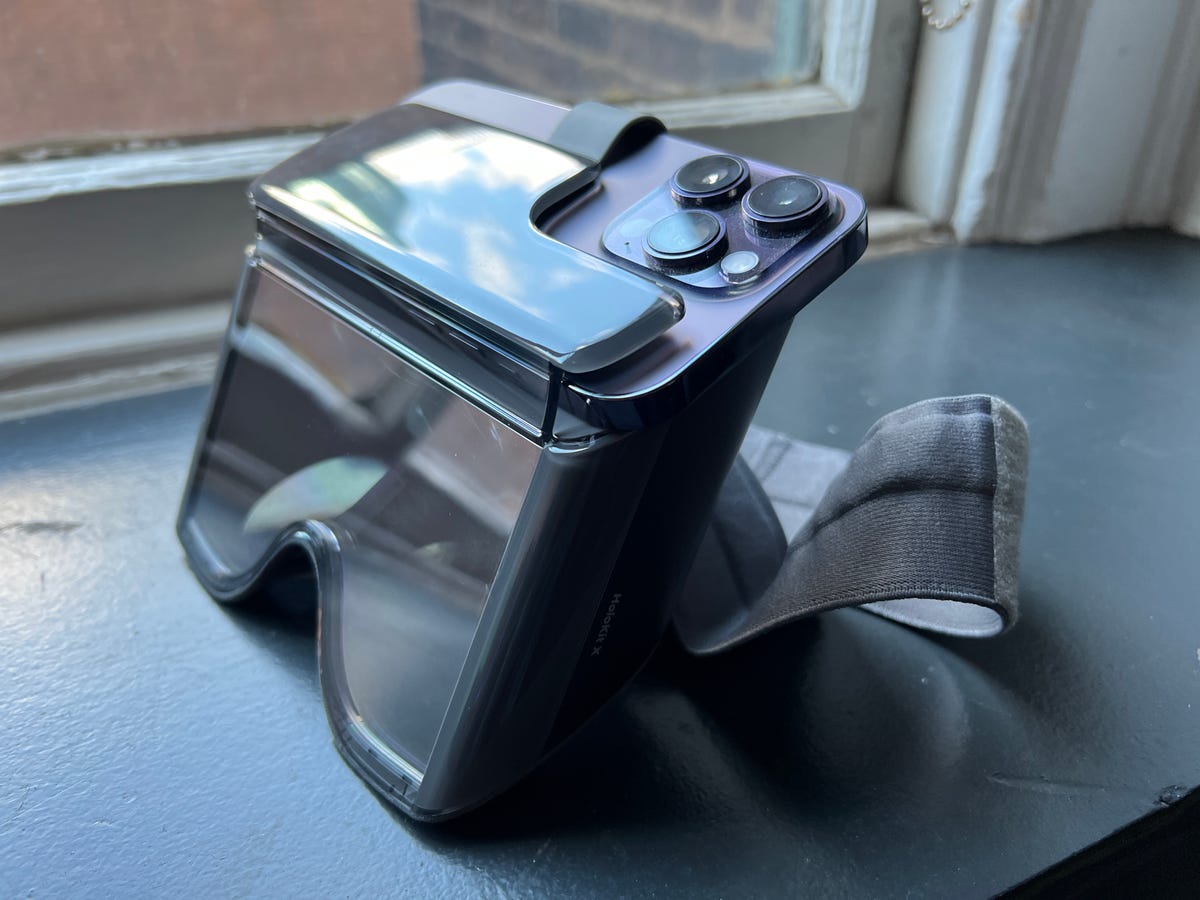
The HoloKit X, a pair of goggles with a reflective visor that turns an iPhone into an AR headset. It can work with an Apple Watch and AirPods. Could this be Apple’s strategy too?
Scott Stein/CNET
Apple Watch and AirPods could be great companions
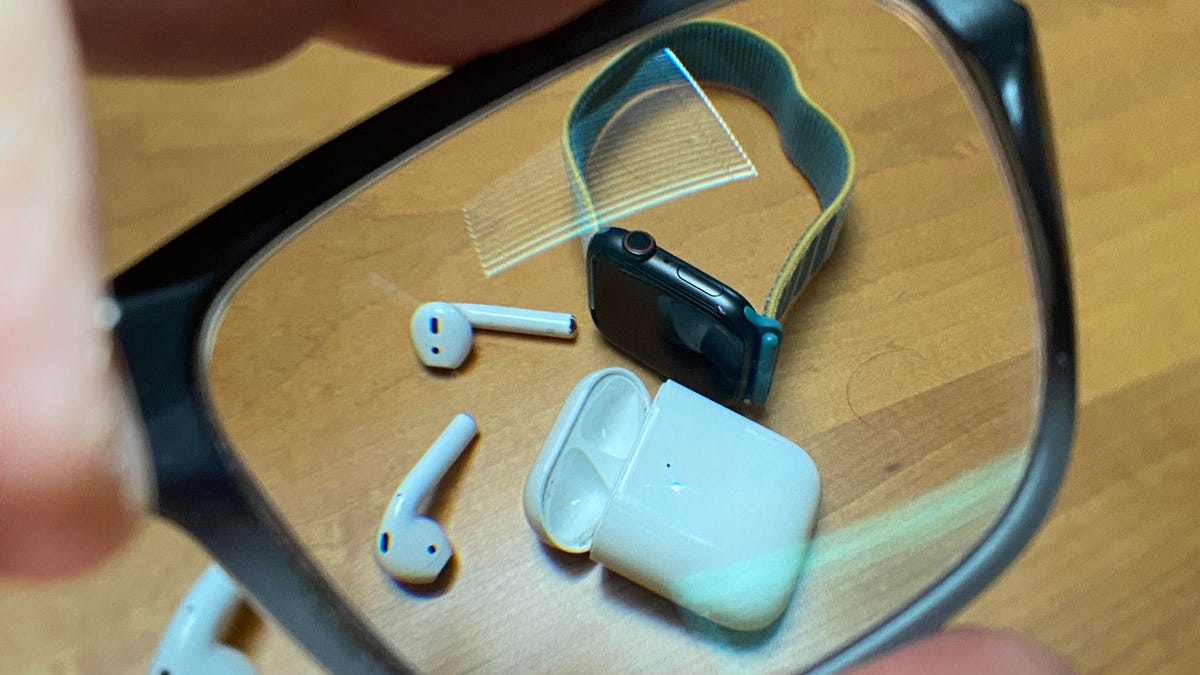
Apple’s already got a collection of wearable devices that connect with the iPhone, and both make sense with glasses. Its AirPods can pair for audio (although maybe the glasses have their own Bose Frames-like audio, too), while the Watch could be a helpful remote control. The Apple Watch already acts as a remote at times, for the Apple TV or for linking up with the iPhone camera. Apple’s future headsets could also look to the Watch and expand its display virtually, offering enhanced extras that show up discreetly, like a halo. Or they could use the Watch as some sort of controller.
The Apple Watch could also provide something that it’ll be hard to get from hand gestures or touch-sensitive frames on a pair of glasses: haptics. The rumbling feedback on the Watch could lend some tactile response to virtual things, possibly.
There’s already a low-cost pair of phone goggles, the HoloKit X, that explores these ideas. It uses an iPhone for the headset’s display and cameras and can channel spatial audio to AirPods, and use an Apple Watch for gesture controls. Apple could do the same.
Could Qualcomm and Apple’s reconciliation also be about XR?
Qualcomm and Apple are working together again on future iPhones, and I don’t think it’s just about modems. 5G is a key feature for phones, no doubt. But it’s also a killer element for next-gen AR and VR. Qualcomm has already been exploring how remote rendering could allow 5G-enabled phones and connected glasses to link up to streaming content and cloud-connected location data. Glasses could eventually stand on their own and use 5G to do advanced computing, in a way like the Apple Watch eventually working over cellular.
Qualcomm’s chipsets are in almost every self-contained AR and VR headset I can think of (Meta Quest, HoloLens 2, a wave of new smart glasses, the latest version of Google Glass, Vive Focus). Will Apple’s tech dovetail at all with Qualcomm’s cross-device platforms?
There are other AR devices out there, like the nReal Light. Apple needs to open up iOS to work with them, like fitness trackers and smartwatches.
The NFL’s final regular season Sunday has arrived. The Chiefs locked up the AFC’s top seed in Saturday night’s early game, while the Jaguars punched their playoff ticket in Saturday’s second contest. On Sunday, there are still a few notable and important games as the regular season comes to a close.
Perhaps the most notable game on the slate will be Sunday Night Football as the Lions head to Green Bay to take on the Packers. A Green Bay win would put the Packers in the postseason as they would have the tie-breaker over the Seahawks even if Seattle wins this afternoon. A Seahawks loss opens the door for the Lions to take the final NFC playoff spot with a win tonight.
Sunday Night Football kicks off at 8:20 p.m. ET (5:20 p.m. PT) on NBC.
Here’s how you can watch all the action this Sunday, including RedZone, as well as the upcoming playoffs without cable.
Aaron Rodgers looks to lead the Green Bay Packers to the playoffs.
Kayla Wolf/Getty Images
What are my streaming options for NFL games?
Paying for cable is the easiest solution, but not the cheapest. For cord-cutters looking to save some money, NFL football streaming options can get complicated, with games played across three different days and nights each week on different channels and streaming services. For the final weekend, games will be shown on ABC, CBS, Fox, NBC, ESPN and ESPN Plus. The majority of the action takes place on Sunday afternoon at 1 p.m. ET (10 a.m. PT) and 4 p.m. ET (1 p.m. PT), with most AFC teams on CBS and most NFC teams on Fox.
All five of the live TV streaming services carry ESPN and Fox, and all but Sling TV carry CBS. All but DirecTV Stream carry the NFL Network. For the games on CBS and Fox, keep in mind that not every service carries every local network, so check each one using the links below to make sure it carries CBS and Fox in your area.
There are three other streaming services that cord-cutting NFL fans should consider. The paid Premium plan of Paramount Plus will show CBS games on Sundays, and the paid Premium plan of Peacock will show NBC’s broadcasts of Sunday Night Football. And ESPN Plus will show both games on the final Saturday of the season.
Wait, there’s one more streaming service to consider for the remainder of the year. Prior to the season, the NFL launched a new streaming service for watching games on your phone or tablet — no casting to your TV. In past years, you could do this for free with the Yahoo Sports app, but now you’ll need to pay $5 a month or $40 for the season for the NFL Plus subscription. With it, you’ll be able to watch every local game on Sunday and the national games on Sunday, Monday and Thursday nights as well as the playoffs and Super Bowl — again, only on your phone or tablet.
Lastly, there’s NFL RedZone, a channel that springs to life each fall and shows live NFL action during the Sunday afternoon games. It pops in and out of the live games and attempts to show each touchdown scored in each game. RedZone is available as an add-on on four of the five major live TV streaming services — all but DirecTV Stream.
Best for everything: YouTube TV ($65)
Sarah Tew/CNET
Our pick from the last two years remains our go-to choice in 2022.
At $65 per month each, YouTube TV checks all the NFL boxes. Local channels CBS, NBC and Fox are included in many markets, and ESPN and the NFL Network are also included so you can watch Sundays and Monday nights. The next best options are FuboTV and Hulu Plus Live TV; both offer the same channels as YouTube TV for NFL fans, but for $70 a month.
Want to follow your fantasy team with RedZone? That’s available on all three services as part of an add-on. If you’re a YouTube TV subscriber, you can add the $11 per month Sports Plus add-on by clicking on your profile and going to Settings, then the Membership tab. FuboTV subscribers can go into My Profile and choose Manage Add-ons to get its $11-per-month Sports Plus with NFL RedZone offering. And Hulu users can now add RedZone for $10 per month with its Sports add-on.
Both YouTube TV and FuboTV allow three people to watch at once (Hulu allows two live streams) and all three have apps on nearly every mobile device and major streaming platform, including Amazon Fire TV, Google TV, Roku and Apple TV.
While all three are largely similar, we like YouTube TV for its superior DVR — unlimited storage compared with 30 hours on FuboTV and 50 hours on Hulu. We also like YouTube TV because it gives you an option to stream in 4K for an extra $20 a month. FuboTV does, too, with its $80-a-month Elite plan. Keep in mind that only Fox and NBC offer 4K NFL broadcasts; CBS and ESPN do not.
DirecTV Stream offers the main broadcast channels for NFL games, but it starts at $70 per month and lacks the NFL Network and RedZone.
Sling TV’s Orange and Blue plan for $55 a month gets you ESPN and the NFL Network, and, in select major markets, Fox and/or NBC, but you’ll still lack CBS. You can also add RedZone for $11 per month with the Sports Extra add-on.
The cheapest way to stream NFL RedZone
NFL RedZone shows every touchdown scored during the Sunday afternoon games each week.
Rob Carr/Getty Images
A frequent fan-favorite method of following all the NFL action on Sundays, RedZone is a way to catch every big play around the league. The cheapest road to RedZone is to get Sling TV Blue for $40 per month and add the $11 per month Sports Extra add-on.
This option can also be streamed on a host of devices including iOS, Android, Apple TV, Roku, Chromecast, Amazon Fire TV and web browsers.
Note: If you only subscribe to Sling’s Orange package you won’t be able to get RedZone in Sports Extra. Your base package needs to be either Sling Blue or its larger Sling Blue Plus Orange bundle for you to be able to get RedZone as an add-on. If you choose the latter, the Sports Extra add-on is more, $15 per month, as you will also get additional channels like the SEC Network, ACC Network and PAC 12 Network.
If you mainly plan to watch on a phone, you can also check out RedZone Mobile, which is in the NFL app. This is a separate subscription from NFL Plus and runs $35 for the season (which breaks down to around $7.78 per month for the roughly four-and-a-half months of regular season football). While this is one of the cheapest ways to get RedZone, be aware that — similar to NFL Plus — you will not be able to AirPlay or Chromecast it onto a larger screen and will need to watch on your phone.
Budget alternative for NFC fans in big cities: Sling Blue ($40) or antenna ($20 one-time)
Sarah Tew/CNET
Those looking to save some cash might want to check out Sling Blue for $40 a month. While it lacks ESPN, meaning you’ll miss out on Monday Night Football, in select markets you’ll be able to get Fox and NBC. The catch is that those markets are mainly in big cities, so if you live outside one of those areas, Sling Blue might not be for you.
You can also add RedZone through the company’s $11 per month Sports Extra add-on.
Fox broadcasts most NFC games on Sundays, while NBC has Sunday Night Football. CBS, which broadcasts the bulk of AFC games, isn’t included on Sling at all. But an antenna can fill those local channel gaps without a monthly charge.
Budget alternatives for AFC fans: Paramount Plus (or an antenna)
Sarah Tew/CNET
There are some apps that offer CBS’ slate of Sunday AFC games live, including Paramount Plus’ Premium tier for $10 per month. Depending on where you live, however, your local CBS station (and those NFL games) might not be available. CBS offers livestreaming services in many markets; you can check for yourself if your area has live CBS streaming here.
An antenna is another option for getting CBS. And as we mentioned above, an over-the-air antenna connected to your TV provides another option, no streaming or monthly fee required, as long as you have good reception.
What about Sunday Ticket?
For one more season, NFL Sunday Ticket is still largely limited to DirecTV satellite subscribers. While that is expected to change in 2023, those who live in buildings that can’t add a satellite dish can already get a streaming version to watch football starting at $294 for its To Go package for the season, or $396 for a Max package that includes the RedZone channel (a student version is also available at a discount). You can check your address on the Sunday Ticket site. Both packages have a one-week free trial.
With the season well past the halfway point, those prices have dropped to $220.47 for the To Go option and $281.97 for Max.
The problem here, however, is that even if you’re eligible, it doesn’t include local games. You can only watch Sunday games that aren’t being broadcast on CBS, Fox or NBC in your area. They also won’t be helpful come playoff time — as you’ll need your local stations and ESPN to catch all those games.
For $65 a month, you’ll get all the major football channels with YouTube TV. Plus, RedZone is available for an extra $11 per month. Plug in your ZIP code on YouTube TV’s welcome page to see which local networks are available in your area.
Sling TV’s $40-a-month Blue plan includes NBC, Fox and the NFL Network. Enter your address here to see which local channels are available where you live. NFL RedZone is also available for an extra $11 per month.
Note: This version of Sling TV does not include ESPN. For that, you’ll need to switch to the similarly priced Orange plan or go for the combined $55 per month Orange and Blue bundle. With the combined plan, RedZone is an extra $15 per month.
Those looking for CBS’ Sunday games will be able to stream them on Paramount Plus with its $10 per month Premium tier. You can check for yourself if your area has live CBS streaming here.
Foldable phones are all the rage, with Samsung, Oppo and Motorola, releasing their own devices. Other companies, like Apple and Google, are rumored to be working on versions of their flagship products with foldable designs.
But at CES 2023, foldable tablets are what piqued my curiosity. Samsung and LG, two of the world’s largest display-makers, both showcased tablet-like devices in various shapes and sizes that can bend, fold, slide or do all three.
These concepts got me wondering about whether there’s a real future for foldable tablets, especially at a time when companies are struggling to sell traditional tablets. What is clear, however, is that companies like Samsung and LG are thinking about it, as are PC-makers like Lenovo and Acer.
The more I’ve thought about it, the more a foldable tablet starts to make sense — maybe even more so than a foldable phone.
Samsung and LG’s foldable concepts at CES 2023
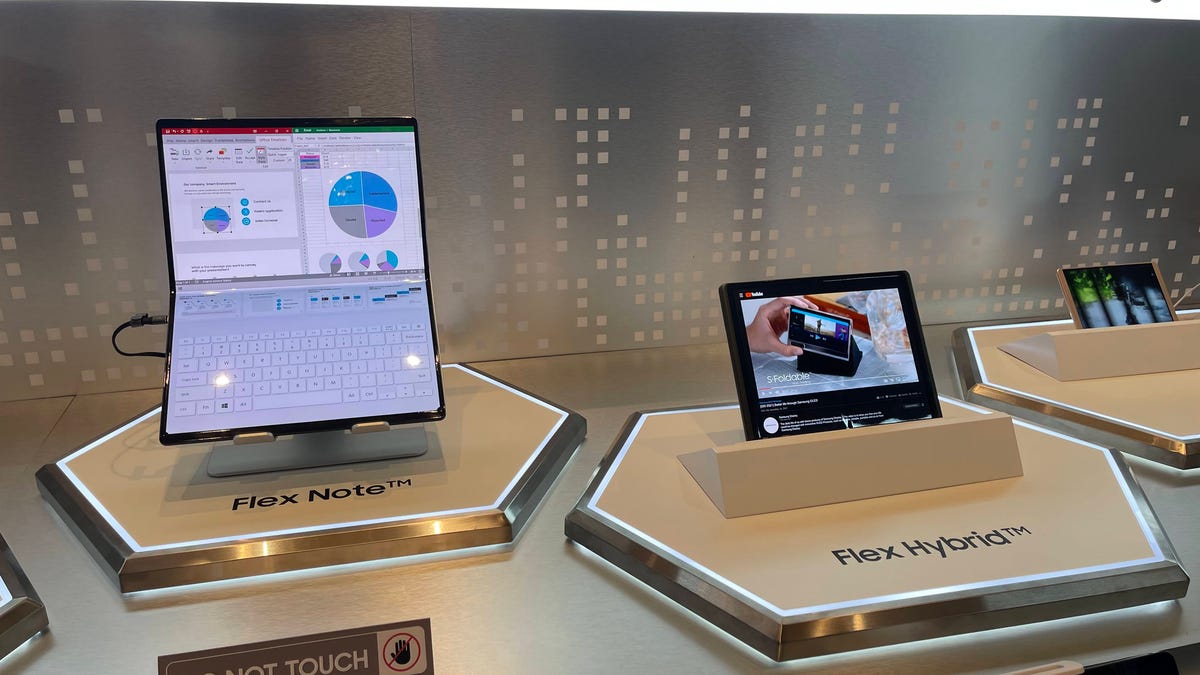
Samsung and LG both kicked off CES 2023 with announcements about their concept foldable displays, many of which come in tablet-sized formats. The star of the show was Samsung’s Flex Hybrid, a concept that you have to see to fully understand.
Samsung showcased its concept displays at CES 2023.
David Katzmaier/CNET
It closes like a notebook and opens up to reveal a tablet-like screen. But the real wow factor is that you can extend the screen’s size and even change its aspect ratio when unfolded. The right side of the screen slides out, extending the display size from 10.5 inches to 12.4 inches. In a demonstration at its CES booth, Samsung showed how the display automatically adjusts to show more content when the screen is extended.
This isn’t the first time Samsung has exhibited concepts like this. In 2022, Samsung flaunted accordion-like displays and sliding screens, designs that are also present this year.
Samsung has other ideas for shapeshifting tablets, too. It also showed the Flex Slidable Duet concept at CES, a screen that expands on both sides to provide more viewing area for playing games or watching movies. The display measures 13 to 14 inches but can extend up to 17.3 inches, according to a Samsung press release. There’s also a version of this concept that can only expand its screen in one direction, a device that Samsung appropriately calls the Flex Slidable Solo.
LG’s concept for a 17-inch tablet-like foldable display.
David Katzmaier/CNET
LG had two main foldable tablet concepts to show at CES: an 8-inch tablet that can fold inward and outward in both directions, and a 17-inch device that folds in half. LG asserts that the 17-inch display is almost entirely creaseless, and the company is positioning it as either a giant tablet or a more portable external monitor for a laptop.
The gadgets shown at CES are far from being the first foldable tablets. There are Lenovo’s X1 Fold and newer ThinkPad X1 Fold, while Asus has the Zenbook Fold OLED. LG’s 17-inch concept largely looks like it’s trying to accomplish the same goal that Lenovo and Asus have already begun to explore with these devices.
The big question is whether these companies can convince consumers that foldable tablets are even useful in the first place. Samsung is seemingly trying to address this conundrum by developing screens that can change their shape and size to go along with how you’re using your device. Based on Samsung’s demo of the Flex Hybrid, it looks like you’ll be able to view content that wasn’t visible before when expanding the slideable portion of the screen. The clip above seems to show a shopping website as an example, with more products being shown as the screen expands.
Lenovo already has some interesting ideas about how to put the X1 Fold’s bendable screen to good use. When the screen is folded halfway, you can place Lenovo’s Bluetooth keyboard over the bottom half of the screen so that it functions as a mini laptop.
Samsung also isn’t the only company experimenting with displays that can expand by sliding and rolling. TCL and Motorola have both dreamed up similar concepts for smartphone designs, although Samsung’s feels closer to an actual product given its experience in foldables. Samsung is also the world’s largest smartphone-maker and second-largest tablet-maker, which makes its concepts seem more impactful than those from TCL and Motorola. While LG no longer has a presence in the mobile industry, it’s a major display supplier and still makes its own laptops.
Foldable tablets may have advantages over foldable phones
Having a phone that can fold in half to easily fit in your pocket can certainly be useful. But a tablet that can do the same thing is even better, mostly for the simple reason that tablets are inherently larger than most phones.
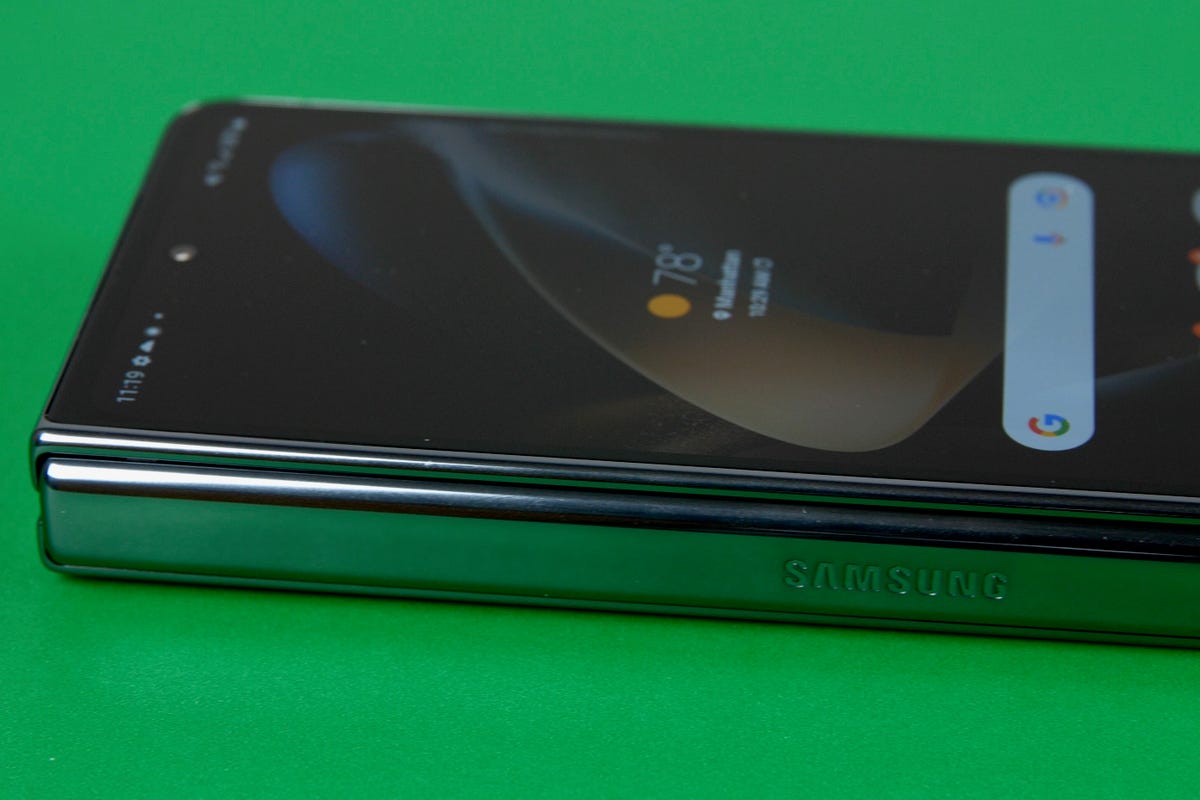
There’s another advantage: Foldable tablets may not face all of the same design challenges that bendable phones have encountered so far. For example, one of my biggest complaints about the Galaxy Z Fold lineup has been that it sometimes feels awkward to use when closed. The cover screen has vastly improved since the first Galaxy Fold arrived in 2019, but it still doesn’t come close to feeling like a standard, nonfolding phone.
The Galaxy Z Fold also feels bulky when closed since its thickness essentially equates to two phones stacked on top of one another. When I reviewed Microsoft’s Surface Duo 2 in 2021, I struggled to find a comfortable way to hold it when taking photos with the main camera since you must keep the phone unfolded to see what you’re shooting.
The Galaxy Z Fold 4 is stil thick compared to a regular phone.
Kevin Heinz/CNET
These drawbacks may not be as big of an issue with foldable tablets. Unlike phones, you’re probably not going to be using a tablet in one hand most of the time. An outer display on a foldable tablet, if there even is one, wouldn’t matter as much because you’re presumably going to be using the device unfolded. The foldable tablets I’ve seen so far don’t even have cover screens.
Aside from the selfie camera for video chats, camera quality also isn’t as important on a tablet as it is on a phone. So the awkwardness issue I mentioned when taking photos with the Surface Duo 2 likely wouldn’t happen on a foldable tablet.
The primary appeal behind foldable tablets from Samsung, LG, Lenovo and Acer — concept or not — is portability. Having a tablet that folds in half makes it easier to fit in a backpack, suitcase or purse on your next flight, commute or beach trip. But phones are already compact in their current form, meaning the value proposition behind phones like the Galaxy Z Fold can be a little harder to sell.
That doesn’t mean foldable tablets are immune from design hiccups, as my colleague Dan Ackerman wrote when trying out Lenovo’s and Acer’s devices. Creating larger displays that bend and fold likely presents its own set of engineering challenges compared to foldable phones.
Foldable phones are also moving more quickly, with market researcher IDC forecasting a 66.6% year-over-year increase in global shipments in 2022. So even though foldable phones may have different hurdles to overcome, companies like Samsung have been able to address these points over several generations of products so far.
Tablets need a refresh
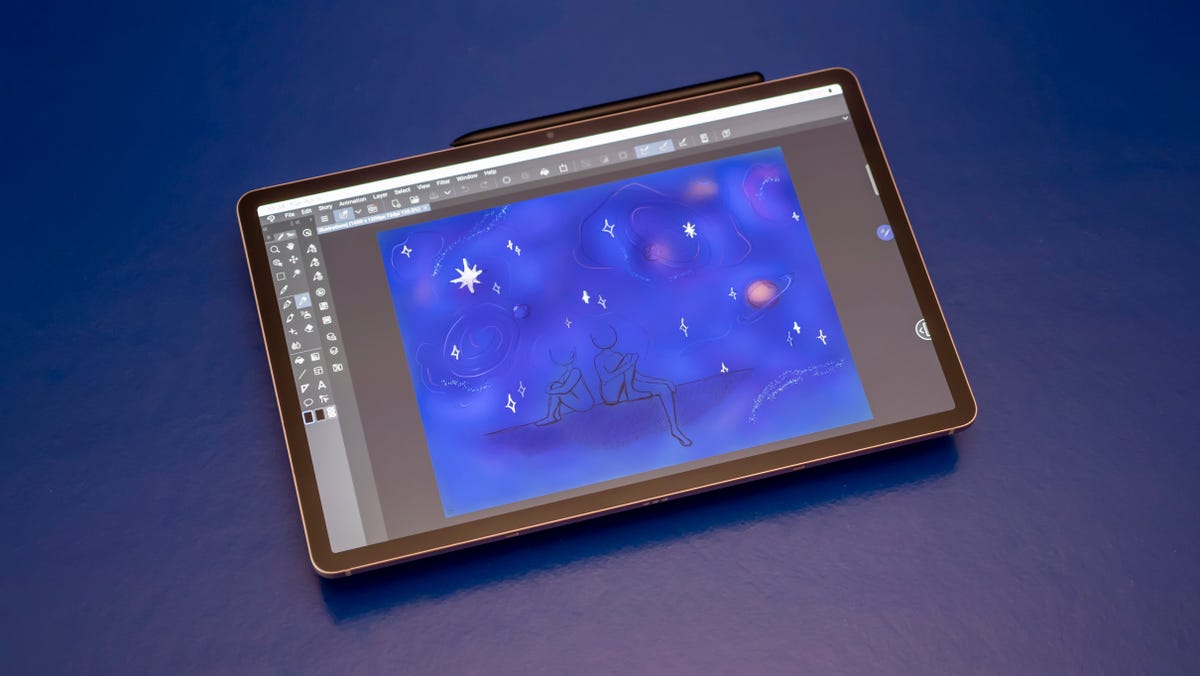
The Samsung Galaxy Tab S8.
Josh Goldman/CNET
Tablet sales got a boost during the early phase of the pandemic as people socialized, worked and attended school virtually. But sales looked bleak last year. Global tablet shipments were down 8.8% year over year in the third quarter of 2022, marking the fifth straight quarter of decline, according to IDC. That slump was mostly due to economic headwinds as consumers are looking to spend less, says the report.
New tablets with shapeshifting displays may not be enough to change that, especially since foldable devices are typically expensive. But tablets are still long overdue for a refresh. Arguably, the tablet’s biggest transformation since the first iPad’s launch has been the shift toward laptop-tablet hybrid devices, a transition that began roughly a decade ago around the debut of Windows 8. But tablets haven’t fundamentally changed much since then, aside from adapting larger screens and gaining routine hardware upgrades.
It took years for those hybrid devices to work out their kinks and become mainstays in our lives. If foldable tablets catch on, the case will likely be the same, mostly because of high prices and software challenges. But the concepts present at CES show that progress is certainly happening.
The goal for all tablets, foldable or not, is to provide a larger display for tasks that your phone may not be ideal for such as gaming, watching movies, reading and working. So finding creative ways to further extend that screen size, as Samsung has done with the Flex Hybrid’s slidable screen, seems like a natural evolution.
Foldable phones still feel like they’re in search of a purpose, but foldable tablets may have already found one.
CES 2023 feels the same and also quite different. Fancy, new, and outright weird tech fills the Las Vegas showroom halls I’ve visited many times before. But in the three years since I was last here in person, the world has changed quite a bit. Especially the way we work.
It may take a little digging under the surface, but this year’s CES show has a lot to say about the great shift toward hybrid and remote work, in everything from better video conference tools to attempts at building a metaverse-infused, mixed-reality workspace.
Meetings in the metaverse
The metaverse office concept, at least according to one definition, is a shared collaborative space where one can participate via several means: virtual or augmented reality, 3D displays, standard laptop, tablet and phone screens; or in-person through things like smart whiteboards that work across all these different experiences.
CNET/Josh Goldman
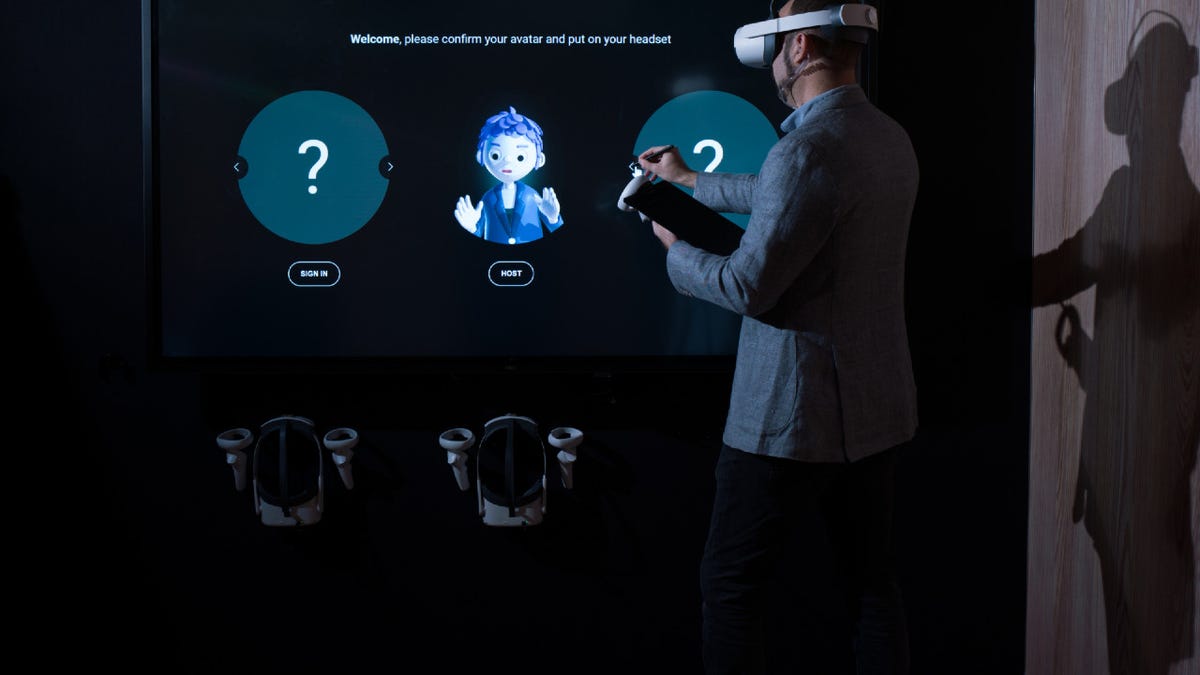
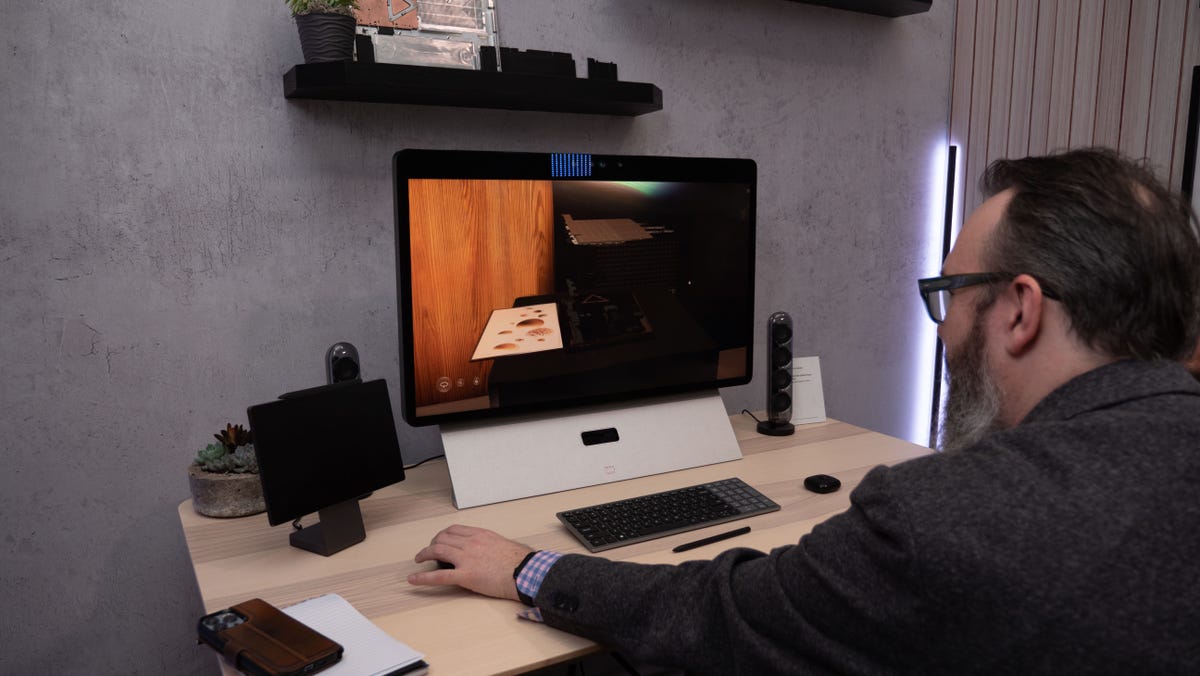
Dell has become a leader in showing off concept pieces and prototypes during CES, and this year, its Concept Nyx (the same name Dell uses for gaming prototypes) tackles that version of the metaverse head on. At a pre-CES preview, I was able to participate in a faux meeting by creating a 3D avatar for others to see, and also by sitting in front of an autostereoscopic display (allowing you to see in 3D without special glasses) that gave me a 3D view of a project. After that, I donned a VR headset to feel like I (or my avatar) was actually in that shared space and writing on a whiteboard with my VR controller. And after that, I was able to use a slate-style tablet to interact with the real-world version of that same whiteboard, but without wearing a headset.
None of this is close to being a shipping product anytime soon, and like many things at and around CES, the hardware is carefully labeled as “conceptual.” Of that batch of products and experiences, the oversize, glasses-free 3D display, using eye-tracking hardware to make the 3D image actually look decent, seemed like the part with the most workplace potential.
Gamers go first
Much new PC technology is driven first by the gaming audience, which has a tolerance for gear that can be both expensive and experimental. That’s why ideas like VR and autostereoscopic 3D often show up in gaming hardware first, before moving into more practical products for your nongaming hours.
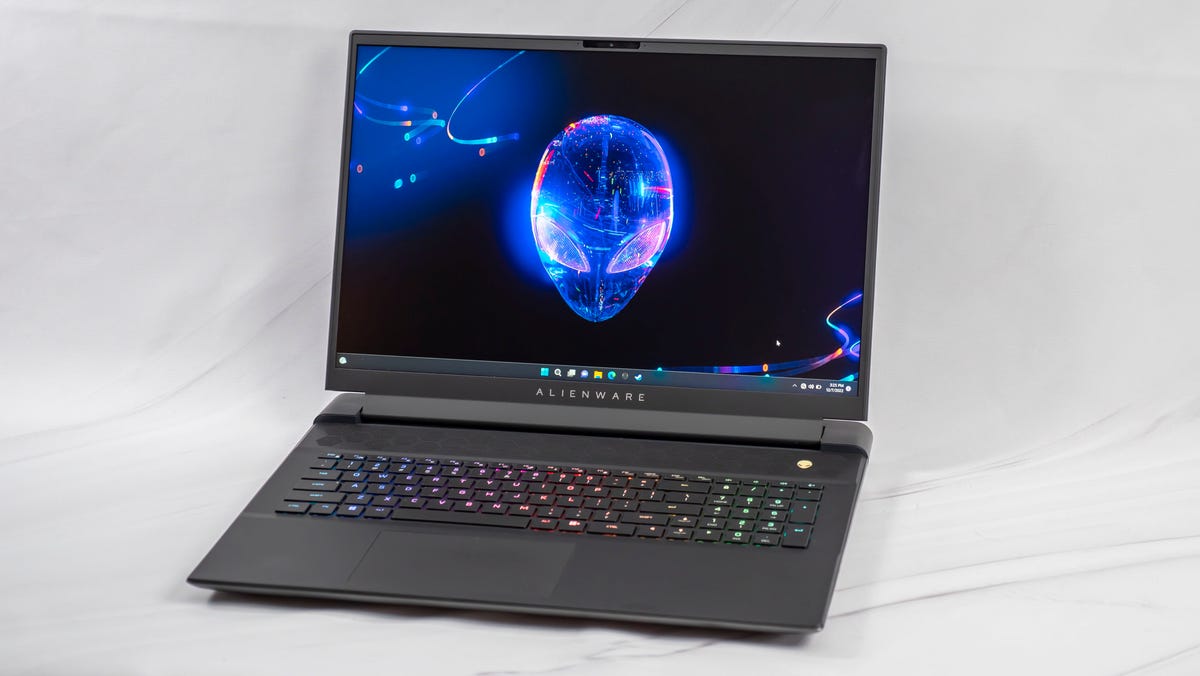
For example, this CES saw several new 18-inch gaming laptops, a screen size that’s been virtually extinct since the early 2010s. The first of these bigger screens are in gaming laptops from Dell, Razer, Asus and Acer, but there’s obvious crossover appeal for hybrid and remote workers who want the flexibility of a laptop but with a larger screen that feels more desktop-like. Razer laptops, with their minimalist styling, are especially popular with gamers and creative pros alike. I would not be surprised to see more professionally pitched laptops eventually grow into that new 18-inch size.
The 18-inch Alienware M18.
Josh Goldman/CNET
Asus also leaned into glasses-free 3D with its new ProArt Studiobook and Vivobook Pro laptops. Both, similar to Dell’s display prototype, use eye tracking to make 3D viable. And those devices are aimed at artists and designers, not gamers. Acer also has a similar eye-tracking 3D laptop aimed at gamers, called the Predator Helios 300, as well as a professional display from 2022 called the Acer SpatialLabs View with that same technology.
Laptops with glasses-free 3D were first tried back in 2012 and never made it to a second generation. The eye tracking in these new versions, however, makes the experience miles better.
Now playing:Watch this:Lenovo Goes All-In on OLED and E Ink Laptops and Tablets…
4:32
More, and different, screens
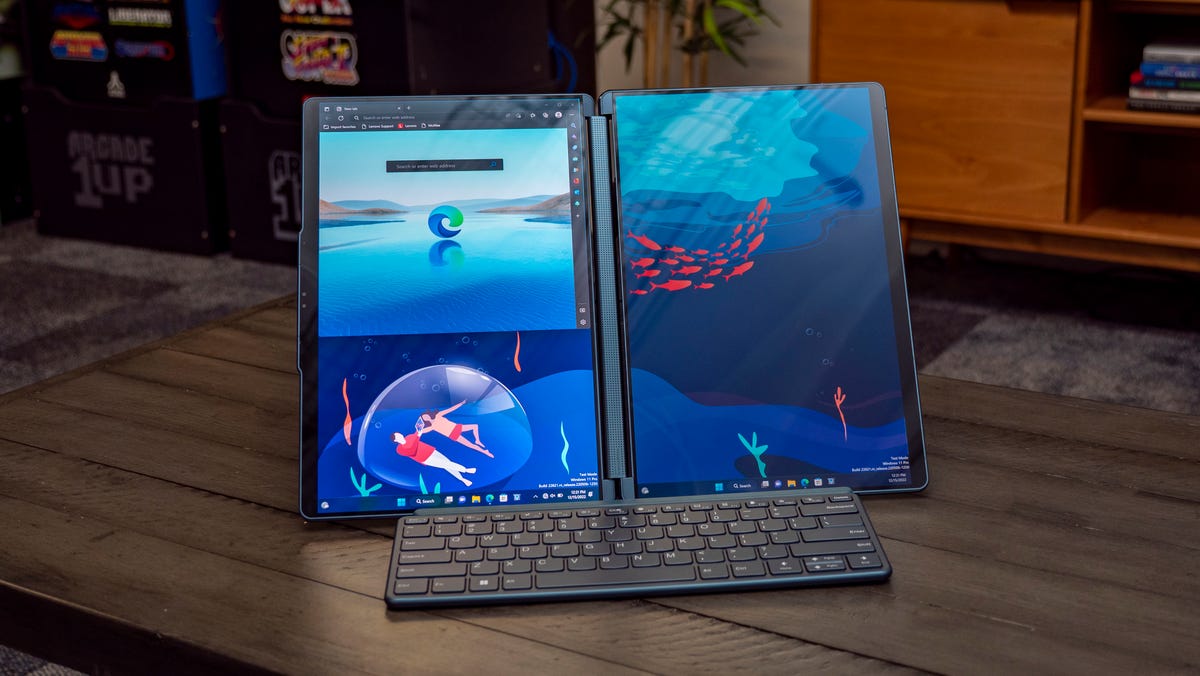
Other experiments, like Lenovo’s twin-OLED-screen Yoga Book 9i and color E Ink/OLED combo, the ThinkBook Plus Twist, might eventually offer some new features that will bleed into more staid work laptops, but it’s far from a sure thing. That said, new E Ink devices like the 10.3-inch Yoga Paper could have more practical work applications, and I only say that because I’ve been using a similar-feeling new Amazon Kindle Scribe while walking the floor at CES 2023 to great effect.
The Yoga Book 9i from Lenovo.
Josh Goldman/CNET
The most welcome trend in both consumer and commercial laptops from the past two years continues unabated, I’m pleased to say. Nearly every new laptop we saw defaulted to a full-HD 1,080-resolution webcam, rather than the wimpy low-res versions that were common prepandemic.
Even better, it’s considered such a standard feature that PC makers hardly feel the need to call it out anymore. It was way too long in coming, and low-res webcams made that first year of remote work in 2020 more difficult than it needed to be for many. But now that we’ve normalized the hybrid workplace and accept video meetings as equal to in-person ones, I’d call it one of those subtle but important changes to how we work that’s making life just a little bit easier.
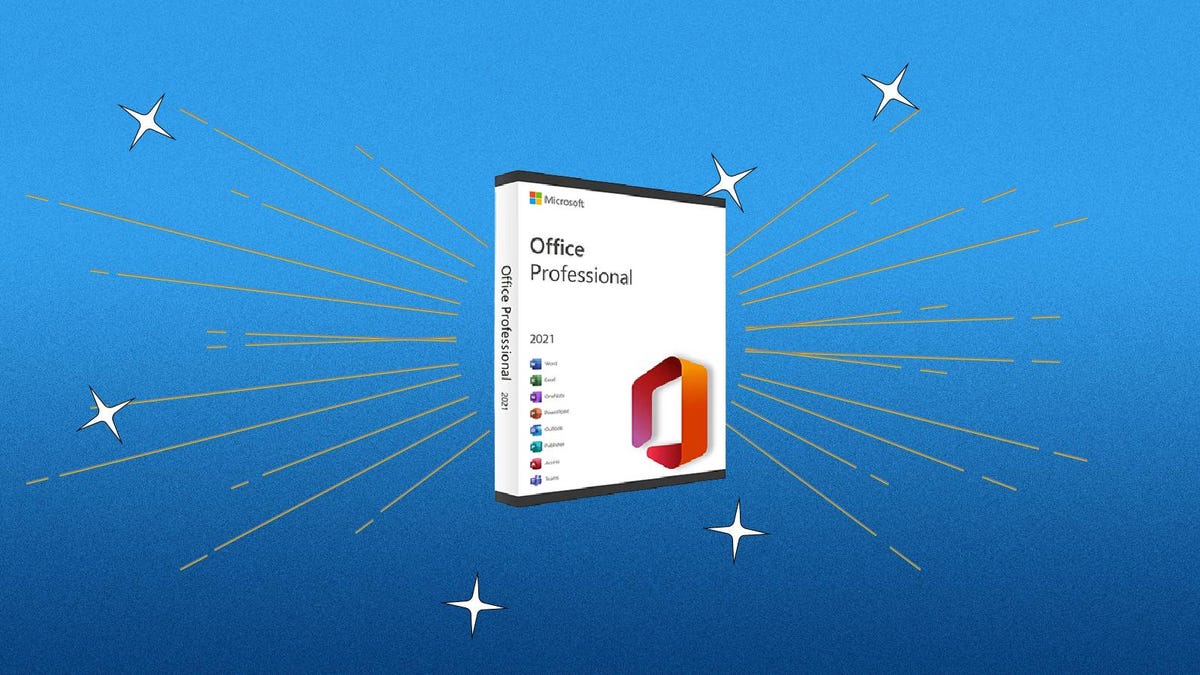
There’s a good chance that you’ve used Microsoft’s Word, Outlook, Excel and other Office programs at some point or another in your daily life before. They’re used by tons of business and organizations, but if you need access on your personal computer, a license can be pretty pricey.
Lifetime access to the 2021 professional suite of Office apps would typically cost you a whopping $349. But right now, StackSocial is offering a chance to grab a lifetime license for just $30, which is over 90% off the usual price, and matches the all-time lowest price we’ve seen. And this license is a one-time purchase, which means you can ditch the subscription (with recurring charges) that Microsoft offers for these essential apps.
This deal is available through Jan. 15, but has already sold out for Mac users. Windows users who don’t want to miss out on these savings should get their order in sooner rather than later.
While the price almost seems too good to be true, we tried it ourselves, and it worked like a charm. (The two big caveats: You get a single key — which only works on a single computer — and there’s no Microsoft OneDrive Cloud Storage included.) But at a price this good, this deal is sure to sell out fast, so take the plunge while you can.
Ready for the next premium app?
Check for promo codes with our CNET Shopping extension before installing the app on your phone.
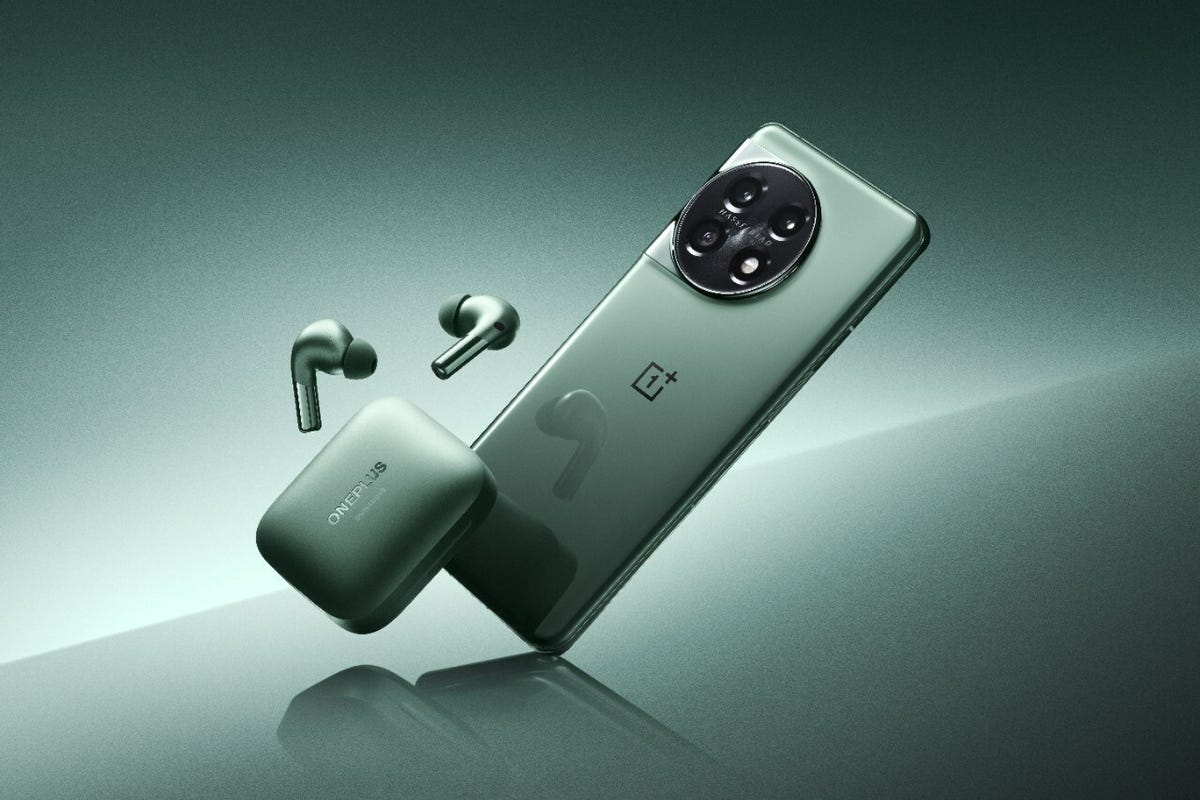
To no one’s surprise, OnePlus’ next phone is called the OnePlus 11 5G. Last week, OnePlus started taking preorders for the new phone in China, and it will be available there on Monday, Jan. 9. The phone is set to launch globally on Feb. 7 and follows last year’s pretty great OnePlus 10 Pro. It also comes on the heels of the OnePlus 10T which left a bad taste in our mouths because of its questionable compromises and a confusing value proposition.
“Gentlemen, you had my curiosity. But now you have my attention.”
I already had high hopes for the 11 because it would be the third-generation phone to be released during OnePlus’ partnership with the iconic camera company Hasselblad. Up to now, Hasselblad’s influence has largely been behind-the-scenes with camera tuning and nifty software features like the Xpan panoramic-style. The OnePlus 11 could be the first time we see actual new camera hardware resulting from the partnership.
I should also point out that details and nuance can be lost in translation, so please keep that in mind as you read on.
This gif was made from part of a promotional video on OnePlus China’s website.
OnePlus China
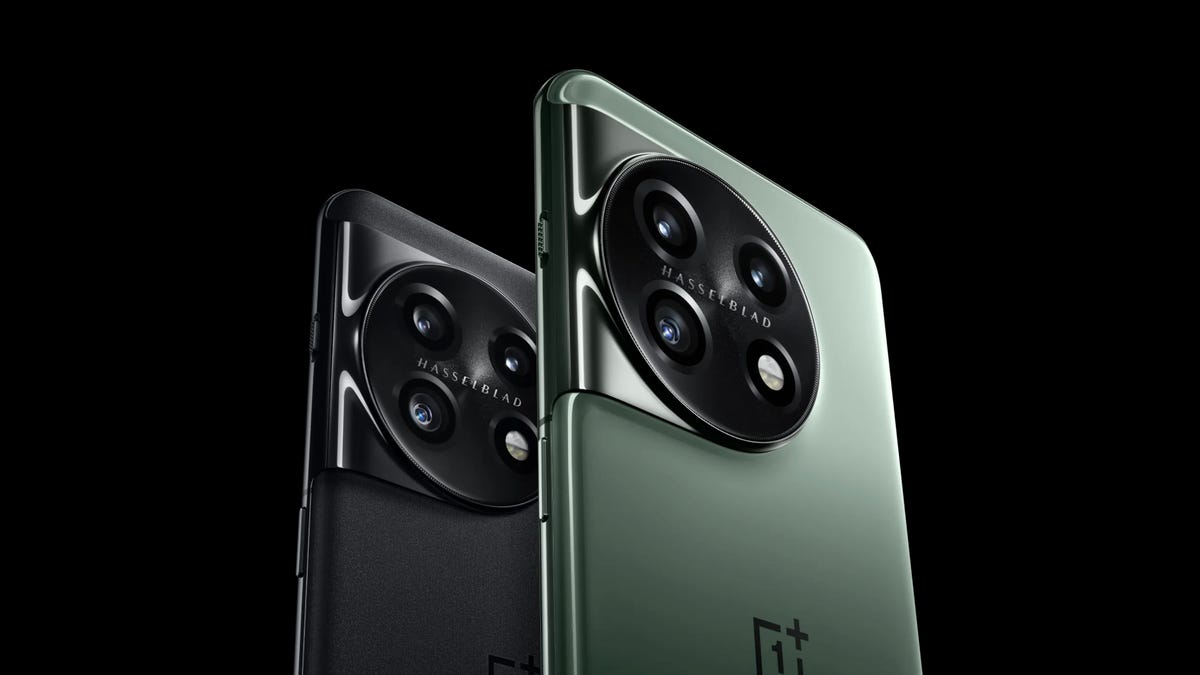
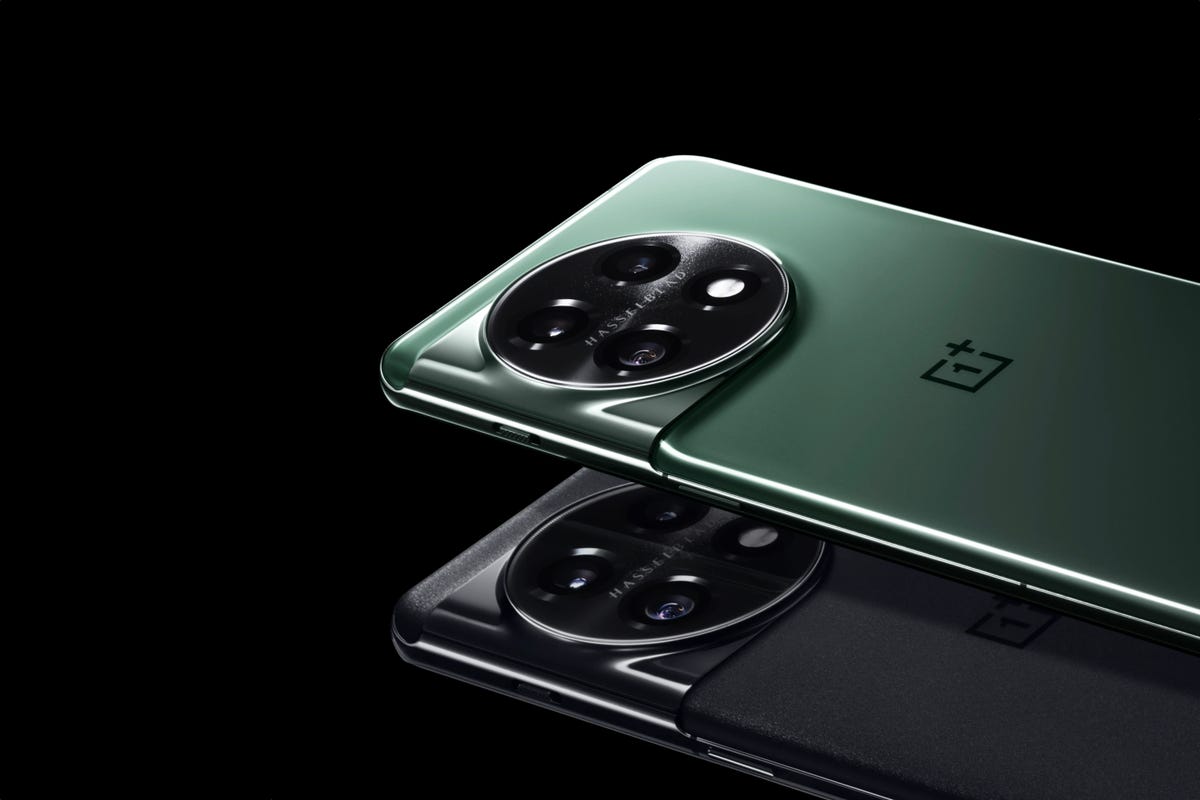
The OnePlus 11 looks fantastic
The 11’s design picks up where the 10 Pro left off. Translated, the site states that the OnePlus 11’s look was inspired by a “black hole in science fiction.” But instead of a square-ish camera bump found on the 10 Pro, the 11’s is circular on top with tapered sides that flow into the edge of the phone. It’s reminiscent of a clasp on a leather attaché. When the phone is in landscape, the camera bump’s shape looks almost like the silhouette of Darth Vader’s helmet.
The site shows off the phone in two colors. There is a matte green color, that isn’t quite British racing green, and a textured black finish, which according to translated text is “silk glass.” I gather this means the finish looks textured but to the touch is just flat glass.
The OnePlus 11’s design looks outstanding.
OnePlus China
There aren’t many photos of the front, but it has a display with waterfall edges that flow off the right and left sides of the phone. The front-facing camera is housed in a hole punch-shaped cutout on the top left side.
An alert slider is visible in a product video on the site that also shows flashy stylized closeups of the OnePlus 11. OnePlus previously confirmed that the button would return after its absence on the OnePlus 10T. The 11 joins the likes of the Nubia Red Magic 8, which has a similar hardware slider for putting the phone into gaming mode.
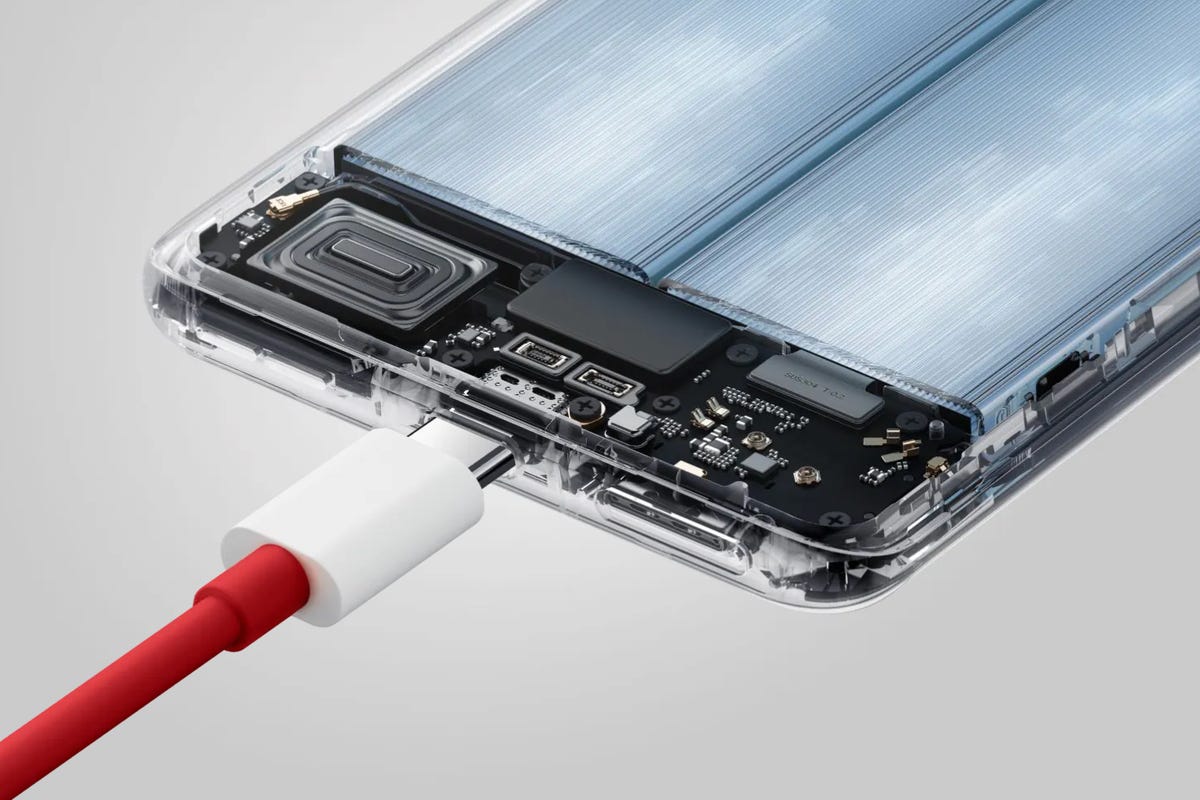
This photo shows some of the insides of the OnePlus 11. Like previous models, the 11 has truly fast charging speeds.
OnePlus China
The OnePlus 11 has the latest Android hardware
The phone has a 6.7-inch AMOLED screen with a variable refresh rate that tops out at 120Hz. The display is LTPO 3. Last year’s 10 Pro had an LTPO 2 display. LTPO stands for low-temperature polycrystalline oxide, which allows displays to have a high refresh rate without killing your battery. According to the translated text, LTPO 3 is smoother and even more power efficient. A graphic claims that the display can drop down to 1Hz, which is the same refresh rate the iPhone 14 Pro uses for its always-on display.
On the inside, the 11 runs on Qualcomm’s Snapdragon 8 Gen 2 chip which according to a OnePlus press release has 35% faster CPU performance and a 25% faster GPU. The 11 is one of the first phones with the new Qualcomm chip. The 11 also comes with 16GB of RAM and either 256GB or 512GB of storage.
Powering everything are dual 2,500 mAh batteries that support 100W fast charging. Last year’s 10 Pro had the same dual-battery setup and supported 80W fast charging, except for US models which were capped at 65W fast charging. The OnePlus 10T supports 150W charging globally and 125W in the US. For perspective, the iPhone 14 Pro supports 20W fast charging. OnePlus says that the 11’s batteries can charge from empty to 100% in 25 minutes.
This gif of the OnePlus 11’s camera bump was taken from a promotional video on OnePlus China’s website.
OnePlus China
The cameras are the same but different
The OnePlus 11 has a 50-megapixel main and 48-megapixel ultrawide camera system that’s similar to the 10 Pro’s. It also has a telephoto camera with a 32-megapixel sensor and 2x optical zoom compared to the 10 Pro’s 8-megapixel sensor and 3.3x optical zoom.
Sony made all of the image sensors including the one in the new telephoto camera. But you have to wonder if OnePlus and Hasselblad chose the 32-megapixel sensor and short tele lens combo because it yields better photos than the tele on the 10 Pro. If that is the case, it’s the first time we see camera hardware design that stems from the OnePlus and Hasselblad partnership.
Translated text suggests the new telephoto camera can take photos with more accurate colors. OnePlus China’s site says that portrait mode pics have better simulated bokeh that mimics the look of images taken with Hasselblad’s XCD medium-format lenses.
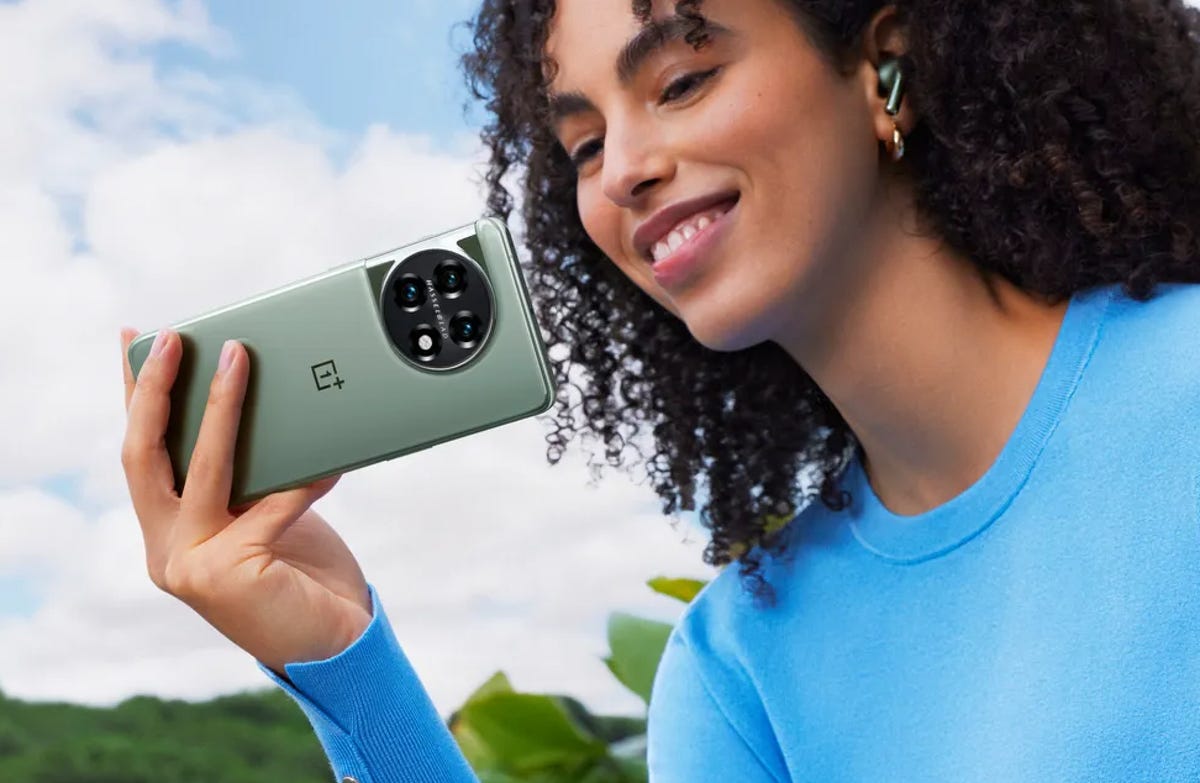
Sample photos from the 11 look good, with balanced colors and highlights that roll off for skin tones. We should take these photos with a big grain of salt because nearly every phone maker’s website flaunts impressive photos taken with their phones – ah, marketing! Sadly, there isn’t any mention of whether these photo improvements will apply to video recording.
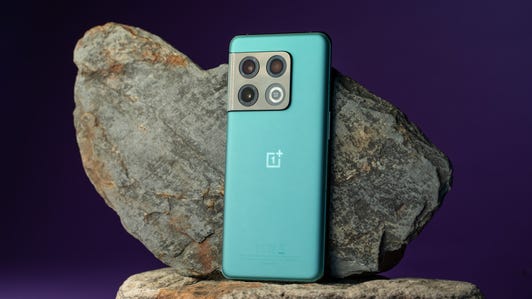
This was a promotional photo OnePlus released in Dec. 2021.
OnePlus
Is there a OnePlus 11 Pro?
From everything I read on the website, the OnePlus 11 is the best spec’d OnePlus phone ever made. It seems to be the “pro” model this year despite lacking the nomenclature. Its 6.7-inch screen is the same size as the one on the 10 Pro. In fact, OnePlus China’s President Li Jie said there is no “pro” version of the OnePlus 11 in response to a question on the Chinese social network Weibo.
That would mark a continued departure from OnePlus’ previous product strategy. Until recently, OnePlus had released three models of its flagship phones, a regular version, a “pro” one and later in the year a T model. For example, in 2020 there was a OnePlus 8, 8 Pro and 8T. The pro models typically have larger displays with a higher resolution and a third rear camera with a telephoto lens compared to the regular version.
Last year, the company released only a OnePlus 10 Pro without a standard model.
The OnePlus 11 and Buds Pro 2 will launch globally on Feb. 7.
OnePlus
What’s next for the OnePlus 11?
The new phone launches in China on Monday, Jan. 9. OnePlus is having a global launch event in India on Tuesday, Feb. 7, where it will also show off the OnePlus Buds Pro 2. I am truly looking forward to trying the phone out for myself, especially that new telephoto camera.
Now playing:Watch this:OnePlus 10 Pro: Style and Power Make for a Great Android…
8:50
OnePlus 10 Pro is a Competitively Priced High-End Phone with 2022’s Best Specs
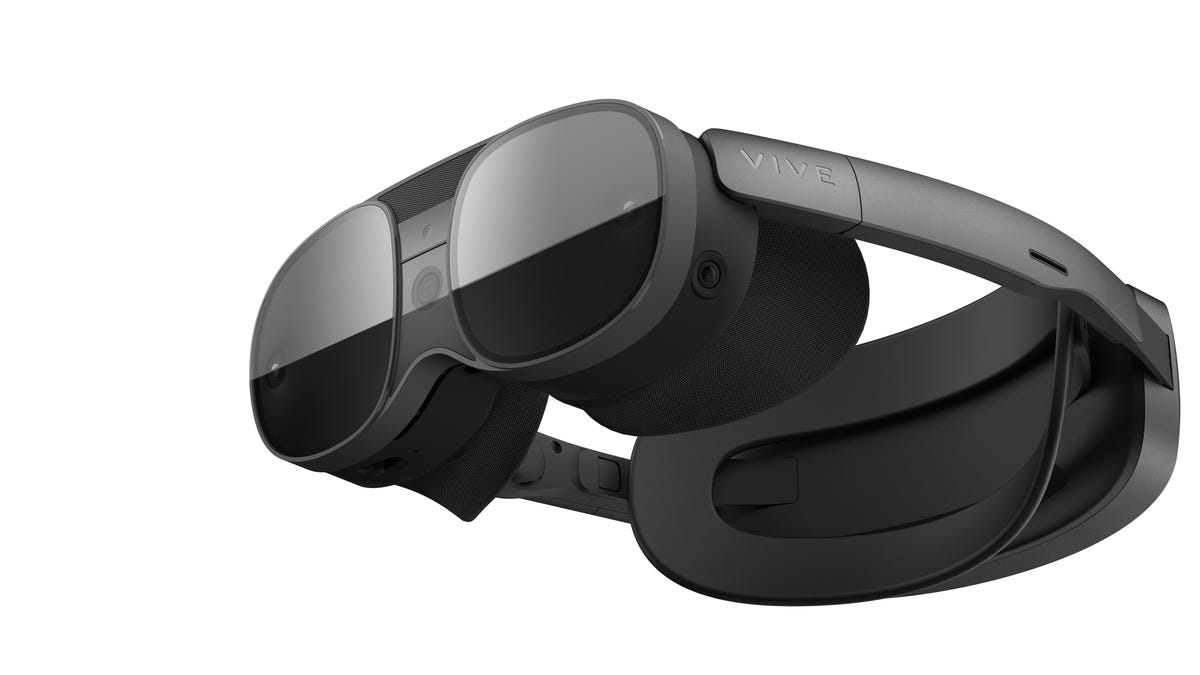
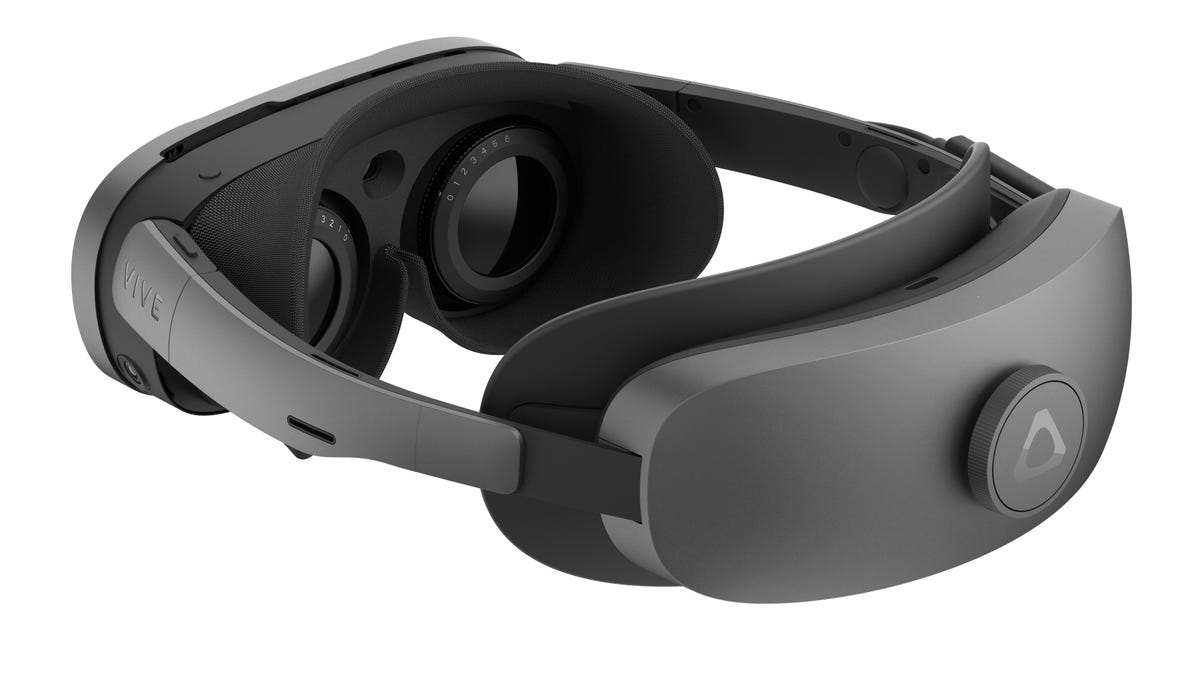
VR is getting better and better, but it’s also getting more expensive. HTC’s newest high-end headset announced at CES, the Vive XR Elite, follows a similar playbook to Meta’s recent Quest Pro, and possibly Apple’s awaited device as well. It raises a question: Are we truly ready for the rise of the $1,000-plus VR rigs? The standalone Vive XR Elite is sleek and looks a lot more compact than the Quest Pro, and is trying to test the higher-end waters.
Now playing:Watch this:Super Small Vive XR Elite Doesn’t Quite Work For My Eyes
3:36
The $1,099 headset, available for preorder Thursday, is arriving by the end of February — remarkably soon for a CES product. That means it’ll be available alongside Sony’s PlayStation 5-connected PSVR 2. While less expensive than the Quest Pro, the XR Elite’s price costs about as much as buying a PS5 and a PSVR 2 together. It’s far from an impulse purchase. But the hardware, which shrinks down the VR form to a pair of nearly glasses-like goggles and includes mixed-reality capabilities that could allow for AR apps, looks to solve how we’ll be using the metaverse for more in our lives than just games, simulation and fitness.
No other company has really cracked this challenge either. But this Vive headset looks, more than ever, like it’s a stepping stone to future AR glasses.
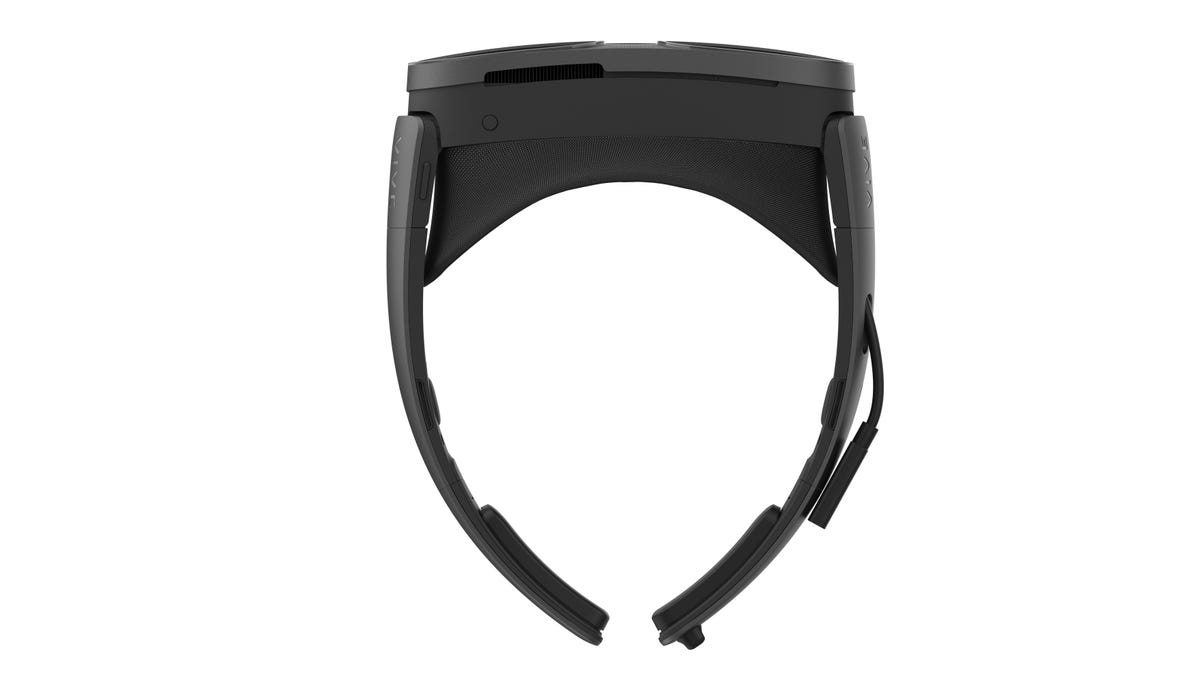
The XR Elite’s battery strap detaches, and glasses-like arms can be added on instead to reduce size further.
HTC
“We see where mixed reality is going to create a whole new suite of use cases. We know the virtual reality use cases are great. I think the AR side is amazing, too,” Dan O’Brien, HTC’s general manager of Vive, told me in a conversation at CES in Las Vegas. He acknowledged that HTC tried to make an AR device in 2015 but stopped because of the complications. O’Brien sees 5G and cloud computing as a key next step. “You need a 5G network, a really robust one to make AR go to scale — you need a cloud infrastructure to deliver to those types of wearables.”
The XR Elite is primarily a standalone VR headset, and it looks like an impressive piece of tech: It has a familiar Qualcomm Snapdragon XR2 chip much like the Meta Quest 2, Quest Pro and Vive’s existing business-focused Focus 3. But it adds a higher-resolution 110-degree field of view, LCD displays with 2K resolution per eye that can run at 90Hz. There’s also a boosted 12GB of RAM along with 128GB of storage. It can connect to PCs to run SteamVR or HTC’s VivePort software, or connect with Android phones. But its potential as a bridge to AR experiences seems like the most impressive feature.
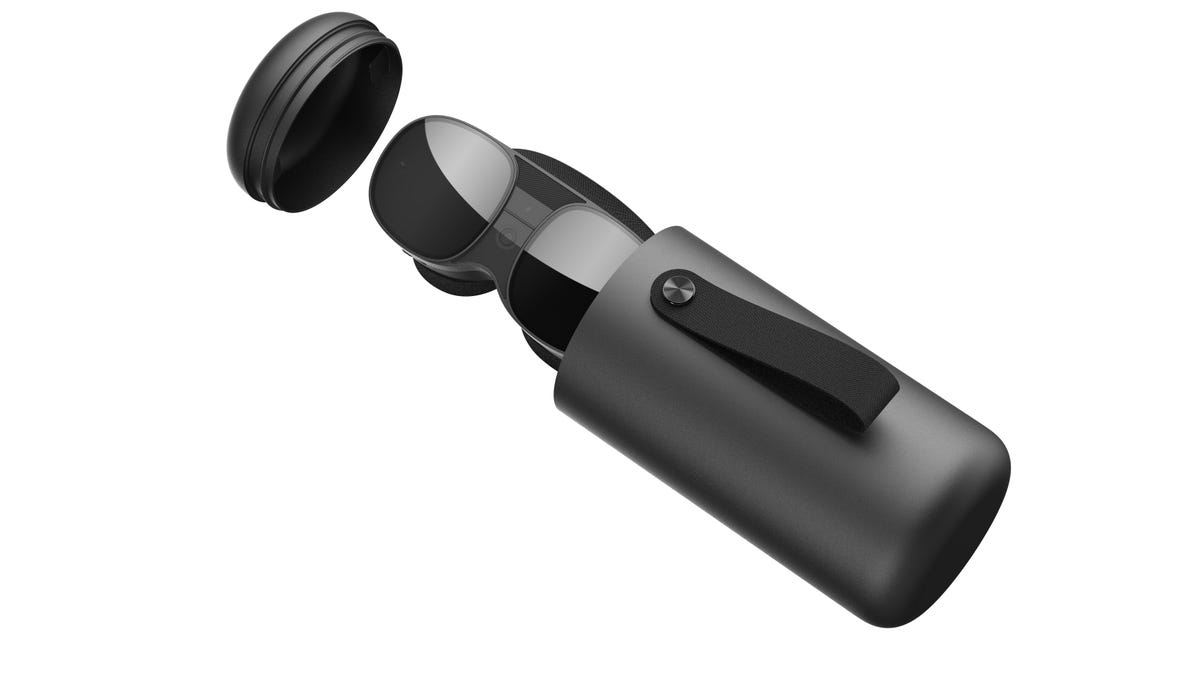
Those are just specs, though. The XR Elite is a VR headset with a similar proposition to previous models, but with expanded capabilities. Its compact size is the most surprising part: At 340 grams, it’s less than half the weight of the Quest Pro. The rear hot-swappable battery gives about two hours of life. It gets even smaller by unclipping the back battery strap and adding glasses arms that can turn the headset into a modified pair of VR glasses, which could just plug into an external USB-C charger or battery for power. It’s small enough to fit in a compact carrying case tube.
The XR Elite in its carrying case, which looks more portable than any other VR headset I’ve seen.
HTC
But that compact size comes with a twist: Instead of fitting on top of glasses, the XR Elite uses adjusting dials, or diopters, which can change the lens prescription on the fly without you needing to wear glasses at all — for some people, at least. The diopters only accommodate up to a -6 prescription, but my own vision is over -8 for nearsightedness. It’s a challenge HTC faced with its even smaller Vive Flow phone-connected VR goggles, which also went for the glasses-free approach.
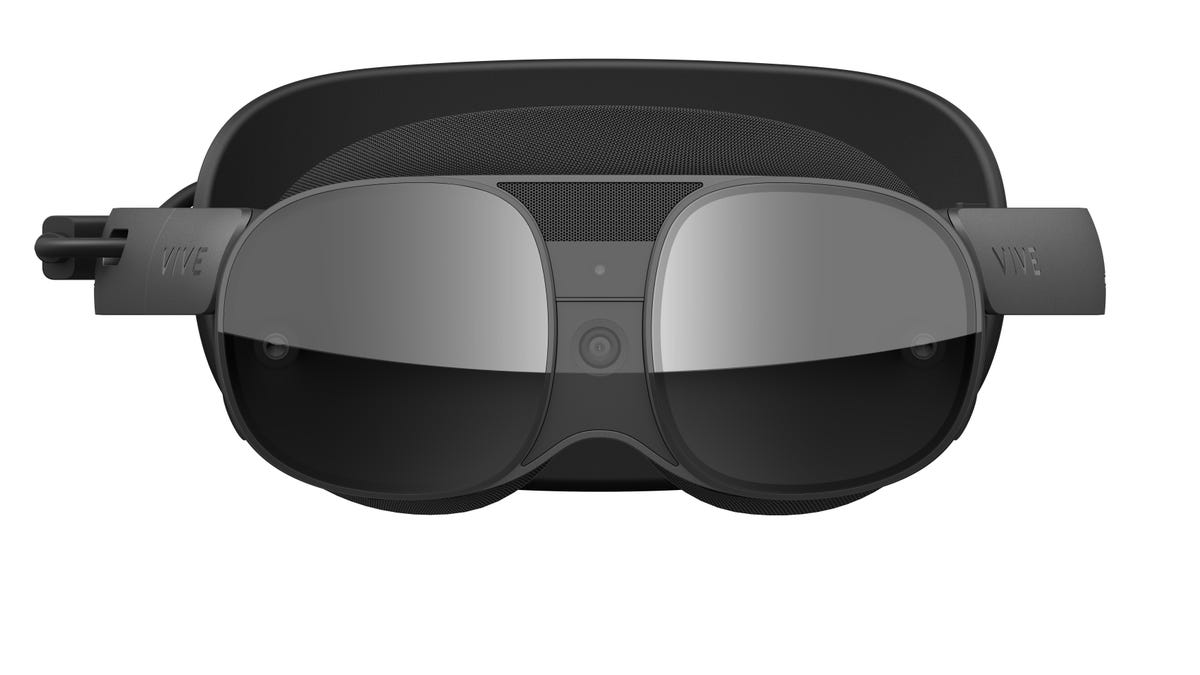
The XR Elite has a dedicated depth sensor on the front, along with color passthrough cameras that can eventually show mixed reality-experiences, similar to the Quest Pro. The Quest Pro doesn’t have the Elite’s added depth sensor, but it accommodates for that with its onboard cameras.
A front camera (part of an array for movement tracking), and also a depth sensor for measuring spaces and layering AR.
HTC
The XR Elite could also adapt further. While the hardware doesn’t have its own eye-tracking tools onboard, eye- and face-tracking add-ons are coming later in the year. The headset’s controllers are the same standard ones that HTC has for the Vive Focus 3, which follow the same game controller-like playbook as the Meta Quest 2 and others. But HTC already has its own line of wearable VR body trackers and wristbands, and more accessories could follow.
O’Brien acknowledges that the sticky, mass-market appeal of VR and AR aren’t here yet. “I think developers will be using cloud computing, being able to actually get their content into the metaverse much faster, and much more efficiently,” he said. “If you think about the streaming business, these streamers, these TikTokkers, all these kids that create the really compelling, fun experiences that just keep drawing you back in? That’s not in the metaverse today, We need to create more opportunities for less sophisticated immersive content creators to get involved, and then create more [of an] economy.”
O’Brien sees cloud computing, driven by eye tracking’s ability to compress graphics data via a technology called foveated rendering, as a way of eventually shrinking the processors on future headsets, getting smaller and fitting on more people.
The headset doesn’t work with glasses: instead, it has prescription-adjusting diopter dials inside.
HTC
My concern is about the limited prescription options at the moment. “As we get to much lighter glasses, people will probably be bringing more of their prescriptions to it in the future,” says O’Brien. “For now, what we can do is just try to address the majority of the market as best we can with these types of setting changes, because we have to get the headsets lighter. We’ve got to get them more comfortable. And if you’re going to have these big eye relief areas inside of these headsets, they’re going to stay really big.”
O’Brien sees the included VR controllers as possibly becoming optional one day, even maybe being left out of the box and bought separately, but not yet. Hand tracking isn’t reliable enough. “Hand tracking has to make massive advancements over the next two to three years to really become much more of a natural input tool.” But O’Brien suggests it’s a way for future headsets to get more affordable. “If a user can just put on glasses and interact with content [with their hands], that’s going to be a much less expensive product.”
This product has been selected as one of the best products of CES 2023. Check out the other Best of CES 2023 award winners.
Household privacy protection is important — which is why using a smart TV VPN is essential. Your internet service provider can monitor and collect data on whatever you’re watching on your smart TV — and it’s all too eager to sell your data in order to target you with ads. The best smart TV VPN secures your privacy by encrypting your data as your internet traffic is routed through a remote, secure server. This means that what you do online while connected to a VPN server is hidden from anyone attempting to snoop on what you’re up to — including your internet service provider.
Long gone are the days of viewer anonymity we once enjoyed with old boxy, fuzzy-pictured TVs.Nearly every TV you can buy these days is connected to the internet, which means that streaming services and other apps are transmitting all sorts of information while you watch. So if you want to protect your information and browsing habits, using a solid, well-tested VPN is a good idea. A bonus here is that a smart TV VPN can also help you access content on Netflix and other streaming sites that would otherwise be restricted in your location.
Using a smart TV comes with security risks as well. Your smart TV is another device that’s connected to the internet, and without the right protections, internet-connected devices can be hacked. Government entities or cybercriminals can compromise your smart TV, get access to your viewing information, intercept your passwords and more. It’s important to minimize those risks and keep unwanted eyes off of your viewing habits.
The best VPN for your smart TV will offer excellent security, fast speeds, the ability to unblock streaming services, cross-platform compatibility (including on VPN routers as well as on Android and Amazon Fire devices) and helpful customer support. (Beware of free VPN services since they can put your privacy at risk, and they typically impose restrictive bandwidth and data caps that make them essentially useless for your smart TV.) With a focus on the qualities above, we’ve rounded up the five best VPNs for your smart TV.
Latest tests: No leaks detected, 2% speed loss in spring 2022 tests
Network: 3,000-plus servers in 160 locations across 94 countries
Jurisdiction: British Virgin Islands
Price: 5 simultaneous connections for $13 per month, $60 for six months or $100 for a year (current discount: 3 months free). 2-year subscriptions available.
When it comes to speed, security and unblocking capabilities, ExpressVPN is tough to beat. After a set-back in 2020, ExpressVPN is again currently in first place as the fastest VPN we’ve tested. ExpressVPN caused us to lose just 2% of speeds in our speed tests, so you shouldn’t have any issues achieving enough speeds for a smooth streaming experience whether you’re streaming in 720p or 4K UHD.
It also unblocks Netflix and other streaming services more reliably than most other VPNs, has servers in 94 countries around the world — so basically any geographic region you’d want access to is available in its extensive global network of VPN servers.
All of our top-rated VPNs have wide compatibility across platforms and operating systems, but ExpressVPN’s collection of setup guides, detailed FAQs and troubleshooting articles give it a clear advantage for Smart TV users, even if you’re connecting your TV to several other consoles and devices. That’s also where ExpressVPN’s 24/7 customer support, and its no-questions-asked, 30-day money back guarantee come in handy.
With ExpressVPN’s custom router app, you can also enable its split-tunneling feature to run certain devices (like your smart TV) through the VPN and others through your regular network connection. The Network Lock killswitch feature is also available on the router app, which will protect your privacy by killing your internet connection should the VPN disconnect for any reason.
If you have a Fire TV or a Google TV, you can bypass the router setup altogether and install the ExpressVPN app right onto your smart TV.
ExpressVPN’s included Media Streamer smart DNS feature is also simple to set up on any smart TV. Just keep in mind that while smart DNS can help you unblock geo-restricted content, your connection won’t be encrypted, so you won’t have the same privacy protections as you would via your VPN connection. But if you’re a casual user and streaming is your only objective here, then Media Streamer could be a good option for you.
All this comes at a price, however. ExpressVPN may be the best VPN for smart TVs, but it is also one of the most expensive. ExpressVPN’s best plan offers five simultaneous connections for $100 a year (which includes three extra months, for a limited-time deal totaling 15 months of service). You can also opt for a $13 per-month plan, or pay $60 for six months.
Latest tests: Zero data leaks and 19% internet speed loss in fall 2022 tests
Network: 3,200-plus in 99 countries
Jurisdiction: Netherlands
Price: Unlimited connections for $48 for the first year (then $60 annually) or $13 per month. 2-year subscriptions available.
Surfshark boasts an impressive suite of privacy and security features, unlimited simultaneous connections, easy-to-use interface and expansive global network. And it’s still significantly cheaper than most of its competitors. That’s what helped Surfshark earn CNET’s Editors’ Choice for Best Value VPN in 2022.
Along with standard VPN features such as a kill switch and DNS leak protection, some of the more notable Surfshark features include camouflage mode (which hides the fact you’re using a VPN), split-tunneling, NoBorders mode (which lets you use Surfshark in regions where VPNs are restricted) and multihop VPN connections. You’ll also get access to Surfshark’s CleanWeb technology, which blocks ads and malware and helps you avoid phishing attacks.
One innovation we’re excited to see Surfshark roll out over the next year is its Nexus network, which connects the VPN’s entire network of servers together and allows you to choose multiple servers to route your connection through. The functionality is somewhat similar to Tor, but Surfshark says it’s faster. With its Dynamic MultiHop, IP Randomizer and IP Rotator functions, the Nexus network can give you a few extra layers of protection while you use the VPN — which can be particularly beneficial to users with critical privacy needs.
Surfshark says it doesn’t log any user activity. And although no-logging claims are virtually impossible to prove with 100% certainty, German cybersecurity firm Cure53 declared Surfshark’s security to be “solid” in its 2021 security audit of the VPN. Surfshark says a new audit is forthcoming by the end of this year.
As of February 2022, both Surfshark and NordVPN have the same corporate parent (Tesonet), but Surfshark said it is legally bound not to share any information between the entities that would go against its privacy policy or terms of service. We didn’t find any language in either document that would indicate Surfshark has any obligation to share user data with its parent company or any sibling companies, which include NordVPN.
Surfshark rates consistently as one of the fastest VPNs available. Which is why we were surprised that one of the only issues we had with Surfshark came in our speed test. While it still ranks as one of the fastest VPNs we’ve tested — with an internet speed loss of just 19% — we were disappointed with the inconsistent speed results we got to certain locations. Speeds to Europe and Singapore were erratic (dipping as low as 9Mbps to Singapore), while speeds to New York were slower than speeds to the UK and even Australia. Surfhark is in the process of significantly expanding its server network, now offering more than 3,200 servers in 99 countries. The continued expansion of its server network could potentially help bring some more consistency to the VPN’s speeds.
In our tests, Surfshark had no problems unblocking Netflix and Amazon Prime Video content, but we did run into a fair bit of trouble accessing Disney Plus. After testing various servers in the US and other countries where Disney Plus is available, we were finally able to access the content when we connected to a server in Boston. You may need to test a few servers yourself before gaining access to Disney Plus content with Surfshark.
Surfshark offers cheaper introductory prices that jump after the first billing cycle. Even so, Surfshark manages to keep its prices lower than most other VPNs — helping it earn CNET’s Editors’ Choice for Best Value. The yearly plan starts out at $48 for the first year, then jumps to $60 for any additional years of service. If you opt for the two-year plan, you’ll pay $60 up front for the initial two years combined, then $60 per year for any additional years. Surfshark’s monthly plan stays constant at $13 a month. If you’re not satisfied with the service for any reason, Surfshark offers a 30-day money-back guarantee.
Latest tests: No leaks detected, 13% speed loss in summer 2022 tests
Network: 5,600-plus servers in 84 locations across 59 countries
Jurisdiction: Panama
Price: 6 simultaneous connections for $12 per month or $60 for a year (current discount: 3 months free). 2-year subscriptions available.
NordVPN is one of the biggest and most recognized names in the industry. And for good reason — because NordVPN is an excellent VPN overall, offering basically anything and everything you’d want in a quality VPN service. It’s fast, secure, easy to use on all platforms and has an excellent global network of servers — many of which are optimized for things like streaming and security.
NordVPN’s speed and security are both top-notch and can give VPN users a solid streaming experience while keeping your activity private at the same time. With NordVPN, you’ll be safe and secure behind its AES 256-bit encryption along with your choice of IKEv2/IPsec, OpenVPN or NordLynx VPN protocols. NordLynx is built on the WireGuard protocol, but uses a double network address translation (NAT) system that gives each user the same IP address and each individual VPN tunnel a unique IP address to help protect your privacy while affording you the fast speeds you can get via the WireGuard protocol. Essentially, this double NAT system ensures that none of your personal data is stored on the VPN server, giving you fully private internet access.
NordVPN’s Help section is filled with useful guides on how to get the service working on your smart TV. You’ll find step-by-step instructions on how to get the VPN set up on a host of different routers as well as how to set it up on your Fire TV and Google TV.
Overall, it’s a great VPN and a solid choice for smart TVs. As far as price, you’ll find NordVPN in the middle of the pack here — its 2-year subscription plan comes out to $3.29 per month. If you’re not sure if Nord is the right choice for you, you can always give it a test run thanks to its 30-day money-back guarantee.
Latest tests: DNS leaks detected, 26% speed loss in spring 2021 tests
Network: 1,800-plus servers in 115 locations across 80 countries
Jurisdiction: United States
Price: 5 simultaneous connections for $13 per month or $96 for a year. Family plans available.
For critical VPN use, we wouldn’t recommend Hotspot Shield due to its US jurisdiction in addition to its use of its proprietary, closed source Hydra VPN protocol. But if security and privacy aren’t your primary concern, then Hotspot Shield makes for an excellent smart TV VPN. Though we may not be completely sold on its privacy protections, we are on its speed — Hotspot Shield is fast.
It’s also excellent for streaming content on your smart TV. With servers located in more than 80 countries around the world, you’ll have access to a wide selection of geographic regions with Hotspot Shield.
However, Hotspot Shield’s Support section and overall customer service experience leaves quite a bit to be desired. The Support section is a bit convoluted and Search doesn’t always output exactly what you’re looking for, so it might take some work to find what you’re after. And the live chat feature is only available to premium customers. Once you find what you’re looking for, the guides and tutorials are sufficient to get you set up, but the path there isn’t as clean as with other VPNs. Like the others in this list, Hotspot Shield offers apps for Fire TV and Google TV, as well as tutorials on how to set the VPN up on your router.
If you’re willing to pony up $7.99 a month for its yearly subscription plan, or $2.99 a month for a 3-year subscription, then you’ll get a super-fast smart TV VPN that’s excellent at unblocking content in Hotspot Shield. But if you’re concerned at all about its US jurisdiction, you’d be better off going with ExpressVPN or the other two up above.
Latest tests: No leaks detected, 49% speed loss in summer 2020 tests
Network: 9,200-plus servers in 115 locations across 91 countries
Jurisdiction: Romania
Price: 7 simultaneous connections for $13 per month, $42 for 6 months or $57 for two years. ($57 annually after the first two years).
CyberGhost VPN may not offer all the bells and whistles as the other VPNs on this list, but it may not have to because it’s just so ridiculously easy to use. It also has servers specifically optimized for streaming on various services, which make it a great choice for your smart TV.
It’s not the fastest VPN on the block, but you shouldn’t run into any trouble streaming content buffer-free. And CyberGhost has servers located in 91 countries around the world, making it one of the best in terms of global network coverage.
If you decide to hook CyberGhost VPN up to your smart TV via a router, CyberGhost does provide detailed instructions in its Help center on how to do so — even though it doesn’t offer custom router firmware like ExpressVPN does. If you have a Fire TV or Google TV, you’ll be able to download the CyberGhost VPN app directly to your TV. CyberGhost VPN also offers a smart DNS solution that will give you access to its DNS servers in the US, UK, Germany and Japan.
Cyberghost VPN can also be quite budget-friendly. If you opt for the 3-year plan, which also includes three months free, you can get CyberGhost for just $2.29 per month. But if you prefer the flexibility of a one-year subscription plan, it’s still one of the cheaper options at $4.29 per month. It’s one of the cheapest smart TV VPNs, and a very capable one if you’re fine with a VPN that’s not chock-full of advanced options.
ExpressVPN received a CNET Editors’ Choice Award for best overall VPN. We evaluate VPNs based on their overall performance in three main categories: speed, security and price. Express isn’t the cheapest, but it’s among the fastest and, so far, is the most secure. (Note that we’re currently re-evaluating ExpressVPN based on the news mentioned above.)
Surfshark, with its lower price, is a close second among our picks, thanks to its impressive performance and unlimited devices.
NordVPN, our third choice, is a die-hard heavy hitter. It costs more than Surfshark but less than Express, has an enormous network that’s constantly getting faster and more secure and is easily the most reliable service we’ve tested.
Why should you use a VPN on a smart TV?
Today’s TVs aren’t only for watching cable or local network programming. They’re also for video-on-demand streaming, and some content is regionally locked. If the programming you want to watch isn’t available in your country, you can use a VPN on your smart TV to spoof your location to access virtually any of the content you may want. Even if unblocking geo-restricted video content on your smart TV isn’t of interest to you, you might want to use a VPN on your smart TV to prevent your ISP from monitoring your viewing habits or keeping track of the internet activity generated by your smart TV.
Wearables can already track a dizzying number of bodily statistics, from heart rate to blood oxygen levels and skin temperature. If the new devices shown at CES 2023 are any indication, the next wave of smartwatches and wristbands aim to gain a better understanding of your alertness, fatigue and stress levels, too.
Watchmaker Citizen and smaller brands like BHeart and Nowatch have all announced new wearables that claim to pay close attention to your mental wellbeing. The shift toward stress tracking isn’t necessarily new, as I wrote in September when covering Fitbit’s Sense 2 and the Happy Ring. But the announcements at CES suggest that tech companies are interested in monitoring other factors that play into mental wellness.
The launches come as stress has been on the rise in the US because of factors like political divisiveness and inflation in addition to the pandemic, according to a survey conducted by the Harris Poll on behalf of the American Psychological Association.
“Modern life was hard enough with constant technology and ever-present communication and the pace of life,” Dr. Debra Kissen, CEO of the Light On Anxiety Treatment Center, which specializes in cognitive behavioral therapy services, previously said to CNET. “And then throw in a pandemic, and I think it really brought mental health concerns that were always there undeniably to the surface.”
This recent interest in exploring the link between physical and mental wellness also comes as annual smartwatch upgrades aren’t as pivotal as they used to be. Now that smartwatches have matured and the problems that plagued early devices have been addressed, companies large and small are searching for what’s next.
Citizen says its CZ Smart watch can gauge alertness and fatigue
The Citizen Watch.
Citizen
Citizen says its new CZ Smart watch uses tools built based on research from the NASA Ames Research Center Fatigue Countermeasures Laboratory to assess fatigue and alertness levels. One of the biggest features that separates it from other wearables is its Alert Score, which it generates after you take the Alert Monitor test in Citizen’s YouQ wellness app. That test is based on the Psychomotor Vigilance Test that NASA has used to assess astronauts’ alertness.
The watch also wants to help you understand whether you’re a morning or evening person by analyzing your sleep patterns and Alert Scores. The overall goal is to combine these readings with more traditional metrics like heart rate and activity to make suggestions about how to address fatigue and increase your alertness. The “casual” finish starts at $350 (roughly 290, AU$520), while the “sport” edition starts at $375.
The BHeart band is a stress tracker you can attach to a regular watch
BHeart’s fitness band.
Baracoda
Health tech company Baracoda’s BHeart band grabbed headlines for its self-charging design that the company claims uses motion, body heat and sunlight to power itself. But the wristband is also another example of a new wearable attempting to provide mental health insights in addition to tracking physical metrics.
It claims to calculate stress management readings using heart rate variability. The app may suggest that users take a walk or do some yoga to relax based on those readings. Since it’s a watch band and not an actual watch, you can also wear the BHeart strap with any standard watch that has a lug width of 18 to 22 centimeters. The band starts at $100 and launches in April.
The Nowatch claims to estimate stress and cognitive performance
The Nowatch pictured on someone’s wrist.
Nowatch
If you couldn’t tell from the name alone, the Nowatch isn’t a watch. It’s a screenless wellness tracker that claims to measure stress and cognitive performance.
The company worked with Philips on sensors that can measure electrodermal activity — or changes in sweat — to estimate stress levels. Fitbit uses similar technology in its Sense and Sense 2 devices. Users can also press the crown on their watch to mark specific stressful moments so that the watch can log it within the app. That sounds a bit different than Fitbit’s approach with the Sense 2, which can automatically flag potential signs of stress in addition to performing on-demand stress readings.
But one of the Nowatch’s more unique offerings is its Predicted Cognitive Zone feature, which the company says can provide insight on the wearer’s cognitive performance based on their physical state.
The Nowatch starts at $499, although the company is temporarily selling it for $369 until Jan. 9.
The next step for wearables
It took years for smartwatches, smart rings and fitness bands to turn sleep and activity data into meaningful insights that actually feel useful. Now, companies are seemingly setting their sights on addressing other factors that impact our health like stress, burnout and lack of sleep.
In addition to the new devices at CES, Fitbit debuted the second generation of its Sense smartwatch last fall — which doubles down on the stress tracking tech it introduced in the first model. Polar also announced the Ignite 3 watch in November, which claims to pinpoint the time of day in which you’ll be most alert based on your sleep cycles. Biogen announced in 2021 that it was collaborating with Apple on a research study to investigate the role that the Apple Watch and iPhone could play in monitoring cognitive performance.
Of course, it’s important to remember that these are just claims for now. It’s impossible to know whether these tools are accurate or useful without using them. The devices also arrive at a time when there’s increased awareness and scrutiny over the amount of data that tech devices gather about their users.
Dr. Charles A. Odonkor, assistant professor at the Yale University School of Medicine, also previously told CNET that changes in bodily markers like heart rate, perspiration and blood pressure may not always indicate stress and could be a sign of other conditions.
Still, the arrival of devices like these suggest that the next frontier for wearables could be about much more than just motivating you to hit the gym.