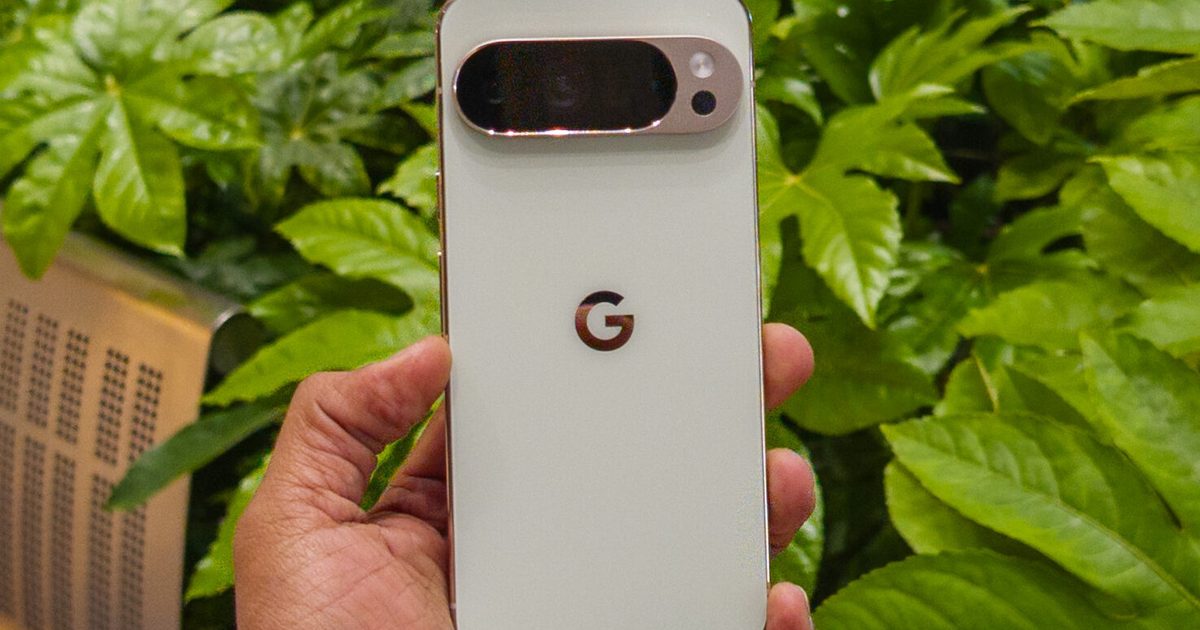
A new leak regarding Google’s forthcoming Tensor processor has emerged, offering a glimpse into its capabilities that suggests a complex performance profile. According to Mystic Leaks, the upcoming Pixel 11 will feature a reconfigured CPU utilizing ARM’s latest C1-series cores. The leak suggests the inclusion of a high-performance “Ultra” core operating at approximately 4.11GHz, alongside several “Pro” cores running at 3.38GHz to enhance overall processing power.
However, the outlook isn’t entirely positive.
Tensor G6 Performance Gains
 Google
Historically, Google’s Tensor processors have fallen short of Qualcomm and Apple in raw CPU power. By adopting newer ARM cores, the next-generation mobile AP may finally bridge this performance gap. Additionally, the Tensor G6 is expected to bring wider enhancements, notably a shift to TSMC’s advanced 2nm manufacturing process. This transition promises superior energy efficiency, better thermal management, and extended battery longevity.
Previous Pixel devices have faced criticism for thermal issues and power inefficiency. Consequently, the Tensor G6 represents more than a simple speed increase; it aims to address these fundamental challenges.
Graphics Performance Remains Unclear
 Nirave Gondhia / Techgeeks
While these upgrades are promising, the GPU situation remains uncertain. The leak suggests Google might adopt a PowerVR-based GPU architecture for the Tensor G6. This could amount to little more than a rebranding, with early indicators pointing to minimal to no GPU performance gains over the prior generation. While daily tasks may feel unaffected, gaming and intensive graphical applications could continue to be a weak point for Google’s future flagship devices.
Broader Chip Enhancements
Beyond the CPU and GPU, Google appears to be upgrading other elements of the upcoming System on Chip. The Pixel 11 may replace Samsung modems with MediaTek’s M90 chip to improve connectivity and power consumption. Further rumors indicate the introduction of a new Titan M3 security chip and enhanced on-device AI capabilities.
The mixed nature of these upgrades is evident. Nevertheless, Google has historically not emphasized gaming as a key selling point for its phones, and it seems poised to maintain that strategic focus.