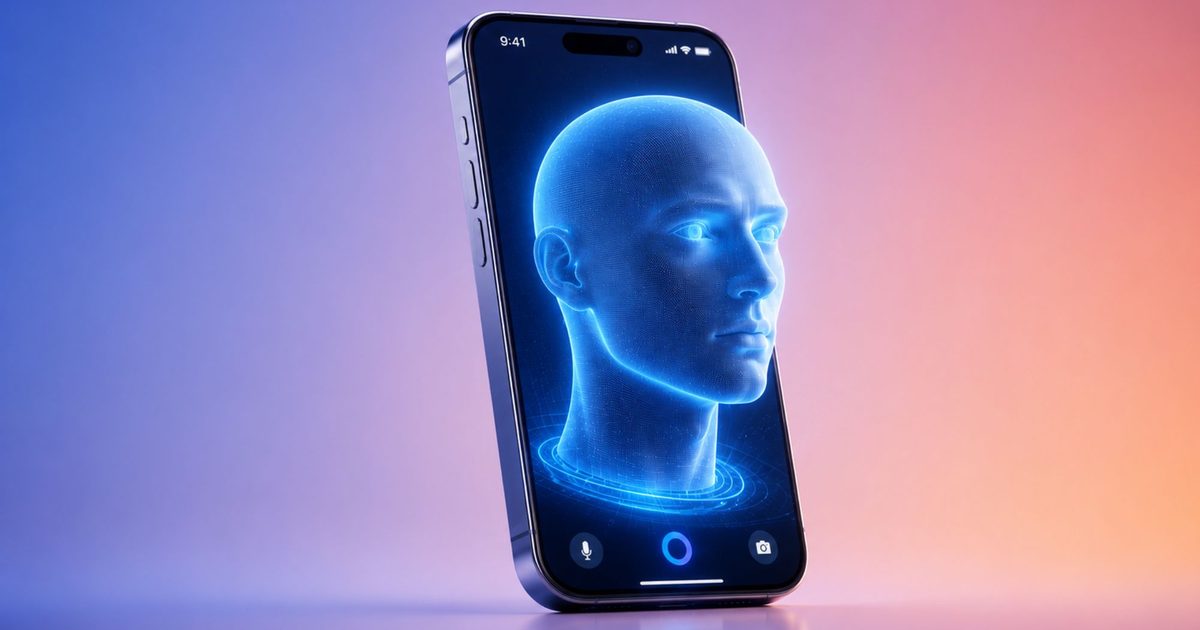
Holographic projections on your iPhone may seem like a plot from a sci-fi novel. However, a recent leak suggests that Apple could be turning that fantasy into reality. An anonymous source on X, operating under the handle “Schrödinger,” asserts that the tech giant is crafting a “Spatial iPhone” equipped with a holographic screen, allegedly manufactured by Samsung.
This display, internally designated as “MH1” (Mobile Holographic 1), comes with some extraordinary claims. It is crucial to approach these details with a healthy dose of caution, as no official confirmation has been provided yet.
What is the mechanism behind a holographic iPhone display?
The rumored screen combines sophisticated eye-tracking with a method known as diffractive beam-steering. This technique utilizes microscopic structures within the display layer to direct light toward your eyes at exact angles, creating glasses-free 3D depth that seems to hover above the glass (as reported by MacRumors).
Additionally, a nano-structured holographic layer is integrated directly into the AMOLED panel. A patented algorithm is said to allow users to tilt the device to view objects in a video from different angles, a feature the leaker refers to as “360-degree rotation.”
The display is also expected to retain full 4K resolution for standard 2D viewing, with the holographic layer activating only for designated content.
This represents a significant improvement over earlier 3D screens like Nintendo’s 3DS, which were known for compromising image clarity. The project is currently in the first phase of research and development, with a projected launch date for holographic smartphones set for 2030.
Apple’s past endeavors indicate this concept is plausible
Apple has been pursuing this concept quietly for almost twenty years. The company secured patents for glasses-free 3D displays as early as 2008, and again in 2014 for touchscreen holography utilizing micro-lenses.
Apple SVP of Hardware Engineering John Ternus recently described spatial computing as an “inevitability,” noting that the technology is still in its “early innings.”
Furthermore, iOS 26 already includes a feature named Spatial Scenes, which introduces 3D parallax effects to photos on iPhone 12 and later models. This serves as a modest yet revealing glimpse into Apple’s future direction.
A Spatial iPhone arriving in 2030 is not a certainty, but Apple’s patents, Samsung’s holographic display research, and Ternus’s statements all indicate that this is more than just a pipe dream.