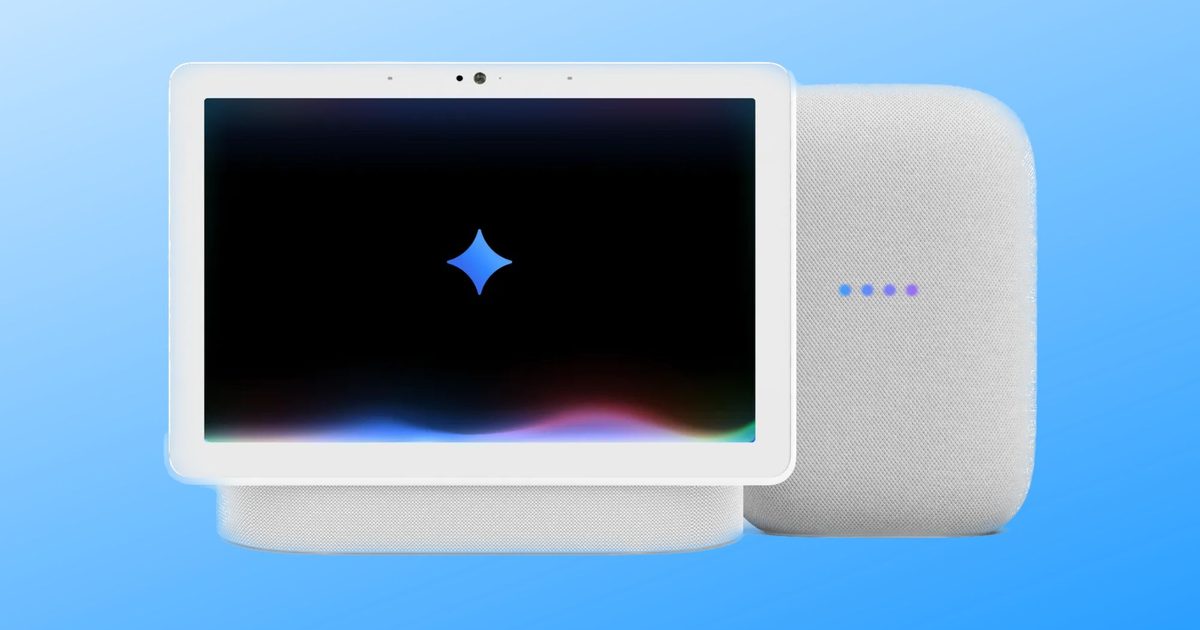
Owners of Google smart displays and speakers have several new updates to look forward to. The company has released a new wave of enhancements for Gemini for Home, boosting both the intelligence and speed of the assistant on these devices.
Gemini for Home becomes more intelligent and personalized
Perhaps the most notable new feature is Gemini’s ability to leverage data stored in Ask Home to respond to queries about security cameras. For instance, if you’ve stored a note identifying your nanny as Alice, you can inquire when Alice got home, and the assistant will automatically retrieve the corresponding video footage. Users can also request a Home Brief through their speaker or display for a concise rundown of household events during their absence. Additionally, smart displays will now present thumbs-up and thumbs-down options following most voice commands, streamlining the process of providing feedback to Google.

Response speeds have been enhanced overall as well. With optimized backend processing for routine commands, actions such as activating lights, creating alarms, and handling timers should now feel significantly more responsive. Adult users will additionally receive more useful answers to general questions, such as requests for cocktail recipes, while existing parental controls continue to safeguard younger household members.

The Google Home app also receives practical improvements
The Gemini updates coincide with the release of Google Home app version 4.16, which introduces its own enhancements. Setting up new devices is now more straightforward due to a redesigned QR code discovery process that automatically guides users to the appropriate configuration steps. Those with Nest Thermostats can now temporarily suspend outdoor temperature settings with one tap, without disrupting their established long-term schedule. Furthermore, thermostat schedule banners will now show more pertinent and up-to-date details. Finally, iPhone owners can now control compatible third-party thermostats and air conditioning units directly within the app, a capability that was previously available only to Android users.