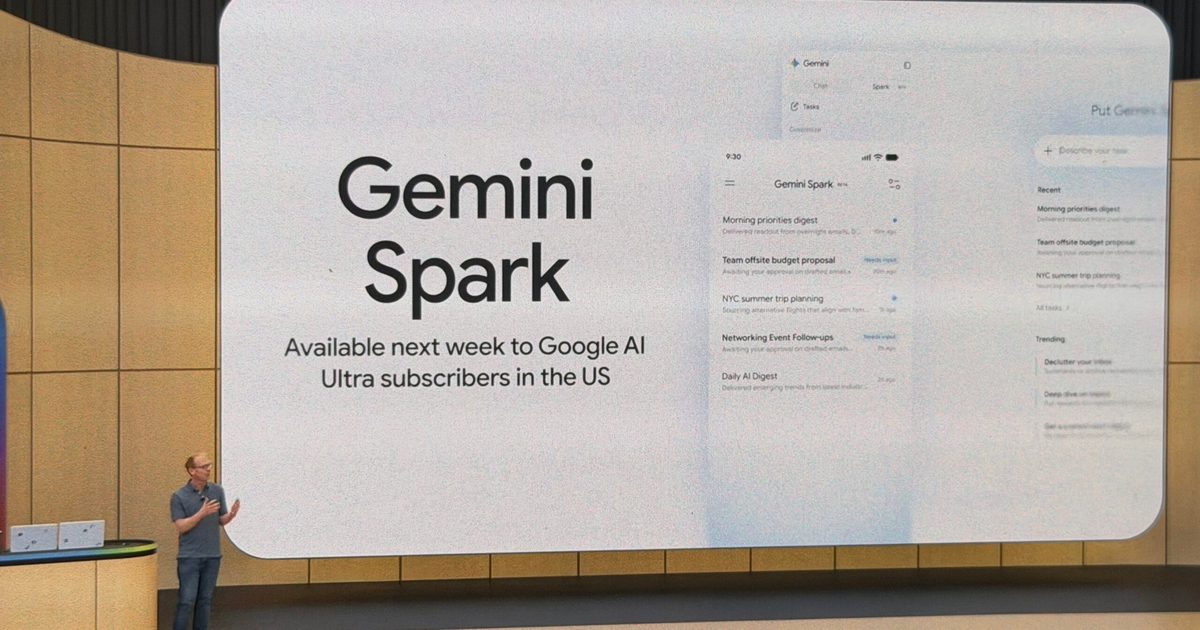
For years, AI assistants have largely lived inside chat windows: you ask a question, they answer, and the exchange ends. Google now appears ready to take that concept much further with Gemini Spark, a new AI agent that is being rolled out to all Google AI Ultra subscribers in the United States. Instead of hopping between multiple apps and manually handling tasks, you can delegate the work to Gemini Spark and let it operate in the background.
Google says Gemini Spark can act autonomously across your digital ecosystem, completing tasks even when your phone or laptop is off. Users may watch it perform actions in real time or let it run silently behind the scenes. Crucially, Google emphasizes that the system stays under the user’s control and is designed to request permission before carrying out any major actions.
**Google wants AI to become the middleman**
The debut of Gemini Spark highlights a broader shift in the AI sector. Companies are no longer satisfied with chatbots that merely answer queries; the next frontier is AI agents that can actually perform tasks on your behalf. Imagine asking an assistant for restaurant suggestions, then having it compare options, book a reservation, add the event to your calendar, and remind you when it’s time to leave. That’s the kind of capability many AI firms are pursuing.
Google’s strategy suggests it wants Gemini to serve as the layer between users and the apps they rely on daily. Rather than bouncing between services, the AI becomes the coordinator that links them all.
**The biggest challenge isn’t capability**
The technology itself may not be the hardest sell; gaining trust will be. Most people are comfortable letting AI summarize an email or answer a question. Granting it permission to act independently is a very different proposition. Even with approval checkpoints, many users will likely demand proof that an AI agent can make reliable decisions without creating new problems.

That’s why Gemini Spark feels like more than just another feature update. It offers an early glimpse of a future where AI doesn’t merely respond to commands but actively manages parts of your digital life. Whether users are ready for that level of automation remains an open question, but Google is clearly betting that the next step in AI is getting people comfortable enough to let AI take action on their behalf.