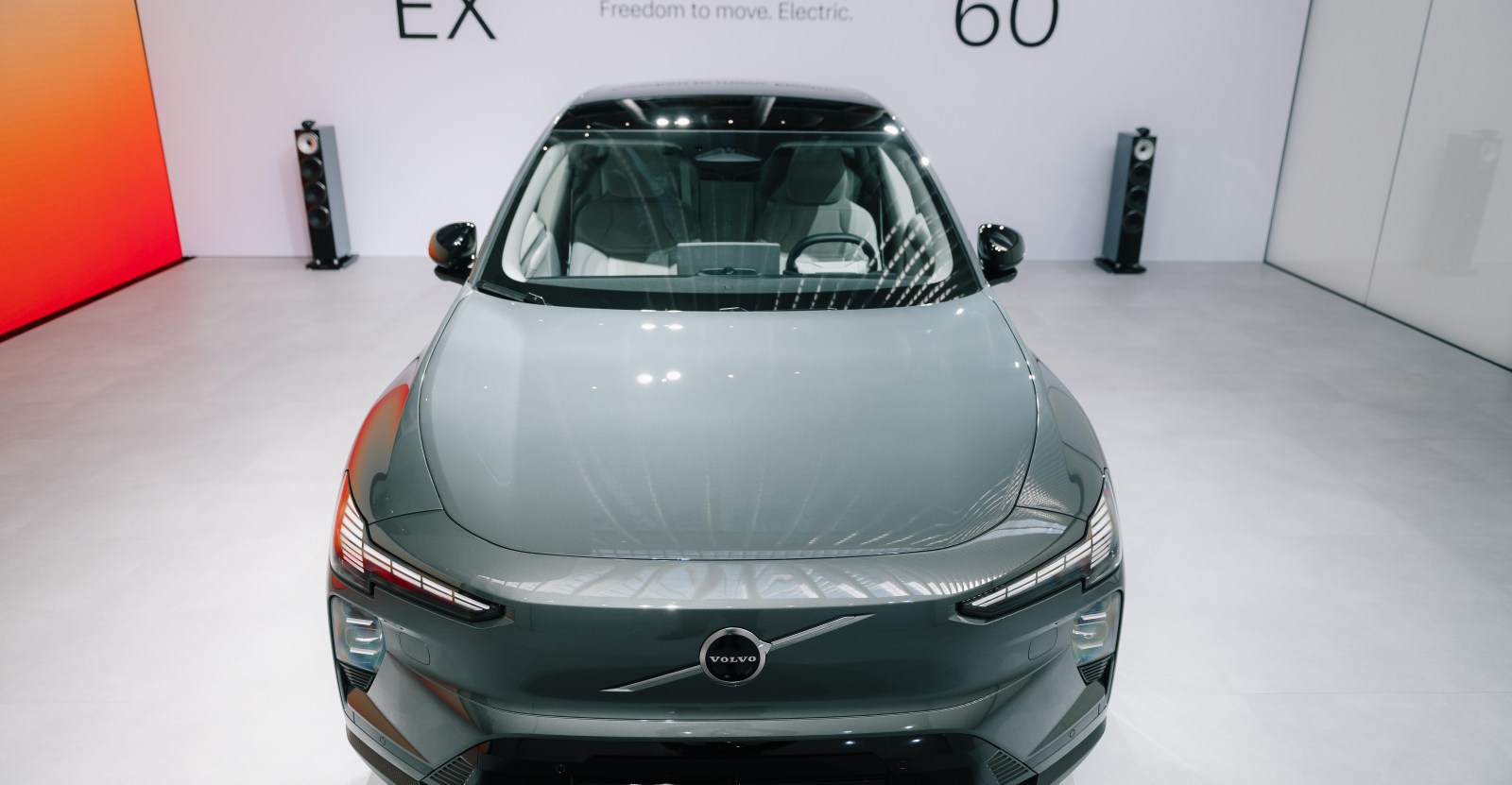
Volvo aims to introduce hands-free, point-to-point driving capabilities by 2030, leveraging Nvidia’s newest AI technology. The Chinese-owned, Swedish-engineered automaker announced Thursday it would adopt Nvidia’s autonomous driving stack to power a new partially automated driving system comparable to Tesla’s Full Self-Driving (Supervised).
This system will mirror Tesla’s FSD by enabling hands-free, point-to-point partially automated driving on local streets. Volvo describes the new point-to-point system as Level 2++, capable of navigating complex urban environments — including traffic signals, stop signs, and unprotected left turns — without direct driver input.
Beyond Tesla’s FSD, it will also share similarities with the Nvidia-powered system Mercedes-Benz recently debuted for the all-new CLA sedan, according to Ali Kani, VP and general manager of Nvidia’s automotive division, in an interview with Techgeeks.
Volvo will employ Nvidia’s Hyperion platform, which incorporates the chipmaker’s high-performance silicon along with additional sensors positioned around the vehicle so the car can perceive its surroundings. The automaker will also utilize Nvidia’s Alpamayo software, which applies “reasoning” models to interpret complex road conditions and determine steering, braking, or acceleration decisions.
The configuration will not include lidar, though the laser sensor could be added later if Volvo chooses.
By deepening its existing partnership with Volvo, Nvidia is helping the automaker address past setbacks in automated driving. Volvo previously had to effectively shelve its Ride Pilot Level 3 unsupervised autonomous driving system in the US after failing to secure regulatory approval.
The company also planned to equip some models with lidar sensors, but that initiative stalled after its supplier Luminar went bankrupt.
Volvo is also contributing its longstanding reputation for safety to the collaboration.