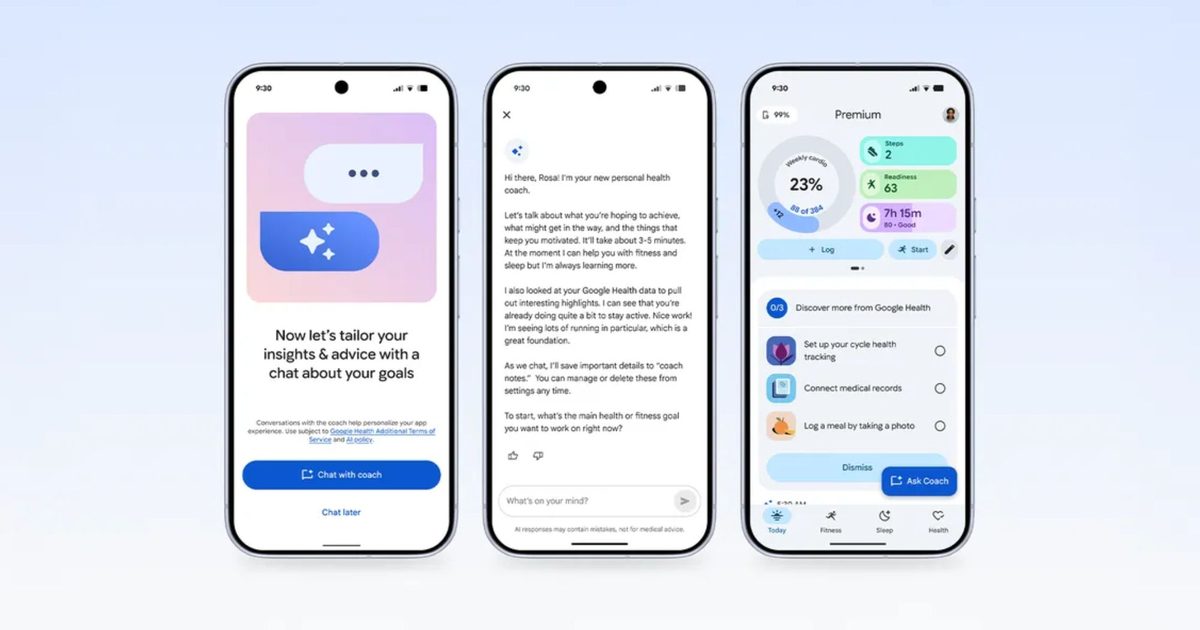
Google has officially stepped into the AI health coaching arena, a move that has been anticipated for some time. The tech giant has introduced the Google Health Coach, a Gemini-driven wellness companion integrated into the newly rebranded Google Health app. This assistant monitors your exercise routines, evaluates your sleep patterns, processes your medical documentation, and adapts to your lifestyle in real-time. Essentially, it offers the expertise of a personal trainer, sleep specialist, and nutritionist around the clock for a monthly fee of $9.99. Below is a comprehensive overview of Google’s strategy to become your primary health companion.
A Familiar Coach, Rebranded
The Google Health Coach wasn’t introduced without prior development. It has been in development for some time, previously known under a different title. Google initially showcased it during its August 2025 Made by Google event, with a public beta launch scheduled for October. This promise was fulfilled for Fitbit Premium users on Android, with an iOS version arriving subsequently.
Previously, this feature operated within the Fitbit app under the name Fitbit AI Coach. With the recent announcement, the Fitbit app has been rebranded as Google Health, and the coach has received a matching new name. The preview phase allowed Google to collect user feedback and refine the tool before committing to a worldwide launch, which is now imminent.
 Google
Launch Timeline
Google Health Coach will officially launch alongside the rebranded Google Health app on May 19. The release will be phased, with full availability expected by May 26, coinciding with the market debut of the new Fitbit Air.
Initially, the coach will be restricted to Fitbit and Pixel Watch devices, though support for additional hardware will be added later. Non-compatible device owners can still download the Google Health app and register to be notified when their device becomes supported.
Core Capabilities
Designed to act as a personal health assistant, the coach begins with an onboarding conversation to understand your profile. It asks about your objectives, daily habits, available equipment, injuries, and other lifestyle factors to tailor its advice. Since circumstances change, you can update this information anytime, allowing the coach to adjust its recommendations dynamically.
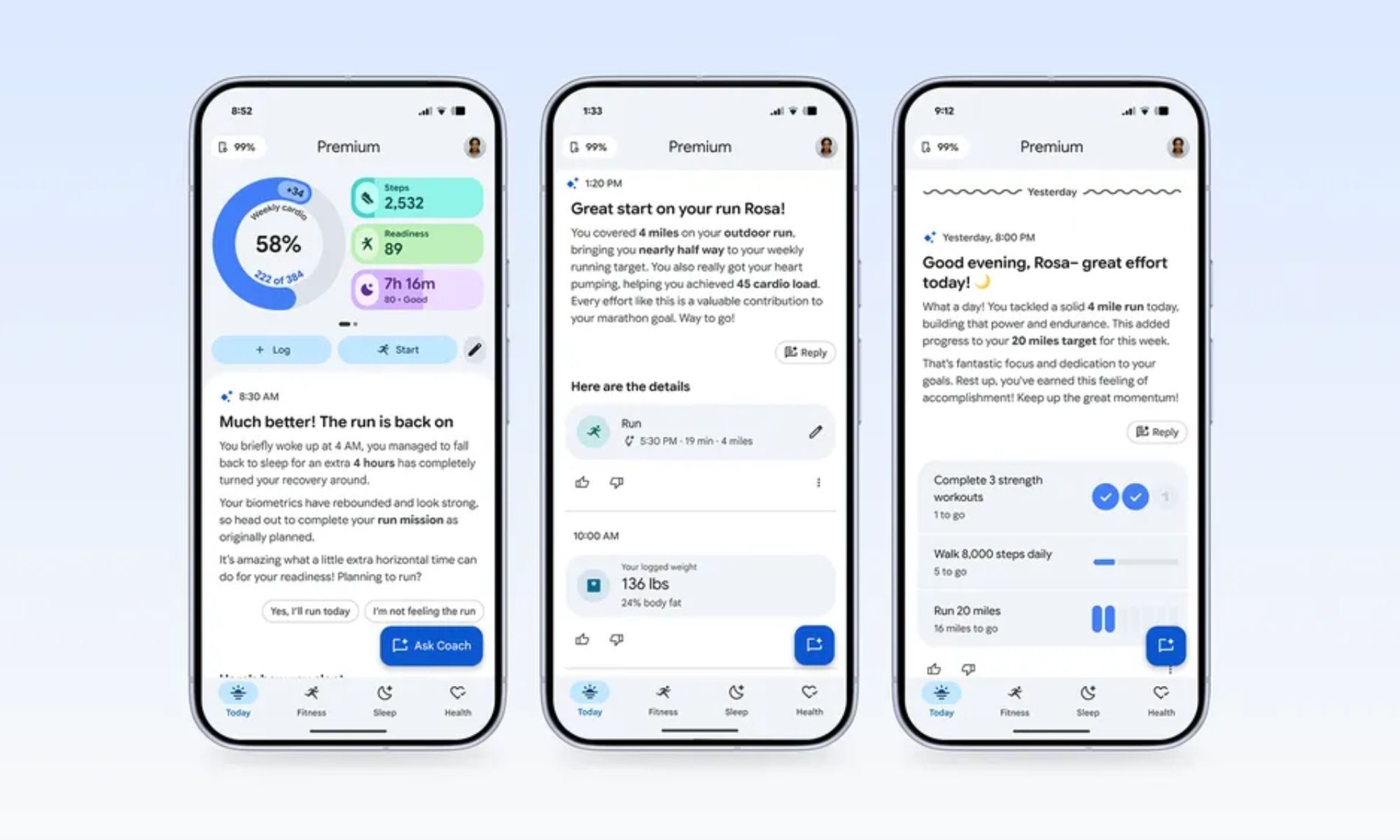
By combining this contextual data with your fitness, sleep, nutrition, cycle tracking, local weather, and optional medical records, the coach provides relevant guidance. Daily insights and prompts appear in the redesigned Today tab of the Google Health app. For specific queries, the “Ask Coach” feature provides on-demand assistance.
 Google
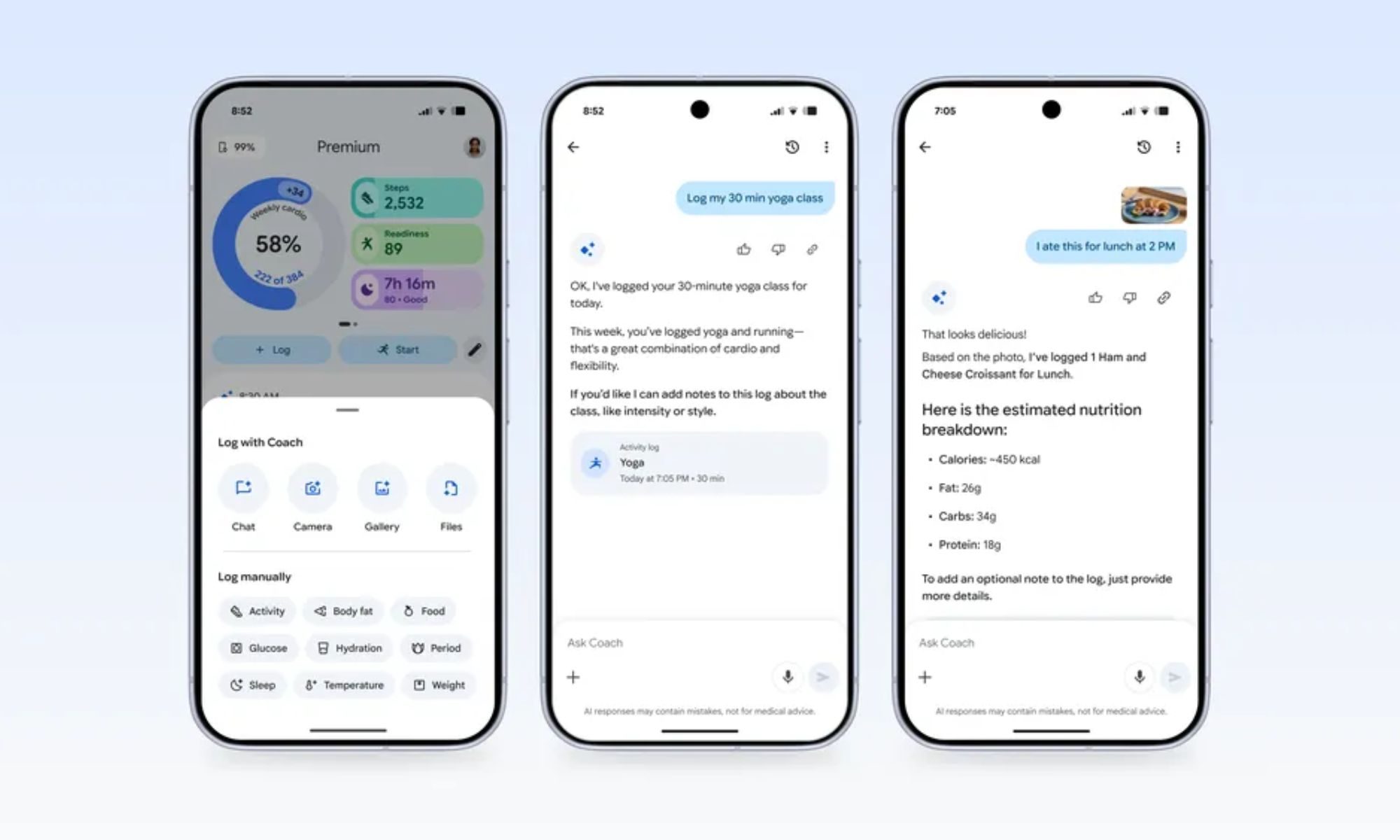
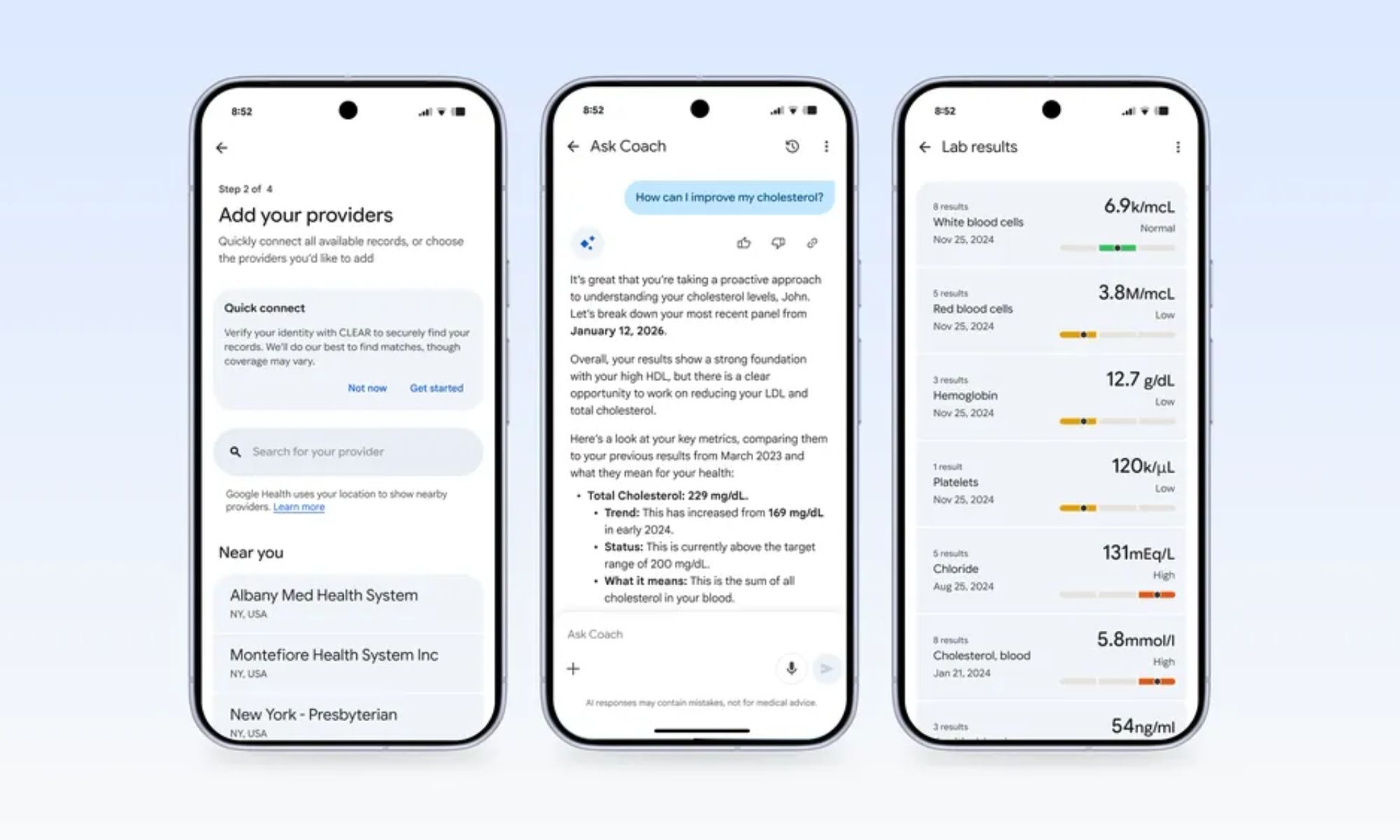
The coach supports logging meals, workouts, and health data via voice, photos, or documents. Users can photograph a gym whiteboard to record a session or take a picture of a meal for nutritional analysis. In the US, users can also sync medical records and query the coach about test results, medications, and past visits.
 Google
 Google
The coach also influences the broader Google Health app experience. The Fitness tab provides a weekly plan aligned with your goals, suggesting workouts based on your readiness and recovery. Users can create custom routines using natural language, receiving step-by-step guidance throughout.
 Google
 Google
The Sleep tab expands on basic hour tracking by analyzing long-term consistency and identifying areas for improvement. The Health tab offers a quick overview of key metrics and allows users to request summaries of their medical records in plain language.
 Google
 Google
Cycle tracking, nutrition, and mental wellbeing modules have been rebuilt from the ground up, with the coach linking insights across all three to refine workout and recovery suggestions. For instance, if your menstrual cycle impacts your energy or sleep, the coach will factor that into your weekly plan.
 Google
Grounded in Expertise
Google emphasizes the coach’s strong foundation, stating its advice is driven by Gemini and informed by “novel health research and established wellness principles.” The company collaborated with a Consumer Health Advisory Panel of medical professionals and clinicians, along with its own clinical and sports science teams, to ensure recommendations are evidence-based.
NBA star Stephen Curry and his performance team also contributed, working with Google Health to refine the coach’s approach to goal setting and recovery.
Regarding privacy, Google reaffirms its pledge made upon acquiring Fitbit: health and wellness data will not be used for Google Ads. This commitment extends to the Google Health app and will remain in effect.
Pricing and Availability
Google Health Coach is included with a Google Health Premium subscription, the rebranded Fitbit Premium. Pricing remains unchanged at $9.99 monthly or $99 annually. Existing Fitbit Premium subscribers will experience no changes to their accounts.
Users on Google AI Pro or Ultra plans receive Google Health Premium at no additional cost, enhancing the value for health-conscious individuals. The new Fitbit Air also includes three months of Google Health Premium, allowing new device owners to test the full features before subscribing.
Google Health Coach launches on May 19. With Apple recently abandoning its own health coaching initiatives, Google has a chance to establish early dominance in this market. The real test will be how the coach performs in daily use, making the coming months an interesting period to watch.