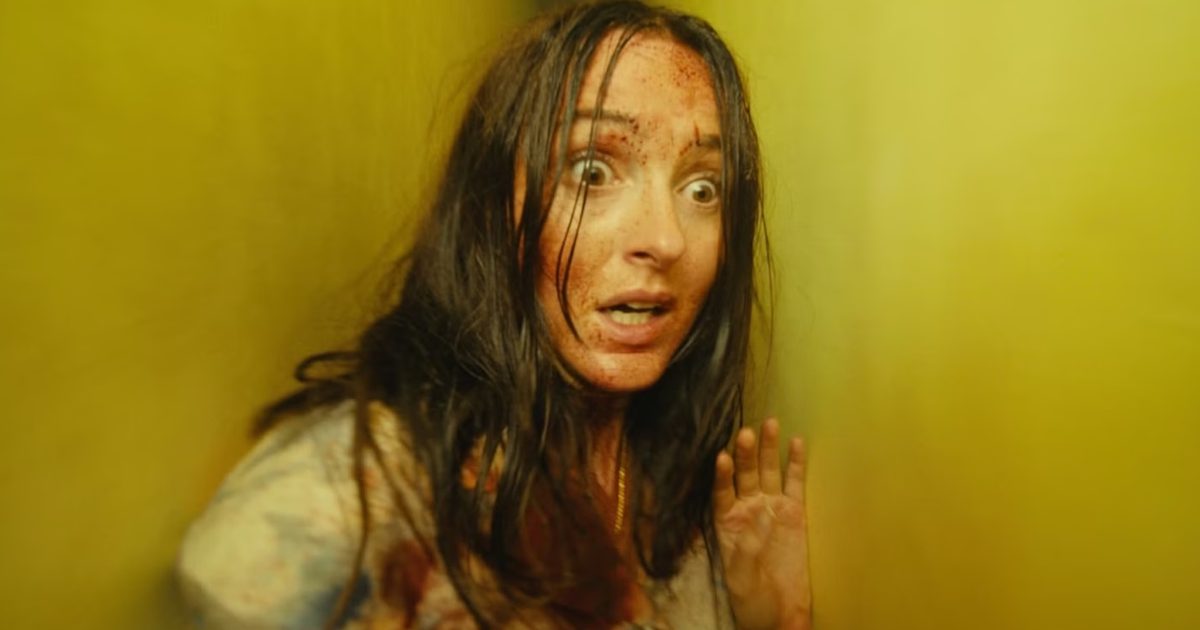
In recent years, several popular YouTubers have successfully transitioned into horror filmmaking, and A24’s Backrooms may be the most ambitious example yet. Directed by 20‑year‑old Kane Parsons, the film follows therapist Mary (Renate Reinsve) as she searches for her patient Carl (Chiwetel Ejiofor) after he disappears into a strange alternate dimension hidden behind his furniture store.
Although Backrooms originates from an internet creepypasta, Parsons turned the concept into a viral YouTube short series, converting an online myth into one of the web’s defining modern horror phenomena. With his feature‑length debut, Parsons joins the ranks of online creators‑turned‑filmmakers such as RackaRacka (Talk to Me), Chris Stuckmann (Shelby Oaks), Markiplier (Iron Lung), and Curry Barker (Obsession). The movie also continues the rise of liminal horror works like Skinamarink and I Saw the TV Glow.
In an interview with Techgeeks, Parsons sat down with Ejiofor and Reinsve to talk about translating Backrooms to the big screen, evolving the story from a series of low‑budget shorts into a thoughtful, character‑driven narrative.
Backrooms turns liminal horror into a haunting character study
Much like NEON’s liminal horror hit Exit 8, Backrooms captures the terror of the ordinary, turning mundane spaces into something deeply unsettling. Beneath the surreal sci‑fi horror lies a tale about how people cling to daily routines, even when those routines imprison them in isolation.
Both Mary and Carl feel stuck in unfulfilling lives, but Carl especially longs to break free. After his dream of becoming an architect falls apart, he settles for a dead‑end job at a furniture store, where the Backrooms offers an escape from his bleak existence. Parsons reinforces these ideas with a nostalgic 1990s setting, liminal visuals, and a found‑footage‑inspired style.
While speaking to Techgeeks, Ejiofor described Backrooms as a “psychological investigation” of Carl, whose mind becomes linked to the ever‑shifting maze.
“What I loved was that this character had a real complexity that mirrored the experiences he was going through in the Backrooms in a way that I found really bizarre but also really compelling, and there was something in Carl’s psychology that explained the environment, in a way that I understood as a feeling. It felt very deeply cinematic to me.”
Throughout the film, the maze appears shaped by Carl’s memories—filled with furniture from his store and props from one of his commercials, symbolizing how his work has consumed his life. Familiar objects become the basis for an unnerving environment populated by oddities such as mauled seagulls, warped street signs, and distorted humanoid creatures.
This empty, repetitive space also mirrors his loneliness. At the same time, the film shows that Carl’s isolation is partly self‑inflicted; retreating deeper into the Backrooms represents a withdrawal into his own mind, where he can become the person he always wanted to be. His obsession with mapping the maze echoes the architectural ambitions he never realized.

Backrooms blurs the line between doctor and patient
Even with a rich online mythology to draw from, one of the most compelling aspects of Backrooms is the dynamic between Mary and Carl. Because of his divorce and dreary job, Carl repeatedly turns to Mary for therapy, often reenacting moments from his failed marriage during sessions.
While Mary tries to help, the film makes clear she is also a human grappling with her own emotional baggage. A traumatic childhood drove her into therapy work, and her self‑help book never reached the audience she hoped for.
As the story unfolds, it becomes evident that Mary doesn’t have all the answers. Like Carl, she struggles to make sense of the chaos in their lives—chaos that materializes inside the Backrooms themselves.
Speaking to Techgeeks, Reinsve said she was “fascinated” by how the environment mirrored the characters’ internal states.
“The characters, up against each other, had a similar structure that mirrored what was happening in the Backrooms. It was layered psychology, pointing to what’s happening in our world with technology and development, and that drew me in.”
Ultimately, the film suggests Carl must be willing to change to improve his life. Instead of confronting his personal issues, he continues to complain about how unfair the world is, which only deepens his suffering. This message delivers a surprisingly mature narrative from a young filmmaker.
What’s the verdict on Backrooms?
In the end, Backrooms offers a mind‑bending, nerve‑wracking nightmare about how daily routines can consume us. Whether it’s running a furniture store or trying to understand the Backrooms themselves, the movie shows how people can imprison themselves emotionally, manifested as an infinite, liminal maze filled with horrors and unanswered mysteries.
Parsons delivers this bold, insightful story with nail‑biting suspense, surreal imagery, an eerie soundscape, and stellar performances from the cast, making Backrooms one of the most impressive horror debuts in recent memory.
“All of this comes from years of building an existing mythology. The vector I explored on YouTube was very much sci‑fi, giving a deep, thorough human perspective—you don’t get clear answers, but you can piece together an understanding of what this place is or what the circumstances are.”
Backrooms opens in theaters on May 29, 2026.