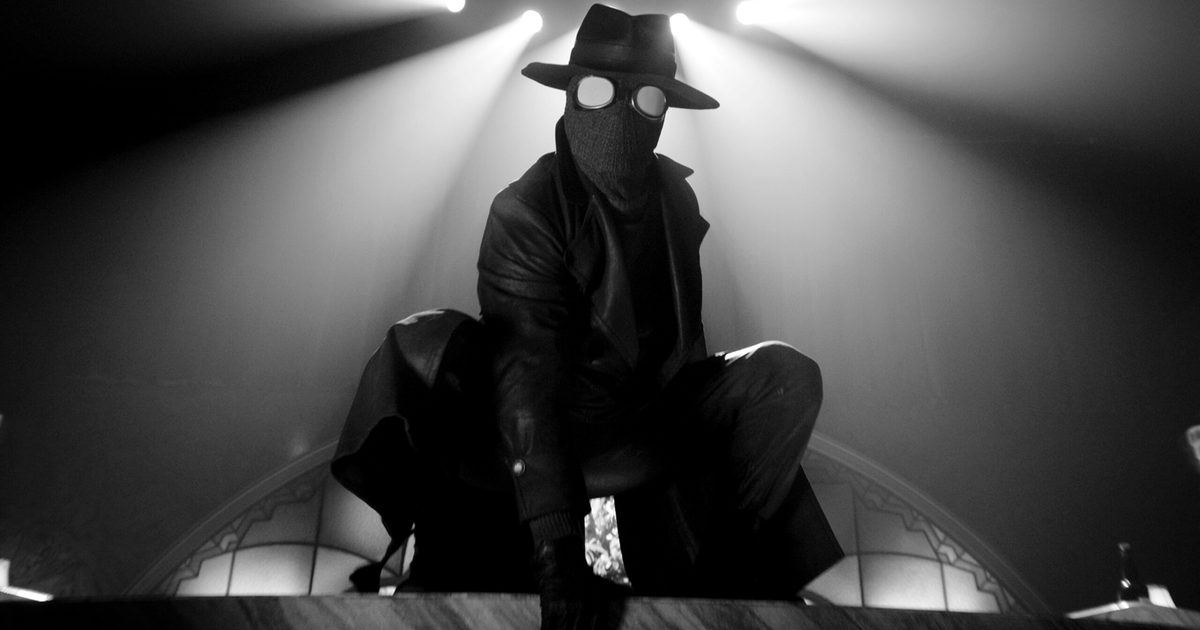
For several years now, every Spider‑Man show and film has struggled to exist without Peter Parker. Some have explored the Multiverse and followed new web‑slingers, while others have tried and failed to build their own cinematic universe with films like Venom and Morbius. Though the Spider‑Verse movies have achieved great success, few spin‑offs have justified their existence by advancing the franchise with fresh stories.
That changes with Prime Video’s new series, Spider‑Noir. In this Nicolas Cage‑led production, web‑slinging private investigator Ben Reilly takes on a case involving super‑powered people like himself in 1930s New York. Rather than a conventional superhero adventure, the show delivers a hard‑boiled detective tale that stands apart from the many Spider‑Man movies and series we’ve seen so far.
**Spider‑Noir revives a weary, repetitive franchise**
Spider‑Noir opens strong by abandoning the web‑slinger’s classic origin. Audiences already know Peter Parker’s teenage backstory—great power, great responsibility. This series cuts through that familiar web by introducing Reilly long after he’s obtained his powers and suffered personal loss.
By focusing on a Spider‑Man who has already failed and abandoned crime‑fighting, Spider‑Noir offers the hero’s story from a dramatic, new perspective. Instead of a young, awkward Peter Parker, we get an older, angry, and despondent Ben Reilly who feels like a Humphrey Bogart anti‑hero from *Casablanca* or *The Maltese Falcon*.
Reilly isn’t becoming a superhero; he’s deciding whether he wants to be one again.
**Nicolas Cage supplies the series’ soulful core**

Cage made a memorable cameo voicing Spider‑Noir in *Into the Spider‑Verse*, but his role was mostly comic relief. In this live‑action series, Cage gets ample space to stretch his acting muscles, and the show leans into his strengths.
Reilly is cynical, scornful, and occasionally goofy. One moment he’s roughing up gangsters in a bar; the next, he’s undercover as a plumber or an Eddie‑G‑style cop. Cage doesn’t deliver another over‑the‑top performance, yet it’s clear he’s reveling in bringing this weathered, witty web‑slinger to life.
All of this makes Ben Reilly one of Cage’s most engaging and fully realized characters, far beyond a simple cameo or parody.
**The noir setting refreshes every character**

The series doesn’t romanticise 1930s New York. It portrays the era in stark black‑and‑white, highlighting racism, sexism, political corruption, and post‑war trauma. We experience these weighty issues through supporting characters who add depth and realism.
Robbie Robertson (perfectly played by *New Girl* star and Emmy winner Lamorne Morris) works alongside Reilly as a journalist fighting to regain his job and expose the city’s buried truths.
Li Jun Li (*Sinners*) brings nuance to Cat Hardy, the femme fatale who tugs at the Spider’s heartstrings. She isn’t the comic‑book cat‑burglar fans expected, but the writers give her enough care and complexity to make her stand out.

Even classic villains like Sandman receive the same thoughtful treatment. Portrayed as old‑time gangsters, they feel more like tragic creatures from a Universal monster film—caught in the wrong place at the wrong time, trying to make the most of a harsh life.
The crime boss Silvermane, however, remains a ruthless ruler. Though he doesn’t become a cyborg as in the comics, Silvermane controls the city with an iron fist and a heart of steel. Emmy‑winning actor Brendan Gleeson (*The Banshees of Inisherin*) exudes quiet terror as Silvermane, delivering a grounded yet monstrous noir villain.
**Spider‑Noir fuses noir aesthetics with comic‑book visuals**

Many modern superhero movies and series now share a homogenised visual language, making them feel less fresh. Spider‑Noir, by contrast, oozes artistic originality.
Beyond its black‑and‑white palette, the series employs super‑imposed shots, diopter lenses, and Dutch angles, creating a visual style that stands out from most comic‑book adaptations. Some frames even resemble comic panels brought to life on screen.

**Spider‑Noir nails what other entries missed**
The Spider‑Verse films proved that audiences will follow Spider‑Man stories that experiment with new genres and visual styles. Spider‑Noir takes that experiment to live‑action and delivers impressive results.
While Sony has scaled back on Spider‑Man spin‑offs, the franchise doesn’t need a single shared universe to thrive. It needs bold, self‑contained narratives that push beyond traditional superhero fare. If Spider‑Noir can succeed as a detective series, there’s no reason why cyber‑punk Spider‑Man 2099 or anime‑inspired Peni Parker can’t do the same.
The Multiverse has often been used by studios to recycle old plots and stay safe. Spider‑Noir shows that the franchise can have a bright future away from Peter Parker.
Stream Spider‑Noir on Prime Video and MGM+ starting May 27, 2026.