Every video editor has a set of chores they’d gladly hand off to someone else. Exporting is no longer one of them, thanks to today’s fast laptops. The real‑time drudgery lies in the monotonous tasks: manually masking subjects, hunting for scene cuts in lengthy footage, frame‑by‑frame rotoscoping, or wrestling with edits that demand more patience than imagination.
That’s precisely why Nvidia’s RTX Spark demo at Computex 2026 caught me off guard. I entered the booth expecting another AI‑laden sales pitch and a wall of benchmark charts. Instead, I left convinced that, for the first time in years, hardware could actually reshape the editing workflow itself, not just shave a few minutes off render times.

RTX Spark doesn’t reinvent editing—it removes the tedium
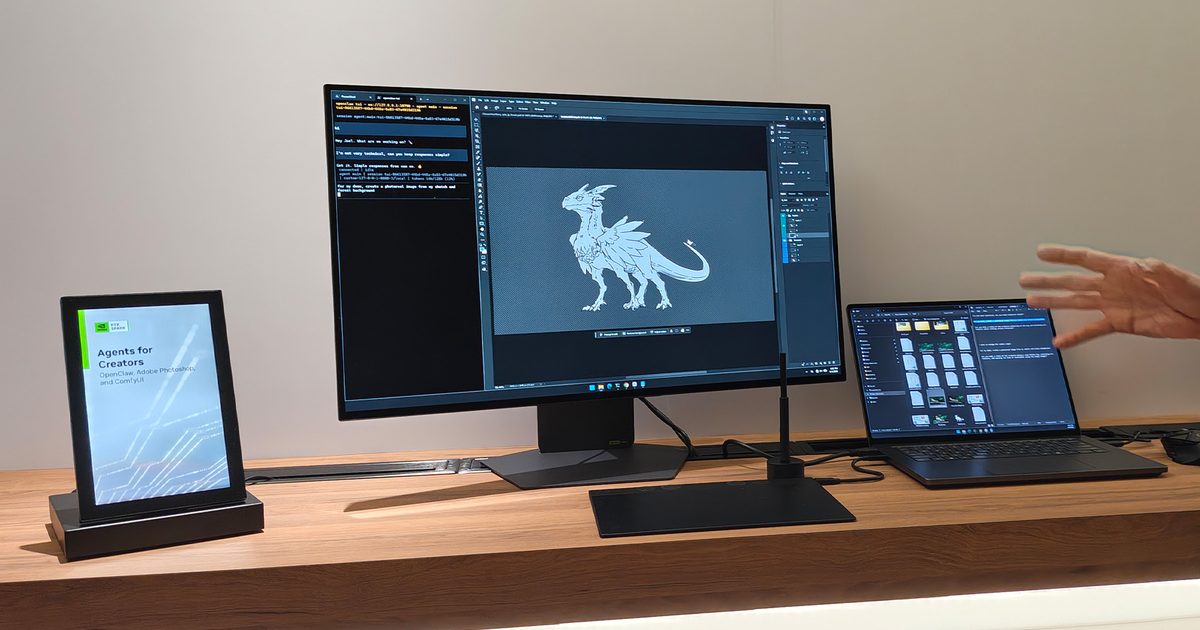
The first demonstration wasn’t even in Premiere Pro; it was inside Adobe Photoshop, and it completely turned my expectations of AI image editing upside down. Rather than typing a lengthy, precise prompt, the presenter simply loaded a picture, drew a couple of arrows to show where new elements should appear, added a brief command, and let the RTX Spark‑powered laptop handle the rest. Within seconds, Photoshop produced the requested composition locally. The resulting image could be panned, rotated in 3D, expanded with Generative Fill, and even animated frame‑by‑frame with astonishing ease.
The magic lay not only in speed but also in simplicity. Instead of forcing creators to learn a new “AI language,” Nvidia and Adobe seemed to be teaching the AI to understand the way creators naturally work. The prompt was plain English, yet it was executed flawlessly. More importantly, because everything ran locally on the RTX Spark platform, there was no waiting for cloud servers to process the request and send back results.

Under the hood, RTX Spark pairs a 20‑core Grace CPU with a Blackwell‑based RTX GPU and up to 128 GB of unified memory, delivering enough on‑device AI horsepower to tackle demanding creative workloads. After watching the demo, however, the specs felt secondary—the hands‑on experience was the real star.

Premiere Pro finally tackles the boring stuff
The Photoshop demo was clever, but the Premiere Pro showcase made me genuinely smile. Nvidia displayed two nearly identical RTX‑powered laptops side by side: one running the publicly available Premiere Pro, the other running a new beta built with Adobe to leverage RTX Spark’s AI features.
Both machines were asked to perform scene‑edit detection on the same video. While the public{} version processed the timeline at its usual pace, the RTX Spark‑powered beta identified cuts almost instantly. Watching a task that editors normally start and then walk away from become practically instantaneous was truly impressive.

Next came rotoscoping, arguably the least glamorous job in post‑production. Anyone who has spent hours isolating a moving subject frame by frame knows how quickly patience wears thin. In the demo, the presenter simply clicked on an object once, and the AI instantly generated a mask and tracked it across the entire clip with minimal manual input. It felt less like a software gimmick and more like a silent assistant erasing hours of repetitive work.

RTX Spark is more than a creator chip
Of course, Nvidia isn’t marketing RTX Spark solely as a creator platform. The company also showed off striking gaming demos featuring DLSS 4.5 and advanced path‑tracing, proving the Blackwell GPU still packs serious gaming muscle. I even saw games run smoothly on the ARM‑based platform, confirming Nvidia’s focus isn’t limited to AI workloads. Additional technical demos highlighted AI‑assisted development and debugging, where local models help developers analyze code and troubleshoot without relying on the cloud.
Whether these use cases become mainstream remains to be seen. I’m not entirely convinced developers will overhaul their workflows around RTX Spark overnight, and gamers willing to pay a premium may still prioritize raw graphics performance over AI features. Those are markets where Nvidia still has a lot to prove.

Where RTX Spark hit home for me, however, was creative work. If one‑click rotoscoping, near‑instant scene detection, and intuitive AI‑assisted image editing become everyday tools, I can easily imagine video editors and content creators flocking to these machines. RTX Spark isn’t trying to replace human creativity—it’s simply eliminating the repetitive, mind‑numbing chores, giving creators more time to focus on what they do best: telling better stories.
