“The GEME Terra 2 makes composting feel accessible and meaningful, even if it is not quite as odor free as promised.”
““The GEME Terra 2 makes composting feel accessible and meaningful, even if it is not quite as odor free as promised.””
- Simple setup and easy to start using
- Handles a wide range of food waste, including meat and dairy
- Produces real, usable compost
- Continuous feeding design
- Helps reduce household food waste in a meaningful way
- Produces noticeable odor during decomposition
- Food must be cut into small pieces
- Can fill quickly for larger households
- Occasional error messages if overloaded
For families aiming to shrink food waste, indoor composters promise an attractive solution: turning kitchen scraps into usable compost without the hassle of a traditional outdoor bin.
The GEME Terra 2 markets itself as a next‑generation unit capable of handling everyday kitchen leftovers, even tougher items like meat, dairy, and oily foods—something many competitors struggle with.
The brand’s mantra is simple: “If you can eat it, GEME can handle it.” In practice, however, some inputs work better than others.
Unlike many food recyclers that merely dry and grind waste into a pulp, the Terra 2 performs genuine microbial decomposition, speeding up the natural composting process with controlled heat, moisture, and airflow.
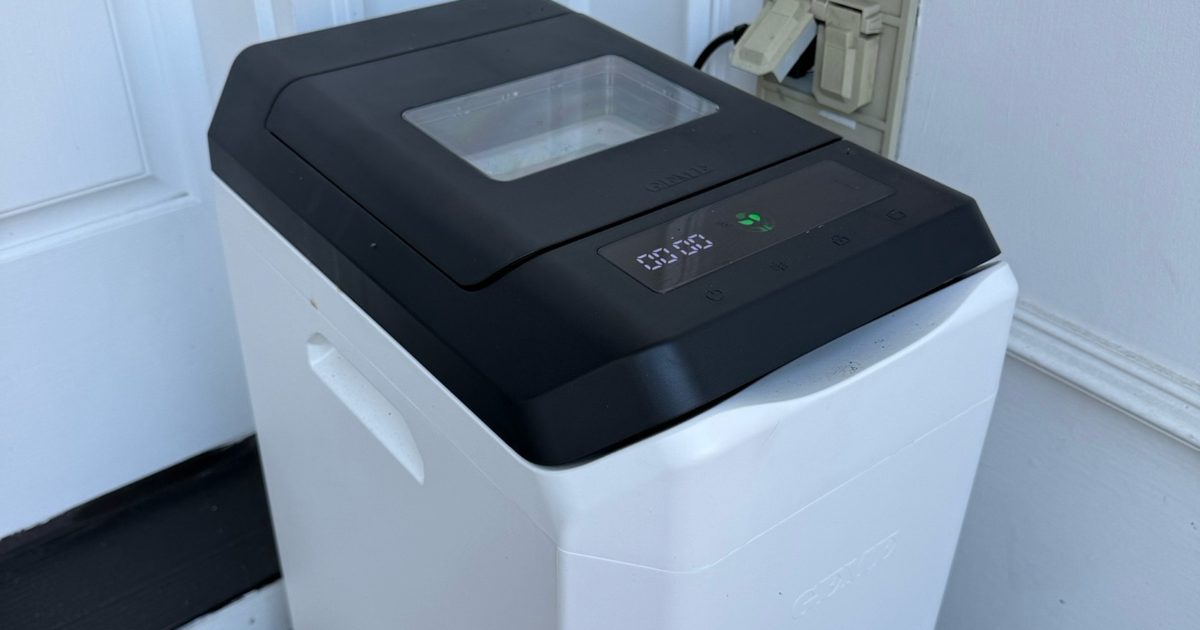
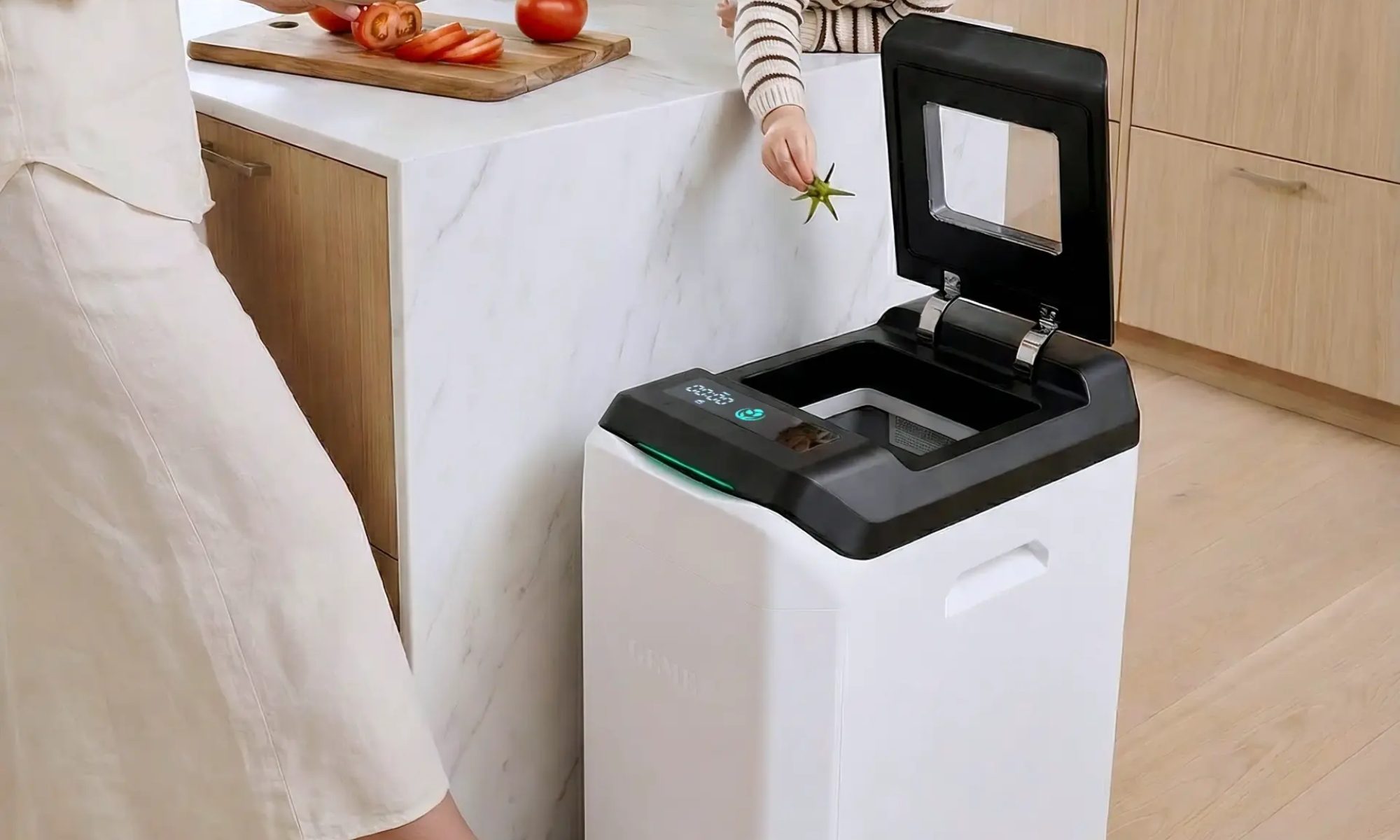
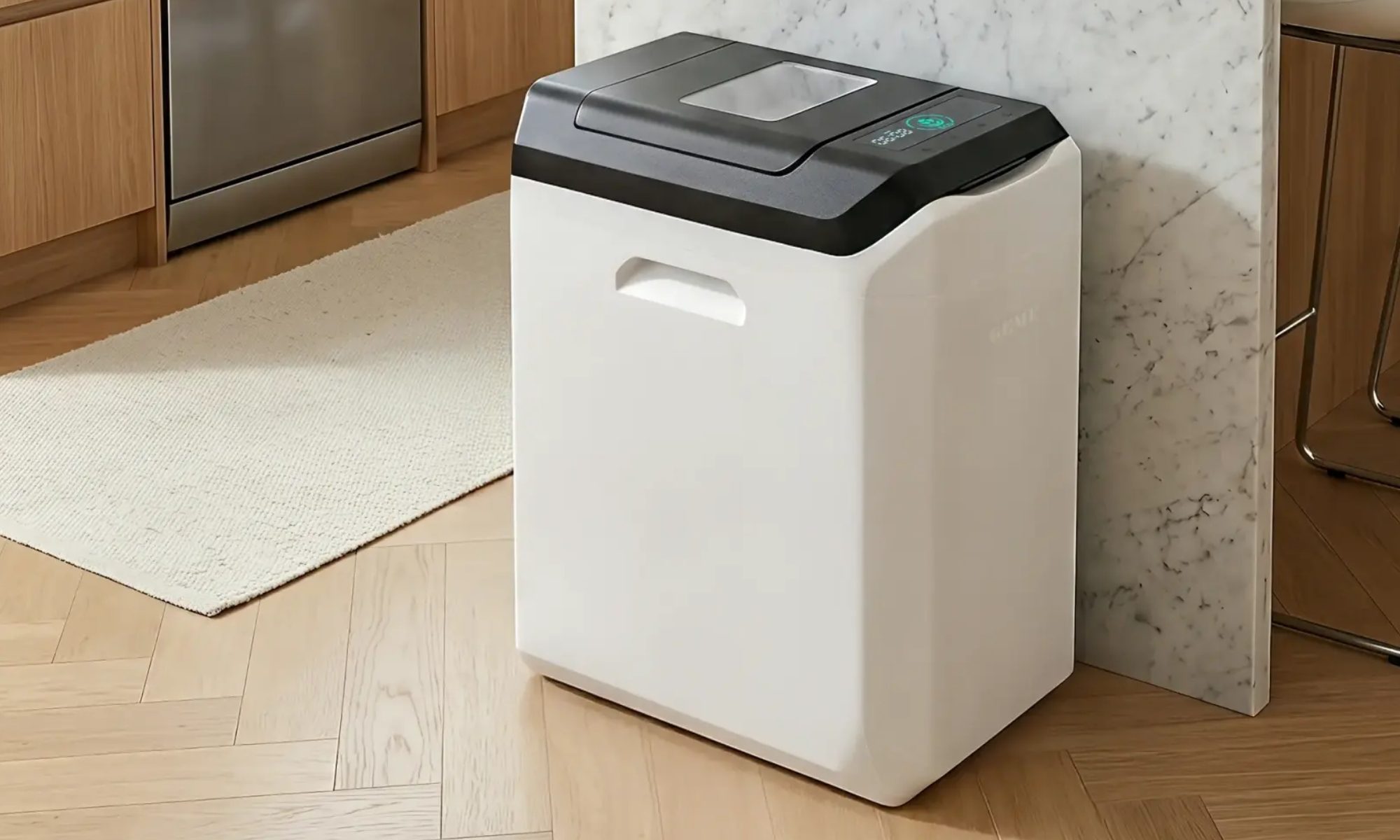
It’s worth noting that this isn’t a tiny countertop gadget; it’s closer in size to a full‑size kitchen trash can and needs dedicated floor space.
Approved inputs include fruit and veg scraps, cooked leftovers, coffee grounds, eggshells, and plant‑based waste. Plastics, metals, large bones, and excess grease are off‑limits.
For a family of five, this became one of the most rewarding aspects of using the Terra 2. We generate a surprising amount of kitchen waste, and instead of tossing it, it felt genuinely good to see those scraps become something useful rather than ending up in the landfill.
After several weeks of testing, the system proved capable of delivering real compost, though not without a few trade‑offs.
Verdict
The GEME Terra 2 makes composting approachable and truly satisfying—especially for families—but odor and capacity limits may make it a better fit for smaller households or well‑ventilated spaces.
GEME Terra 2 Specs
- Dimensions: 11.7″ x 17.2″ x 22.3″
- Capacity: 14 L
- Daily processing: 1 kg recommended (up to 3 kg depending on usage)
- Weight: 28 lb (13 kg)
- Power: 110 V / max 0.43 kWh
- Composting method: Microbial aerobic fermentation
- Feeding style: Continuous feed
- Decomposition time: 6–8 hours for initial breakdown (full composting takes longer)
- Odor control: Metal oxidation deodorization + UV system
- Output: Real compost suitable for gardening or houseplants
Design
Quick take: Functional and larger than expected
The Terra 2 arrives in a single box and is a breeze to set up. Plug it in, add the starter compost, and you’re ready to start processing waste. In size, it resembles a kitchen trash can more than a countertop appliance, so a floor spot is required.
We placed it just outside our front door, which turned out to be the best spot for airflow and odor management. The design is straightforward and utilitarian, built for function rather than visual flair. Once installed, it blends into the background as a utility device.
Score: 8.5/10
Performance
Quick take: Produces genuine compost but needs some management
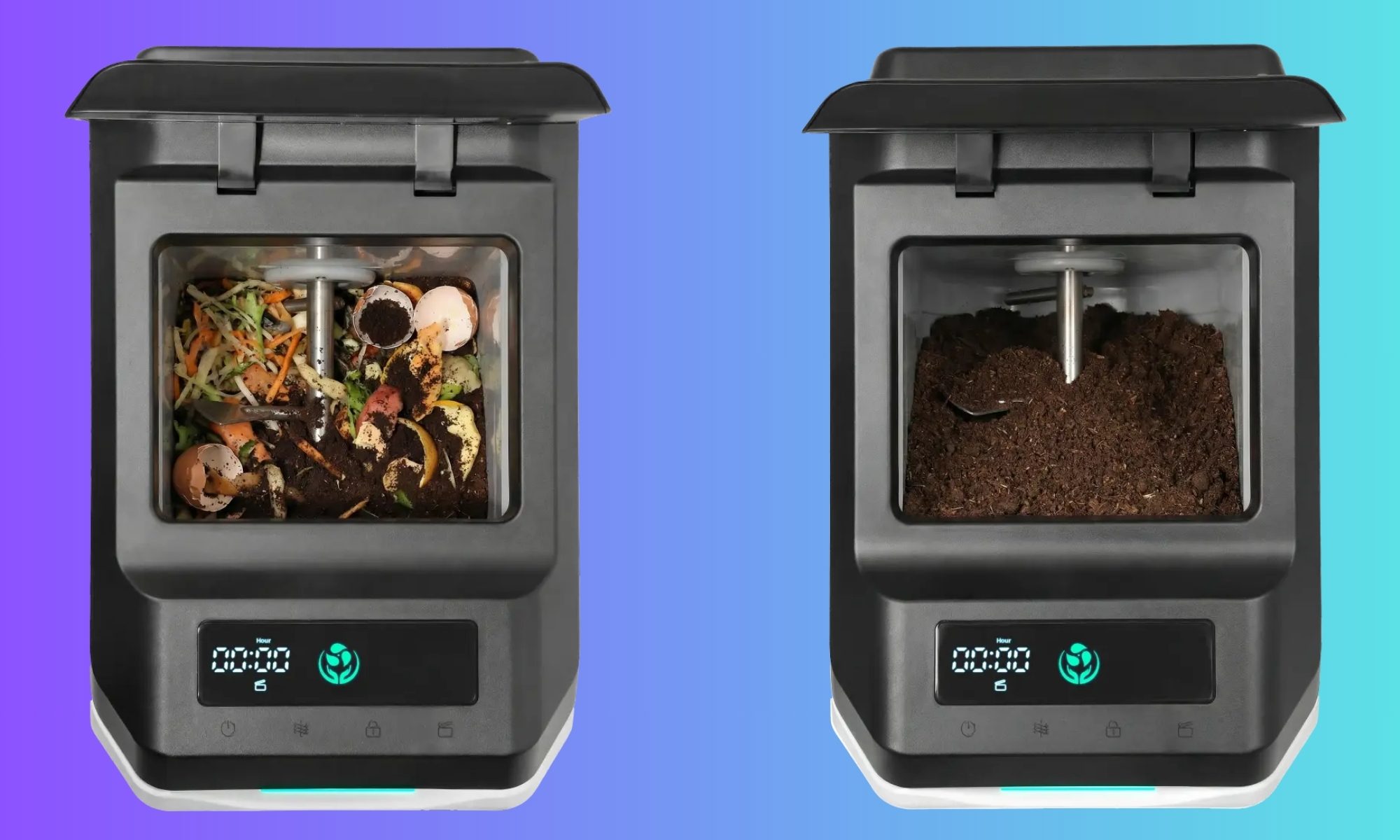
The Terra 2 lives up to its core promise: turning food scraps into usable compost. We mixed the finished product with fresh potting soil to repot several plants, which responded well and looked healthier.
The biggest learning curve is prep. Food waste should be chopped into pieces about an inch or smaller for optimal results. This required a habit change for our household.
In a five‑person home, the unit sometimes lagged behind the volume of scraps. While marketed to handle up to 3 kg per day, the manual recommends closer to 1 kg daily for consistent performance. This gap between advertised capacity and real‑world results is where most friction appears.
When overloaded, the unit occasionally displayed an E32 error, prompting us to remove some material and let the system catch up. Because this is true composting, it also takes time. Initial breakdown occurs within hours, but fully usable compost forms more gradually. The process is slower than simple food recyclers, but the end product is more natural and usable.
Score: 7/10
Ease of Use
Quick take: Simple operation with a modest learning curve
Day‑to‑day use is straightforward once you understand the system. Food scraps can be added continuously, and finished compost can be scooped out periodically. Larger pieces that haven’t fully broken down can be returned to the unit, much like traditional composting.
The main adjustment is consistently cutting waste into smaller pieces before feeding it in. The system also works best when inputs are spaced out and kept below the internal fill line. Overloading or dumping a lot of high‑moisture waste at once can slow decomposition or trigger error codes.
Once that habit is set, maintenance becomes much easier.
Score: 8/10
Noise & Odor
Quick take: Quiet operation, but noticeable smell
The Terra 2 runs with a low, steady hum—quiet but not silent. Odor was the biggest drawback during testing. Despite claims of minimal smell, the composting process often emitted a sour, rotten odor, especially when fresh scraps were first added.
After a few days, as decomposition progressed, the smell usually improved. For our household, the odor made it difficult to keep the unit indoors, which is why we ultimately placed it outside. This is the trade‑off of producing real compost.
The unit does include a deodorization mechanism and UV‑based purification, but in real‑world use it does not fully eliminate odor, particularly during the early stages of breakdown.
Score: 6/10
Durability & Maintenance
The Terra 2 behaves like a small, contained compost system. Periodic maintenance is required, such as removing finished compost and returning larger pieces for further breakdown.
The build feels solid and durable, and the unit appears designed for long‑term, continuous use. As long as users follow material guidelines and size recommendations, it performs reliably.
GEME offers a one‑year limited warranty, shorter than some premium appliance competitors. Given the mechanical components, continuous operation, and reliance on internal systems like the UV lamp and stirring motor, long‑term durability will likely depend on consistent maintenance and proper usage.
The system is designed to run 24/7, entering an energy‑saving mode when activity is low. Because it relies on active microorganisms, ongoing care—occasional moisture adjustments and adding the microbial starter (GEME Kobold)—is part of long‑term ownership.
Score: 7.5/10
How It Compares: Indoor Composters
The Terra 2 differentiates itself from many rivals by focusing on true composting rather than dehydration. Most popular alternatives dry and grind food waste into a pulp that still needs further processing.
The Terra 2 performs genuine microbial composting, yielding a more natural soil output, but with the realities of odor and slower breakdown. For users who want authentic compost, that distinction matters.
Why Not Try…?
- Lomi Kitchen Composter
- Mid‑range price (typically $500–$700)
- Faster processing cycles (as little as a few hours)
- Lower odor risk due to filtration
- Produces dried output rather than true compost
A solid pick for those who value convenience and speed over authentic composting. It’s less pricey than premium systems like Mill, but still a notable investment.
- Vitamix FoodCycler
- More affordable (typically $300–$400)
- Compact and quiet
- Very low maintenance
- Does not produce real compost
Best for smaller households seeking a simple, low‑cost way to reduce waste without managing an active compost system.
- Mill Food Recycler
- Higher upfront cost (around $999)
- Optional subscription (~$33/month) for waste pickup
- Virtually odorless
- Does not create compost; produces dried material for external processing
The Mill offers the most polished, hands‑off experience, but at a significantly higher price and without the benefit of home‑grown compost.
- Traditional Outdoor Compost Bin
- Lowest cost (often $50–$200)
- Handles large volumes easily
- No electricity required
- Requires outdoor space and regular maintenance
Still the best choice for households with yards and higher waste output.
How We Tested
We used the GEME Terra 2 from the start of the year in a five‑person home. Setup was simple: the unit arrived in a single box, and after adding the starter compost it was ready to go. We fed it a wide variety of kitchen scraps—vegetable peels, leftovers, coffee grounds, eggshells, and more.
Finished compost was removed regularly and used for repotting plants, letting us see the results directly. Because a family of five generates a high volume of kitchen waste, we were able to test the system under realistic, everyday conditions.
Should You Buy the GEME Terra 2?
- Buy it if:
- You want to cut household food waste
- You enjoy gardening or caring for houseplants
- You lack space for an outdoor compost pile
- You’re comfortable managing a composting system
- Skip it if:
- You need a completely odor‑free appliance
- You generate large volumes of kitchen scraps
- You want instant results with no prep work
If you’ve been searching for a way to reduce food waste and create usable compost at home, the Terra 2 offers a genuinely rewarding solution. For the right household—especially those motivated to cut waste—it can be a valuable addition to the home.