Considering all the Android 16 QPR updates and the new ones announced at The Android Show and Google I/O 2026, Android 17 is definitely shaping up to be one of the most ambitious updates the company has shipped in years.
Between Gemini Intelligence that gets things done on your behalf, the new security features, and productivity-based features like App Bubbles, there’s a lot to unpack. The stable update is expected in June or early July 2026, but plenty of the upcoming features are already live on the Android 17 Beta version for compatible Pixel devices.
Here’s everything we know so far, including the latest Android 17 news, release timeline, how to download the beta version, compatible devices, and all the features that might reach a wider audience with the upcoming stable build release.
Android 17: Latest news
- June 10, 2026 Google released Android 17 QPR1 Beta 4 for Pixel devices.
- June 1, 2026 Android 17 Beta 4.1 went live with a couple of new features like Continue On.
- May 20, 2026 Android 17 is getting a feature that makes switching between Android devices feel much more natural than it currently does. The feature is called Continue On.
- May 17, 2026 Google is working on an anti-doomscrolling feature called Pause Point, which will arrive with Android 17 for all users.
- May 12, 2026 At the Android Show 2026, Google announced several developments including Gemini Intelligence, which itself is a suite of AI-powered features, along with Chromebooks, and Android 17.
- May 12, 2026 The upcoming Android version will get a new location button that grants an app precise location access only when you’re using it.
- May 12, 2026 Instagram is getting Ultra HDR capture, playback, built-in video stabilization, and Night Sight support for flagship smartphones with Android 17.
- April 8, 2026 With Android 17, gamers should be able to remap their controllers on a system level.
Android 17 release timeline
The Android 17 release cycle looks slightly different from anything Google has done before, and that’s largely because Google retired its long-standing Developer Preview this year. Instead of the early, developer-only preview that used to kick off each Android release, Google has now placed the Android Canary channel.
While Android 17 reached platform stability in April 2026, Google just dropped the Beta 4.1 upgrade on June 3, 2026, an unscheduled big-fix drop addressing the lingering issues ahead of the stable launch, which is also expected to roll out in June 2026.
| Stage | Date | What It Means |
| Android Canary Channel | Continuous (2025 – early 2026) | Google’s permanent replacement for Developer Previews. |
| Beta 1 | February 13, 2026 | The first public beta, open to all enrolled Pixel devices. Introduced app-facing API changes, early security architecture updates, and camera and media capability improvements. |
| Beta 2 | February 26, 2026 | Refinements across system stability, early UI changes, and behavior adjustments based on Beta 1 developer feedback. |
| Beta 3: Platform Stability | March 26, 2026 | Google locked down Android 17’s final SDK and NDK APIs with this build. |
| Beta 4 | April 16, 2026 | The last scheduled public beta. |
| Google I/O & The Android Show | May 19, 2026 | Google’s official consumer-facing reveal. |
| Beta 4.1 | June 3, 2026 | A minor, unscheduled bug-fix drop addressing lingering issues ahead of the stable launch. |
| Stable Public OTA Rollout | Expected June 2026 | Over-the-air delivery to all supported Pixel hardware. |
| QPR1 Minor SDK Release | September 2026 (estimated) | Google’s Q4 platform drop, adding additional APIs and features outside the main release. |
How to download the Android 17 Beta?
For now, Android 17’s beta version is available to anyone who has a supported Pixel device. To download the beta, you’d first have to enroll yourself in Google’s official Beta Program.
However, before you proceed, there’s one important caveat: if you leave the beta program before the stable Android 17 release, Google will require a full factory reset of your device before returning it to the stable Android 16 channel.
The steps required to install the Android 17 beta are given below.
- Head to Settings > System > Backup and initiate a manual backup to your Google account.
- Enroll your device in the Android Beta Program by signing in to the portal with the Google account tied to your Pixel, and locate your device in the list of eligible hardware.
- Once you locate your device, tap “Opt in” to enroll.
- Now, on your compatible Pixel device, go to Settings > System > System update and tap “Check for update.” The beta package should appear in a few minutes after you enroll.
- Download the update and wait for the installation to run in the background. You’ll see a restart prompt once your phone is ready.

Which devices support Android 17?
Google Pixel
Every Pixel smartphone that runs on a Tensor chip is eligible for Android 17. This includes the older models from the Pixel 6 series, all the way up to the latest Pixel 10 family, both flagships and the A-series devices. More than 20 Pixel devices will receive the Android 17 stable update.
It’s worth mentioning here that Google extended the software support for the Pixel 6 series, including the regular Pixel 6, Pixel 6 Pro, and the Pixel 6a, keeping them in the update window through October 2026. However, Android 17 will be the final major operating system update for these devices.
Refer to the complete list of supported Pixel devices below.
- Pixel 6, Pixel 6 Pro, Pixel 6a
- Pixel Tablet
- Pixel 7, Pixel 7 Pro, Pixel 7a, Pixel Fold
- Pixel 8, Pixel 8 Pro, Pixel 8a
- Pixel 9, Pixel 9 Pro, Pixel 9 Pro XL, Pixel 9 Pro Fold, Pixel 9a
- Pixel 10, Pixel 10 Pro, Pixel 10 Pro XL, Pixel 10 Pro Fold, Pixel 10a
Samsung Galaxy
Samsung’s new custom skin, One UI 9, is based on Android 17. The skin is already available as part of the One UI 9 beta program (through the Samsung Members app), which went live for Galaxy S26 users in May 2026 in regions like the United States, United Kingdom, Poland, South Korea, and India. This makes Samsung one of the earliest non-Google partners to roll out the Android 17 beta.

Regarding the stable launch, Samsung is expected to roll out One UI 9’s stable version with its second major hardware event of the year, Galaxy Unpacked in July, along with its latest generation of foldables. Older lineups like the Galaxy S25 and Galaxy S24 series could get the stable OTA update around the same time.
However, the S23 series, along with the mid-range A-series devices and the Galaxy tablets, could get the stable release later in 2026.
Devices expected to receive One UI 9 are given below.
- Galaxy S26, Galaxy S26 Plus, Galaxy S26 Ultra
- Galaxy S25, Galaxy S25 Plus, Galaxy S25 Ultra, Galaxy S25 Edge, Galaxy S25 FE
- Galaxy S24, Galaxy S24 Plus, Galaxy S24 Ultra, Galaxy S24 FE
- Galaxy S23, Galaxy S23 Plus, Galaxy S23 Ultra, Galaxy S23 FE
- Galaxy Z Fold 8 Ultra, Galaxy Z Fold 8, Galaxy Z Flip 8 (upcoming devices)
- Galaxy Z TriFold
- Galaxy Z Fold 7, Galaxy Z Flip 7
- Galaxy Z Fold 6, Galaxy Z Flip 6
- Galaxy Z Fold 5, Galaxy Z Flip 5
- Galaxy A57, Galaxy A37, Galaxy A56, Galaxy A36
- Galaxy Tab S11 series
- Galaxy Tab S10 series

Third-party OEM partners
For the first time, Google has opened the Android 17 beta pipeline to international hardware partners during the Beta 4/4.1 stability phase. Nine manufacturers currently have devices in the official beta program, including OnePlus, Xiaomi, Vivo, Oppo, Honor, iQOO, Lenovo, and Realme.
Most of these don’t sell smartphones in the United States, but they’re quite popular in other major markets like India. Stable Android 17 rollouts for these brands are expected to begin in Q3 2026, along with their respective software skins, such as OxygenOS 17 for OnePlus and HyperOS 4 for Xiaomi.
What’s new in Android 17?
Android 17 is the most feature-loaded operating system upgrade Google has shipped in years. The credit goes partly to the new features confirmed at The Android Show and Google I/O 2026, and partly to a wave of Pixel-exclusive Android 17 QPR updates that will finally reach a broader audience through the stable update.
While Google has already confirmed a bunch of new features for the stable Android 17 release, a couple of others introduced in Android 16 QPR updates could also make their way to other OEMs with Android 17.
Gemini AI and core UI updates
Gemini Intelligence

The most crucial announcement of The Android Show 2026, Gemini Intelligence moves Google’s AI assistant beyond voice commands and transforms it into an AI agent that is capable of performing multi-step tasks in the background, while you’re off doing something else.
Gemini Intelligence can parse an open Chrome tab (through on-screen awareness), identify details like event times or prices, and complete bookings or fill forms in the background, using the new Gemini in Chrome and the new, smarter Autofill. You only confirm the payment details; Gemini Intelligence takes care of the rest.
Create My Widget
Android 17 will also embrace vibe-coding (in a controlled manner) by allowing users to create their own custom widgets. The new tool will let users describe a widget in plain language and build it for them on the spot, such as one that includes a to-do list for shopping, fetches information from Daily Brief, or shows a countdown to an event marked in their calendar.
Gboard Rambler

At the same event, Google confirmed a new feature called Rambler, which redefines what traditional speech-to-text means.
Built into Gboard, the feature can not only remove filler words (such as “umm” or “ya”), but it can also handle awkward phrasing, mid-sentence conversions, recognize multiple languages, and produce a clean transcription of whatever you ramble (that’s where the name comes from).
Split Notifications and Quick Settings Panels
The upcoming update will split the combined notifications and Quick Settings drawer into two different panels, wherein swiping down from the top-left corner will bring up the notifications, while swiping from the top-right will let you access the Quick Settings menu. While the redesign is mandatory on foldables and tablets, it will remain optional on smartphones.
Independent Wi-Fi and Mobile Data Toggles

You’ll have access to two separate Quick Settings tiles for enabling/disabling Wi-Fi and mobile data, effectively reversing the rather controversial internet pill merger, which was introduced a couple of years ago.
Hide app names from the home screen
Available in the Pixel Launcher for Android 17, this particular feature will let you remove app names from beneath the home screen icons entirely, resulting in a cleaner layout. Apple iPhones got a similar feature with iOS 18 in 2025.
Noto 3D Emoji Overhaul

Google has redesigned all of its Noto emoji with a subtle, textured look. Called Noto 3D, these emojis will be available first with Android 17 on Pixel phones via Gboard, YouTube, and Gmail.
Android 17 Easter Egg
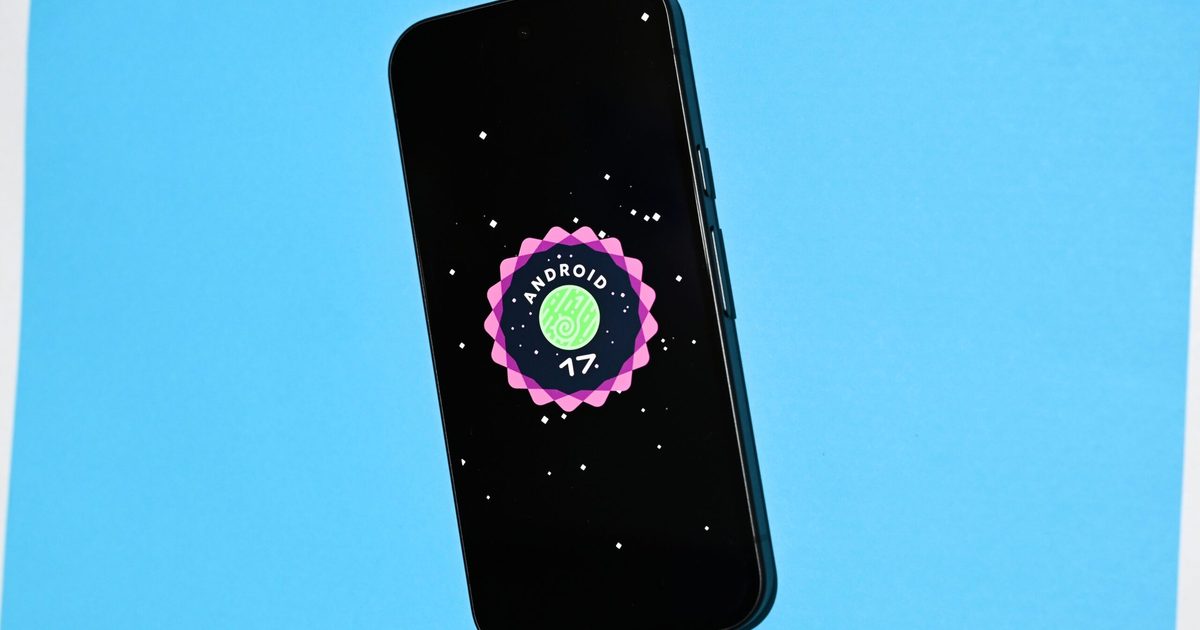
This is the first new Android Easter egg since Android 14. Head to Settings > About Phone > Android version, tap the version number repeatedly, and you should see a black screen with diamond-shaped dots arranged in a circle. You can connect them in any order, and it reveals the Android 17 logo.
Live Updates display more data points

At Google I/O 2026, Google announced the Metric Style update of Android’s Live Updates framework. Designed for health, fitness, and travel apps, the Live Updates can now display up to three data points across the always-on display, lock screen, and status bar at once.
Pill-style media app switcher
This particular feature arrived with Android 17 QPR1 Beta 3, replacing the carousel-style media control tile in the notification section with a compact card layout. This eliminates any accidental seek-bar scrubbing.
Keyboard quick settings tile

Confirmed in Android 17 QPR1 Beta 4, the feature adds a dedicated Quick Settings tile for switching input methods like Gboard’s voice typing or Gemini.
Medical companion device profile
This new companion device profile tier gives health-critical apps a dedicated Bluetooth connection that goes around standard battery optimization settings.
Material 3 Expressive

The UI overhaul arrived with Android 16 QPR1, exclusively for Pixel devices, and should reach other Android OEMs with Android 17. It introduces bouncier, physics-based animations, and background blur effects in the app drawer and notification shade.
Forced Auto-Themed Icons
Released with Android 16 QPR2, the feature mandates that all app icons adopt the system’s chosen color theme, and not just those whose developers chose to support it.
Expanded Dark Theme

Lock Screen Widgets
Launched with Android 16 QPR2 on Pixel phones, Lock Screen Widgets might expand to all supported phones with Android 17.
Flashlight Brightness Slider

Released in Android 16 QPR3 Beta 1, this update will roll out to all Android 17 users, allowing them to access a vertical brightness slider instead of simply toggling the flashlight on or off by long-pressing the flashlight tile in the Quick Settings menu.
Ability to remove At a Glance
With Android 17, you’ll be able to remove the At a Glance widget from the home screen on Pixel phones. This ability was first introduced with Android 16 QPR3.
Ecosystem continuity, interoperability and auto
Continue On

Google’s answer to Apple’s Handoff lets you start a task on your Android phone, such as reading an email or editing a document, and pick it up on a nearby tablet exactly where you left off.
Better iPhone-to-Android migration
Android 17 supports transferring contacts, messages, files, home screen layouts, and eSIM data from iPhones running iOS 26.3 or newer.
Improved Quick Share

Google has updated its Quick Share wireless file transferring system to reduce the friction between Android and iOS devices. With Android 17, the system will detect non-Android devices quicker than it currently does.
Mouse Cursor Flow and Pointer Acceleration Toggle
First rolled out with Android 16 QPR1, pointers now move seamlessly from the device screen to a connected external monitor without getting stuck at the edge. Furthermore, a pointer acceleration disable toggle delivers flat 1:1 movement tracking.
Android Auto dashboard overhaul

At Google I/O 2026, the company revealed its Android Auto redesign, introducing media card configurations that adapt to a broader range of infotainment display aspect ratios. The stable update will also add a swipeable card-based media app switched to Android Auto.
Content creation and gaming
Screen Reactions
Screen Reactions uses the native screen recorder to capture the screen and the video from your front camera simultaneously, stitching the video (with your reaction) directly onto what you’re recording. It will roll out exclusively for Pixel devices with Android 17.
Smart Enhance and sound separation
Meta’s Edits app gets two more flagship-exclusive tools with Android 17: Smart Enhance and Sound Separation. While the former upscales photos and videos, the latter isolates individual audio layers from the noise, letting creators boost their vocals.
APV support
Co-developed with Samsung, Google has integrated Advanced Professional Video (APV) support directly into the Android 17 framework. Currently available on flagships like Galaxy S26 Ultra, the storage-efficient video format will expand to more flagship devices with the upcoming update.
Instagram updates

Google has partnered with Meta to introduce Instagram-specific updates for flagship Android devices. These include Ultra HDR capture and playback, built-in video stabilization, and Night Sight into the Instagram app.
Floating screen recording toolbar
Confirmed with the third beta of Android 17, the screen recorder’s controls no longer live exclusively in the notification shade. Instead, they live in a compact pill overlay on the screen (during recording).
Adobe Premiere comes to Android

Adobe’s Premiere mobile app is coming to Android this summer, with its launch timeline tied to the Android 17 stable update rollout.
System-wide loudness management
Confirmed via Android 17’s audio framework changelogs, this particular addition automatically balances volumes across streaming apps and media sources.
Native gamepad button remapping
Google’s upcoming operating system update contains a system-level controller configuration dashboard for both USB-C wired and Bluetooth-based gamepads, allowing users to remap buttons and adjust analog thumbstick curves without using third-party keymapping apps.
Native VVC (H.266) video decoding
Versatile Video Coding is integrated at the platform level in Android 17, with hardware-accelerated decoding on supported silicon, and can deliver the same visual quality as H.265/HEVC at about half the data rate.
Vulkan 1.4
Android 17 increases the minimum graphics API floor to Vulkan 1.4 and mandates ANGLE (Almost Native Graphics Layer Engine) support.
Productivity, multitasking, and performance
Forced app resizeability

In the fourth Android 17 beta, Google enforces app resizeability by removing the opt-out mechanism for developers that allowed them to block split screen resizing. All apps must allow users to customize their window size or split configurations.
App Bubbles
Long-pressing any app icon in Android 17 Beta 3 or newer reveals a new Bubble option that keeps the app active as a small circular icon in one corner of the screen, helping users with two or three-app-based workflows.
Pause Point

Pause Point adds a 10-second waiting period before opening an app you’ve marked distracting. During the pause, Android 17 offers a breathing exercise, a favorite photo memory, or an audiobook suggestion.
Split-screen adjustment arrows
Confirmed in Android 17 Beta 4, the thin window splitter between split-screen apps now features small directional arrows that users can tap to change the split ratio to 70:30 or 90:10.
Desktop Mode external monitor workspaces
Desktop Mode arrived with Android 16 QPR1 and might expand to more devices with Android 17. It transforms compatible phones into a full windowed computing experience (like Samsung DeX) when connected to an external display.
App memory limits
Android 17 Beta 4 comes with RAM usage limits on a per-app basis. Apps that exceed their allocation are closed by the system, preventing a few heavy apps from hogging all the available memory.
Custom keyboard shortcut rebinding
The feature lets users map specific hardware key combinations to open apps or trigger system functions. It might expand to a broader range of devices with Android 17.
Disable background blur toggle
A toggle in Settings > Accessibility > Color & motion > Reduce blur effects reduces the frosted glass effect from the user interface. It was first rolled out with Android 16 QPR2.
Privacy and security-related updates
Bank Spoofing Protection
When a suspicious call arrives, Android silently queries the bank’s app installed on users’ phones to confirm whether a call is actually in progress from the bank’s end. If not, the call is immediately terminated. The feature won’t just work with Android 17, but Android 11 and newer versions.
Live Threat Detection

With Android, Google’s on-device AI scam scanner can now flag apps secretly forwarding SMS messages or abusing accessibility permissions to place invisible overlays that capture user inputs, and there’s a new “dynamic signal monitoring” feature as well.
SMS OTP hiding
Confirmed in Beta 2, Android 17 only allows the intended recipient apps or the device’s default SMS app to read OTPs within three hours from receiving them.
Granular contacts access picker
The upcoming Android version will introduce a contact-level permission selector instead of granting apps blanket access to the entire contacts directory.
Transparent location sharing controls
Android 17 adds a new button that surfaces which apps are actively using GPS data in real time, along with a single-tap option to revoke location access immediately.
Background audio isolation and restrictions
The audio framework enforces strict limits on background apps trying to start an audio playback, request audio focus, or adjust system volume without actively informing the user.
Biometric lock for lost devices
The Mark as Lost feature in Find Hub now requires biometric authentication on top of PIN/passcode.
Time zone change notification
When a local cell tower overrides the device clock, something that silently changes calendar events and alarms, a system notification confirms the time zone adjustment. The feature was rolled out with Android 16 QPR2, and should reach more devices with the stable Android 17 update.