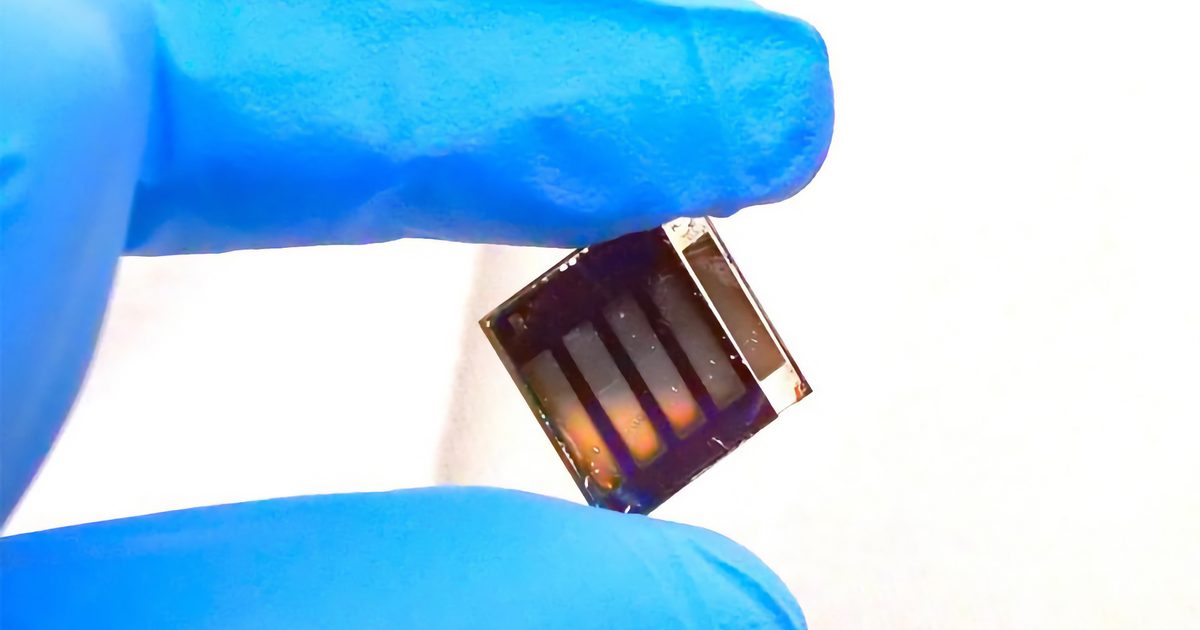
Researchers at the University of Queensland have created indoor solar panels that may eventually charge your wearables, sensors, and small electronics using only the ambient light in your home or workplace.
These panels utilize perovskite, a material that has been gaining attention as a potential successor to traditional silicon in solar cells. While silicon-based indoor solar cells top out at around 10 percent efficiency, perovskite can do significantly better.
The main issue has been that most perovskite solar cells rely on lead and hazardous solvents in their production, which is a problem for both safety and scaling up to real-world manufacturing. The UQ team has figured out a way around that.
How Does This Technology Function?
PhD student Zitong Wang, under the supervision of Dr Miaoqiang Lyu and Professor Lianzhou Wang, developed a vapor-based process that can manufacture high-quality lead-free perovskite material without any hazardous solvents.
 The University of Queensland
The panels hit a power conversion efficiency of 16.36 percent under indoor lighting, which is the highest recorded for this type of lead-free perovskite indoor solar cell made using an industry-compatible method.
Can These Panels Replace Traditional Batteries?
The panels are being explored as an alternative to coin-cell and button batteries for low-power devices like environmental sensors, wearables, and health monitors. Supermarkets testing electronic shelf labels, which replace paper price tags, are among the early candidates for the technology.
The panels are thin, flexible, and can be made in different shapes, making them easy to slot into all kinds of products. The next step is encapsulation to protect them from moisture and oxygen. After that, it is mostly a waiting game.
Dr Lyu expects perovskite indoor panels to hit the consumer market within the next few years. This is an exciting new technological development that could significantly benefit the environment. I look forward to seeing how it evolves and improves our lives.