Google’s AI-driven Search capabilities have dramatically transformed the way we conduct online research. Rather than wading through endless search results, most users now simply read the AI Overview and move on. Google intends to shift this behavior. The tech giant is introducing five new features to AI Mode and AI Overviews that aim to display more clickable links and provide users with stronger incentives to visit the underlying websites.
Deeper Discovery and Contextual Links
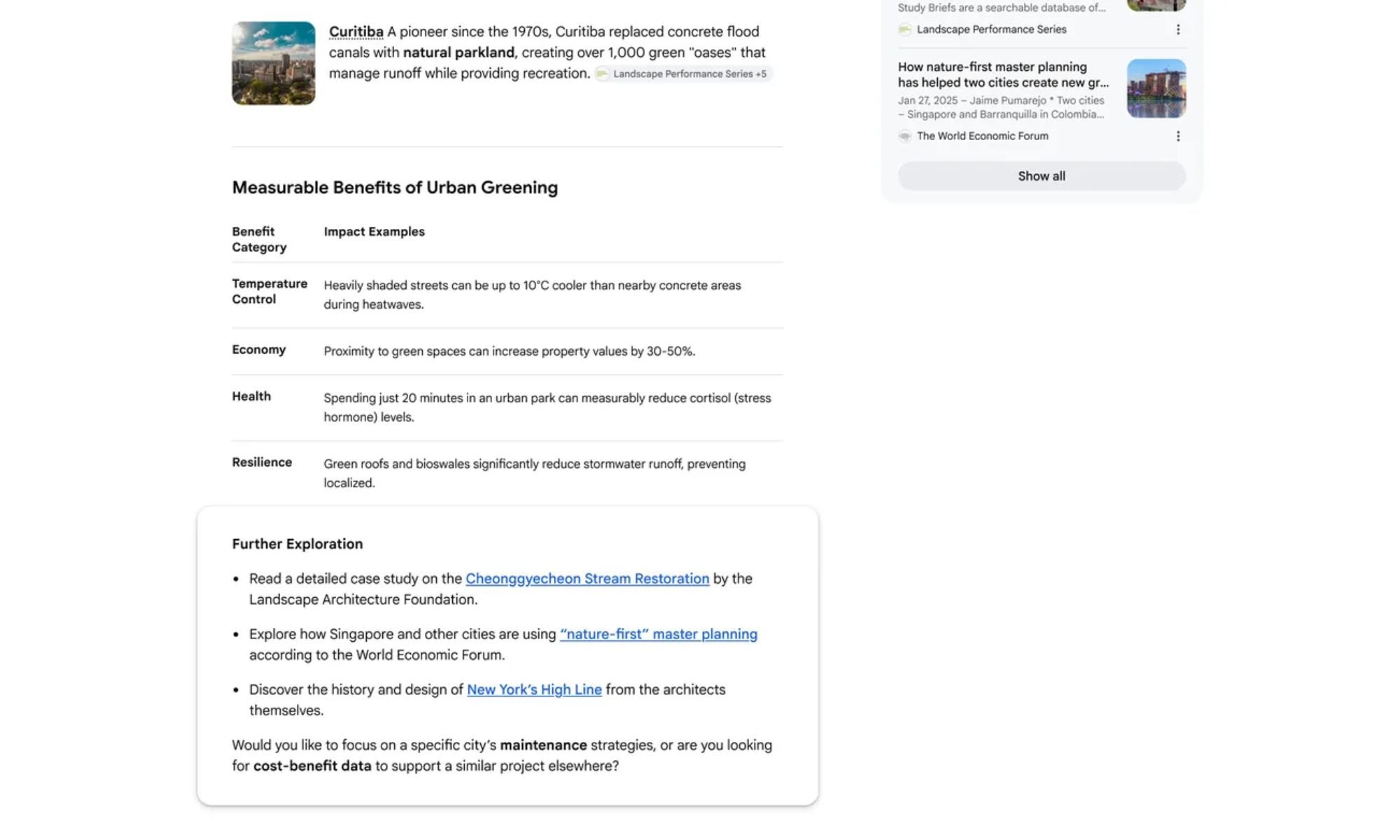
The standout new feature is Further Exploration, a dedicated section that appears at the bottom of AI Overviews, offering curated links to specific articles, case studies, or reports relevant to your query. For instance, if you search for how cities are increasing green spaces, Google might show links to a stream restoration project in Seoul or a report on the design of New York’s High Line park. This feature is designed to encourage users to continue their research rather than closing the tab immediately after reading the summary.
 Google
Google is also embedding more links directly within AI responses, positioned next to the relevant text rather than grouped at the bottom. For example, searching for a California bike trip might show a link to a Pacific Coast touring guide next to a bullet point about terrain, and a training blog post next to a bullet point about daily mileage. This approach provides users with a more direct path from the AI answer to the source material behind it.
 Google
 Google
On desktop, hovering over any inline link will trigger a preview showing the website name and page title, which is aimed at giving users more confidence about visiting the website. Google’s internal testing found that users were more hesitant to follow links when they could not tell where they led, so the preview removes that friction before the click.
 Google
Subscriptions and Community Perspectives
AI Mode and AI Overviews will now label links from a user’s active news subscriptions so they stand out in results. Google says early testing showed users were significantly more likely to click those labeled links. For subscribers, it means the publications they already pay for will be easier to find inside AI search results rather than buried below them.
 Google
AI responses will also begin surfacing previews of perspectives from public forums, like Reddit, social media, and firsthand sources, with added context like a creator’s handle or community name.
 Google
 Google
A search about photographing the northern lights, for example, might surface tips from a specific photography forum, with a link to the full discussion thread. Thanks to this, users who want real-world advice rather than a synthesized summary will have a clearer path to the people who have actually been there.
 Google
The Bigger Picture
These updates also carry real stakes for publishers. AI Overviews have raised concerns across the media industry about declining referral traffic, and these features are Google’s most direct attempt yet to show that AI search and the open web can coexist. Whether they move the needle on click-through rates will be worth watching.
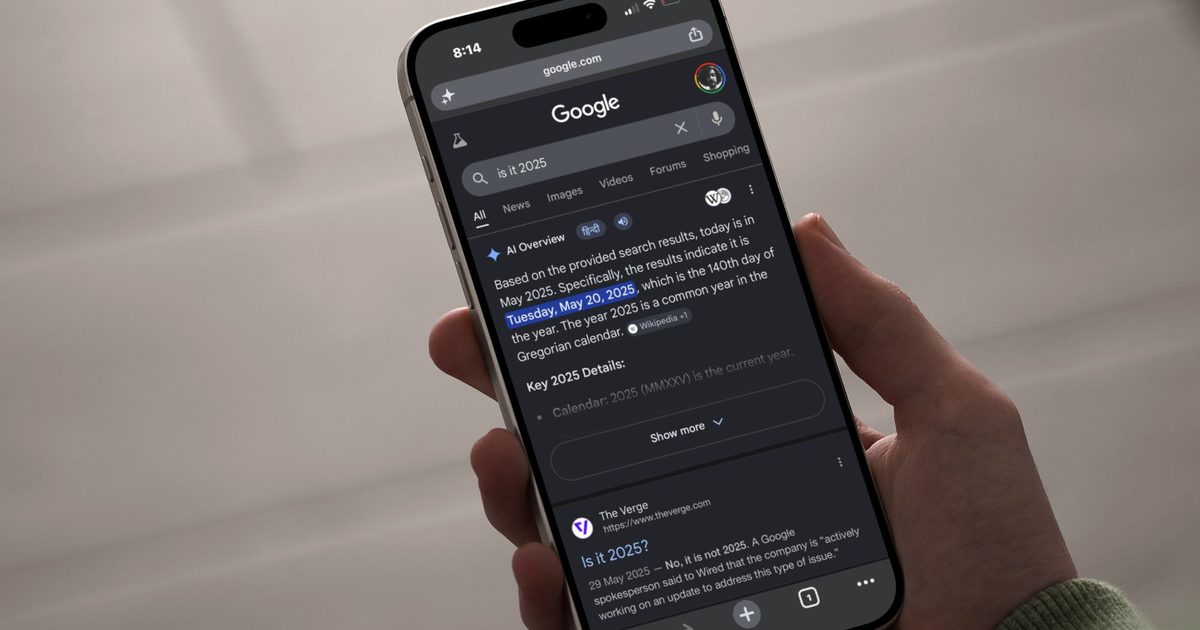
AI Overview accuracy, however, remains an open question. It has a history of confidently stating wrong information, and the featured image for this story is a reminder of that: it misidentifies today’s date as May 20, 2025. Getting users to click through to publishers may be a step in the right direction, but it’s hard to fully trust a guide that does not always know what day it is.