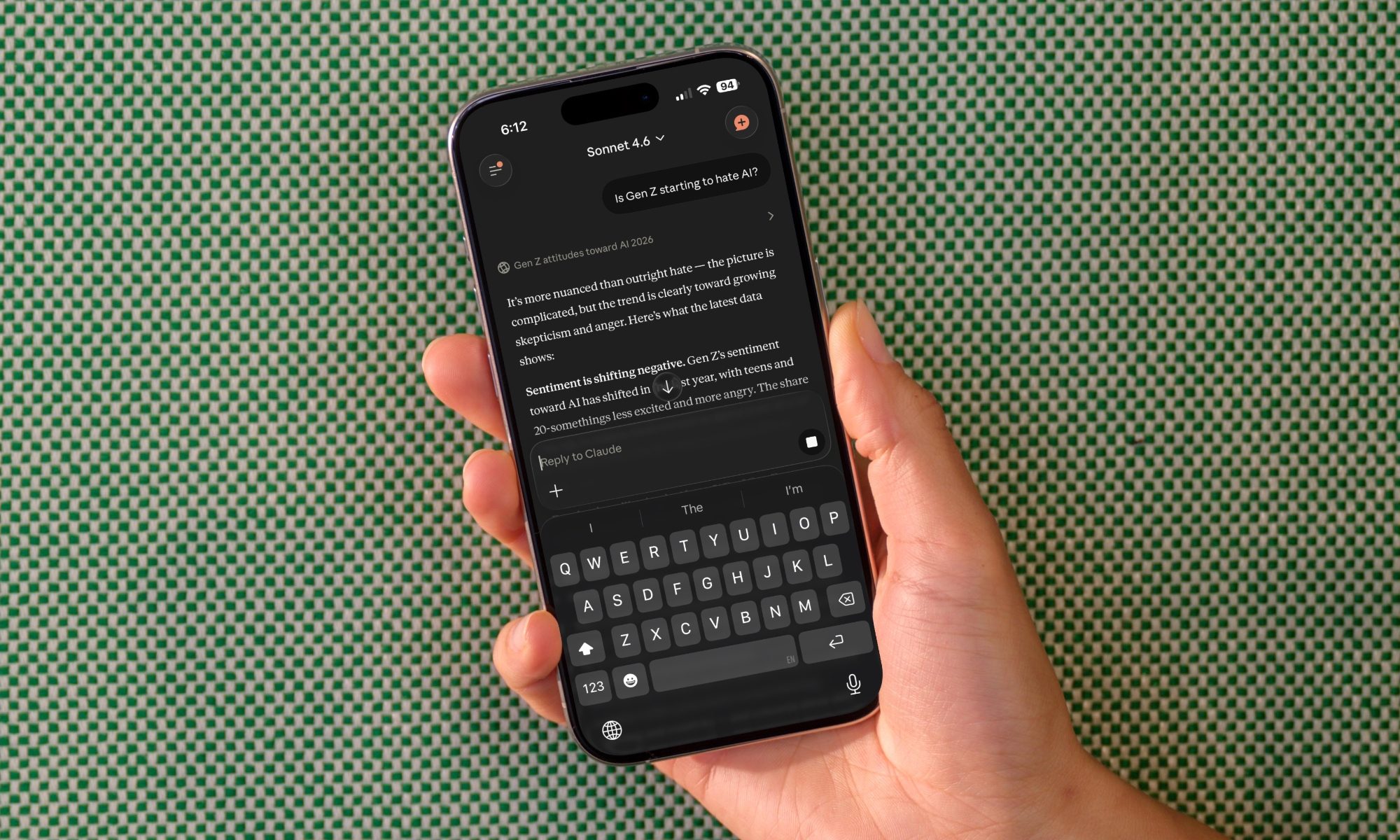
For those of us who incorporate AI into our daily routines, including myself, personal preferences have already been established. I rely on a premium Claude subscription to assist with my writing tasks (such as brainstorming headlines and adjusting tone), while Gemini serves as my primary tool for creating images and conducting background research, particularly when I need to delve deeply into a subject.
You might prefer Perplexity for searching or ChatGPT for coding, and that is perfectly acceptable since it enhances efficiency and delivers the necessary information quickly. The issue is that your device’s operating system is unaware of your preference and, until recently, did not care before forcing its own AI selection.
In the business sector, this is referred to as partnerships. The majority of Android makers, such as Samsung and OnePlus, have collaborated with Google to embed Gemini directly into their hardware. Conversely, Windows mandates Copilot regardless of user preference.
 Shikhar Mehrotra / Techgeeks
Apple, according to reports, is preparing to implement a feature that neither competitor has considered, let alone executed: asking users which AI they prefer and where.
The era of your device dictating your AI choice is nearing its end
The difference becomes immediately apparent when examining the strategies employed by Android and Windows.
According to Bloomberg’s Mark Gurman, iOS 27 will launch a new capability internally dubbed “Extensions.” This feature will enable users to choose their preferred AI model for specific Apple Intelligence functions rather than accepting whatever model Apple decides to install.
Upon the release of iOS 27, users will be able to navigate to Settings, assign their chosen third-party AI model to an Apple Intelligence feature (Writing Tools, Image Playground, etc.), and iOS 27 will handle the rest. Siri will receive similar treatment, allowing you to select the AI model that processes your requests in the background.
As soon as iOS 27 is available on my iPhone 17, I plan to designate Claude as the AI model for Writing Tools and Gemini for Image Playground.
 Rachit Agarwal / Techgeeks
This goes beyond a simple selection; it is a seamless, system-level preference. Once configured, every time you access an Apple Intelligence tool, your chosen AI model will appear automatically. There is no need to switch applications or copy and paste prompts and results between windows.
This represents true model portability in action, and honestly, it is a far more logical solution than anything Android or Windows has managed to deliver.
On Android and Windows, accessing your preferred AI always requires a detour
Consider using AI text tools on a Samsung Galaxy smartphone. Galaxy AI provides numerous options, including Writing Assist, Note Assist, and Call Assist, but all are driven by Google’s Gemini.
What if I wish to use Claude in Samsung Messages to compose a text? I would need to leave the app, launch Claude’s app or website, paste the text, enter a prompt, copy the result, return to Messages, paste it, and send it. Need a different model to summarize meeting notes in Samsung Notes? The same process applies.
I know, just reading that is exhausting. Imagine millions of users performing this cumbersome routine daily just to utilize their preferred AI. On Windows, Copilot is hardcoded into Notepad and Paint, leaving everyday users with no other option.
 Nadeem Sarwar / Techgeeks
Motorola deserves recognition for surpassing most Android OEMs by enabling users to access Gemini, Copilot, Perplexity, and Meta’s Llama AI through Moto AI. However, the company has already assigned each AI model to specific use cases. For example, Llama powers Catch Me Up, Copilot handles quick Q&A, and Gemini manages photo analysis. Exciting, perhaps? But I did not choose any of those assignments.
The platforms offer an AI ecosystem to alleviate digital frustration, but what they have actually constructed is a walled garden.
Apple isn’t winning the AI race: It’s building the track
Apple’s strategy, conversely, treats your AI preference similarly to how iOS handles default browsers or email clients: as a user setting. In my view, this is genuine democratization. It is the right to choose which AI is truly beneficial to me, rather than whichever ranks highest on a benchmark.
To grasp how Extensions might function in reality, any AI firm could opt in and integrate support via their App Store app, which would then operate as an engine within Apple Intelligence. After installing the app, it will appear as an option in Settings.
From there, you can direct an Apple Intelligence tool to whichever model you trust most for that particular task. While the company’s proprietary models remain available, the ability to outsource a query to third-party models sits as an additional layer. Furthermore, we might see a dedicated App Store section highlighting compatible AI applications.
 Andy Boxall / Techgeeks
Here is where it becomes even more intriguing for Apple as a business. Historically, the company has faced criticism for falling behind in the AI race. However, opening its platform of over 2.5 billion active devices, including iPhones, iPads, and MacBooks, to Claude, Gemini, and other qualified providers could transform that weakness into its most profitable strength.
The iPhone maker already collects a standard 30% commission on App Store subscriptions, but if this extends to every Claude Pro or Gemini Advanced subscription processed through iOS, Apple suddenly finds it does not need to win the AI race. It merely needs to own the racetrack.
Keep in mind, none of this has been officially confirmed by Apple. However, we are approaching WWDC 2026, which is when Apple could officially announce the shift from being an AI-first company to an AI-agnostic platform that profits from all of them.