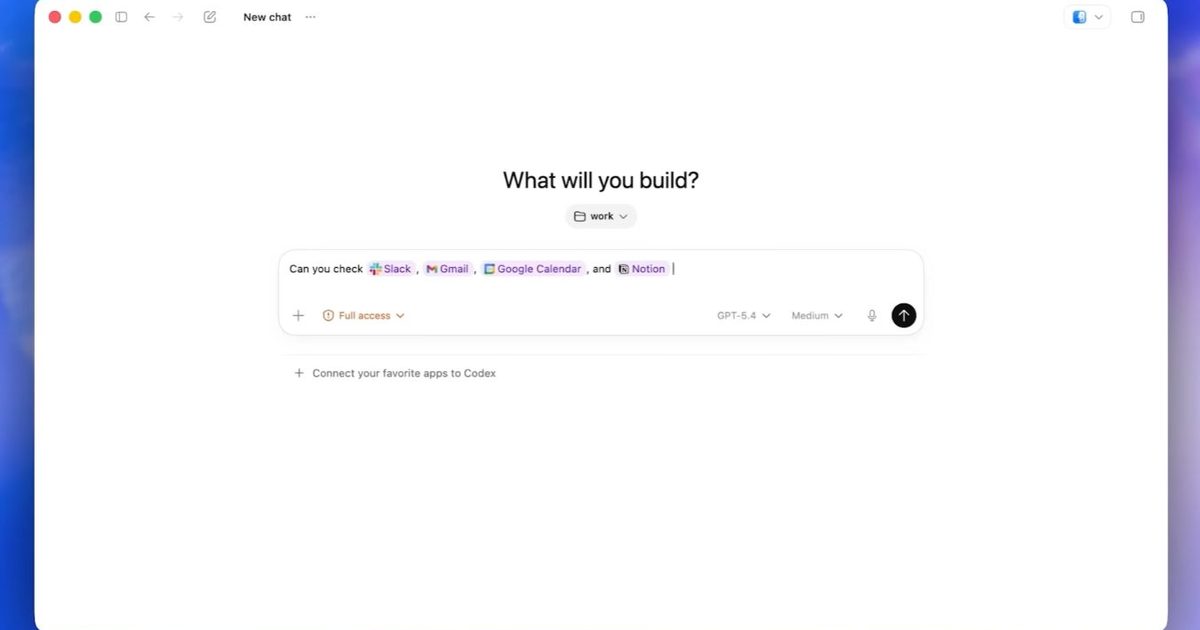
OpenAI is expanding the reach of Codex beyond its traditional coding interface. Its latest Chrome extension empowers the agent to leverage authenticated web sessions, enabling assistance within Gmail, Salesforce, LinkedIn, various dashboards, and proprietary internal applications.
This shift moves Codex out of isolated developer environments and directly into the web applications where daily professional tasks are conducted. By gaining access to Chrome, the agent can assist with research, CRM data entry, dashboard monitoring, and debugging tasks that often span multiple browser tabs.
The Codex Chrome extension is accessible via the Codex app in regions outside the EU and UK, where support is forthcoming. This expansion is significant because the most capable AI agent is also the one requiring the most defined operational boundaries.
Unlocking New Capabilities via Chrome
The standout feature is Codex’s ability to maintain state within web applications. Rather than beginning with an empty prompt, it can function within logged-in environments, making it highly practical for private dashboards, forms, and account-specific tools.
This level of access introduces sensitivity beyond a standard software update. Agentic AI poses security risks when autonomy, tool usage, and external access converge, as each new capability increases the potential for errors or the execution of harmful instructions.
Thus, the utility of this feature is also its primary stress test. Codex is valuable in Chrome because it interacts with real services, necessitating strict permission controls for the same reason.
Defining the Limits of Access
Codex can now navigate tasks across the web, utilize browser context, and present results for user approval. OpenAI notes that it does not hijack the active browsing session, keeping the user in control rather than ceding the entire tab to the AI.
The danger lies in the scope of that autonomy. A system capable of reading dashboards, completing forms, or interacting with internal tools requires more rigorous review protocols than a chatbot answering queries in a separate window.
The Value of Caution
The upcoming challenge for OpenAI is to ensure Codex’s browser interactions feel controlled rather than just impressive. Site approvals, permission configurations, and review processes will determine whether the extension serves as a genuine productivity enhancement or an overreaching shortcut.
For early adopters, the prudent approach is to begin with limited scope. Grant Codex access only to the few sites where the benefits are clear, avoid sensitive accounts until the workflow is proven, and review its actions before allowing the agent to handle high-stakes tasks.