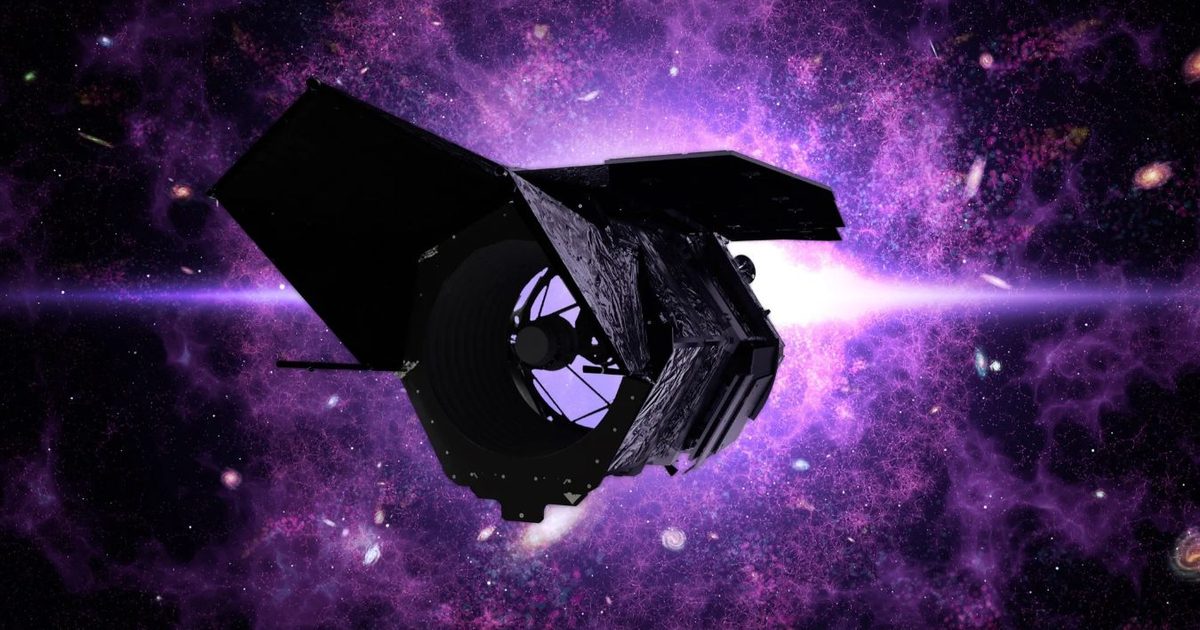
NASA is now targeting an early September 2026 launch for the Nancy Grace Roman Space Telescope, accelerating the schedule from a previous deadline of May 2027. This shift positions the mission as a critical event to monitor in the coming months.
The rationale is straightforward: Roman is engineered to capture expansive sections of the sky using high-resolution infrared imaging.
Rather than zooming in on isolated regions, the observatory is designed to conduct wide-field, deep-sky surveys that will enable researchers to investigate dark energy, dark matter, exoplanets, galaxies, and stars with unprecedented scale.
NASA anticipates the telescope will generate a 20,000-terabyte data archive during its five-year primary mission. This extensive dataset is expected to facilitate research on 100,000 exoplanets, hundreds of millions of galaxies, and billions of stars, highlighting why an earlier launch date carries significant scientific weight.
A Mission Designed for Broad Coverage
Roman’s primary strength lies in its expansive field of view. By merging a wide observational range with sharp infrared imaging, the telescope offers astronomers a highly efficient tool for mapping large swaths of space, outperforming instruments designed for narrower targets.
 NASA
NASAThis broad capability is crucial because the mission supports diverse scientific goals. While Roman focuses on dark energy, dark matter, and exoplanets, NASA notes its instruments will also aid in discovering rare celestial events and previously unknown objects.
Significance for the Astronomy Community
The long-term value of Roman will stem as much from its data archives as from its initial findings. A survey of this magnitude will provide researchers with a comprehensive resource to revisit for years, enabling them to cross-reference observations, validate theories, and identify key targets for other observatories.
This utility extends beyond NASA, influencing the broader astronomical community. Roman’s data could help determine future research priorities, a hallmark of how major observatories impact the field.
Key Milestones Ahead
The telescope is scheduled to arrive at Kennedy Space Center in June, with a planned launch aboard a SpaceX Falcon Heavy from Launch Complex 39A in Florida.
Following closely after Artemis II, NASA’s first crewed lunar flyby in over five decades, this accelerated schedule contributes to a period of significant momentum for the agency.
 NASA
NASANASA will announce the exact launch date as prelaunch preparations advance, making the confirmation of the early September target the next critical milestone.