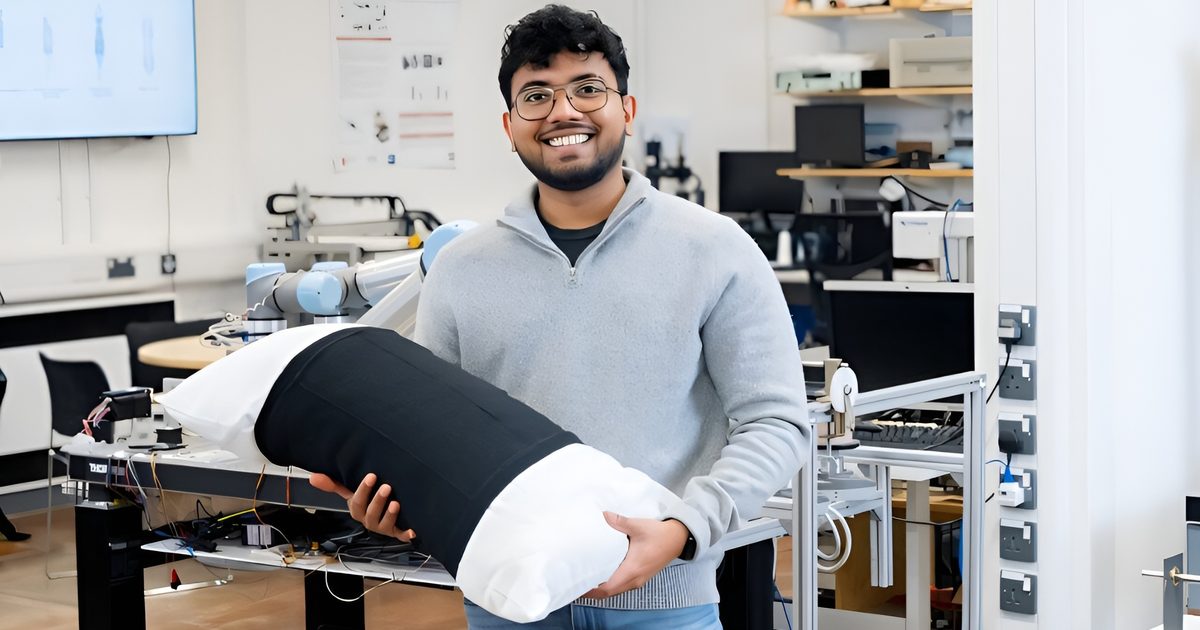
Missing a phone call while asleep is frustrating. Sleeping through a fire alarm is significantly more dangerous. This innovative smart pillow concept appears far more practical than a mere novelty. Researchers from Nottingham Trent University have created a smart pillow cover intended to assist deaf individuals in waking up to crucial nighttime notifications.
In contrast to standard smart pillows, the team engineered a sleeve that fits over a conventional pillow. It slides into a regular pillowcase and vibrates when connected alarms or calls are received.
What issue does it address?
This initiative stems from input from the Deaf community, who noted that current under-pillow alert devices are often too large and uncomfortable for sleeping. To address this, the team created a thinner electronic textile sleeve with four small haptic actuators integrated into a yarn-like framework.
 Nottingham Trent University
Each actuator measures just 3.4mm by 12.7mm, and the electronics are small enough that users are not supposed to feel them while seeping. So the safety product is both handy and comfortable to use.
How it can even save lives
The sleeve connects to a smartphone through a microcontroller, and that setup can then link wirelessly to household alarms. When something goes off, the pillow vibrates intensely enough to wake the user, with distinct patterns used to signal different kinds of alerts. This means a user with a hearing impairment can be alerted of a fire alarm, a burglar alarm, or even an incoming phone call.
This extra layer basically makes the feature thoughtful. The goal here is to wake up someone and also give them enough information to know why they are being woken up in the first place.
The researchers say the yarn used in the sleeve has already passed durability testing, including multiple washing cycles, which suggests they are treating this as a real product concept rather than a lab-only demo. The work was presented at the ACM CHI conference in Barcelona, and the team is now looking for an industrial partner to help bring it to market. Tech Xplore also quotes supervisor Theo Hughes-Riley calling it a significant step toward more inclusive emergency alert systems for deaf and deaf-blind individuals.