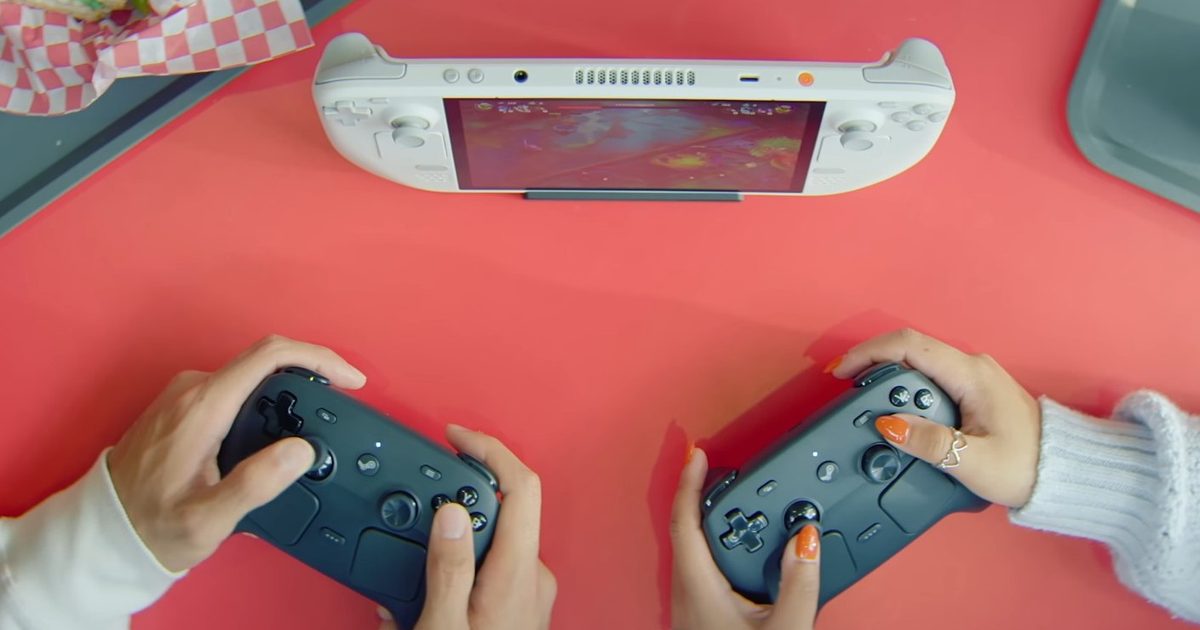
Valve’s new Steam Controller has had a pretty good start. Early reactions have been positive, and the $99 controller sold out quickly after launch.
That demand also brought scalpers, who started listing the controller at inflated prices. Valve has since introduced a reservation queue to give real buyers a better shot at future stock. Still, one complaint kept coming up. For many players, the Steam Controller was simply too locked into Steam.
What was holding the Steam Controller back?
For players who mostly game through Steam, the setup works well. Steam Input handles the controller’s extra features and gives users plenty of control over how it behaves. Still, many players do not keep all their games inside Steam. For those users, the controller was harder to recommend because it did not work as smoothly across other launchers and non-Steam games.
That is now starting to change. As spotted by Phoronix, support for the new Steam Controller has been added to SDL (Simple DirectMedia Layer), the widely used cross-platform library that many games and apps rely on for controller input. It has also received a follow-up mapping update, which should help the controller behave more like a standard third-party gamepad in SDL-supported games.
How well does it work outside Steam now?
Early testing sounds promising, although it is not perfect yet. Testers in the SDL pull request said that the controller works with or without Steam running, and that touchpads, capacitive stick touch, grip sense, back buttons, gyro, accelerometer, and the QAM button are functional in some form.
That said, there are still minor touchpad issues, and running Steam in the background can cause double-input problems in some cases.
For now, it appears that the Steam Controller will have to rely on SDL to play third-party games. Valve developer Pierre-Loup has already clarified that adding standard Windows XInput support would essentially make it behave like an Xbox controller, which could limit its unique inputs, require a separate mode-switching setup, and add extra cost for users.