If there’s one gadget class I’ve become almost addicted to over the past few years, it’s handheld gaming PCs. I’ve logged hundreds of hours on the Steam Deck, bought an original ROG Ally for myself, and most recently did a deep dive into the ROG Xbox Ally X. I’ve watched the segment grow from a niche experiment into a viable alternative to a gaming laptop for quick couch sessions or travel. I’ve also lived through its biggest flaw: no matter how refined these devices become, a trade‑off always lurks—be it battery life, thermals, raw performance, or software quirks.
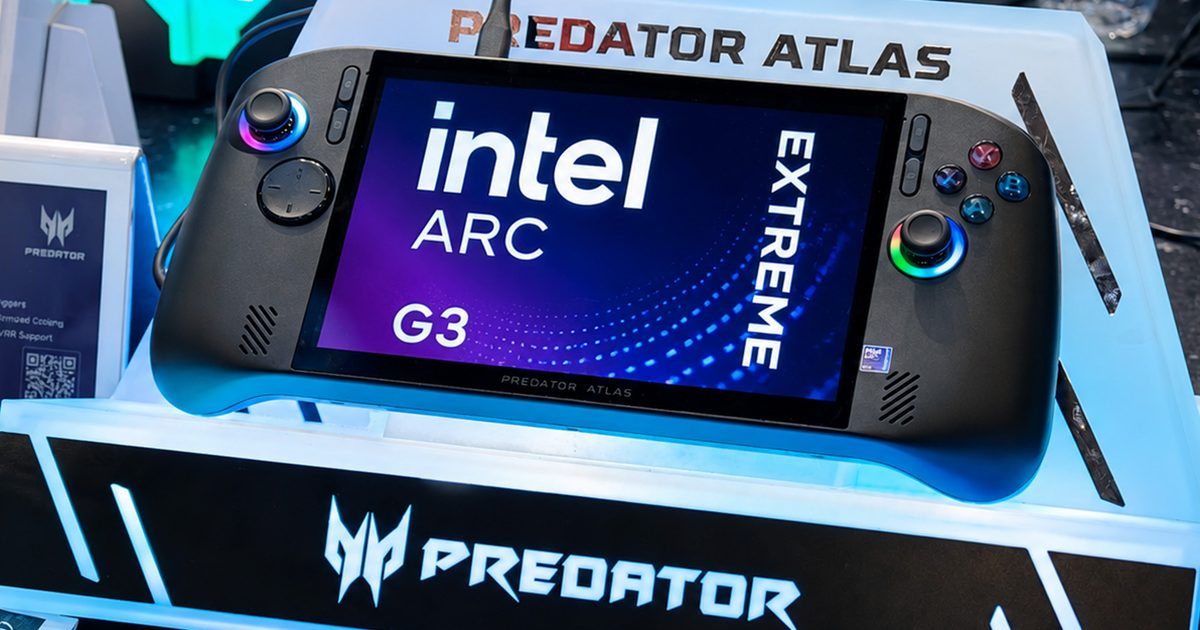
So when I arrived at Computex 2026 and got hands‑on time with Acer’s fresh Predator Atlas 8 and MSI’s newest Claw 8 EX AI+, my excitement was natural. Not only because they look striking, but because they bring something the handheld arena has been starving for: genuine competition. In truth, Intel’s new Arc G3 Extreme processor could be the most consequential handheld announcement in years, and honestly, it feels long overdue.
Intel’s Arc G3 Extreme feels like the reset button the company desperately needed
For a long time AMD has ruled Windows‑based handhelds, powering everything from the ROG Ally to the Lenovo Legion Go with its Ryzen Z‑series silicon. Intel’s earlier forays fell short due to uneven drivers and poorer efficiency, but the Arc G3 Extreme appears to be a clean break. Instead of repurposing laptop chips, this is a graphics‑first design built expressly for handheld gaming, based on Intel’s new Panther Lake architecture and fabricated on the advanced 18A process.
The centerpiece is the integrated GPU, which houses 12 next‑gen Xe3 cores and supports hardware‑accelerated ray tracing and XeSS 3, including Multi‑Frame Generation. The aim isn’t merely higher frame rates but achieving them efficiently, delivering smoother AAA titles without draining the battery at an alarming pace. Intel claims up to a 42 percent performance uplift over competing solutions in certain tests, along with notable gains in performance‑per‑watt.
Those numbers will need solid third‑party verification, but after spending several hours with the hardware they no longer seem far‑fetched. What struck me wasn’t just the FPS readout but the overall polish. Games launched quickly, animations were fluid, and I never witnessed any jarring stutters or erratic frame pacing. Everything just worked—a surprisingly refreshing experience in a segment that has often demanded a lot of patience from early adopters.

Intel also seems to have made real strides on the software front. Past Arc products were plagued by driver inconsistencies, yet my brief hands‑on suggested a much more mature approach. While a demo floor can’t replace long‑term testing, the experience felt notably refined. After years of juggling handhelds, I’ve grown accustomed to making compromises—dropping wattage to save battery, lowering graphics settings for smoother play, staying tethered to a charger when a demanding AAA title saps power. Using Intel’s new platform made me wonder if those compromises are finally starting to shrink.

The Acer Predator Atlas and MSI Claw hands‑on experience
Acer has flirted with handhelds before (think the Nitro Blaze line), but the Predator Atlas 8 feels like its first true flagship push into the space. It offers comfortable ergonomics, responsive controls, and a premium build that inspires confidence instantly. Its custom AeroBlade cooling kept temperatures in check even under heavy loads, and the vibrant 8‑inch 120 Hz screen stayed readable under the bright Computex lighting. More importantly, once I started playing, I forgot the specs entirely and simply enjoyed the session—a high compliment for any gaming device.
The MSI Claw 8 EX AI+ appears to be the result of MSI actually listening to feedback from its earlier handhelds. The revamped ergonomics make it far more comfortable to hold, the buttons and triggers feel satisfyingly tactile, and the overall feel is noticeably more refined. Paired with Intel’s Arc G3 Extreme and XeSS 3 enhancements, gameplay remained consistently smooth, while Windows’ dedicated Xbox fullscreen UI made navigation feel closer to a console than a traditional PC.

The future looks bright, but there’s one big catch
After testing both units, I didn’t leave convinced that Acer or MSI had built the superior machine. Instead, the processor powering them kept dominating my thoughts, which is perhaps the greatest compliment I can give Intel. For the first time in years, AMD finally faces a serious challenger in the premium handheld market, and the Arc G3 Extreme feels more than just another ambitious slide‑deck promise. That said, the real verdict will come once these devices land on reviewers’ desks, where battery endurance, sustained performance, thermals, and driver stability will matter far more than a polished demo.
The lingering question every gamer is asking is: what will they cost? Pricing could ultimately make or break both the Predator Atlas 8 and the Claw 8 EX AI+, but regardless of the price tag, I left Computex feeling genuinely optimistic about handheld gaming’s trajectory. The Steam Deck sparked the revolution, ASUS pushed it forward, and now Intel appears ready to shake things up in a big way. If the Arc G3 Extreme lives up to its hype, the biggest winners won’t be the companies behind it, but gamers like us.
