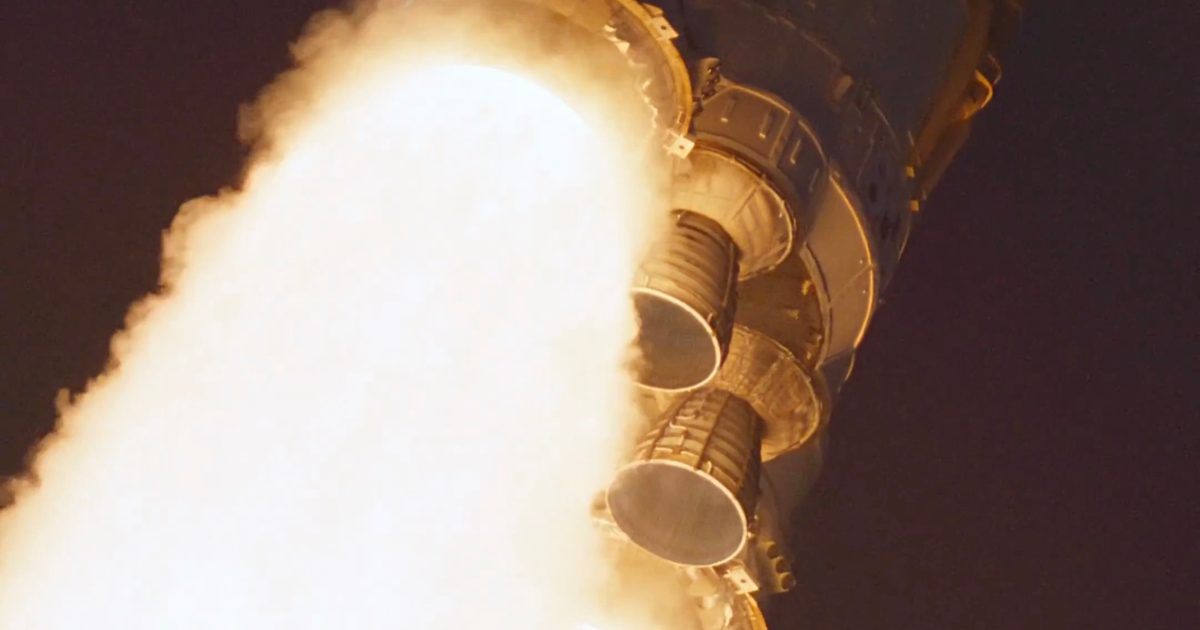
As the Artemis II crew begins their return trip to Earth after a successful lunar flyby earlier this week, NASA has unveiled impressive new footage of the April 1 launch that propelled them into space.
The detailed tracking shot captures the immense power of the Space Launch System (SLS) rocket, showcasing its four core RS-25 engines and two solid rocket boosters as the 98-meter-tall vessel ascended from the Kennedy Space Center in Florida.
At liftoff, the SLS generates a massive 8.8 million pounds of thrust, surpassing the Apollo-era Saturn V by about 1.2 million pounds. This is roughly half the power of SpaceX’s Starship, which is currently under development and intended for future lunar travel.
The rocket’s propulsion is provided by a la own mix of high-performance engines. The core stage features four RS-25 liquid-fueled engines that utilize liquid hydrogen and oxygen for maximum efficiency. Interestingly, these engines are repurposed components from the retired Space Shuttle program, which ended in 2011.
The vehicle also relies on two huge solid rocket boosters to provide the majority of the initial power needed to lift the massive rocket and the crewed Orion spacecraft into orbit.
The Orion spacecraft pushed the crew further from Earth than any humans in history as it looped around the moon earlier this week.
In addition to collecting lunar data, the mission serves as a critical test for human operations in preparation for upcoming Artemis missions, with the goal of returning humans to the moon’s surface as soon as 2028.
Following eight days in space, the four Artemis II astronauts are now heading home and are scheduled to splash down off the California coast this Friday, marking a memorable return.
For more information on how to follow the final stages of the Artemis II mission, Digital Trends can help.