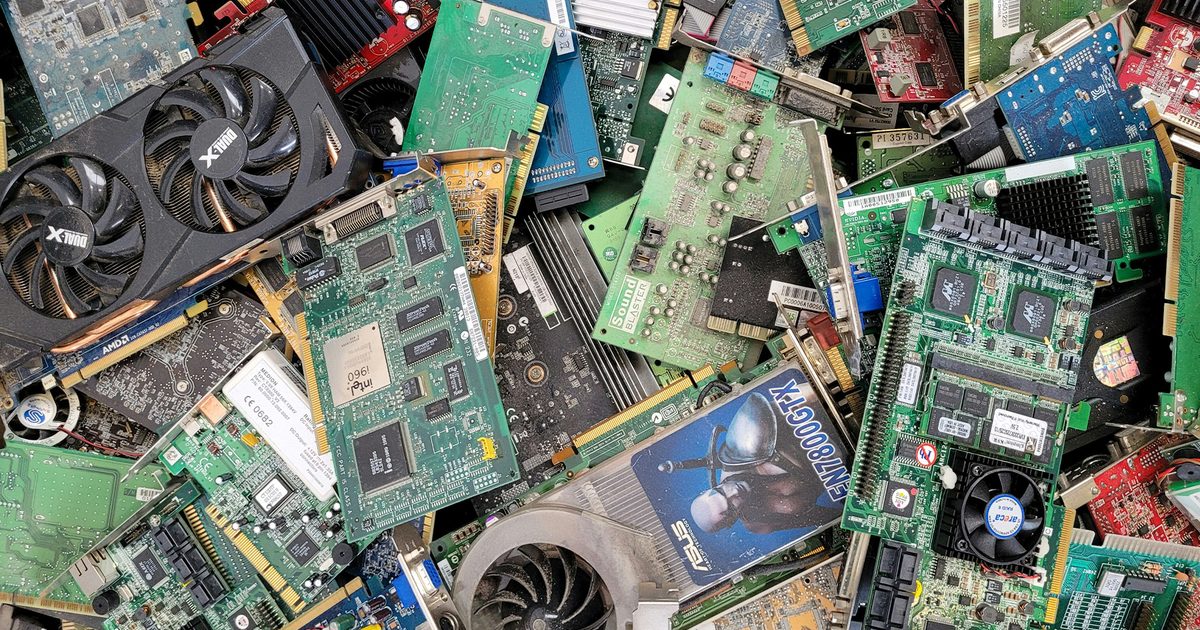
AI is already reshaping global operations, yet it is simultaneously exacerbating one of our most pressing ecological challenges in ways rarely acknowledged. This time, the concern extends beyond power usage to the tangible infrastructure supporting these systems. Each advancement in artificial intelligence carries a direct material consequence.
AI’s Role in Amplifying the E-Waste Challenge
A recent analysis in Nature Computational Science (cited by Rest of World) indicates that the accelerating adoption of AI technologies could contribute an additional 1.2 to 5 million metric tons of electronic waste by 2030. The underlying cause is straightforward: AI systems depend heavily on high-performance components such as GPUs and custom servers, which have relatively short operational lifespans. Typically, this infrastructure is upgraded every two to five years, leading to the rapid disposal of older equipment as more capable systems are deployed.
 Rest of World / Global E-Waste Monitor 2024
This trend is unfolding on a massive scale. As organizations compete to construct larger data centers and develop more sophisticated models, the need for computing hardware continues to climb, directly increasing the volume of outdated equipment being discarded.
A Worldwide Environmental Concern, Not Just a Tech Issue
E-waste already ranks among the most rapidly expanding waste categories globally, generating tens of millions of tons annually. Compounding the issue is the fact that a significant portion escapes proper recycling protocols. Mishandling these materials can release hazardous substances such as lead and mercury into the environment, threatening both ecological balance and public health. Furthermore, the bulk of this waste is exported to lower-income nations, where recycling processes often lack adequate safety measures. Consequently, while AI’s advantages are distributed worldwide, its ecological burden falls disproportionately on vulnerable regions.
 Mark Stosberg / Unsplash
While AI may appear to be a purely digital transformation, it leaves a substantial physical imprint behind the scenes. Without significant shifts in hardware lifecycle management, this environmental footprint will continue to expand rapidly.