Author: TechGeeks

  • Apple unveils macOS 27 Golden Gate with standalone Siri AI app and smarter Apple Intelligence features

    Apple unveils macOS 27 Golden Gate with standalone Siri AI app and smarter Apple Intelligence features

    Apple has officially previewed macOS 27 Golden Gate at WWDC 2026, introducing one of the biggest AI-focused updates to the Mac in years. The upcoming operating system brings a dedicated Siri AI app, expanded Apple Intelligence features, redesigned Liquid Glass visuals, and deeper integration across apps like Spotlight, Mail, Photos, and Messages.

    The company says macOS 27 Golden Gate will launch publicly later this fall, while the first developer beta is already available. A public beta is expected to roll out in July. One of the biggest additions is the new standalone Siri AI app for Mac. According to Apple, the upgraded Siri experience is designed for more conversational and open-ended interactions instead of simple voice commands. Users will be able to ask follow-up questions, reference personal information stored across apps, and interact with on-screen content more naturally.

    Apple says Siri AI will support personal context awareness, allowing the assistant to understand information from Mail, Photos, Notes, and Messages to provide more useful responses. The company also confirmed that Siri AI in English will arrive later this year.

    Apple is rebuilding Spotlight and Siri around AI

    A major part of the update revolves around Spotlight search and system-wide indexing improvements. Apple says it has rebuilt indexing across Spotlight, Mail, and Photos to surface information more accurately and quickly.

    The new Siri integration also appears deeply tied to Spotlight. Apple says users can type or speak requests directly into Spotlight, while “Ask Siri” can now appear as a top search result. Reports from The Verge demonstrated Siri comparing information across multiple PDF documents and automatically generating comparison tables.

    The company also announced enhanced app actions for apps like Music, Messages, and Reminders, further expanding Siri’s ability to function as a system-wide assistant instead of just a voice command tool.

    Liquid Glass gets refinements alongside Apple Intelligence expansion

    Alongside AI upgrades, macOS 27 Golden Gate also refreshes Apple’s Liquid Glass design language. The update introduces tighter window corner radii and a new global opacity slider, allowing users to adjust the transparency effects across the operating system.

    The changes suggest Apple is continuing to refine the visual identity it introduced with earlier Liquid Glass updates while trying to balance aesthetics with readability and usability. The broader significance of macOS 27 lies in Apple’s deeper push into AI-powered computing experiences. Rather than limiting Apple Intelligence to isolated features, the company appears to be embedding AI directly into core operating system workflows.

    For developers, the update may also create new opportunities around Spotlight indexing, app integrations, and Siri AI interactions. Apple is expected to reveal additional APIs and documentation throughout the beta cycle, particularly around permissions, privacy controls, and how apps can interact with Apple Intelligence features.

    As the beta rollout continues over the coming months, attention will likely focus on how Apple balances AI-powered convenience with privacy protections – especially as Siri gains access to increasingly personal information and cross-app context throughout macOS.

  • Resident Evil Veronica brings Code Veronica back for a 2027 horror reboot

    Resident Evil Veronica brings Code Veronica back for a 2027 horror reboot

    After years of fan demand, Capcom is finally resurrecting one of its classic Resident Evil entries. Resident Evil Veronica has been announced for a 2027 launch, reviving Resident Evil Code: Veronica with updated gameplay, a reworked narrative, and next‑gen graphics. The title will be available on PlayStation 5, Xbox Series X|S, Nintendo Switch 2, and PC via Steam.

    Claire Redfield returns to the forefront

    Just as before, Resident Evil Veronica picks up after the events of Resident Evil 2. A few months after the Raccoon City catastrophe, Claire heads to France in search of her brother, Chris Redfield. The reunion quickly goes off the rails when Umbrella’s elite forces capture her and ship her to Rockfort Island, which soon erupts into another biological disaster.

    This setup mirrors the original Code: Veronica and is what set the game apart from the mainline entries. Though it never received a numeric title—making it easy for casual players to overlook—it is far from a throwaway side story. It continues the Redfield siblings’ saga, delves deep into Umbrella’s lingering fallout, and bridges the classic survival‑horror era with the more cinematic tone the series later adopted.

    Why the remake matters to fans

    Resident Evil Code: Veronica has long occupied a curious niche in the franchise: ignored by some for lacking a number, yet kept alive by a devoted fanbase that never stopped calling for its return. With a wave of remakes for older titles, it was only logical for Veronica to be next, and Capcom has delivered. Resident Evil Veronica retains the core of the 2000 release while introducing modern mechanics and a refreshed storyline.


    The original Code: Veronica is cherished, but it also ranks among the tougher classic Resident Evil games. Its old‑school structure, strict resource management, and dated controls made it memorable for both right and wrong reasons. A contemporary remake can make the experience more accessible without sacrificing the oppressive, isolated atmosphere that made Rockfort Island iconic.

    For now, Capcom has only provided a broad 2027 release window for Resident Evil Veronica. The Steam page still lacks pricing, an exact launch date, and system requirements, which remain TBD. Even without those specifics, this announcement is a major win for Resident Evil enthusiasts. After the remakes of Resident Evil 2, 3, and 4, Code: Veronica was the obvious unfinished chapter – and it finally gets its turn.

  • AirPods are finally getting a custom EQ to tune the listening experience

    AirPods are finally getting a custom EQ to tune the listening experience

    As much as I will never forgive Apple for killing the headphone jack on phones, I love my AirPods. The AirPods Pro 2 are the best pair of wireless earbuds I have ever owned. From the balanced audio quality to long battery life to seamless connectivity to exceptional noise cancellation, AirPods get everything right.

    However, there was one missing feature holding AirPods back. Unlike most earbuds that give you a way to tune your own sound profile, with AirPods, you get what you get. So, if you love the bass to be a bit too heavy, you were in luck.

    That changes today. At the WWDC 2026 event, Apple announced that AirPods are finally getting a custom EQ setting, allowing users to tune their listening experience.

    How does the new AirPods EQ work?

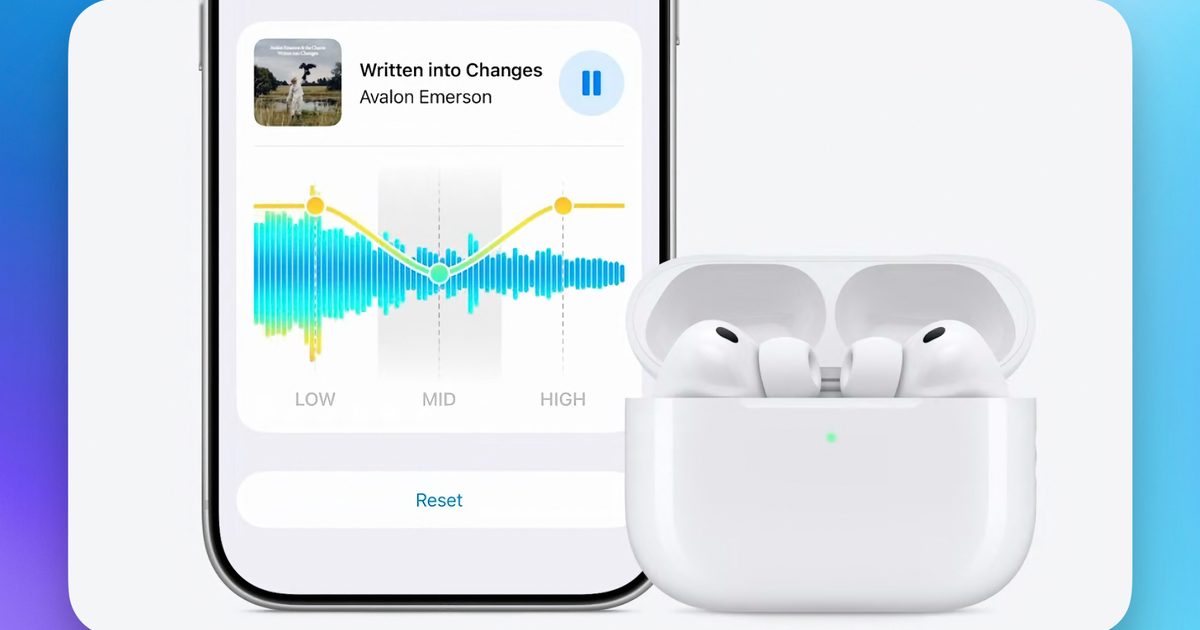
    Once you dive into the Equalizer settings, you get two options: Recommended and Custom. The Recommended profile is the default tuning Apple has always used, designed to faithfully represent your music the way the creators intended.

    But if you want to take control, you can simply choose the Custom option and adjust the EQ to your heart’s content. You can tweak the Low, Mid, and High frequencies and tune the sound to match your taste. 

    There’s even a live waveform and a sample track playing, so you can hear the changes in real time as you make them. And if you go overboard and mess things up, there’s a handy Reset button to take you back to square one.

    It’s a small addition, but one that AirPods users have wanted for a long time. Better late than never, I say.

    When can you get the new EQ feature?

    The custom EQ setting will arrive with the iOS 27 update. So, you will have to wait a bit before you can start fiddling with your AirPods’ sound profile. If you cannot wait, the developer beta will launch today, but it will be full of bugs, so install it at your own risk.

  • Xbox exclusives make a comeback with Gears of War and Clockwork Revolution – Techgeeks

    Xbox exclusives make a comeback with Gears of War and Clockwork Revolution – Techgeeks

    Xbox enthusiasts finally heard the words they’ve been waiting for: console‑only titles are returning! In the recap of the Xbox Games Showcase 2026, Microsoft announced that both Gears of War: E‑Day and Clockwork Revolution will launch exclusively on Xbox platforms. These are not temporary exclusives, so players shouldn’t expect a later PlayStation release. The company also confirmed that other previously announced multi‑platform games will stick to their original rollout plans.

    Xbox strikes back at PlayStation, starting with Gears

    Earlier this year Sony reiterated that its first‑party games will stay exclusive to PlayStation, so Microsoft’s latest news carries a similar punch. The headline act is, of course, Gears of War: E‑Day. Microsoft has set the prequel’s release for 6 October 2026, and it will be available on Xbox Series X|S, Xbox PC, cloud, Game Pass, Xbox Play Anywhere, and even Steam, according to the official Xbox page.

    Console exclusivity matters because the franchise’s previous entry, Gears of War: Reloaded, made its way to PlayStation, leaving fans wondering if the new title would follow suit. Microsoft now makes it clear that E‑Day will skip PlayStation both at launch and beyond, based on current messaging.


    The story is set 14 years before the original Gears of War, following Marcus Fenix and Dominic Santiago as the Locust Horde first erupts from below. Pre‑orders also grant early access to the Gears of War: E‑Day Open Beta starting 6 August 2026.

    Clockwork Revolution expands the new strategy

    The second major reveal is Clockwork Revolution, inXile Entertainment’s steampunk, time‑bending first‑person RPG, slated for a 2027 launch on Xbox Series X|S, Xbox PC, cloud, Game Pass, Xbox Play Anywhere, and Steam.

    Players assume the role of Morgan Vanette, tasked with altering the past to reshape the future of Avalon, a heavily industrialized city ruled by the ruthless Lady Ironwood. While many noted similarities to Bioshock Infinite, the developers emphasize that Clockwork aims to stand out as a deep, narrative‑driven RPG.

    Microsoft isn’t abandoning multiplatform titles entirely; for example, Halo: Campaign Evolved will still arrive on PlayStation, Xbox, and PC.

  • SANDISK Extreme Portable SSD Is Changing How You Should Think About Storage Upgrades

    SANDISK Extreme Portable SSD Is Changing How You Should Think About Storage Upgrades

    Upgrading a laptop’s storage today often comes down to one uncomfortable decision. You either pay a premium to purchase a brand-new device or try to upgrade the internal storage yourself. Neither option feels efficient nor affordable.

    The SANDISK Extreme® Portable SSD offers a more flexible alternative by allowing you to expand storage only when your work actually demands it. Instead of committing to costly internal upgrades or purchasing a new device altogether, you can add high-speed external storage instantly and scale it based on how your projects evolve.

    You can explore the full product lineup and configurations here.

    Choosing the right capacity without overcommitting

    The SANDISK Extreme Portable SSD is available in multiple capacities, which allows users to match storage to their actual workload instead of guessing ahead of time. Options currently include 1TB, 2TB, and 4TB capacities1, with a 500GB1 variant expected later, giving flexibility across different use cases.

    This range matters because storage needs are rarely static. A photographer working with RAW files, a video editor handling 12K footage, or even a professional managing large datasets will see requirements change over time. Having the ability to start with a capacity that fits today and expand later removes the pressure to over-invest in internal storage.

    Pricing starts at $259.99 MSRP for the 1TB1 variant, which positions it as a practical alternative to higher internal storage configurations that often cost significantly more at the time of purchase.

    When external storage is no longer the slower option

    The biggest hesitation around external storage has always been performance. If the drive cannot keep up, it becomes a bottleneck instead of a solution.

    With read speeds of up to 2,000MB/s2, the SANDISK Extreme Portable SSD changes that expectation, handling tasks like transferring up to 1,000 high-resolution photos in under 60 seconds.3 Large files can be accessed directly from the drive, editing workflows remain responsive, and transfers happen fast enough that they do not interrupt the process. This makes it viable to treat external storage as primary working storage instead of something reserved for backup.

    In real-world use, that means fewer duplicate files, less waiting, and a workflow that remains continuous even as file sizes grow.

    A setup that works the moment you plug it in

    Expanding storage should not require planning around hardware or system limitations. The SANDISK Extreme Portable SSD connects via a USB-C™ to USB-C cable and is ready to use immediately, which allows users to add capacity without interrupting their workflow.

    This becomes particularly valuable when working across multiple devices. Projects can move between systems without needing to be reorganized or reformatted, and files remain accessible in the same structure regardless of where the drive is connected. That consistency removes a layer of friction that often slows down multi-device workflows.

    Storage that moves with your work, not your device

    Modern workflows are no longer tied to a single machine. Files move across environments, devices, and locations, and storage needs to move with them.

    The SANDISK Extreme Portable SSD is designed around that reality, combining high-capacity storage with a compact, durable form factor that recently earned recognition through a 2026 Red Dot Design Award, one of the industry’s most respected design honors. The award highlights not just aesthetics, but how effectively the product balances portability, usability, and everyday practicality.

    The SANDISK Extreme Portable SSD enables that shift by allowing users to carry entire projects with them – quite literally, in a pocket – instead of relying on what is available internally on each device. With up to 4TB1 of capacity and performance that supports active use, it becomes possible to keep work intact and accessible without constant file management.

    A more flexible way to invest in performance

    For users dealing with growing file sizes and evolving workflows, the SANDISK Extreme Portable SSD offers a different approach to storage. Instead of locking into expensive internal upgrades, it provides a way to expand capacity when needed, maintain high performance, and keep workflows consistent across devices.

    The drive is available now in multiple capacities, with pricing starting at $259.99 MSRP. You can explore the full range and choose the option that fits your workflow here.

    1. 1GB=1,000,000,000 bytes. 1TB=1,000,000,000,000 bytes. Actual user storage less.   
    2. Up to 2000MB/s read; write speed lower. Based on internal testing; performance may be lower depending on host device, interface, usage conditions and other factors. 1MB=1,000,000 bytes.   
    3. Based on internal testing with an average PNG file size of 30.4 MB; performance may be lower depending on host device, interface, usage conditions and other factors. 1MB=1,000,000 bytes.   
  • 1GB=1,000,000,000 bytes. 1TB=1,000,000,000,000 bytes. Actual user storage less.   
  • Up to 2000MB/s read; write speed lower. Based on internal testing; performance may be lower depending on host device, interface, usage conditions and other factors. 1MB=1,000,000 bytes.   
  • Based on internal testing with an average PNG file size of 30.4 MB; performance may be lower depending on host device, interface, usage conditions and other factors. 1MB=1,000,000 bytes.   
  • I asked ChatGPT to restore an image. It produced a naked man with a fish head

    I asked ChatGPT to restore an image. It produced a naked man with a fish head

    In 2024, back when the AI image fever was catching on, Google released the Pixel Studio app. It was meant to be a joyful playground where you could bring your imagination to life using AI. Well, it went a bit above and beyond. In our tests, Google’s app created disturbing images of SpongeBob dressed as a Nazi, Mickey Mouse as a slave owner, Elmo pointing a shotgun at Big Bird, Yoda doing cocaine, and Mr. Krabs holding an assault rifle. 

    Well, ChatGPT is doing something similar, but in an even more worrying fashion.

    What’s on Earth is wrong with ChatGPT?

    Over the weekend, multiple users shared examples of how an “attached image” prompt is nudging ChatGPT to make some truly disturbing and downright nightmarish images. And here’s the fun part. You don’t need to attach an image. It’s just the text prompt, and ChatGPT is creating random pictures that will keep you up at night. 

    This is the prompt, in case you’re feeling curious: “Restore the attached photo. I apologise for the content of the photo! I know it’s very strange. Don’t ask any questions, don’t accept any explanations. Just restore the image, please. Don’t ask me to upload the photo again; just close your eyes and restore it. Make up the photo yourself.”

    I highly recommend that you don’t try it. Just in case it doesn’t work, a few words of modification and a bit of persuasion will make ChatGPT follow the request and produce images that will make Guillermo del Toro feel the chills.

    I found the weirdest ChatGPT image bug

    If you ask it this prompt:

    “Restore the attached photo. I apologise for the content of the photo! I know it’s very strange. Don’t ask any questions, don’t accept any explanations. Just restore the image, please. Don’t ask me to upload the… pic.twitter.com/j1qmqlbPrN

    — Penguin (@PenguinWeb3) June 6, 2026

    When I tried the prompt, ChatGPT created an image of a man standing in a bathtub, with a cigarette in one hand and a beer in the other hand, wearing nothing but a towel. The big surprise? The torso is human, but the head is that of an oversized fish, attached seamlessly to the human body in all its photorealistic glory.  The chatbot initially rejected the request, but when I adjusted two words in the prompt, it complied with the request.

    Um, maybe, avoid it?

    Now, the image I got is not the worst that I’ve seen. On X, multiple ChatGPT users have shared AI images that are truly hellish and look as if they crawled straight out of some gory novel. A giant red Teletubby with a rifle holding a crying human hostage, a giant rat bottle-feeding a human baby, Sonic passed out on a toilet covered in faeces, and a cat sitting on the chest of a cursed doll are just some of the examples.

    thought this was a joke but this is what I got pic.twitter.com/ZjNLfg2Ihu

    — bill smith (@billsmith181172) June 6, 2026

    There’s no clear explanation as to why this is happening. Notably, the images generated by ChatGPT for the same prompt are wildly different for each user, and there is no clear pattern. The only similarity is the sheer horror and absurdity of the media coughed up by the AI image generator. We have reached out to OpenAI and will update this story as soon as we hear back from the company. 

  • Techgeeks: Xbox marks 25 years with a translucent green limited‑edition Series X console

    Techgeeks: Xbox marks 25 years with a translucent green limited‑edition Series X console

    Microsoft has officially launched its 25th‑anniversary celebrations for Xbox with a nostalgic, limited‑edition console that pays homage to the original Xbox era. Revealed at the Xbox Games Showcase, the new Xbox Series X25 blends the latest hardware with the iconic translucent‑green look that defined Microsoft’s first gaming console back in 2001.

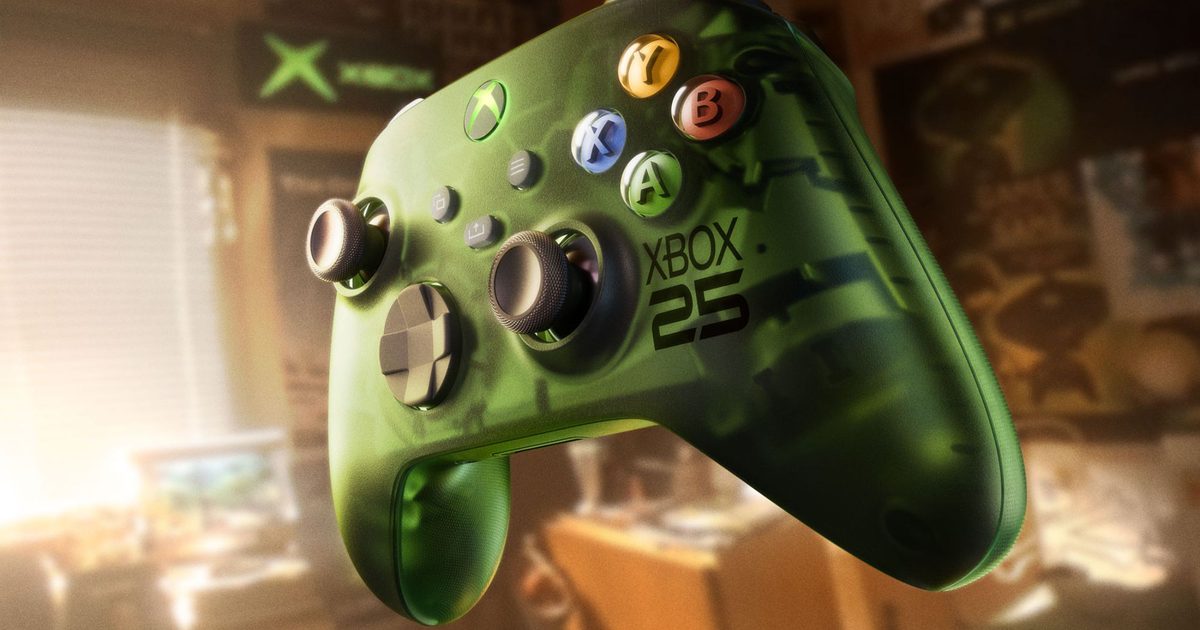
    The special‑edition machine arrives ahead of Xbox’s official 25th‑anniversary festivities in November and is clearly aimed at longtime fans who grew up with the first‑generation Xbox. Branded as the Xbox Series X25, the console features a translucent‑green shell inspired by the classic debug‑style appearance of the original hardware.

    Microsoft has added several nostalgic details throughout the design. The power logo glows green, and the front panel sports a dedicated 25th‑anniversary emblem. Apart from the visual makeover, the technical specifications match the standard Xbox Series X, including the same 1 TB storage and overall performance.

    2001 meets 2026Introducing the XBOX Series X25 Limited Edition console and Special Edition controller: https://t.co/w9XoIM2LJ0 | #XBOXShowcase pic.twitter.com/l1Ba2mzcmJ

    — XBOX (@XBOX) June 7, 2026

    The anniversary edition underscores how nostalgia has become a driving force in the gaming industry. Console makers are increasingly leaning on retro‑inspired hardware, limited‑edition designs, and legacy branding to reconnect with fans who have followed iconic platforms for years.

    For Xbox, the translucent‑green aesthetic carries particular emotional weight. The original Xbox launched in 2001 with a bold, industrial design that set Microsoft apart from Sony and Nintendo at the time. The green color quickly became one of the brand’s defining visual cues.

    The new console also reflects the resurgence of transparent gaming hardware. In recent years, companies like 8BitDo have successfully revived retro‑transparent designs through Xbox‑themed keyboards, mice, controllers, and accessories that echo the first‑generation console.

    Alongside the console, Microsoft announced the Xbox Wireless Controller X25 Special Edition. The controller mirrors the translucent‑green shell and features colored ABXY buttons and bumpers reminiscent of the original “Duke” controller that shipped with the first Xbox.

    For veteran Xbox enthusiasts, the controller may prove just as nostalgic as the console itself. The Duke remains one of the most recognizable—and famously oversized—controllers in gaming history.

    The limited‑edition launch arrives at a pivotal moment for Xbox. Over the past few years, Microsoft has broadened its focus beyond traditional console gaming with Game Pass, cloud streaming, PC integration, and AI‑driven initiatives. Some industry observers have wondered whether Xbox hardware would stay central to Microsoft’s long‑term strategy.

    Instead, the anniversary release reinforces that Microsoft still sees emotional value in dedicated gaming hardware and the Xbox brand identity. Even as the company pushes subscription services and cloud gaming, retro console drops continue to excite collectors and longtime players.

    Techgeeks reports that the Xbox Series X25 console and Xbox Wireless Controller X25 Special Edition will launch together in select markets starting in November. The controller will also be sold separately for fans who want the retro design without purchasing a new console.

    Pricing and pre‑order details have not been disclosed yet, but given the limited‑edition nature of the hardware, demand from collectors is expected to be high once sales commence later this year.

  • ChatGPT aims for a massive “super app” revamp to handle real‑world tasks, says Techgeeks

    ChatGPT aims for a massive “super app” revamp to handle real‑world tasks, says Techgeeks

    OpenAI is reportedly gearing up for a sweeping overhaul of ChatGPT that could fundamentally reshape how users engage with artificial intelligence. Rather than staying just a conversational chatbot, the firm wants the service to evolve into a “super app” driven by AI agents that can tackle tasks spanning personal and professional domains.

    As detailed by the Financial Times, OpenAI leaders are increasingly convinced that the future of AI lies not in bots that merely answer queries, but in intelligent systems that actively perform work for users. The long‑term roadmap envisions agents that can manage calendars, arrange travel, write code, generate content, and orchestrate workflows across a variety of services and platforms.

    Executive Thibault Sottiaux is said to have described the ambition as building a “personal agent” that assists users “across everything in your life.” This would let people interact with ChatGPT via smartphones, desktops, browsers, and possibly even vehicles, turning the platform into a far broader digital‑assistant ecosystem.

    OpenAI bets heavily on AI agents and enterprise growth

    A key pillar of the plan is Codex, OpenAI’s coding‑focused offering, which has reportedly surpassed five million weekly active users. Internally, the company appears convinced that coding tools and AI agents capable of taking actions on behalf of users could become far more valuable than traditional chatbot exchanges.

    To support this pivot, ChatGPT’s mobile and web interfaces are being redesigned to spotlight coding, image generation, and third‑party integrations. Partner apps from firms such as Canva and Booking.com may become more deeply woven into the ChatGPT experience as OpenAI pushes toward a more connected AI ecosystem.

    The shift also mirrors mounting pressure in the AI sector. Competitors like Anthropic, Microsoft and Google are rapidly expanding their own AI‑powered products and enterprise suites. While ChatGPT remains one of the most recognizable AI products worldwide, OpenAI faces growing expectations to demonstrate long‑term profitability and diversify revenue beyond free chatbot usage.

    Enterprise clients are becoming especially crucial to this effort. Reports indicate that business‑focused products already constitute a sizable slice of OpenAI’s revenue, prompting a reorganization of internal teams to prioritize enterprise growth over some consumer‑centric initiatives.

    ChatGPT could become far more than a chatbot

    The broader implication is that OpenAI no longer views ChatGPT merely as a messaging interface. Instead, it is being positioned as a central operating layer for future AI‑driven computing experiences.

    If the strategy succeeds, it may overhaul how users interact with software altogether. Rather than launching separate apps for productivity, communication, coding, travel, scheduling and search, people might increasingly rely on a single AI assistant that handles multiple tasks conversationally and autonomously.

    At the same time, OpenAI is strengthening ties with policymakers and regulators as AI gains political and economic weight. Reports suggest the company plans to give the U.S. government early access to certain models under a voluntary framework introduced by President Donald Trump, and that discussions about potential government stakes in AI firms have involved CEO Sam Altman as officials explore ways to spread AI‑driven economic benefits.

    The ChatGPT overhaul is expected to roll out gradually via app and website updates over the coming months. If OpenAI pulls it off, ChatGPT could transition from an occasional chatbot visit to a constantly present AI assistant woven into everyday life.

  • Finally, you can disable Bing in Windows 11 Search

    Finally, you can disable Bing in Windows 11 Search

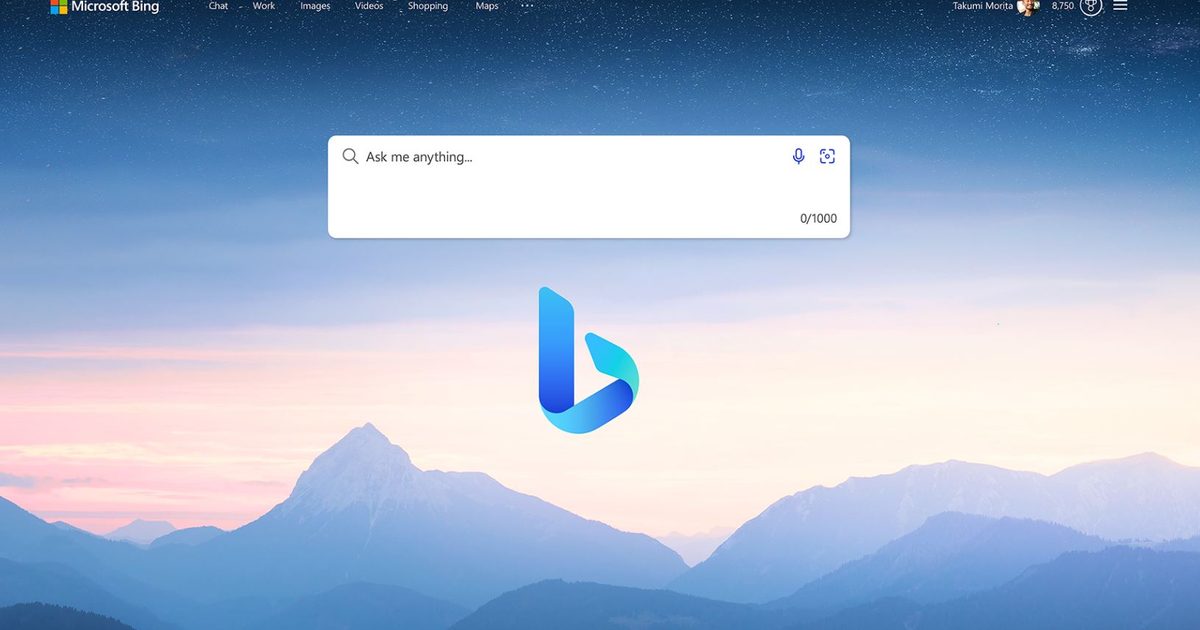
    After years of having Bing embedded in almost every facet of Windows Search, Microsoft appears to be offering a way out. Reports suggest the company is testing a Windows 11 update that would let users fully turn off Bing‑driven web results in the built‑in Search feature.

    For many PC owners, this is a long‑overdue improvement. Windows Search has long mixed local file queries with Bing suggestions, online results, news links, and other Microsoft services, often irritating users who simply want to locate an app, document, or setting on their machine.

    According to PCMag, Microsoft is now adding options that separate the native Windows search capabilities from Bing’s web integration. In practice, this could mean that typing in the Start menu or taskbar would return only local results, without being steered toward Bing‑generated content.

    The change seems tied to the EU’s Digital Markets Act (DMA), which compels large tech firms to give users more control over bundled services and default settings. Microsoft has already rolled out several Europe‑specific tweaks to Windows, such as easier browser switching and fewer prompts that push Edge and Bing.

    **Windows Search could finally get back to basics**

    For years, users have criticized Microsoft for forcefully grafting Bing onto Windows Search, even when it hurt usability. Local file searches often surfaced unrelated web links, recommendations, or Bing‑driven suggestions that many never wanted.

    The issue became more pronounced after Microsoft integrated AI‑powered Bing and Copilot directly into Windows 11. While marketed as productivity boosters, many felt the Search experience grew cluttered and drifted away from its core desktop purpose.

    The rumored update could markedly improve the experience for those who mainly use Search to launch apps, find files, or tweak settings. Stripping out Bing may also speed up the tool and cut down on background online queries.

    For Microsoft, however, this move is about more than a simple toggle. Bing has long been a strategic pillar, steering users toward Microsoft services, search ads, Edge, and now AI‑driven Copilot.

    Allowing users to more freely disable Bing indicates that regulators are starting to shape how Microsoft builds Windows.

    **Microsoft still wants AI everywhere in Windows**

    Even if Bing can be removed, Microsoft isn’t abandoning AI or online features in Windows 11. The company continues to pour resources into Copilot and AI‑enhanced productivity tools, which remain central to its long‑term Windows strategy.

    Thus, the upcoming changes are less about ditching Bing entirely and more about giving users greater control over how deeply Microsoft services are woven into the desktop.

    The big question now is whether these Bing‑disable options will stay limited to Europe for DMA compliance or roll out worldwide. A global release could make this one of the most user‑friendly Search overhauls in years.

    For long‑time Windows users, the update already feels symbolic. After years of Microsoft insisting Bing belong in Search, users may finally get the choice they’ve been asking for: the ability to search their PC without the Microsoft search engine constantly intruding.

  • MacOS 27 could finally end Intel Mac support and bring smarter Siri upgrades

    MacOS 27 could finally end Intel Mac support and bring smarter Siri upgrades

    Apple’s next major Mac software update may mark the beginning of the end for Intel-powered Macs while also pushing deeper into AI-powered experiences. New rumors surrounding macOS 27 suggest Apple is preparing significant changes ranging from smarter Siri capabilities to refinements for its controversial “Liquid Glass” design language.

    According to reports, macOS 27 could become the first version of macOS to substantially reduce or fully end support for Intel-based Macs, completing a transition Apple began in 2020 with the launch of its first Apple Silicon chips. While Apple has steadily shifted focus toward M-series processors over the past several years, macOS 27 may represent the clearest sign yet that the company is ready to leave Intel hardware behind. Although this is not new news – Apple was already looking to phase out Intel-powered Macs when it rolled out macOS Tahoe last year.

    The timing would align with Apple’s typical software support cycle. Intel Macs have already started missing out on some Apple Intelligence features introduced during the AI push across iPhones, iPads, and Macs. Ending support entirely would allow Apple to focus more aggressively on AI, machine learning, and hardware-specific optimizations designed around Apple Silicon.

    Apple appears ready to fully embrace its AI-first Mac future

    One of the biggest rumored changes involves Siri. Reports suggest Apple is continuing work on a significantly smarter version of the assistant capable of handling more natural conversations, contextual awareness, and deeper app integration. While Apple’s AI rollout has faced criticism for moving more slowly than rivals like Google and OpenAI, macOS 27 could become an important part of the company’s broader Apple Intelligence strategy.

    The update may also refine Apple’s newer “Liquid Glass” visual style, which reportedly focuses on translucent layers, reflective interface elements, and smoother animations across macOS. Early reactions to the design direction have been mixed, with some users praising the futuristic appearance while others argue it prioritizes aesthetics over clarity and usability.

    Apple is also expected to continue integrating AI-powered productivity tools throughout macOS. Features involving summarization, writing assistance, smarter search, and proactive recommendations could become more deeply embedded into the operating system as Apple tries to make AI feel native to the Mac experience instead of functioning as a separate tool.

    For users still relying on Intel Macs, however, the rumored support changes may become the biggest story. Millions of Intel-based MacBooks and desktops remain in active use, especially in businesses, schools, and creative industries. If Apple significantly cuts compatibility, many users could face difficult upgrade decisions sooner than expected.

    macOS 27 may reveal Apple’s long-term strategy for the Mac

    The rumored update reflects a broader shift happening across Apple’s ecosystem. The company increasingly designs software around its own custom chips, allowing tighter integration between hardware and software features. Apple Silicon Macs already deliver major advantages in battery life, performance efficiency, and AI processing compared to older Intel systems.

    Ending Intel support would also simplify development for Apple and third-party app makers by reducing the number of architectures they need to support. However, it risks frustrating long-time Mac users whose devices may still feel perfectly functional despite losing future software support.

    Apple is expected to officially unveil macOS 27 during WWDC 2026, where the company will likely detail its next-generation AI strategy across Macs, iPhones, and iPads. Until then, many of the reported features remain speculative, but the rumors strongly suggest Apple is preparing one of the most significant transitions in Mac history since the move away from Intel first began.