Author: TechGeeks

  • Fitbit Air: Google’s Screen-Free $99 Fitness Tracker Challenges Whoop Without a Subscription Fee

    Fitbit Air: Google’s Screen-Free $99 Fitness Tracker Challenges Whoop Without a Subscription Fee

    Techgeeks reports that Google has taken a significant step into the wearable fitness market with the launch of the Fitbit Air. This new health band, priced at $99.99, features no screen and competes directly with Whoop by offering essential health tracking features without requiring a subscription.

    The device is currently available for pre-order and will begin shipping to 21 countries on May 26, 2026. Buyers can select from four Pixel-inspired color options—Obsidian, Lavender, Fog, and Berry—and choose between three strap types: Performance Loop, Active Band, and Elevated Modern Band.

    What capabilities does the Fitbit Air offer?

    Weighing only 12 grams with the strap (5 grams without), the Fitbit Air includes a robust set of sensors designed for dedicated fitness enthusiasts.

    It provides continuous heart rate monitoring with AFib irregular rhythm notifications, heart rate variability (HRV), blood oxygen (SpO2), skin temperature, and standard step and calorie tracking. Additionally, it monitors sleep stages and duration, and features automatic activity detection.

    The absence of a display is a deliberate design choice, aiming to minimize distractions during workouts while the device quietly records data in the background and syncs it to your smartphone via Bluetooth.

    With water resistance up to 50 meters, it is suitable for swimming. A full charge takes approximately 90 minutes using the magnetic charger and provides up to seven days of battery life.

    Fitbit Air vs. Whoop: Key Differences

    In contrast to Whoop, the Fitbit Air provides its fundamental health tracking capabilities without requiring a monthly subscription fee.

    However, accessing advanced tools like the Google Health Coach, a Gemini-driven AI assistant for fitness data analysis, along with long-term insights, requires a Google Health Premium subscription ($9.99/month).

    Fortunately, buyers receive a complimentary three-month trial of Health Premium with the Fitbit Air purchase. Google has also confirmed compatibility with both Android and iOS, and for the first time, users can sync both a Pixel Watch 4 and a Fitbit Air to a single Google Health account.

    The Fitbit Air represents Google’s strategic effort to capture Whoop’s large user base. By offering core health features for free and positioning its premium subscription at a lower cost than Whoop’s annual fee, Google aims to attract fitness-focused consumers to the Fitbit Air.

  • The Mind-Boggling Budget for GTA 6: Why the Numbers Are Hard to Believe

    The Mind-Boggling Budget for GTA 6: Why the Numbers Are Hard to Believe

    Grand Theft Auto 6 has been simmering in Rockstar Games‘ kitchen for quite some time. Yet, after ten years of crafting one of the most anticipated titles in gaming history, the financial toll is becoming staggering.

    In a recent Business Insider profile of Take-Two Interactive CEO Strauss Zelnick, the executive refused to disclose the exact figure. His sole admission was that the project “was expensive.” Nevertheless, industry experts project the final cost could range from $1 billion to $1.5 billion.

    Surpassing Hollywood’s Spending Limits

    The predecessor, GTA 5, moved over 225 million copies globally and generated more than $1 billion in revenue within just three days of its 2013 launch. Consequently, the latest installment in this wildly successful series faces the challenge of surpassing that legacy over a decade later. To put it in perspective, Rockstar’s Red Dead Redemption 2 was already among the costliest games ever produced, with a price tag estimated between $379 million and $550 million.

    Why GTA 6 Might Permanently Shift Game Pricing

    Development costs are only half the equation. Experts quoted in the report also anticipate that GTA 6 will break the current price barrier for AAA titles. One analyst suggested the game might even command a three-digit price point. This strategy could prove difficult, particularly as shoppers are already grappling with rising costs for consoles, games, and everyday expenses.

  • Google Discontinues Project Mariner, the AI Agent That Navigated the Web Visually Like a Person

    Google Discontinues Project Mariner, the AI Agent That Navigated the Web Visually Like a Person

    Google has terminated Project Mariner, the autonomous web navigation tool it first introduced at I/O last year. The system, which could navigate Chrome, complete forms, search results, and arrange travel by capturing screenshots and visually identifying interface components, has been removed. Its official page now displays a notice indicating the service ended on May 4, 2026.

    NEW: Google quietly shut down Project Mariner yesterday, the web-browsing AI agent it highlighted onstage last year at Google IO.I reported for WIRED, nearly 2 months ago, that Google had moved staffers off the Project Mariner team as it responded to OpenClaw-style agents. pic.twitter.com/WMBago74vr

    — Max Zeff (@ZeffMax) May 6, 2026

    See More

  • Mortal Kombat’s Next Chapter Is Already in Development

    Mortal Kombat’s Next Chapter Is Already in Development

    Mortal Kombat 1 marks just the beginning of NetherRealm’s journey back to the fighting ring. Following the 2023 reboot, creator Ed Boon revealed in a Collider interview that the studio is “definitely pursuing another Mortal Kombat game,” offering the most direct indication to date that the franchise is far from over.

    While NetherRealm has confirmed the project’s existence, specific details remain under wraps. No title, release date, platform lineup, character roster, or narrative focus has been disclosed. The upcoming installment is confirmed to be in development, but not yet at a stage where it can be showcased.

    Current Insights

    Boon’s statement addresses long-standing fan questions following Mortal Kombat 1. NetherRealm is clearly not treating the 2023 launch as a conclusion, nor is it allowing the franchise’s future to remain ambiguous.


    The phrasing used is significant. Boon did not clarify whether the next game will directly continue Mortal Kombat 1’s storyline or diverge entirely, leaving ample room for speculation while distinguishing confirmed development from fan hope.

    For now, the most accurate interpretation is that another Mortal Kombat title is actively in development, with defining details kept confidential.

    Beyond a Single Sequel

    While the next game dominates headlines, NetherRealm’s ambitions appear broader. Boon noted the team is “definitely doing more as well,” mentioning “a lot of pots on the stove.”

    This activity spans multiple media. Boon highlighted projects outside gaming, aligning with the franchise’s expansion into film. This also explains his reluctance to confirm projects like Injustice 3, even while hinting at future reveals.

    NetherRealm is managing expectations by confirming direction while withholding specifics. This keeps the next Mortal Kombat game as the most concrete detail within a larger, largely undisclosed slate.

    Looking Ahead

    Fans should await official announcements rather than extrapolating timelines from Boon’s remarks. He mentioned “a lot of great announcements that are coming,” but NetherRealm has not attached names or dates to most of these plans.

    This makes the upcoming phase both exciting and prone to overinterpretation. Until NetherRealm reveals the next Mortal Kombat game, Boon’s statements should be viewed as confirmation of intent, not scheduling.

  • OnePlus Leaks Specs for a Flagship Phone at a Critical Juncture

    OnePlus Leaks Specs for a Flagship Phone at a Critical Juncture

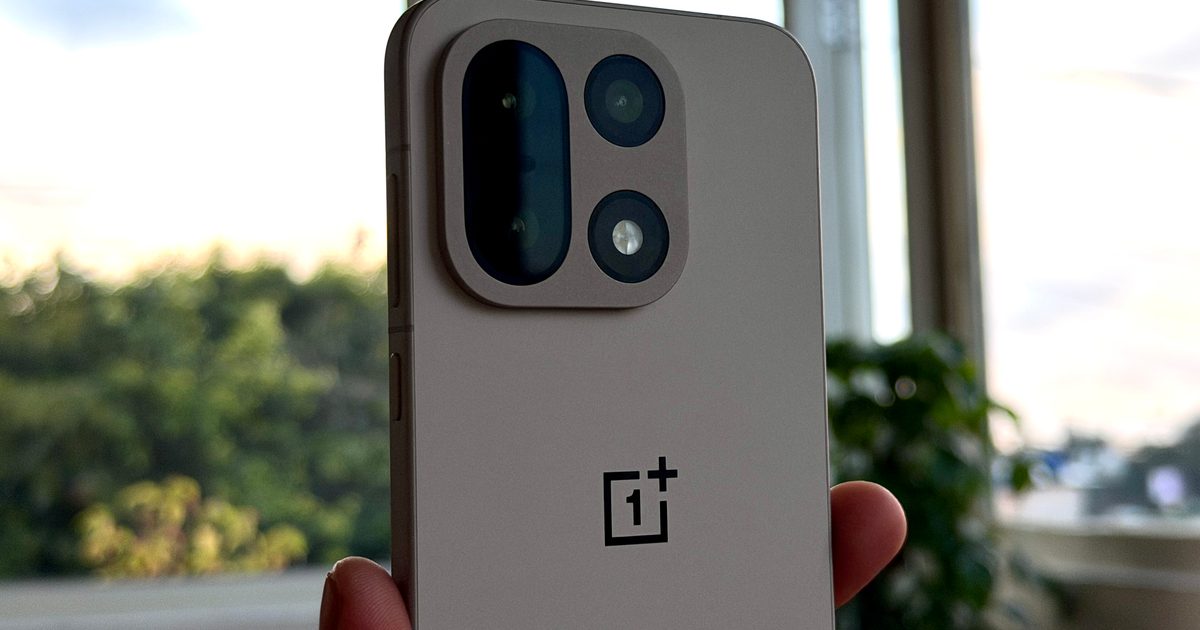
    The OnePlus 16 is beginning to resemble a flagship device that makes a bold entrance rather than a subtle one. Recent information from tipster Digital Chat Station indicates a 200MP periscope zoom camera, a Snapdragon 8 Elite Gen 6 Pro processor, and a battery capacity potentially hitting 9,000mAh.

  • Spotify DJ Now Supports Song Requests in French, German, Italian, and Portuguese

    Spotify DJ Now Supports Song Requests in French, German, Italian, and Portuguese

    Techgeeks reports that Spotify is broadening its widely used DJ tool to reach a global audience. The streaming giant is launching its AI-hosted DJ service to Premium subscribers in additional regions, such as Austria, Brazil, France, Germany, Italy, Portugal, South Korea, and Switzerland, raising the total number of supported countries to more than 75.

    In addition to reaching new markets, the DJ feature now supports four additional languages: French, German, Italian, and Brazilian Portuguese.

    What is Spotify DJ and how does it function?

    For those unfamiliar, Spotify DJ serves as an artificial intelligence-driven companion that operates like a personal radio host within your app. It leverages your listening habits, personal tastes, and Spotify’s editorial knowledge to provide a personalized music stream, complete with brief commentary between songs.

    The voice of the original English DJ is based on Spotify’s own Xavier “X” Jernigan, offering a listening experience that feels more dynamic than a standard playlist. It also adapts based on your feedback, improving its ability to fulfill your song requests the more you engage with it.

    Spotify DJ Accepts Song Requests Like a Live DJ

    Premium subscribers can also ask Spotify DJ for specific tracks using voice commands. Simply press and hold the DJ button located in the bottom right corner of the screen until you hear a beep, then specify your request, such as a mood, genre, artist, or general vibe.

    Spotify has recently been making significant updates. To address the surge in AI-created music, the platform has launched verified artist badges to help users distinguish between human-made and AI-generated content.

    In an unexpected development, the app now allows users to purchase physical books and functions as a fitness coach with integrated Peloton workout sessions.

  • Your Galaxy Watch Can Now Alert You Before You Lose Consciousness

    Your Galaxy Watch Can Now Alert You Before You Lose Consciousness

    While fainting may appear to be a harmless, dramatic episode, the true risk stems from the aftermath. A sudden collapse can lead to broken bones, concussions, and other severe injuries, particularly endangering older adults who may suffer significant head trauma and long-term mobility challenges.

    \n

    Samsung’s recent findings could alter this reality. The tech giant has finished a collaborative clinical trial with Chung-Ang University Gwangmyeong Hospital in South Korea, confirming that the Galaxy Watch 6 is capable of forecasting vasovagal syncope (VVS) prior to its onset.

    \n

    In simpler terms, your wearable device can now alert you to an impending fainting spell.

    \n

    Understanding Vasovagal Syncope and Its Impact

    \n

    Vasovagal syncope occurs when blood pressure and heart rate plummet abruptly, frequently triggered by emotional stress, leading to a loss of consciousness. Approximately 40% of individuals will encounter this condition at least once in their lifetime, with one-third experiencing repeated episodes.

    \n

    \n

    Professor Junhwan Cho from the Cardiology Department at Chung-Ang University Gwangmyeong Hospital explains the significance: “An early warning could give patients advance time to get into a safe position or call for help, which would dramatically reduce the incidence of secondary injuries.”

    \n

    How the Galaxy Watch Foresees Fainting Episodes

    \n

    The research team conducted trials on 132 patients exhibiting potential VVS symptoms. By utilizing a Galaxy Watch 6 fitted with a PPG sensor, the group examined heart rate variability data through an AI algorithm.

    \n

    The outcomes were remarkable. The system successfully predicted fainting events up to 5 minutes in advance, achieving an 84.6% accuracy rate and 90% sensitivity. These results were published in the European Heart Journal Digital Health, marking the first instance where a commercial smartwatch demonstrated this capability.

    \n

    \n

    While the Apple Watch includes a fall detection feature that alerts emergency contacts after a fall, the Galaxy Watch 6 offers a proactive advantage by warning users before they faint, allowing them to take preventive measures to avoid injury.

    \n

    Such innovations transform our daily gadgets into life-saving tools, and we eagerly anticipate how far technological advancements will push these boundaries.

  • Qualcomm Introduces Snapdragon 6 Gen 5 and 4 Gen 5 Chips to Bring Flagship Features to Budget Devices

    Qualcomm Introduces Snapdragon 6 Gen 5 and 4 Gen 5 Chips to Bring Flagship Features to Budget Devices

    Qualcomm has unveiled two new mobile processors, the Snapdragon 6 Gen 5 and Snapdragon 4 Gen 5, offering significant advantages for anyone shopping for a mid-range smartphone.

    These platforms aim to bring premium capabilities typically found in top-tier devices to more budget-friendly models. The chips will enable features such as AI-enhanced photography, fluid screen performance, improved gaming capabilities, and extended battery endurance for upcoming affordable handsets.

    How Will This Impact Your Daily Smartphone Use?

    A major enhancement in both processors is the Snapdragon Smooth Motion UI. The Snapdragon 6 Gen 5 claims a 20% boost in app startup speeds and 18% reduction in display stuttering. The Snapdragon 4 Gen 5 takes this further with a 43% increase in app launch speed and 25% fewer screen stutters, making everyday interactions noticeably more responsive.

    The Snapdragon 6 Gen 5 introduces AI-driven camera enhancements, a 21% boost in GPU capabilities, and Wi-Fi 7 compatibility. Qualcomm’s Chenwei Yan, Senior Vice President of Product Management, noted the objective is to achieve “the right balance of performance, power efficiency and connectivity” to provide superior experiences to a broader global audience.

    If the stated performance metrics hold up, Qualcomm’s latest chips appear poised to meet these objectives effectively.

    Is the Entry-Level Chiplet Worth the Hype?

    While the Snapdragon 6 Gen 5 may set the stage, the Snapdragon 4 Gen 5 stands out as the more compelling release. It delivers a 77% GPU performance leap and supports 90FPS gaming. Additionally, it features Dual SIM Dual Active 5G, allowing users to maintain two active 5G connections simultaneously.

    Given the sharp increase in smartphone costs driven by shortages in RAM, PCBs, and other components, a robust budget processor will help ensure consumers can still access high-quality affordable smartphones.

    Look for new devices from Xiaomi, Honor, OPPO, and realme utilizing these chipsets to debut in the latter half of 2026.

  • Anthropic Equips Claude with a ‘Dreaming’ Mode to Enhance Agent Intelligence

    Anthropic Equips Claude with a ‘Dreaming’ Mode to Enhance Agent Intelligence

    Techgeeks reports that Anthropic has introduced a feature to Claude that resembles a concept from science fiction: the capacity to dream. The firm has unveiled three enhancements to Claude Managed Agents: Dreaming, Outcomes, and Multiagent Orchestration.

    Although the Dreaming feature boasts the most imaginative title, it also offers the most significant practical benefits for developers creating AI agents capable of managing complex, extended tasks.

    Live from Code with Claude: we’re launching dreaming in Claude Managed Agents as a research preview.

    Outcomes, multiagent orchestration, and webhooks are now in public beta. pic.twitter.com/p4DFRzFEd8

    — Claude (@claudeai) May 6, 2026

    See More

    Understanding Claude’s Dreaming Capability

    Beneath its poetic moniker, Dreaming functions as a scheduled background operation that occurs between active sessions. It is designed to analyze all previous agent activities, such as past dialogues, stored memory, finished tasks, and identify recurring patterns.

    Dreaming examines every task executed by the agent, detects repeated errors, recognizes preferred methodologies developed over time, and distributes these insights among multiple parallel agents (when several Claude agents operate simultaneously).

    After processing this information, the agent solidifies these learnings into its memory, ensuring each new session begins with the context of past successes and failures. Developers have the option to allow Dreaming to update memory automatically or to manually review changes before they are implemented.

    Outcomes lets you set the bar for quality. You write a rubric, a separate grader checks the output, and the agent iterates until it gets there.

    — Claude (@claudeai) May 6, 2026

    See More

    The Role of Outcomes and Multiagent Orchestration

    Currently, the Dreaming feature is accessible via research preview on the Claude Platform. This self-improvement tool aids agents in accumulating value over time by recognizing and learning from errors made in prior sessions.

    As its name implies, Outcomes enables developers to establish specific parameters, requirements, or standards for evaluating the agent’s output. A distinct grading system performs this evaluation to ensure it remains unbiased by the agent’s own reasoning. If the output fails to meet the criteria, the grader prompts the agent to try again.

    Multiagent Orchestration facilitates the collaboration of multiple Claude agents on different segments of a complex task. This approach decreases processing time and broadens the scope of responses within a single workflow. Webhooks complete the update by allowing event-driven triggers for agents, eliminating the need for continuous manual prompting.

  • Apple’s Foldable iPhone Might Offer an Unforeseen Advantage in Repairability

    Apple’s Foldable iPhone Might Offer an Unforeseen Advantage in Repairability

    Apple’s debut foldable iPhone, potentially named the iPhone Ultra, could offer more than just a broader screen. According to a recent Weibo update from tipster Instant Digital (刹那数码), the device may also be simpler to open, fix, and disassemble compared to other foldable phones on the market.

    Repairing foldables is notoriously tough due to their tight internal layouts, delicate screens, and intricate wiring. Even Google’s Pixel 9 Pro Fold, often cited as one of the more serviceable foldables, only earned a 4 out of 10 repairability rating from iFixit. This highlights just how complex fixing these devices typically is.

    Might Apple Simplify Foldable Repairs?

    The latest report suggests Apple has engineered a more streamlined internal design for the device, opting for a modular approach over complex cable routing. This design choice could significantly ease the repair process by minimizing the chance of technicians accidentally pulling or harming cables during disassembly.

    To accomplish this, Apple is said to have positioned the motherboard on the right side of the device, directing cables upward to link with the volume buttons. This aligns with earlier tips suggesting the volume controls would sit on the top-right edge, much like the iPad mini.

    Additionally, the power button with Touch ID and the camera control button are reportedly located on the right edge, leaving the left side to contain the display components and the rumored largest battery ever installed in an iPhone.

    Is Repairability the iPhone Ultra’s Main Surprise?

    In recent years, Apple has been working to improve iPhone repairability, a move likely driven by growing regulatory demands and the Right to Repair movement. Since the iPhone 16, battery replacement has become significantly easier due to electrically induced adhesive debonding. If this latest leak holds true, Apple’s first foldable iPhone could bring this repair-friendly approach to a category where fixes are typically much harder.