Author: TechGeeks

  • The Moto Pad 2026 Could Be the Top Budget Tablet Available

    The Moto Pad 2026 Could Be the Top Budget Tablet Available

    For years, Motorola has been quietly producing some of the finest budget smartphones. Now, they are extending that same approach to tablets with the new Moto Pad 2026, and at $249, it may offer the best value for money tablet available today.

    Is this the budget tablet students have been waiting for?

    Despite its low cost, the Moto Pad features an all-metal build with rounded corners, appearing far more premium than its price tag would imply.

    It comes equipped with an 11-inch 2.5K display boasting a 90Hz refresh rate, ensuring scrolling feels fluid and content appears crisp. Whether you are studying textbooks, viewing lectures, or checking notes during class, the screen will handle all your requirements.

    The quad speakers with Dolby Atmos support truly impressed me on paper. At this price point, you typically find a dual-speaker setup, so this is a pleasant surprise. The pairing of a high-resolution screen and quad speakers makes it an excellent tablet for entertainment.

    The device also includes a substantial 7,040mAh battery, capable of providing up to 12 hours of streaming on a single charge. On paper, the tablet has mastered the essentials, and at its price, it appears to be a dream device for students and children.

    What about power and connectivity?

    The Moto Pad is powered by a MediaTek D6300 5G chip, meaning you are not always reliant on Wi-Fi. If you are a student or someone frequently on the move, having built-in 5G connectivity is a significant advantage.

    You can access 5G connectivity directly on the tablet without needing to tether it to your phone for internet access. Using your phone as a hotspot is one of the most battery-draining activities you can perform. Thus, the Moto Pad’s 5G feature not only simplifies online usage but also saves battery on your phone.

    The Moto Pad 2026 will be available starting April 30 through T-Mobile and Metro by T-Mobile, priced at $249.99 on Motorola.com. For a 5G tablet at this price, it is difficult to find a reason to look elsewhere.

  • Sony Intensifies Purge of Low-Quality Games to Maintain PlayStation Store Quality

    Sony Intensifies Purge of Low-Quality Games to Maintain PlayStation Store Quality

    If you’ve ever browsed the PlayStation Store and encountered games that seem suspiciously similar to popular titles but feature low-effort reskins and little originality, Sony has finally listened.

    The company has quietly removed the entire catalogs of three publishers from the PlayStation Store: GoGame Console Publisher, VRCForge Studios, and Welding Byte. These deletions were initially spotted on PSNProfiles, featuring well-known titles like Urban Driver Simulator, Water Blast Shooter – Wet Gun, and Supermarket CEO Simulator (via EuroGamer).

    What Exactly Is Shovelware?

    Shovelware refers to games created with minimal effort, often cloning popular titles to capitalize on their success, or designed to grant players quick achievement or Trophy unlocks. These are essentially low-cost imitations of popular games that managed to enter the PlayStation Store by taking advantage of its lenient submission process.

    Regardless, to streamline its digital marketplace and offer PlayStation users a polished experience, the most recent update aims to assist. What is particularly notable is that Sony is conducting this cleanup for the third time in 2026.

    The fourth-largest publisher on the PlayStation Store (by volume), boasting over a thousand titles, was completely removed in January 2026, with CHI Laba and Nostra Games following in March. This latest April removal occurs less than two weeks after the March sweep.

    Is Sony’s Crackdown Effective?

    Partially. These removals are linked to the Shared Commitment to Safer Gaming, a joint effort among three major console and publishing companies: Sony, Xbox, and Nintendo. This institutional support strengthens Sony’s current crackdown compared to earlier, isolated purges.

    However, within the PlayStation Store, the issue continues. Sony’s strategy remains reactive, suggesting the company deletes flagged content instead of reviewing submissions beforehand to stop low-effort titles from appearing. Additionally, the banned content continues to resurface on the platform under various names.

    Until submission criteria become stricter, maintaining control will be difficult for Sony. In my view, Sony needs to shift from reactive delisting to proactive gatekeeping of submissions, or the cycle will persist. Nevertheless, the latest crackdown deserves praise.

  • Your next iPhone might look exactly like your current one

    Your next iPhone might look exactly like your current one

    Most of the iPhone 18 buzz has been around the Pro models, and for good reason. Upgraded cameras, a punch hole selfie camera, and the long-awaited iPhone Fold are all competing for attention. But what about the standard iPhone 18 and the iPhone Air 2? A leaker answered both questions, and the answers are surprisingly uneventful.

    Over the weekend, Weibo leaker Fixed Focus Digital shared two posts covering Apple’s less-talked-about upcoming iPhones. The first one is pretty straightforward: the standard iPhone 18 will look almost identical to the iPhone 17. The leaker says the design will remain largely unchanged, with only a possible minor adjustment to its dimensions.

    Will the base iPhone 18 get the smaller Dynamic Island?

    Earlier leaks suggested that all iPhone 18 models would get a smaller Dynamic Island. Fixed Focus Digital’s leak contradicts that saying that the smaller Dynamic Island is being reserved for the Pro lineup. So if you’re waiting for that particular upgrade, you might need to stretch your budget.

    The minor size tweak, if it even happens, is not something most people will notice. All it would do is ensure that your current iPhone 17 cases won’t fit on the iPhone 18, so you will need to buy new accessories.

    Is the iPhone Air 2 happening this year?

    According to Fixed Focus Digital, Apple will proceed with a normal product cycle and release the iPhone Air 2 this fall alongside the iPhone 18 Pro and iPhone Fold. This contradicts reports from The Information and Bloomberg’s Mark Gurman, who both suggested a spring 2027 release.

    While earlier reports suggest the original iPhone Air did not sell particularly well, new sales data show that the iPhone Air outsold the Plus models it replaced. That said, only Apple knows whether these sales are enough to justify continued updates to the iPhone Air.

    Fixed Focus Digital is adamant that, like the Mini and Plus models, iPhone Air 2 will get its second generation with no major changes. Whether there will be a third generation or not is still unanswered.

    With conflicting reports, it’s essentially a coin flip at this point. If Apple moves ahead, expect internal upgrades, like the A20 Pro chip, but few visible changes.

  • The upcoming OnePlus 16 could make a splash with a big camera upgrade

    The upcoming OnePlus 16 could make a splash with a big camera upgrade

    The next big thing from OnePlus may still be a couple of months away, but the leaks have already started doing what they do best: spilling just enough tea to keep things interesting. And this time, it’s all about the camera. If the latest whispers are anything to go by, the OnePlus 16 could be gearing up for a rather ambitious upgrade, one that leans heavily into zoom photography and, of course, about the megapixels, too.

    A 200MP camera?

    According to well-known tipster Digital Chat Station, the OnePlus 16 is expected to feature a 200MP sensor. That alone is enough to raise eyebrows, but as always, the devil is in the details, and those are just starting to trickle in. Another tipster, Smart Pikachu, suggests that this won’t be a random 200MP sensor. Instead, OnePlus could borrow something from Realme’s playbook.

    The rumored sensor is said to be the same one used in the Realme GT 8 Pro — a 200MP periscope telephoto camera. On the GT 8 Pro, this setup uses the Samsung ISOCELL HP5 sensor, paired with a periscope lens offering 3x optical zoom, an f/2.6 aperture, and a 65mm focal length. It’s built to bring distant subjects closer without sacrificing quality. The same sensor is also used in devices like the Oppo Find X9 Pro, which tells you it’s already in serious camera-centric phones. While the 200MP periscope lens is clearly stealing the spotlight, the rest of the camera system sounds familiar. Leaks suggest that OnePlus could stick with a 50MP primary and a 50MP ultra-wide camera. So, OnePlus seems to be focusing on one meaningful upgrade, while keeping others the same across the board.

    So, is this finally OnePlus going all in on cameras?

    If this leak holds up, the OnePlus 16 could finally step into a space where it doesn’t just compete on performance and software polish, but also gives photography-focused flagships a reason to look over their shoulder. Smartphone cameras aren’t just about bigger sensors anymore. With brands like Realme and Oppo already pushing periscope tech forward, OnePlus joining the party was only a matter of time.

    For now, though, it’s all leaks and educated guesses. But if even half of this turns out to be true, OnePlus’ next flagship could finally have a camera setup that’s not just good, but genuinely exciting.

  • QR code traffic scams sound clever – but they’re deeply concerning

    QR code traffic scams sound clever – but they’re deeply concerning

    Cybercriminals are evolving their tactics once again, with a new wave of phishing scams now using QR codes in fake traffic violation text messages. Security researchers warn that these scams, recently spotted across multiple U.S. states, are designed to trick users into handing over sensitive personal and financial information by mimicking official government notices.
    The scam typically begins with a text message claiming the recipient has an unpaid traffic violation or “Notice of Default.” Unlike earlier versions that relied on clickable links, these newer messages include an image of an official-looking notice embedded with a QR code. Victims are urged to scan the code to avoid penalties, legal action, or additional fines.
    Why you should be careful
    Once scanned, the QR code redirects users to a phishing website disguised as a legitimate government portal, such as a Department of Motor Vehicles (DMV) page. These sites often ask for a small payment – commonly around $6.99 – but their real goal is to collect sensitive data, including names, addresses, phone numbers, and credit card details.
    This shift to QR codes marks a significant evolution in phishing tactics. Known as “quishing,” QR-based phishing allows attackers to bypass traditional security filters that typically scan URLs in emails or texts. Because QR codes are harder to inspect visually and are widely trusted for everyday tasks like payments and menus, users are more likely to interact with them without suspicion.
    For consumers, the implications are serious
    These scams exploit urgency and fear – two powerful psychological triggers – by threatening fines or legal consequences. As a result, even cautious users may act quickly without verifying the authenticity of the message. Authorities consistently warn that courts and government agencies do not request payments or sensitive information via unsolicited text messages or QR codes.
    The growing use of QR codes in scams also reflects broader digital trends. As QR-based interactions become more common in payments, ticketing, and authentication, they are increasingly being weaponized by cybercriminals. This makes awareness and skepticism more important than ever.
    Looking ahead, cybersecurity experts expect these attacks to become more sophisticated, potentially incorporating more realistic branding and targeted messaging. Law enforcement agencies are urging users to avoid scanning unknown QR codes, verify any traffic violations through official government websites, and report suspicious messages immediately.
    As phishing tactics continue to evolve, the message is clear: convenience tools like QR codes can also become security risks if used without caution.

  • Want to know what the world is searching? Google Trends gets a mobile makeover to scratch that itch

    Want to know what the world is searching? Google Trends gets a mobile makeover to scratch that itch

    Want to know what the world is searching? Google is bringing its revamped Google Trends experience to mobile, making it easier to check trending topics and dig into search data wherever you are.
    The update builds on a redesigned interface powered by Gemini, which now surfaces connected queries and comparisons automatically instead of making you hunt for them. It’s aimed at anyone trying to understand what’s gaining traction online, from casual users to creators and researchers.
    At its core, the mobile push tackles a familiar frustration. Google Trends has always been powerful, but getting a full view of a topic could take time and effort.
    With Gemini built in, that process shifts. You start with one idea, and the tool quickly expands it into something more useful, giving you a clearer sense of what people are actually searching.
    Gemini suggests what to compare next
    The biggest change shows up in how Trends handles comparisons. Instead of building everything manually, the Explore interface now lines up relevant search terms tied to your topic.
    Look up something like dog breeds and multiple related queries can appear in the same chart, ready to compare. That makes patterns easier to spot without extra setup. It also introduces nearby topics, helping you move beyond your starting point and uncover angles you might have missed.
    A side panel adds suggested prompts you can tap to keep exploring. The experience feels more guided, especially for users who are not sure what to search next.
    A cleaner view of what’s trending
    Google is also refining how Trends looks, which becomes more important on a phone. Each query now has its own color and icon, making it easier to follow lines across the graph without losing track.
    You can compare more terms at once, and each timeline shows more rising queries. That added context helps explain why something is gaining attention, not just that it is.
    The familiar filters for location, time range, and search type are still there, but the layout feels tighter and easier to scan during quick check-ins.
    What to watch as rollout expands
    Google says the redesigned experience is rolling out gradually, starting on desktop before extending to mobile. That means availability may vary depending on where you are.
    Still, the direction is clear. Trends is becoming more proactive, surfacing insights instead of waiting for you to piece them together.
    If you use Trends often, it’s worth checking the Explore page on your phone to see if the update has arrived. If it hasn’t yet, broader availability should follow as the rollout continues.

  • Intel leak predicts a powerhouse Serpent Lake chip with Nvidia RTX firepower

    Intel leak predicts a powerhouse Serpent Lake chip with Nvidia RTX firepower

    Intel and Nvidia’s growing partnership could reach an exciting turn in a few years. A fresh leak from tipster Jaykihn (via wccftech.com) claims that Intel’s upcoming Serpent Lake chipset could fundamentally change what laptop processors can do by integrating Nvidia’s RTX-class graphics directly onto the chip.
    Serpent Lake refers to Intel’s purported hybrid chip that could combine the Tital Lake CPU architecture with Nvidia’s RTX Rubin graphics chiplets (based on TSMC’s 3nm fabrication technology).
    What exactly is Intel’s Serpent Lake chip?
    On the CPU side, the design reportedly packs eight performance and sixteen efficiency cores, drawn from Intel’s Griffin Cove and Golden Eagle architectures. However, when it comes to GPUs, the company could swap out its own Arc graphics for RTX technology.
    This doesn’t mean that Intel is abandoning its Arc graphics entirely; it’s just a product-specific decision that could make the Serpent Lake chip stand out. The memory configuration sounds equally ambitious, as the chip might support 15 channels of LPDDR6 memory, directly improving the bandwidth bottleneck.
    The leak also confirms a name for Intel’s next-generation P-core architecture: Copper Shark.
    To put everything into perspective, RTX graphics have always lived on separate, power-hungry graphics cards that are quite big and expensive.
    The integrated GPU could change the game for Intel
    Integrating one directly onto the CPU’s die could result in faster communication between the two crucial components, a significant reduction in power draw, and, more importantly, desktop-class GPU performance from a thin-and-light system-on-chip that runs efficiently in laptops.
    Here’s the boring part, though. Serpent Lake won’t arrive immediately. Intel’s roadmap runs through several chip iterations first, including Nova Lake in 2026, followed by Razer Lake and Titan Lake, before Serpent Lake is released in 2028-2029.
    By then, the GPU tile could be based on Nvidia’s Rubin or Rubin-Next architecture, making it the first RTX-class GPU to appear on a non-Nvidia chip. Whether the integration of Nvidia’s GPU tile on Intel’s Serpent Lake chip would result in a price hike isn’t immediately clear.
    What’s clear, however, is that it would offer discrete-GPU-level gaming and AI performance on premium laptops, without the bulk of carrying a dedicated graphics card.

  • iPhone fold dummy leak shows a phone unlike any out there

    iPhone fold dummy leak shows a phone unlike any out there

    Fresh dummy units of the iPhone Fold, iPhone 18 Pro, and iPhone 18 Pro Max have surfaced, all but confirming what leaks have suggested for months. Apple is not building another tall, narrow foldable; instead, it’s making a book-style foldable, which should provide a better tablet-like experience when unfolded.
    Looking at the dummies, the iPhone Fold has a distinctly wide, compact shape, sitting shorter and wider than anything in Samsung’s Galaxy Z Fold lineup, and is more akin to the original Pixel Fold. Open it up, and you are essentially holding a small landscape iPad in your hands.
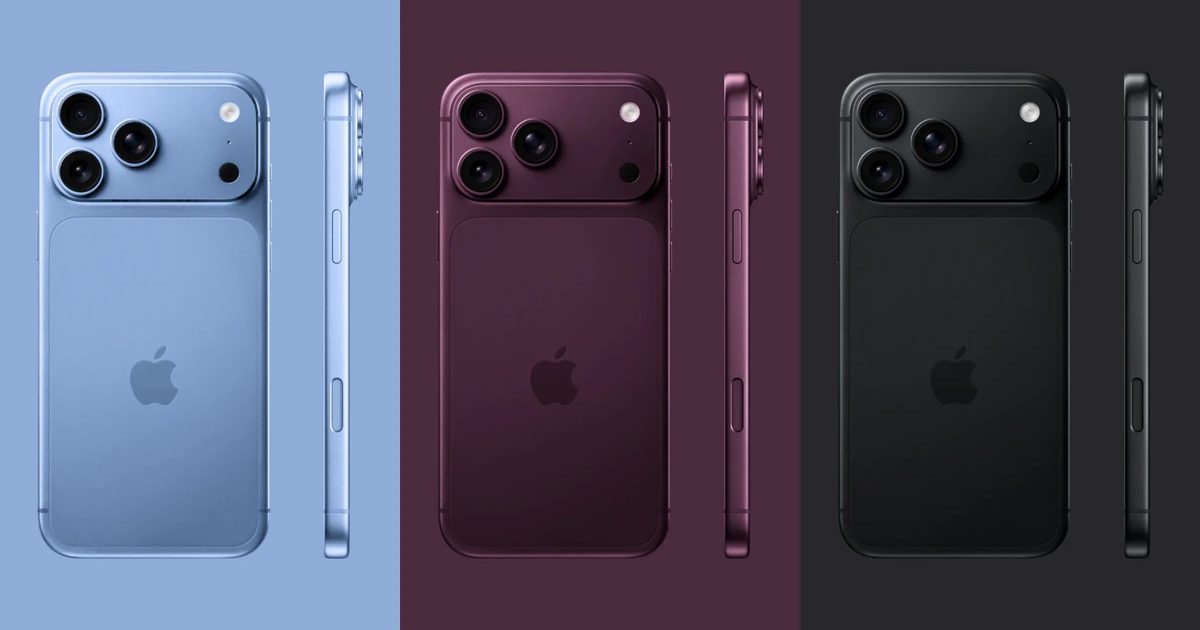
    The iPhone 18 Pro and Pro Max dummies flanking it look more familiar, with a triple camera layout on the back and a MagSafe ring sitting front and center. There’s a hint of a smaller Dynamic Island, but we can’t be sure.
    What else do you get with the new iPhone Fold
    Based on earlier CAD renders, the iPhone Fold features a camera island featuring two cameras, an LED flash, and a microphone. Leaks suggest a large internal 7.8-inch display and a 5.3-inch cover display.
    The cover display features rounded edges with a centered hole-punch cutout, which is a first for an iPhone. Open the device, and you will see a large folding display stretching to the rounded corners, with slim bezels and a hole-punch camera tucked into the top-left corner.
    The dummies do not show any cutouts for the punch-hole cameras, so the exact size of the cutout is still unconfirmed.
    When can you get one?
    Reports suggest Foxconn has already begun early-stage trial production, with suppliers suggesting a second-half 2026 window.
    However, analyst Tim Long believes the iPhone Fold will be announced at Apple’s September event alongside the iPhone 18 Pro, but will not start shipping until December.
    Apple is also reportedly building foldable-specific features into iOS 27, including split-screen support and a more iPad-like multitasking experience.
    If you are already eyeing one, start saving. Pricing is expected to land somewhere north of $2,000.

  • Physical fans inside gaming phones are getting their biggest push yet

    Physical fans inside gaming phones are getting their biggest push yet

    Xiaomi looks set to take active cooling in smartphones out of the niche and into the mainstream with the upcoming Redmi K90 Max. While built-in fans aren’t new, they’ve mostly been limited to over-the-top gaming phones so far. With Xiaomi now preparing to jump on the bandwagon, the technology could finally reach a much wider audience.
    What do we know about the Redmi K90 Max’s cooling system?
    In a recent series of teasers on Weibo, Xiaomi President Lu Weibing revealed that the Redmi K90 Max will feature a new cooling system consisting of a large 18.1mm fan and a redesigned duct that reportedly boosts airflow by 40%. The company claims this setup can reduce temperatures by up to 10 degrees Celsius in just 100 seconds under load.
    The idea behind this new system is to offer users better sustained performance. While modern flagship chips can deliver serious power, they can only do so in short bursts before thermal throttling kicks in. Active cooling aims to keep performance steady during longer gaming sessions, rather than spiking and dropping off.
    What makes Xiaomi’s approach stand out?
    Although Xiaomi has dabbled in gaming features before, bringing a physical fan to the Redmi K series is a notable shift, as it isn’t expected to be a one-off experimental device. Instead, it could signal that the company sees active cooling as something more users might actually want.
    Other brands have already explored this technology. Phones like the Oppo K13 Turbo Pro, Honor Win, and RedMagic 11 Pro all come with internal fans, but they’ve largely targeted the enthusiast gaming segment. That’s where Xiaomi stands out. Its Redmi K series sits closer to the mass-premium category, not a niche gaming lineup. If Xiaomi executes this well, built-in fans could start showing up in more mainstream devices.
    With a 165Hz display, a next-gen flagship chipset, and gaming-focused optimizations also in the mix, the Redmi K90 Max isn’t just chasing specs. It could end up pushing physical fans into the spotlight in a way niche gaming phones haven’t managed so far.

  • Google Photos rolls out AI Enhance and video playback speed controls

    Google Photos rolls out AI Enhance and video playback speed controls

    Google Photos is introducing an Android update focused on faster editing and improved video controls. The changes center on a one-tap AI editing option and long-requested playback speed settings, both starting to appear now.
    The update adds an “AI Enhance” button built to streamline photo edits. Instead of working through multiple sliders, it applies automatic changes to lighting and contrast in a single tap, reducing hands-on tweaking while still improving image quality.
    It also brings video speed options into the app, letting users control how fast clips play without leaving Google Photos. That expands the app beyond storage into a more capable viewing and editing tool.
    Availability still varies by device and region, so not every user will see both features at the same time.
    One tap edits replace manual tweaks
    AI Enhance works like a built-in shortcut for quick edits. Rather than navigating multiple controls, it applies lighting and contrast adjustments automatically inside the editor, shifting focus away from manual precision toward consistent results.
    It’s also reaching Android users globally, making it one of the more immediate parts of this update. The tradeoff is control, since the system makes decisions that won’t always match more detailed editing preferences.
    Video controls catch up
    For video, a long-missing option is now being added. A menu inside each clip includes playback speed settings, with choices ranging from 0.25x to 2x.
    That brings Google Photos closer to dedicated video apps, where speed adjustment is standard. It also makes reviewing clips more flexible, whether slowing things down or moving quickly through longer recordings.
    Early availability suggests a phased rollout rather than a full global release right away.
    Rollout timing and what to expect
    The two updates are arriving at different speeds. AI Enhance is positioned as a broad release across Android, while video playback features remain in earlier stages with more limited availability so far.
    That staggered approach means some devices will get the photo update first, with video controls following as rollout expands. Device differences may also affect when features appear and how well they perform.
    The direction is clear. Faster edits and more flexible playback are becoming built-in expectations inside Google Photos, reducing the need for separate apps as rollout continues.